


Banff: The Fiftieth Honeymoon, Give or Take

Jacob Ung
September 13, 2026

12 min read
Three nights at the Fairmont Banff Springs while Karen attended a conference — rain on the way in, sun on the way out, and a castle worth getting lost in.
There is a term for what we were doing, it turns out. A honeymoon is the trip you take straight after the wedding. A subsequent honeymoon is the one you take years later, to rekindle the romance and get away from the routine. On this trip, one couple asked whether we were on a date, and later someone else asked if we were on our honeymoon, and I realized that by that definition we have been on honeymoon, on and off, for most of our marriage. If that is what counts, then Karen and I have probably surpassed fifty already; but who’s counting? We both love to travel. I have come to think it is one of the keys to a successful marriage.
This particular honeymoon had a conference attached. Karen was there to attend the Banff Pathology Course at the Banff Centre for Arts and Creativity. We flew into Calgary and spent two nights at the Fairmont Palliser under clear skies, long enough for a very good dinner at Francine’s. There was a great deal of security around the hotel while we were there, RCMP officers mostly in black suits and earpieces, and on the Thursday morning a camera crew as well. That was what tipped us off. The Prime Minister was meeting President Zelenskyy in Calgary that day, and the lobby we walked out through suggested they were doing it where we had been sleeping. Then we headed west, and so, as it turned out, did the Prime Minister: the cabinet spent the next two days meeting in Banff, in the same building as Karen’s course.
Unfortunately, the sunshine did not come with us. There were showers outside the city and steady rain by the time we reached the park. Once you are inside Banff National Park the rain stops being weather and becomes part of the scenery, and the whole valley goes quiet in a way that is hard to be annoyed at.
We reached Banff at about ten in the morning. I dropped Karen at the Banff Centre for Arts and Creativity to check in, and then headed to Surprise Corner, at the foot of Tunnel Mountain. There is a wooden viewing platform there that lifts you above the treeline, an excellent perspective from which to photograph the historic Fairmont. It was the first real look I had at the place: the castle rising out of the forest across the valley, the mountain behind it lost in cloud, the flag still flying proudly.
Once she had checked in we went into downtown Banff and did a little shopping, and then we went looking for lunch. We got to Seoul Country, a Korean restaurant on Banff Avenue, right as it opened at 11:30. We were the first ones in, and the server sat us down and asked me a few questions in Korean before I had to tell him I do not speak it. I had the Dolsot Bibimbap and Karen had the Soon Doo Boo Jjigae, and on a rainy day you could not ask for better. Hers is a soft tofu stew, which is what the name means: soft tofu in a spicy red chili broth with garlic, vegetables and assorted seafood, an egg cracked over the top just before serving, all of it still bubbling in a ttukbaegi (took-bay-gee), the traditional black clay pot Korean stews are cooked and served in. Mine was white rice under seasoned beef, an assortment of vegetables, gochujang and a raw egg yolk, in a hot stone bowl designed to scorch the rice, so I did what I always do: mixed everything together, then pushed it out firmly to the sides and bottom of the bowl so more of the colourful ingredients could scorch too. Banchan arrived family style for the table, four small side dishes to share: kimchi, marinated bean sprouts, a seasoned seaweed salad and pickled white radish. They were very authentic, which the room seemed to agree with: as it filled up, most of the other guests were Korean. We were hungry enough that I did not take a single photograph, which will tell anyone who knows me how hungry we were. Beyond the food, what set it apart was the service. I had noticed the same thing in Calgary and would go on noticing it all weekend: Albertans seem to understand, better than most places I have been, how much tourism depends on hospitality. Good service here was the norm rather than the exception.
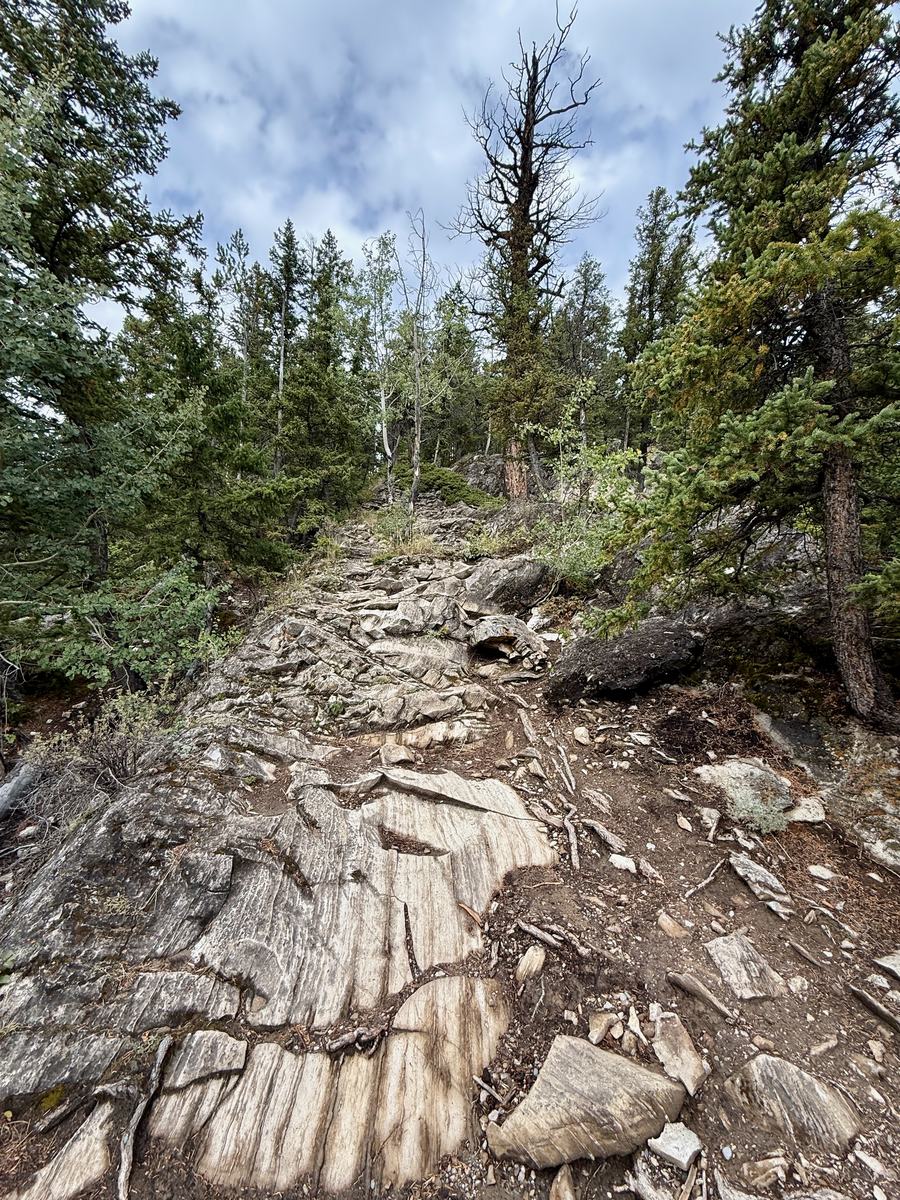
After I dropped Karen back for her sessions, I returned to Surprise Corner and went down to the river on my own — partway along the Hoodoos Trail, then down a side path to the bank of the Bow. The side path is steep, and much of it is not path at all but exposed bedrock: long slabs worn smooth and banded in grey and buff, tree roots running across them, loose gravel gathered at the edges. A few other people started down while I was there. None of them went all the way. From down there you see the hotel from across the water. I got the photographs I had come for, and then it started to rain again while I sat on a boulder enjoying the panoramic view. Knowing that these rocks would get slick, I quickly climbed back up.
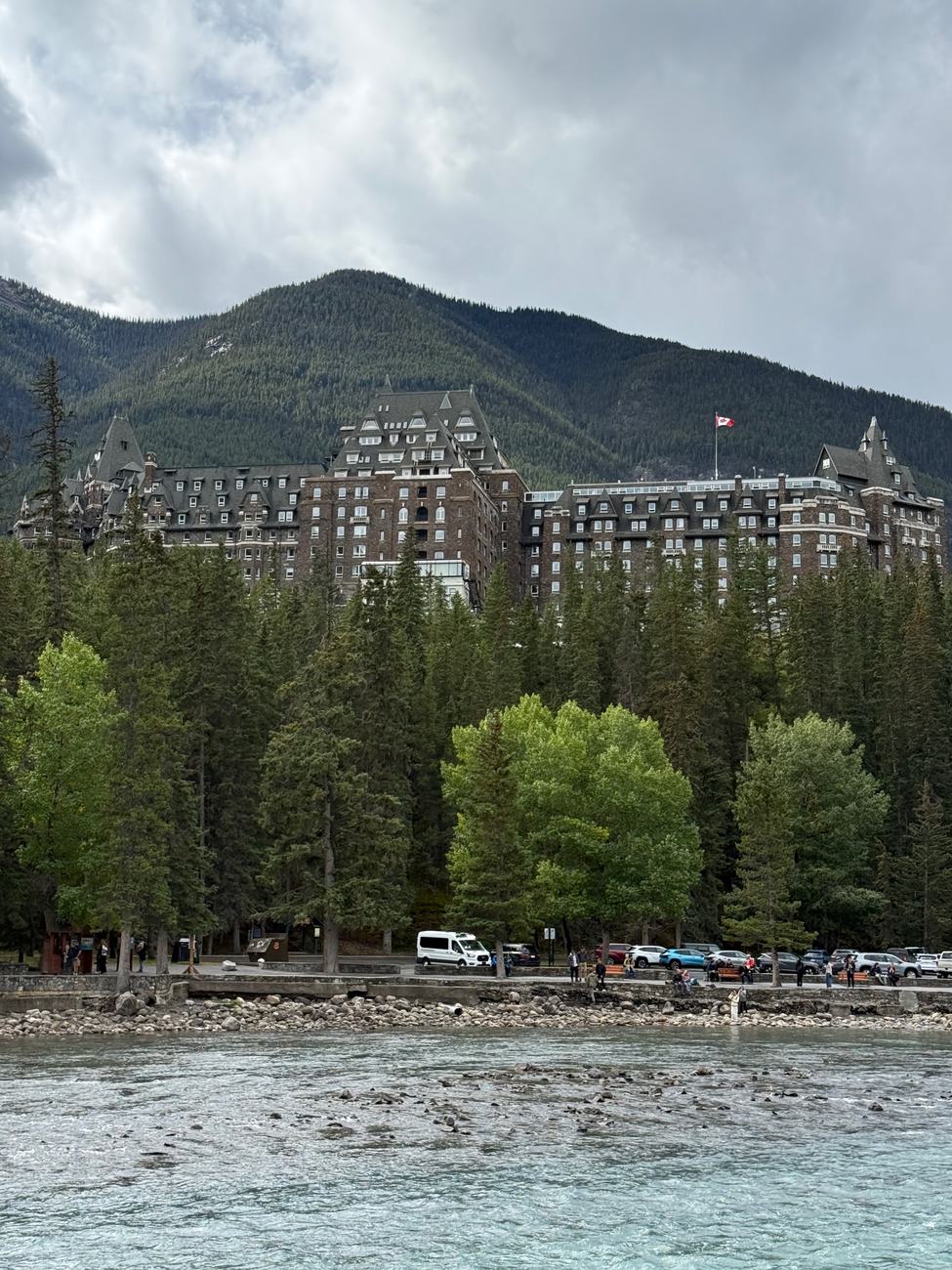
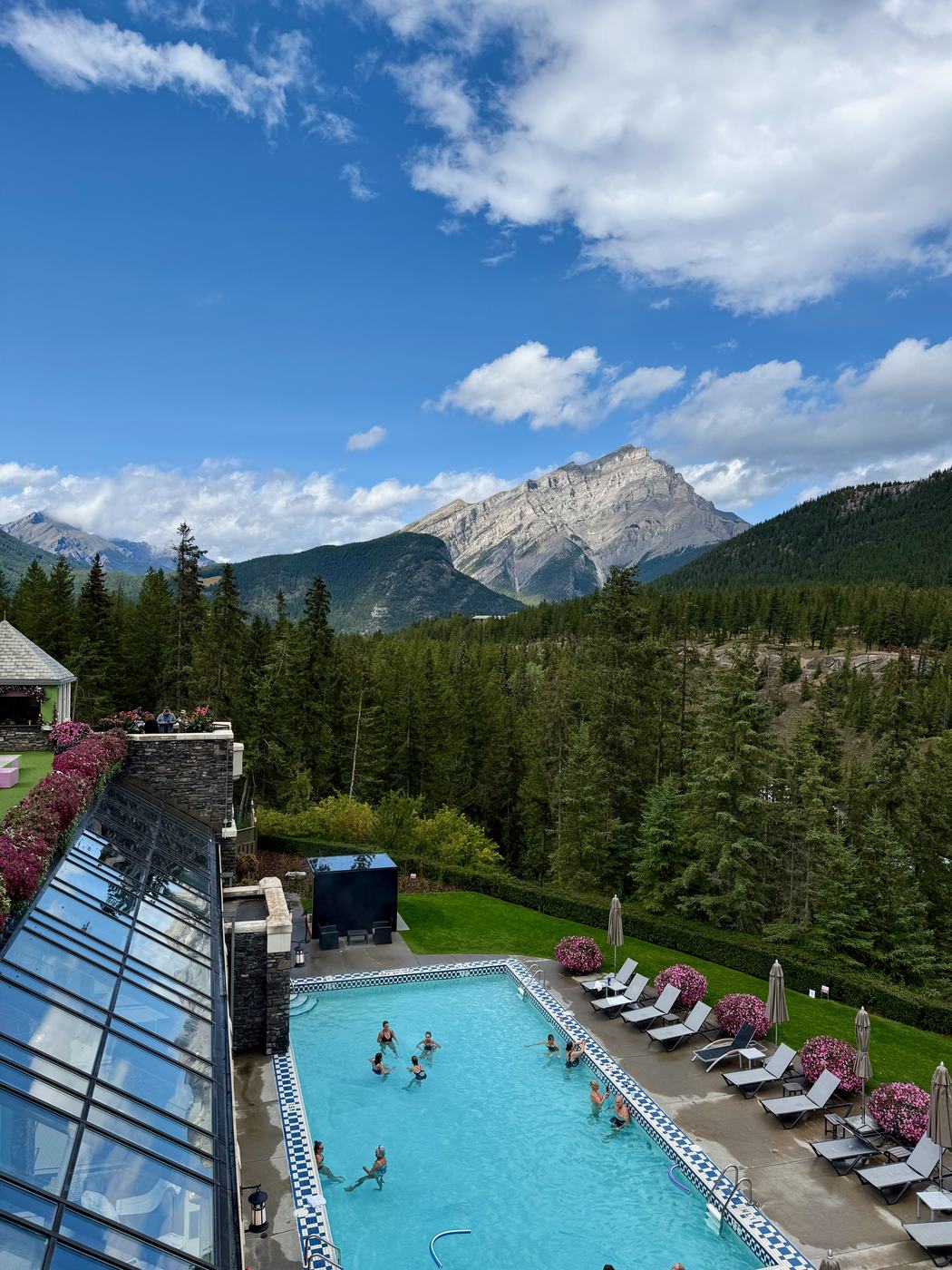
By the middle of the afternoon, about five hours after the fog, the sky over the hotel was completely blue.
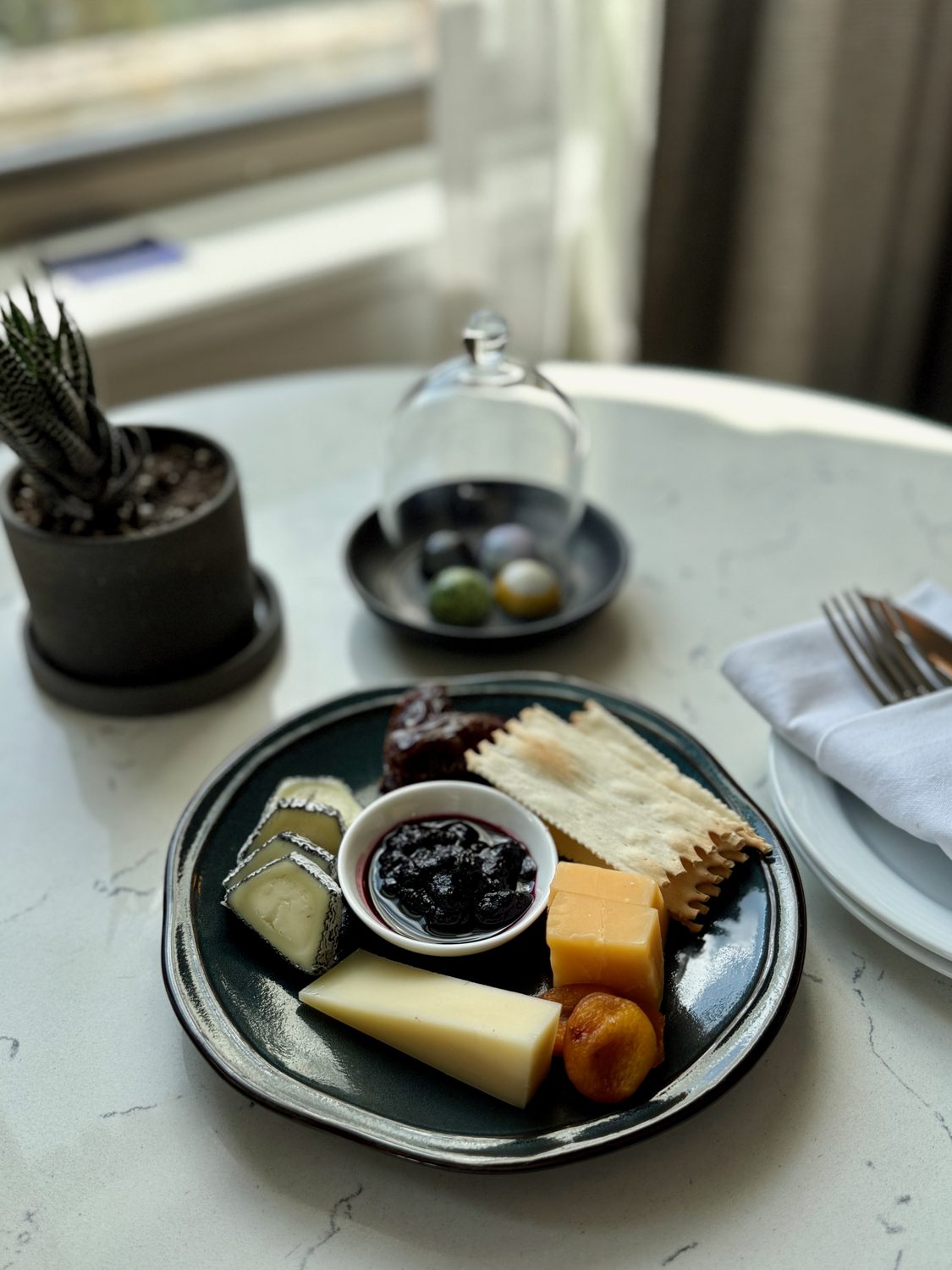
We had booked Fairmont Gold, which the hotel describes as a hotel within a hotel, with its own floors and its own lounge. In the room there was a plate of cheeses with compote, dried apricots and crackers, and a few chocolate bonbons under a glass cloche. The lounge is where we ate breakfast every morning, and where we came back in the afternoons for the hors d’oeuvres. I have stayed on Fairmont Gold floors before, and this was the best food I have had in one of those lounges, in quality and in range: a proper breakfast spread in the morning, and in the afternoons enough that we turned up to dinner more than once not especially hungry. There is a bar, too, a full-service one rather than the honour-system self-serve arrangement at the Palliser, and here you pay for what you drink. That seems to be the pattern across Fairmont Gold floors in Canada and the United States, while some of the Asian properties do not charge. I would guess that has more to do with provincial and state liquor rules than with generosity.

We ate every dinner of the trip inside the hotel — a family-style roast chicken at the Vermillion Room the first night, pasta at Castello Italiana the second, and a steak and an old Rioja at 1888 Chop House the third — and I have written about all three separately. The short version is that you do not need to leave the building to eat well.
The Banff Springs Hotel is enormous, and it was built in stages, so it is a building of wings and staircases and corridors that do not quite line up. It was also rebuilt at some point. The hotel that opened in 1888 was wood, and Walter Painter’s stone tower went up at the centre of it in 1914. In April 1926 fire took the wooden north wing. They rebuilt that one in stone before the year was out, and the following year they replaced the south wing too, which the fire had spared. The hotel reopened whole in 1928, and what you walk through now is all stone. Only some of which I knew on arrival: the hotel runs a history tour, we took it on the Friday, and most of what follows about the building came from that hour. All of it makes the place a good one to explore and a very easy one to get lost in. We did both, most evenings. One night we finished in the heated outdoor pool, which the spa staff told us is mineral-infused to echo the hot springs the town grew up around.
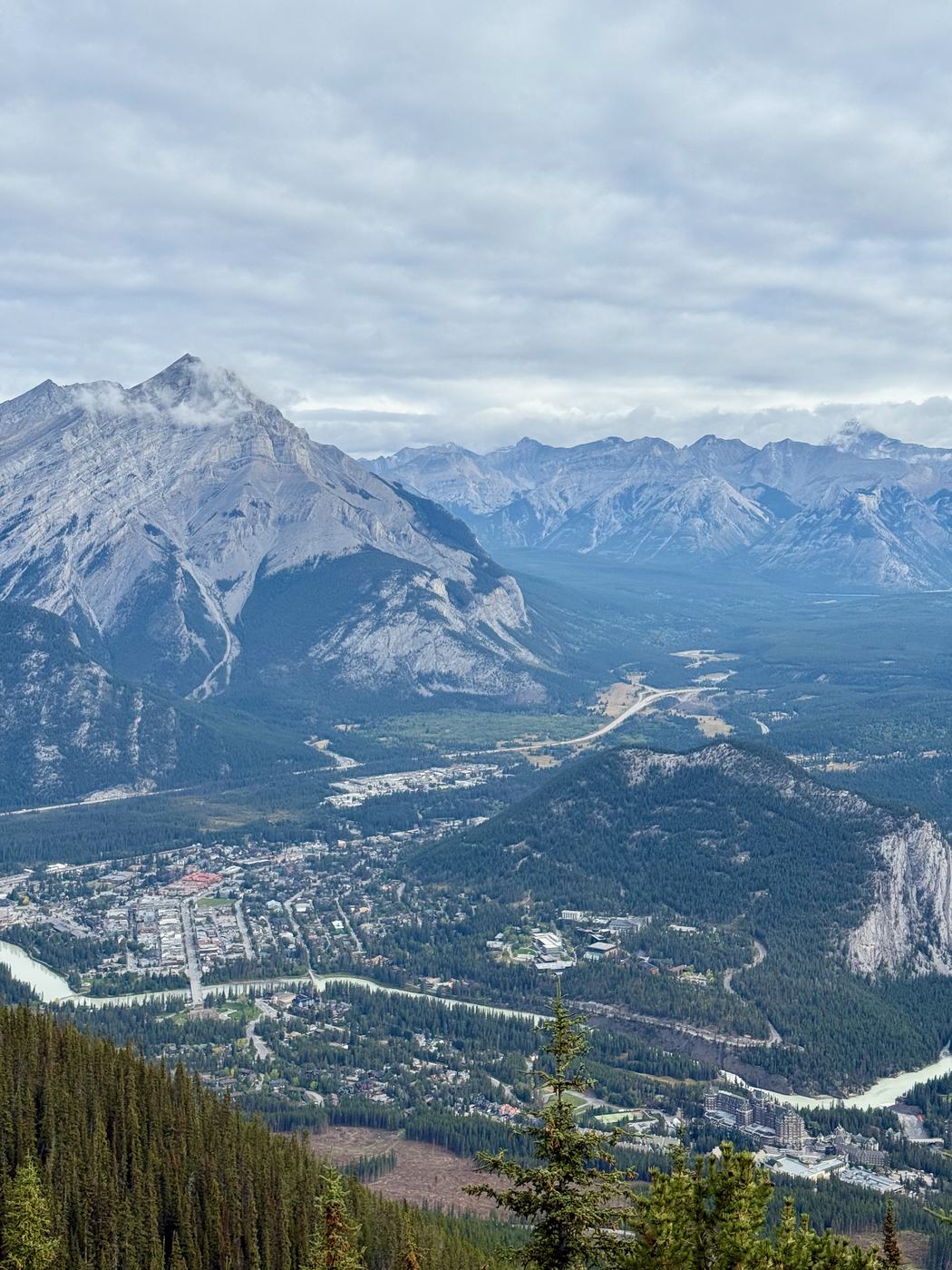
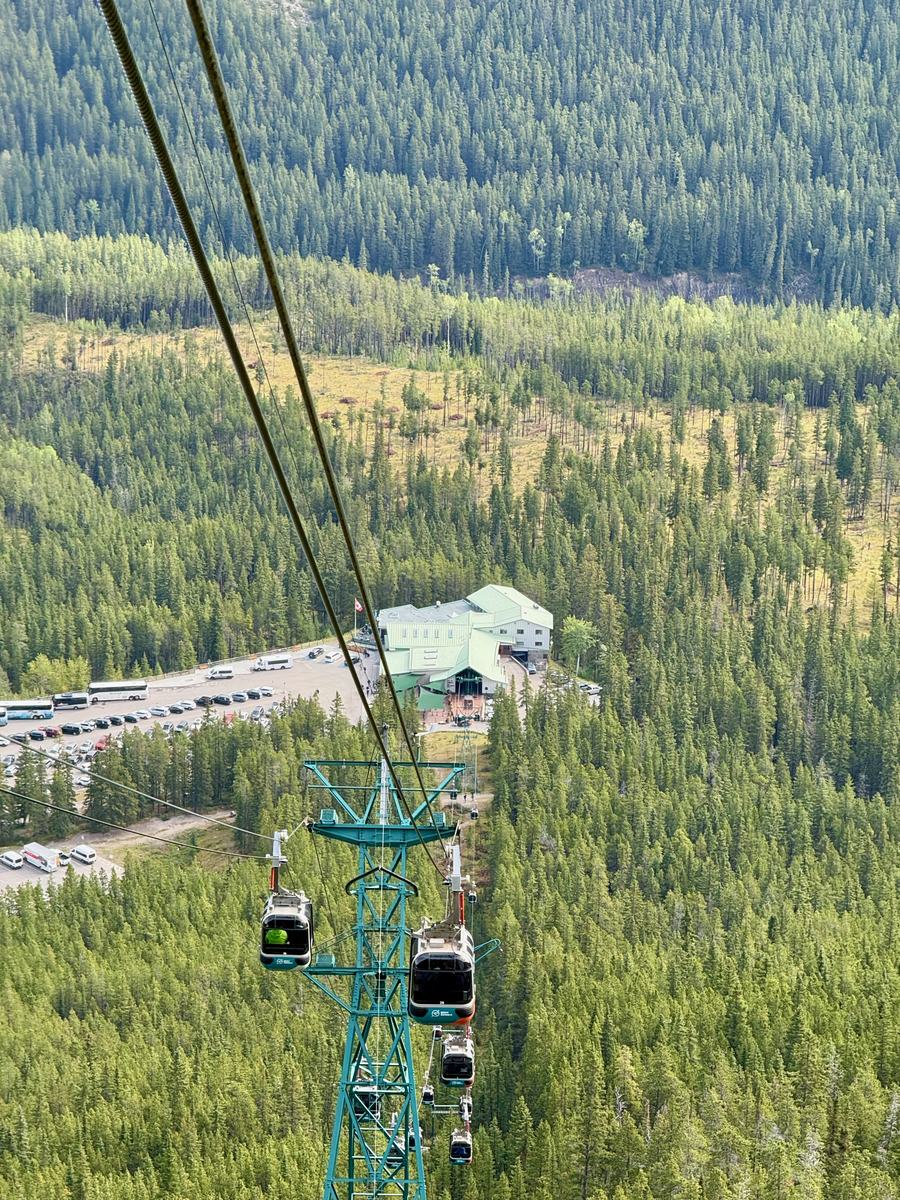
Friday was the grey day, and the day we explored the park. We took the Banff Gondola up Sulphur Mountain first thing. You can hike up instead, and a few people do. According to AllTrails, the app we use to scope out hikes, it takes five to five and a half hours to get up and back down, and the trail is rated hard. From the top the valley was full of low cloud, and the boardwalk along the ridge runs out to Sanson Peak and a small stone building on the summit. There is a plaque nearby for the Sulphur Mountain Cosmic Ray Station, and I assumed that was what I was looking at. It isn’t. The stone building is a weather station that has stood there since 1903. The Cosmic Ray Station was built in 1956 and taken down in 1981, and the plaque is what is left of it. From up there you can see the whole town, the Bow River, and the hotel’s golf course, and almost all of the surrounding mountains.
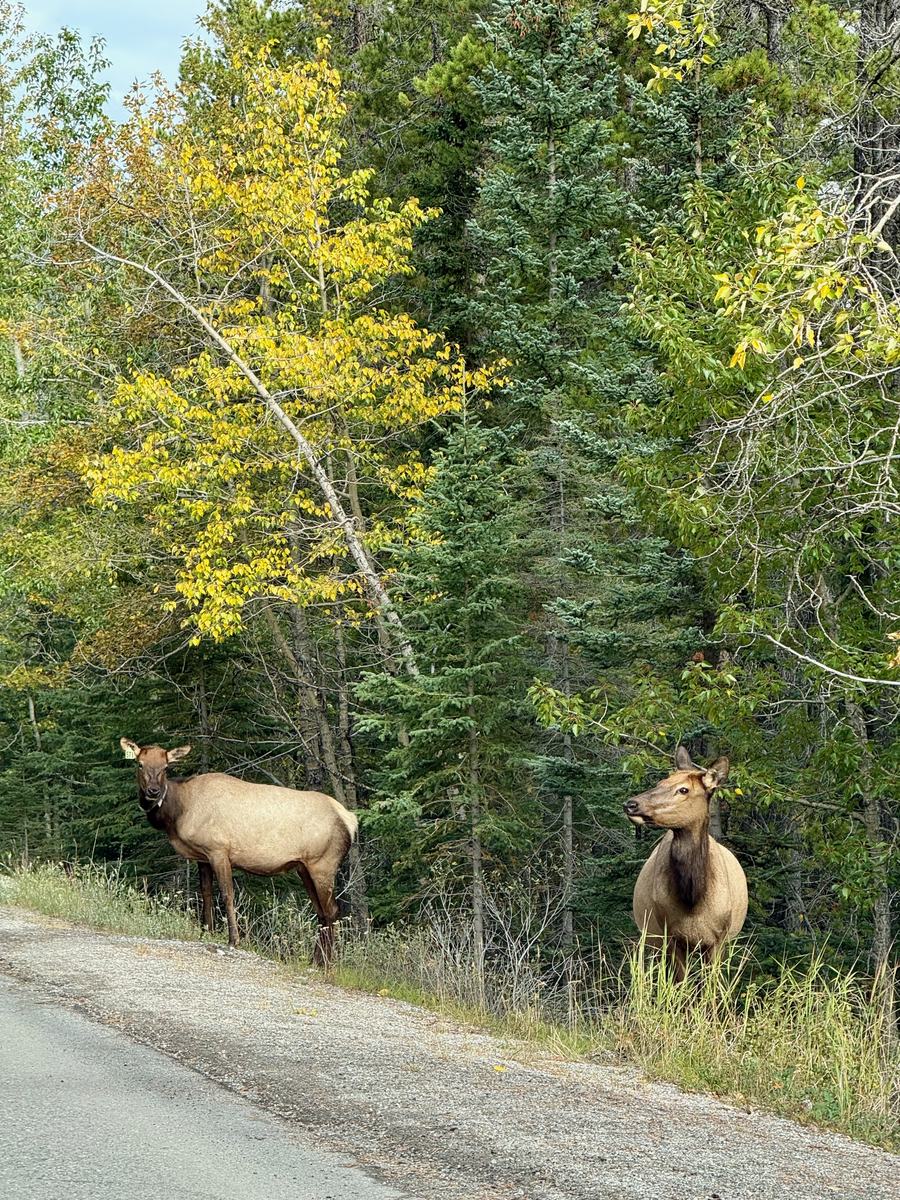
On the way out we passed two elk standing at the side of the road, entirely unbothered by us. We would see elk more than once before we left.
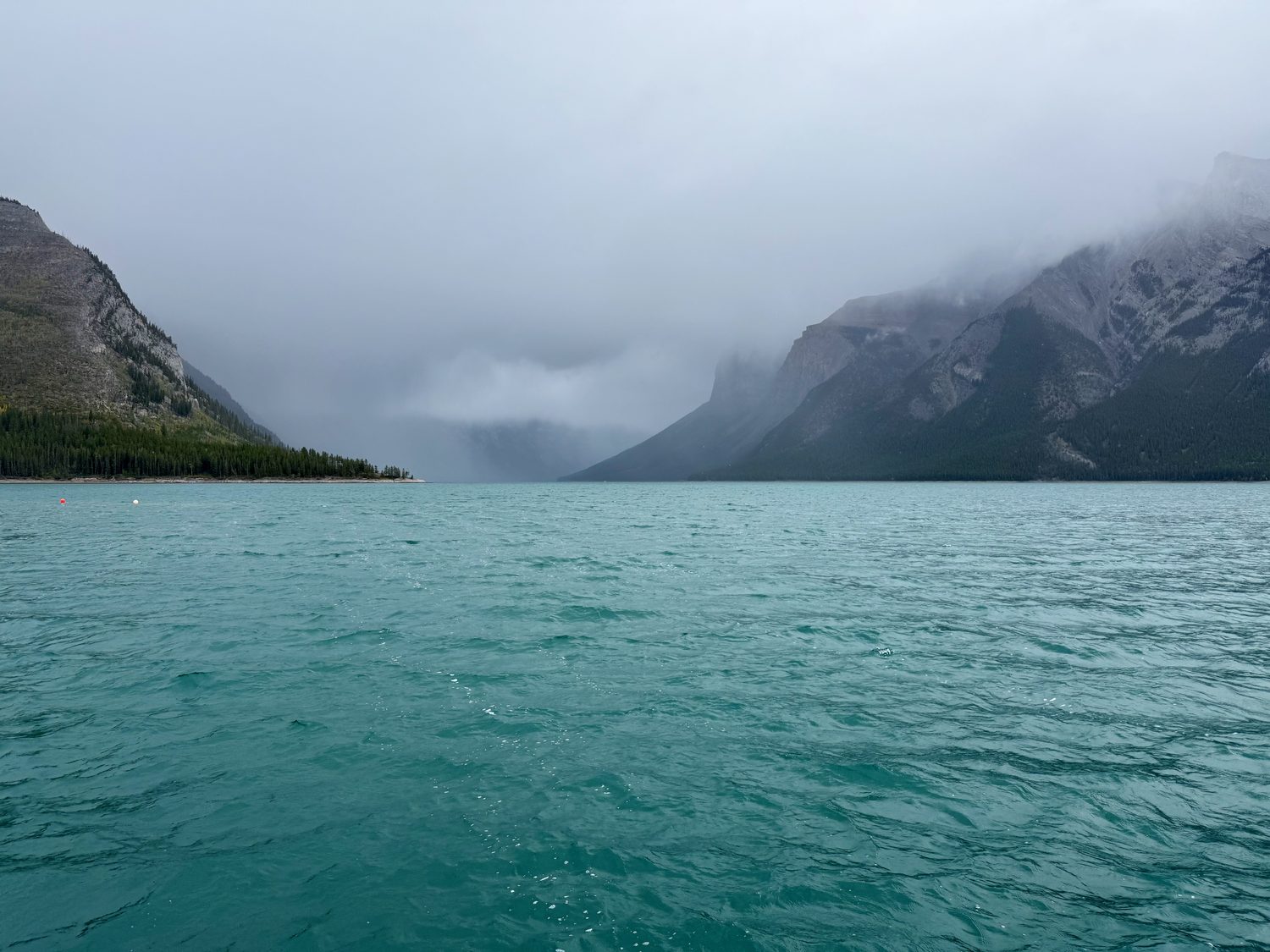
Lake Minnewanka is the longest lake in the park, and not all of it is natural. It was dammed more than once, and in 1941 the water rose over the resort village of Minnewanka Landing, which is still down there. Karen thought the lake had been in Can This Love Be Translated?, the Netflix drama she had watched earlier in the year, parts of which were filmed around Banff. The scene was actually at Two Jack Lake, just down the road. We did stop there for a look, but it was pouring by then, so we saw Karen’s lake through a wet windscreen and never got out of the car. The day stayed overcast, with bursts of rain like that one, and under that cloud Minnewanka looked more like the sea than a lake.
We went on to Vermilion Lakes because we had been told to, not because I knew anything about them. They are beautiful — reeds, still water, and mountains wrapped in cloud — though the Trans-Canada Highway runs right alongside, so beautiful is a better word for them than quiet.
Then the Cave and Basin National Historic Site, which is where the idea of a protected national park in Canada began. Railway workers came across the hot springs here in 1883, and two years later the government set aside the land around them. Inside the cave the spring sits in a turquoise pool under a vault of rock, lit from an opening in the roof. Outside, the basin is an almost unreal blue.
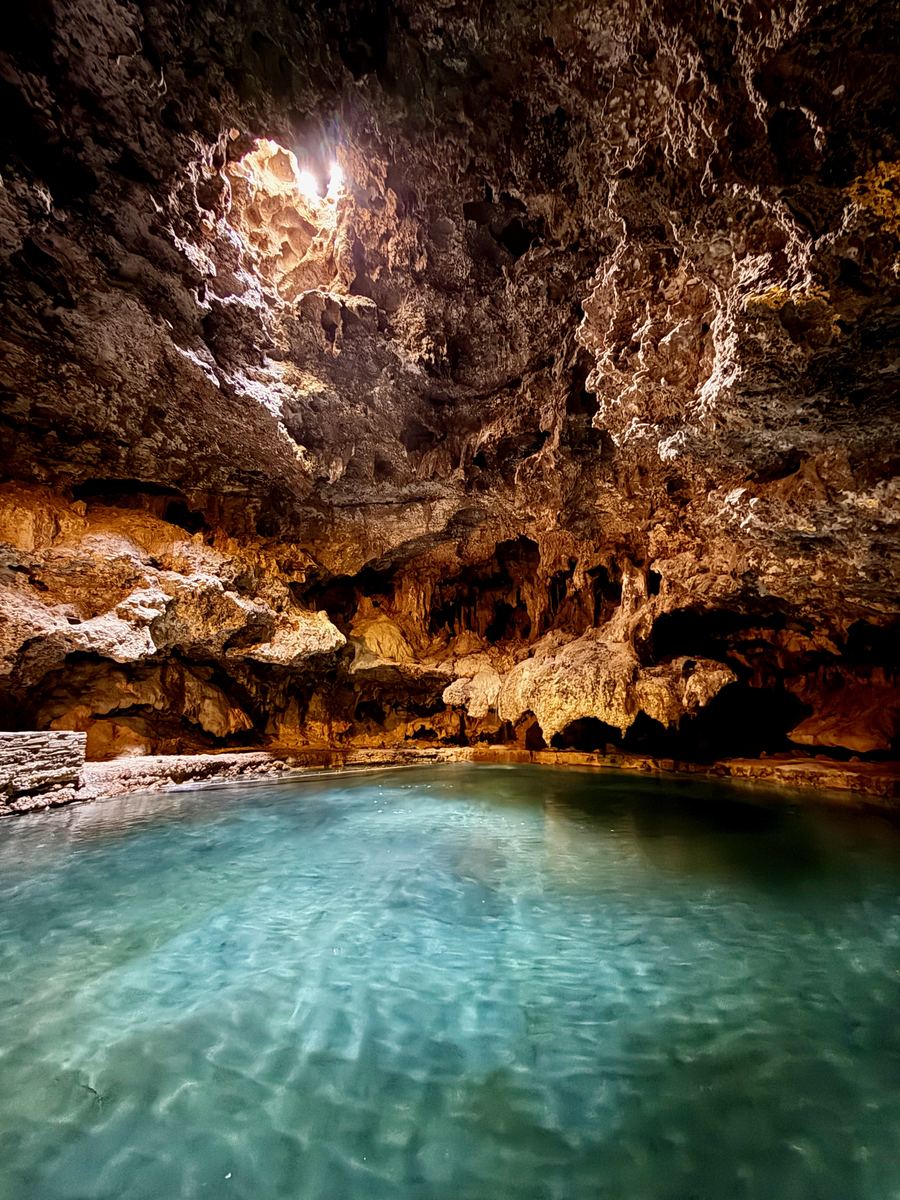
We finished at Bow Falls, just down the hill from the hotel, and went back up for the afternoon spread and the hotel tour.
The tour is the thing I would tell anyone staying at the Banff Springs not to skip. The hotel opened in 1888 as a stop on the Canadian Pacific Railway, which had just joined eastern Canada to British Columbia and needed people to ride it. It was drawing guests to the Rockies seventeen years before Alberta was a province. Everyone calls it a castle, the hotel’s own advertising included, but castle-like is the more honest word. Nobody royal ever held it and nothing was ever defended from it. It was built as a railway hotel, a very luxurious one, and that is all it has ever been.
Some of the interior stone is Tyndall stone from Manitoba, and it is full of fossils. At the foot of the grand staircase up to the Rundle Bar there are at least four coiled shells set into the steps that are easy to pick out once you know to look, and the stone they are in is something like 450 million years old. People walk over them all day. Near the stairs is a bookcase that fills one of the old arches floor to ceiling, and it is also a door into another room. There is no clever mechanism. It is held shut with a magnetic catch, and the way in is to take hold of a shelf and pull hard, because a bookcase that size is heavy. The Rundle Bar itself was the hotel’s front lobby for most of the twentieth century, which explains why a bar has such a grand entrance.
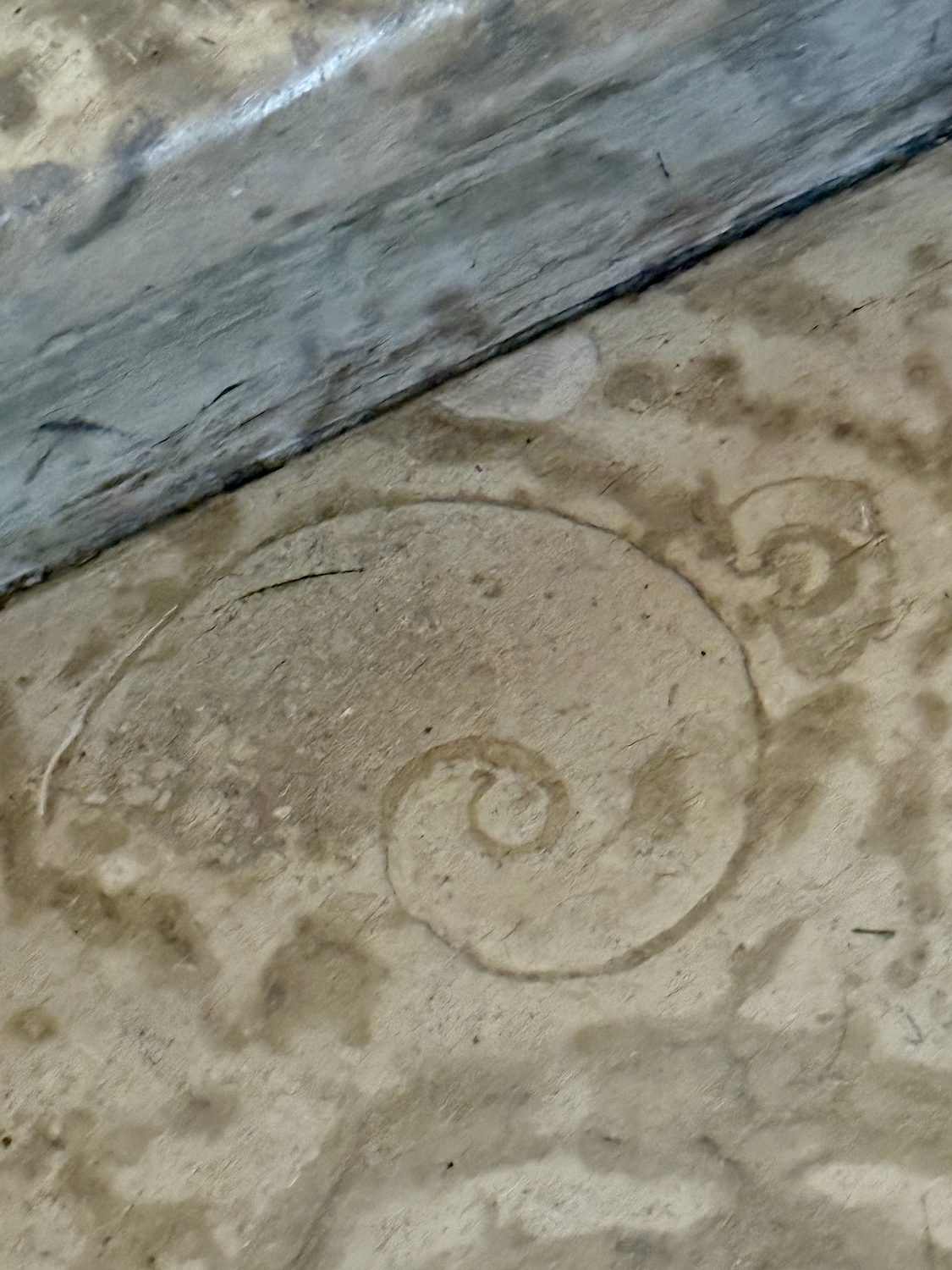
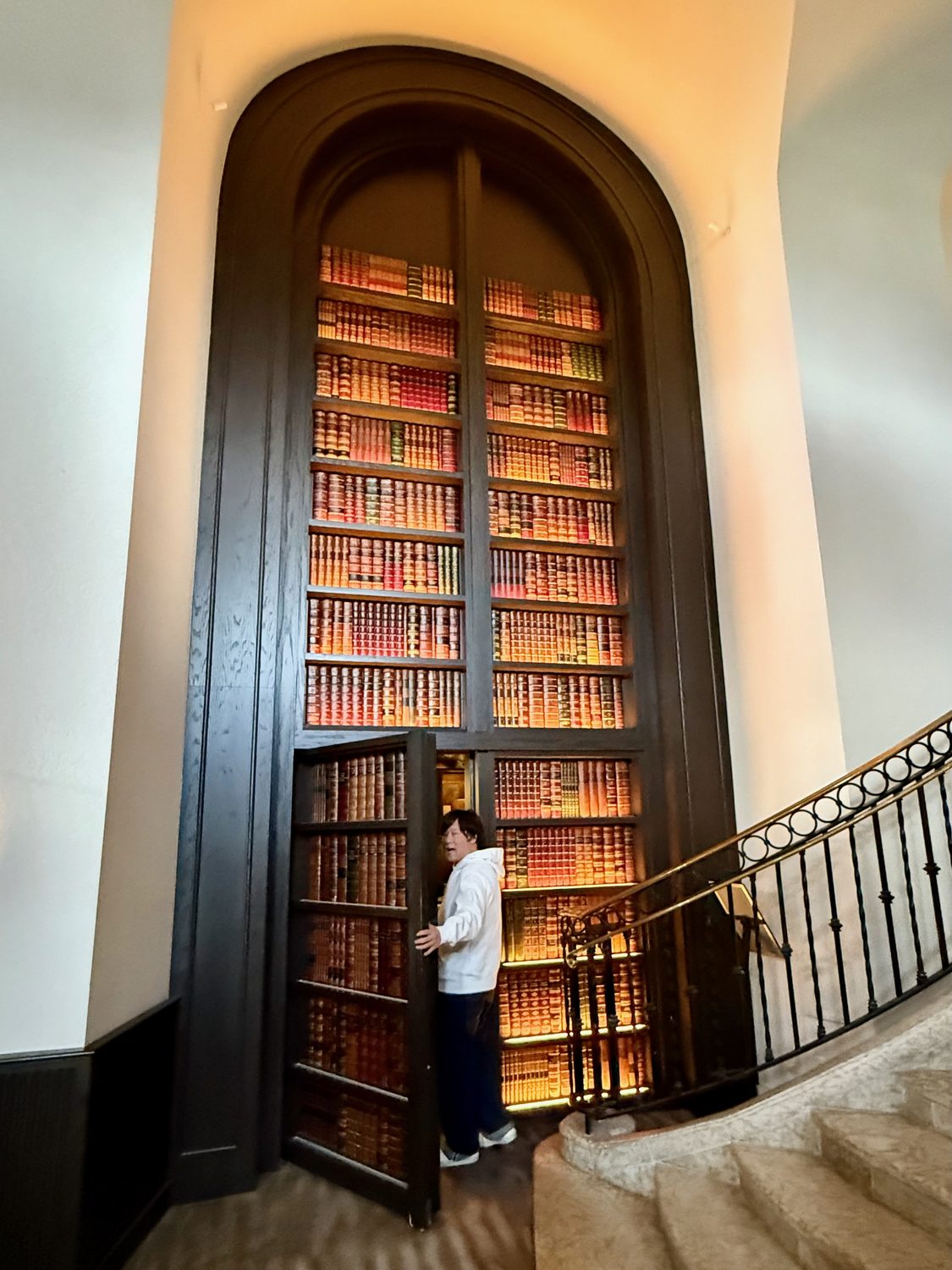
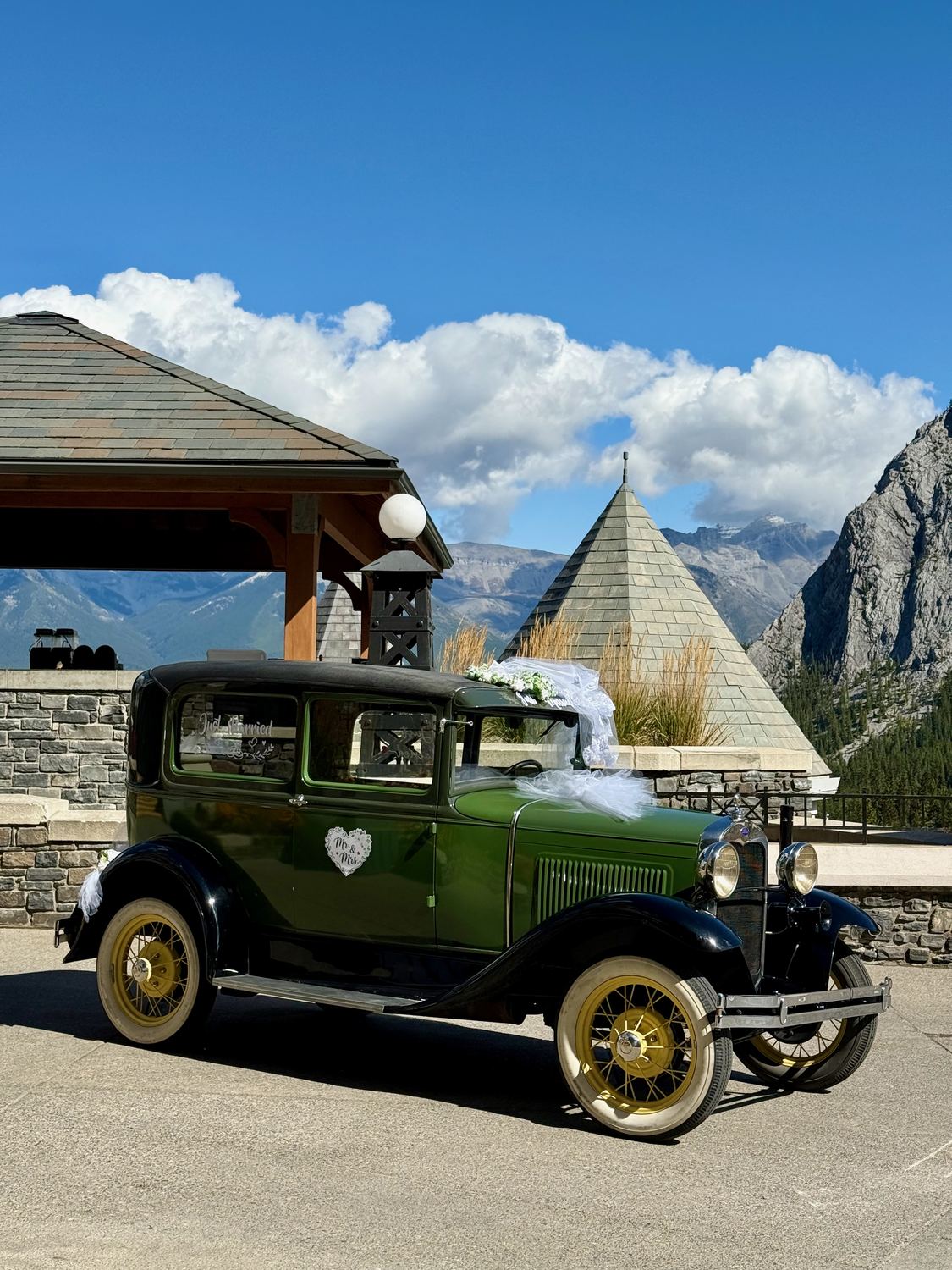
We also noticed, over three days, that the hotel holds weddings the way other hotels hold meetings: not only on weekends, and seemingly one to three a day. We walked past a great hall set with rows of chairs on Thursday afternoon and the same hall laid for a banquet on Friday. On one of the terraces an arch dressed in artificial roses and greenery framed the mountains better than any window in the building. On Saturday a green vintage sedan sat outside with Just Married written across its back window. For two people who had been asked twice that week whether they were newlyweds, it felt a little pointed.
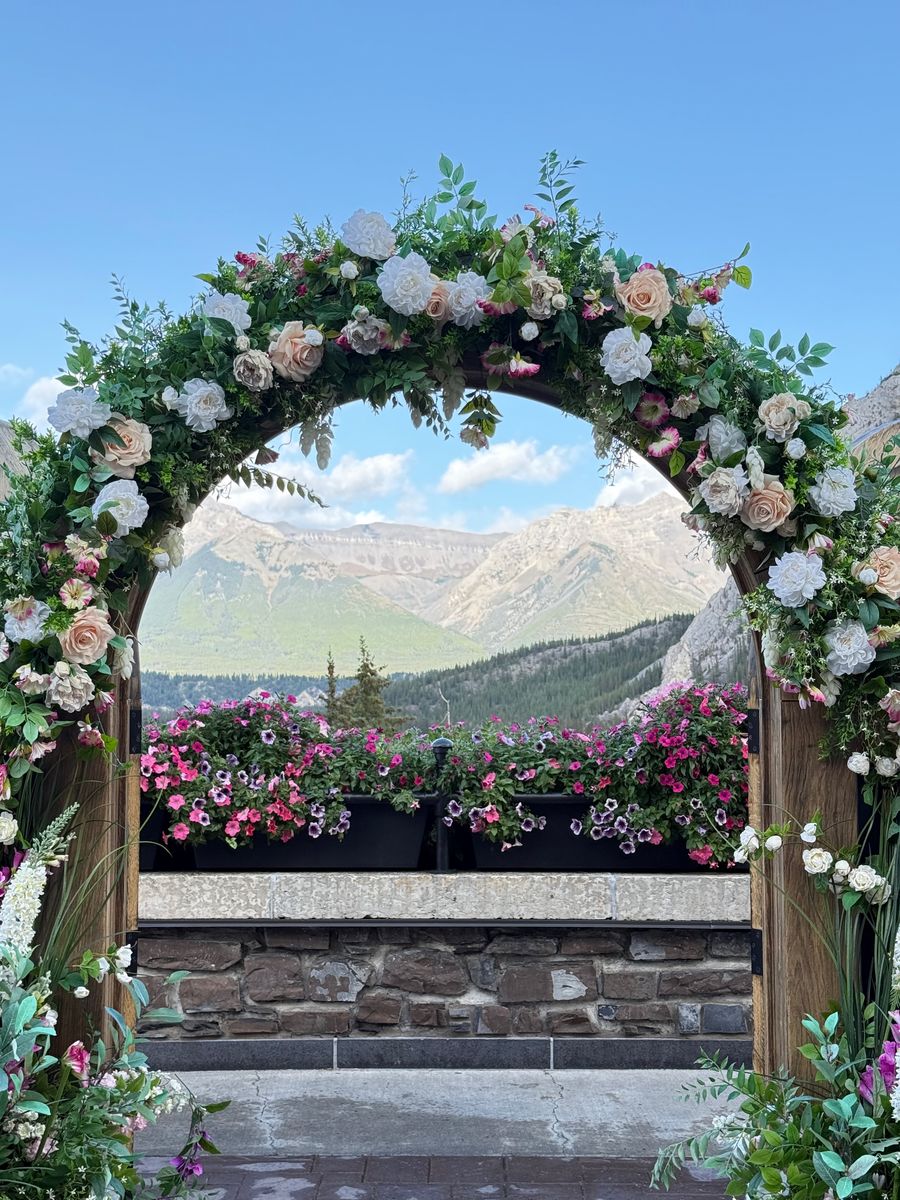
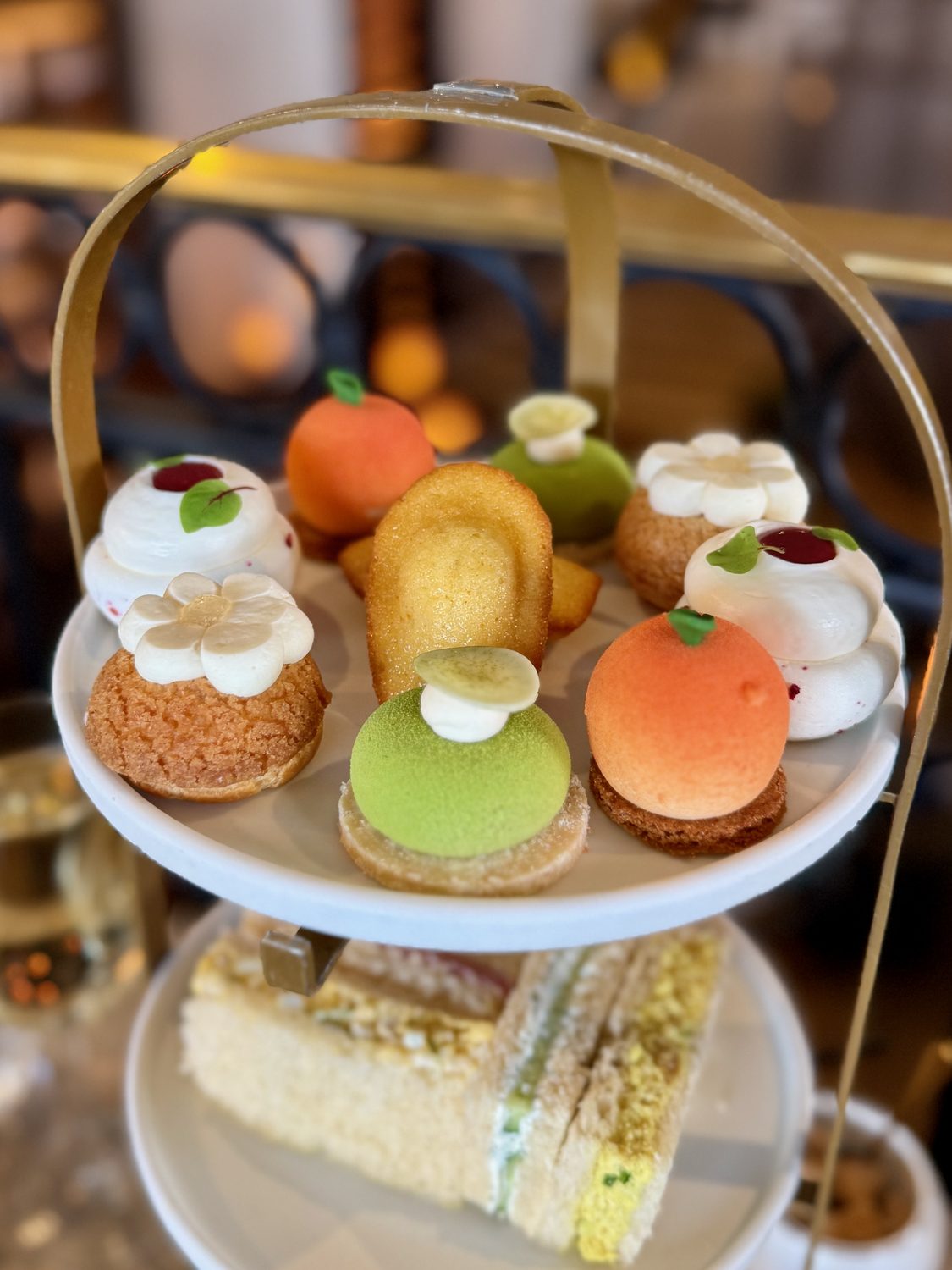
Saturday was the day the sun came out properly. We skipped breakfast for afternoon tea at the Rundle Bar, which, for reasons I am happy not to question, was booked for 11:30 in the morning. I have written about that on its own, but one detail belongs here: our server, Mithlesh, told us about a few places worth seeing, and one of them was the lookout on Mount Norquay.
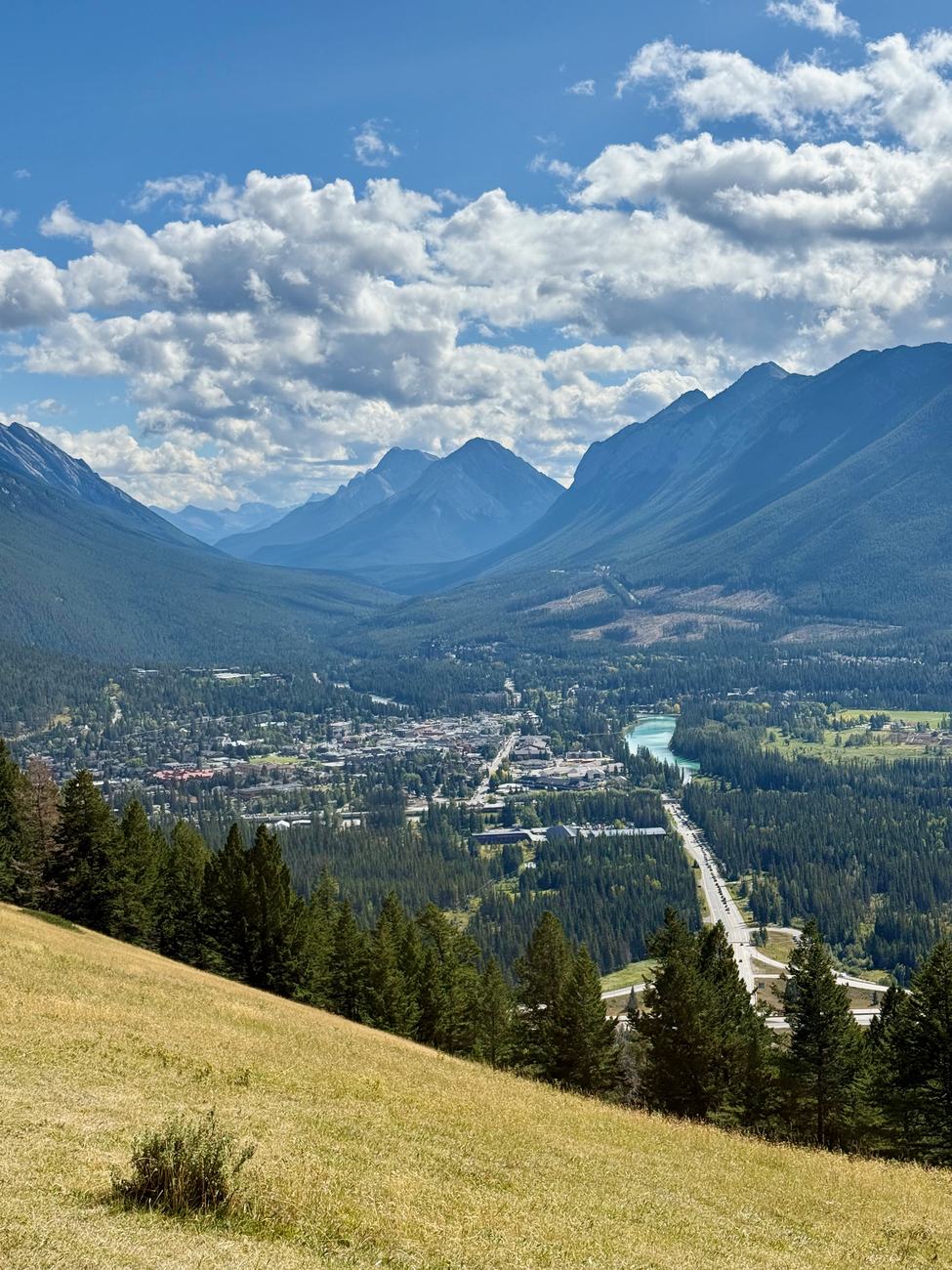
So we went. The road climbs through a series of sharp hairpin turns to a grassy slope about halfway up the mountain, known locally as the Green Spot, where children were playing and I could picture families spreading out a picnic. From there you look back across the town toward Sulphur Mountain and Mount Rundle, which is the view from the gondola turned around. We had been standing on the other side of it the day before.
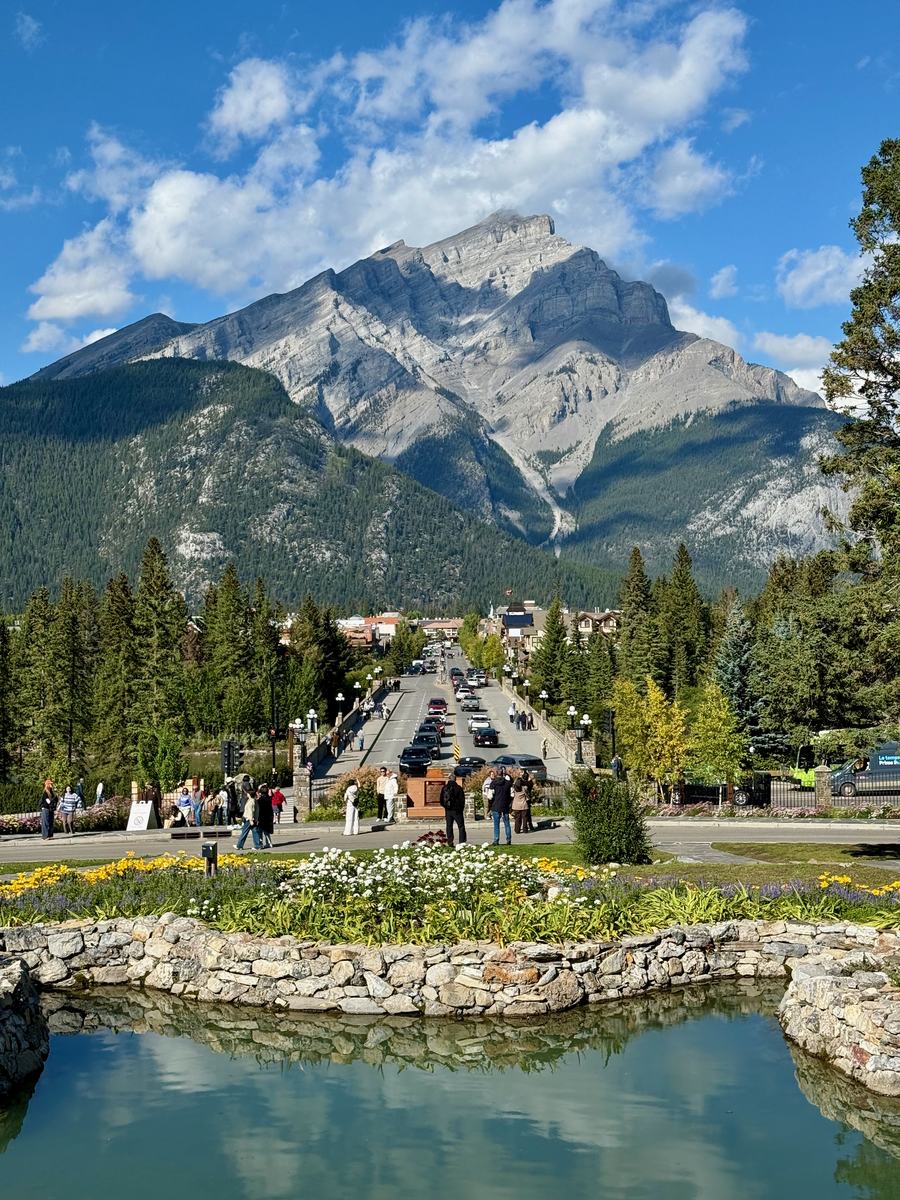
Back in town we crossed the Bow to the Cascades of Time Garden behind the Park Administration Building, and walked the footbridge over the river. Both were in the drama, as was the gondola we had ridden the day before, and between those three and a lake she had only seen through the rain, Karen spotted four locations in two days from a series I have never watched. From the garden you look straight up Banff Avenue to Cascade Mountain. It is the best vantage in town for that photograph, which is why everyone takes it, and I took it too.
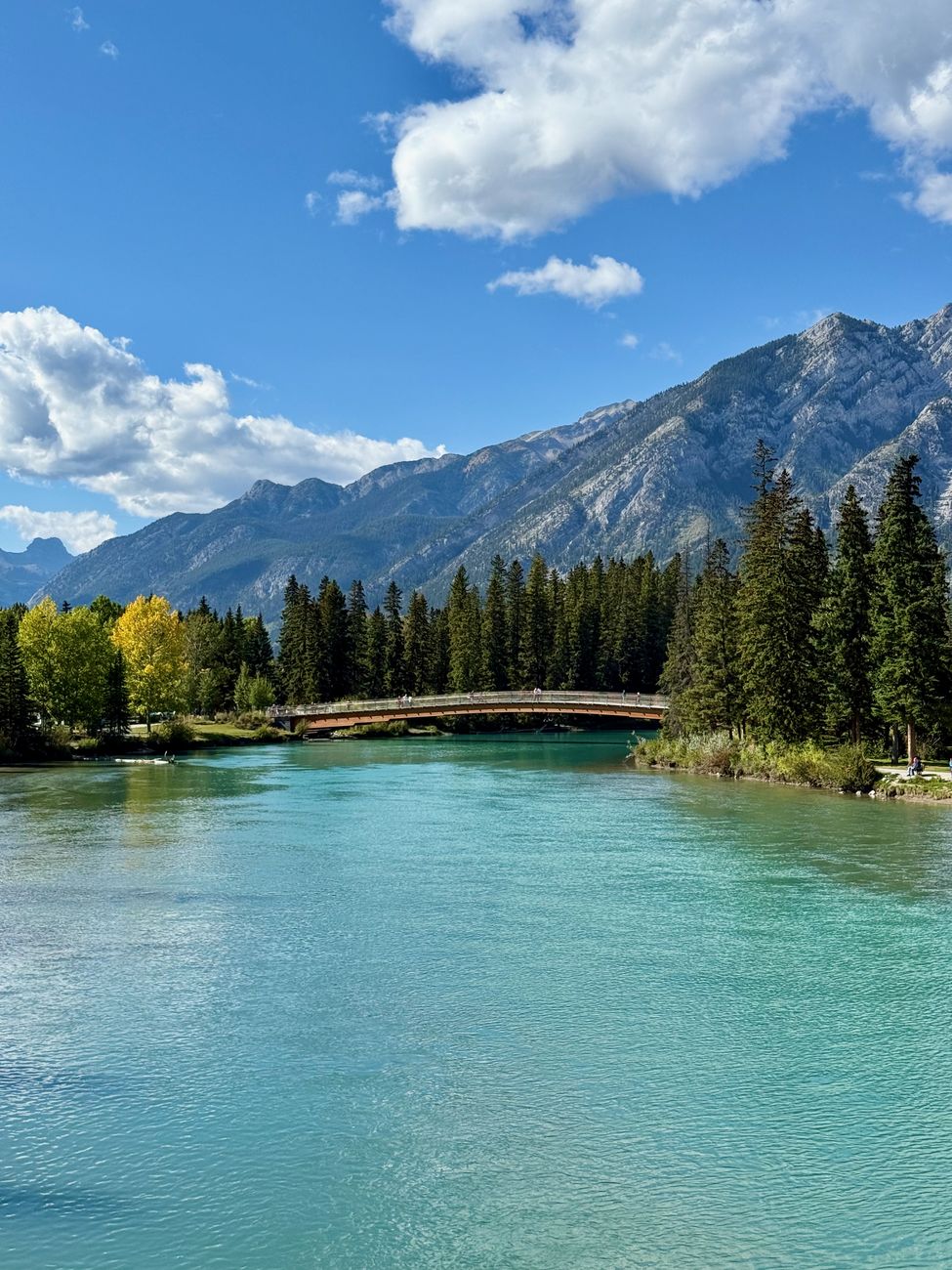
Late in the afternoon we drove the loop road through the Banff Springs golf course, which Stanley Thompson laid out along the river in the 1920s and which has mountains standing over it on every side. It was sunny, there were golfers out, and I spent most of the drive quietly regretting not bringing my clubs. There was an elk in the trees near the course, too far into the forest for a decent photograph. There were signs about bear spray everywhere we went, and I liked how specific they were. Keep it easily accessible, they said, and then they told you what easily accessible means: two seconds. Not at the bottom of a bag. Thankfully, we did not see a bear.
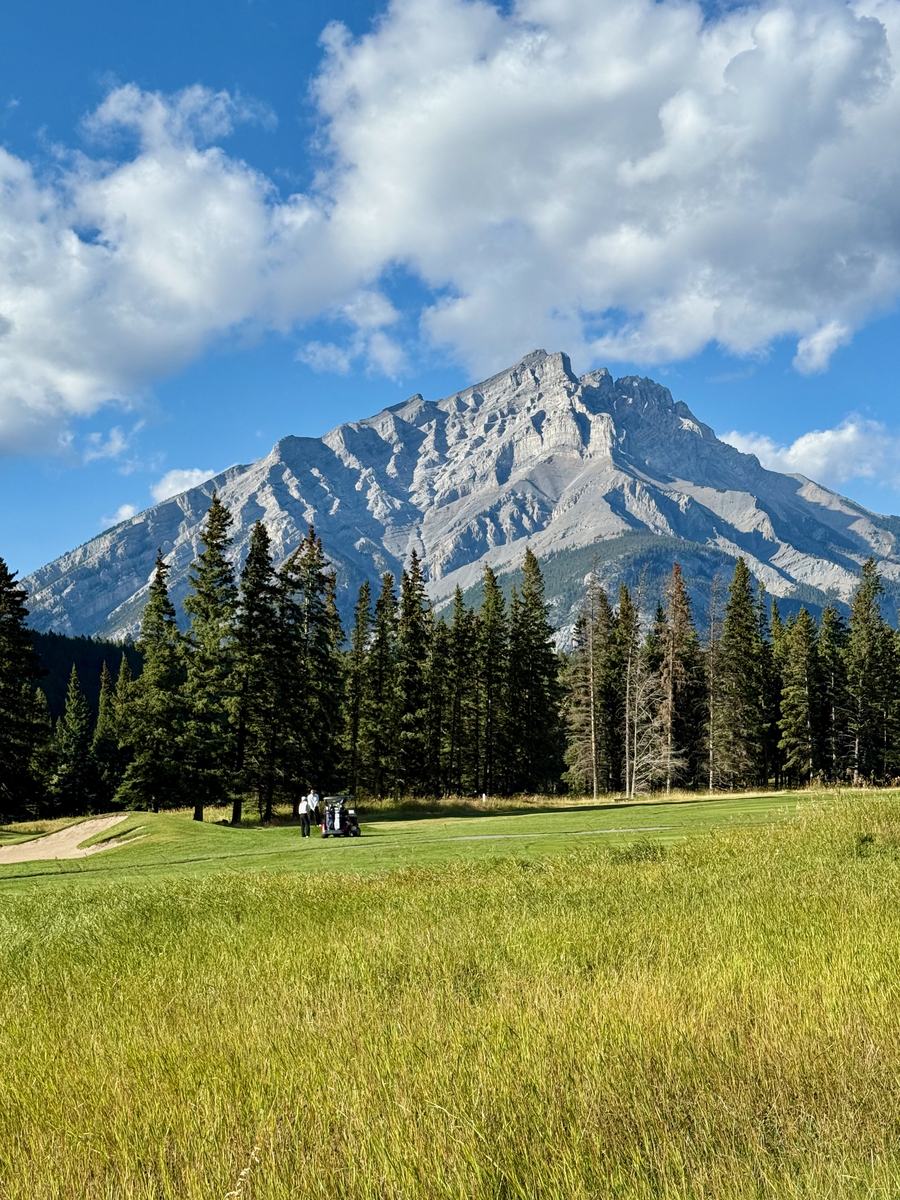
We went back up to the hotel and took all the same photographs again, in sun this time, because our first set had been taken in cloud and drizzle.
On Sunday we did very little on purpose. Breakfast in the lounge, a long sit, some packing, and then around noon the drive back to Calgary for our flight.
You do not need a conference to go to Banff, but I would recommend having a reason to stay put for a few days. We went for three nights, spent almost all of them inside one building and most of our daylight inside one national park, and for us that was more than enough, because this was not our first time here. If it is yours, give it longer. Lake Louise is about forty-five minutes up the Trans-Canada, with another Fairmont on its shore, and there are more mountains and more lakes in every direction than three days can hold. And if you have been married a while and cannot remember the last trip that was just the two of you, book one. It does not have to be Banff. It only has to be somewhere you can escape the daily routines of life.



The Newsletter
New pieces, plus what’s on my table next. Every few weeks.

An error has occurred somewhere and it is not possible to submit the form. Please try again later or contact us.


