


The Rundle Bar, Banff: Tea at Half Past Eleven

Jacob Ung
September 12, 2026

7 min read
Afternoon tea at half past eleven in the morning, in a bar that used to be a hotel lobby — and what the stand is actually for.
Afternoon tea is not really a meal, and judging it as one will only make you unfair to it. It is an occasion that happens to arrive on a stand. I say that up front because what follows is uneven — I demolished the first plate, admired the top tier and was politely indifferent to the middle — and the afternoon was still one of the best things we did in Banff.
Ours was booked for half past eleven in the morning, which is a detail I have decided not to question. We skipped breakfast to make room for it, which turned out to be the right decision and, given what the hotel puts out at breakfast, not an easy one.
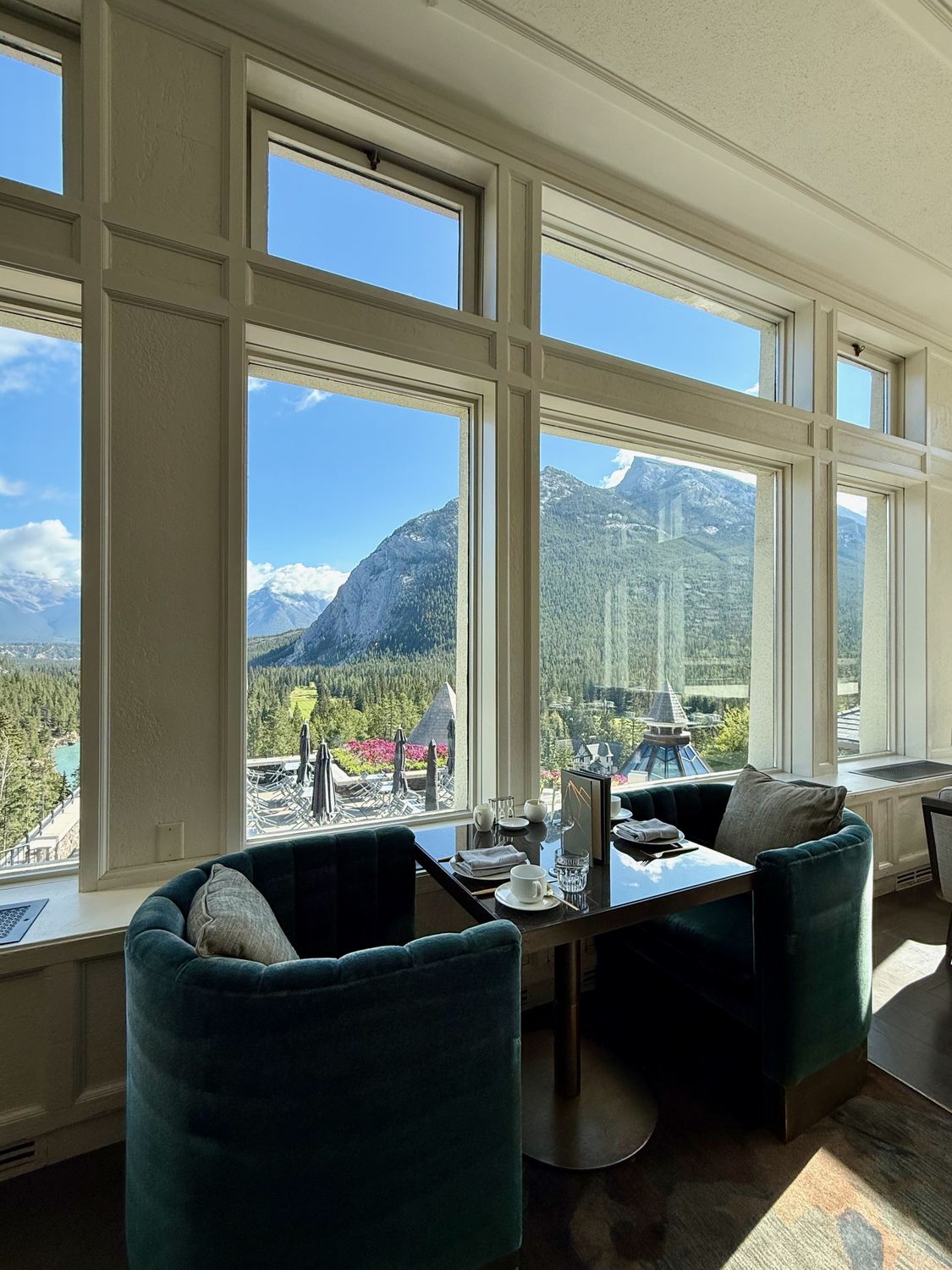
The Rundle Bar takes its name from Mount Rundle, though the room looks out across the whole valley and what fills your window depends entirely on which table you are given. From the right one, Rundle is there. Most people picture Rundle as a shark’s fin, which is exactly what it is from the Trans-Canada as you drive west into Banff — one long tilted wedge. From the hotel it is a different mountain altogether: blunter, flatter across the top, as though something had bitten the summit off. Rundle is not a peak but seven of them, strung along seven and a half miles of ridge with its rock tilted steeply by the collision that raised the Rockies, so what you see is entirely a question of where you stand. Walter Phillips, who painted it for years from this valley, said he never tired of it because it was never the same.
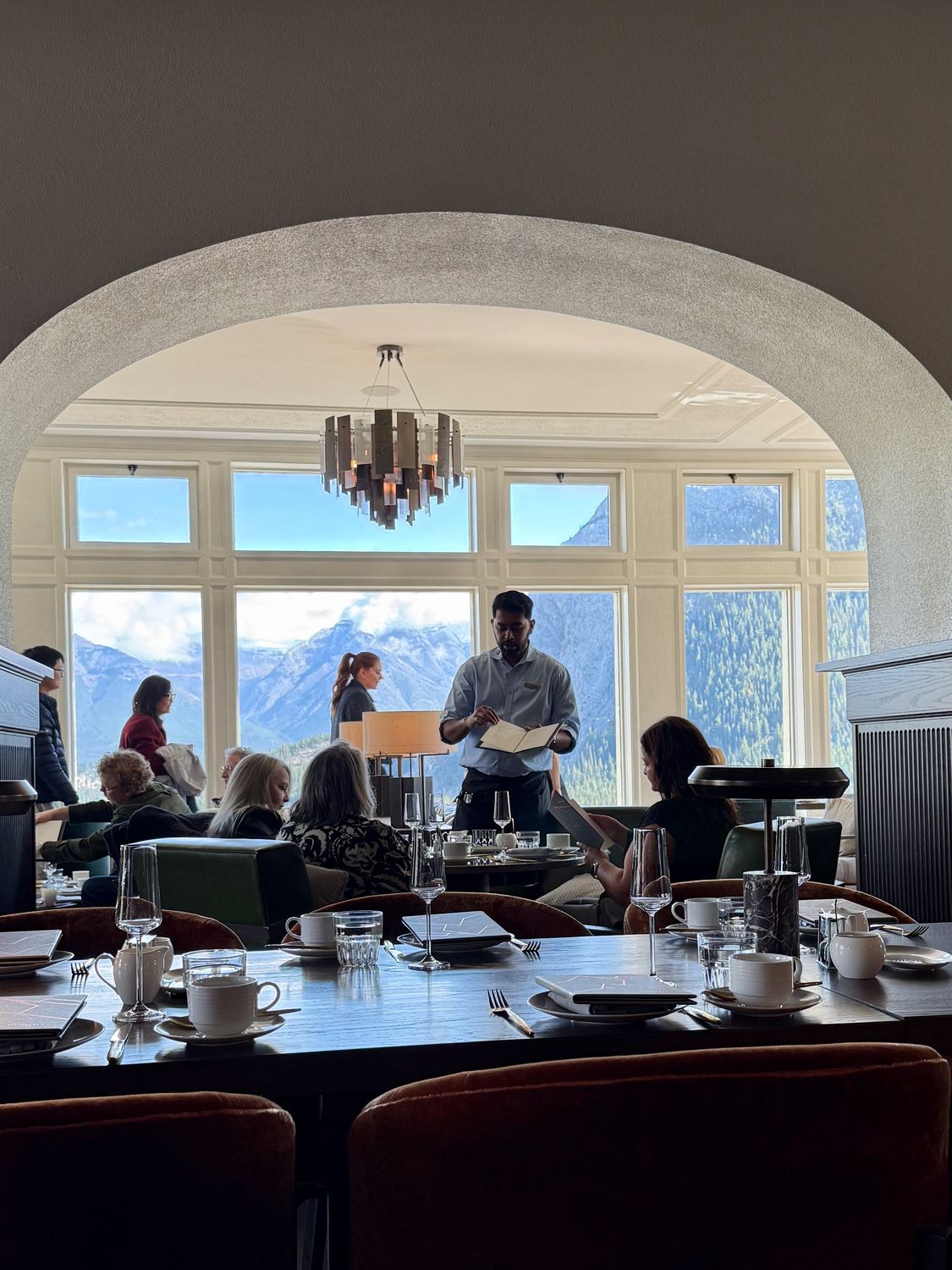
The room was the hotel’s front lobby for most of the twentieth century, which is the sort of fact that stops being trivia the moment you walk in: the grand staircase, the height of the arches and the general sense that the room was built to receive people rather than to serve them drinks all suddenly make sense. It is a bar wearing a lobby’s clothes.
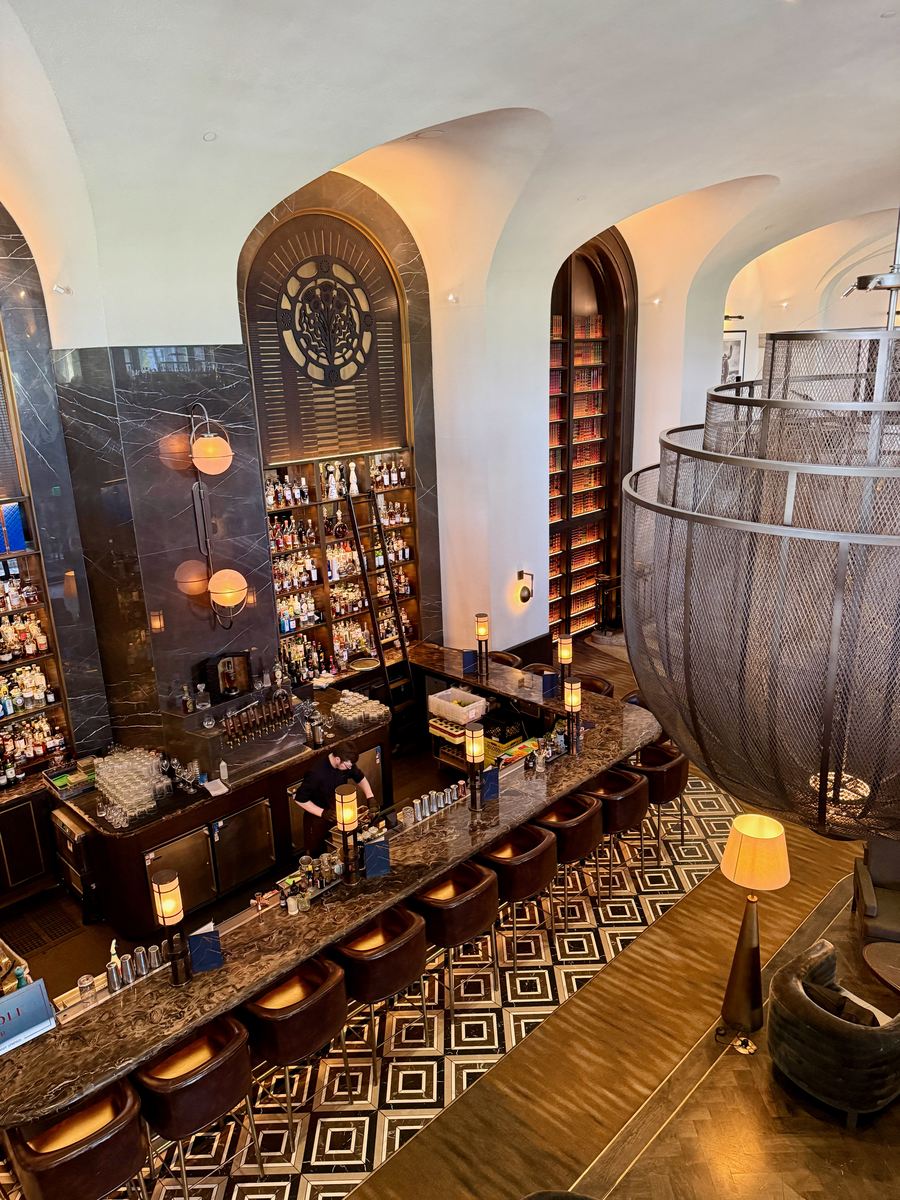
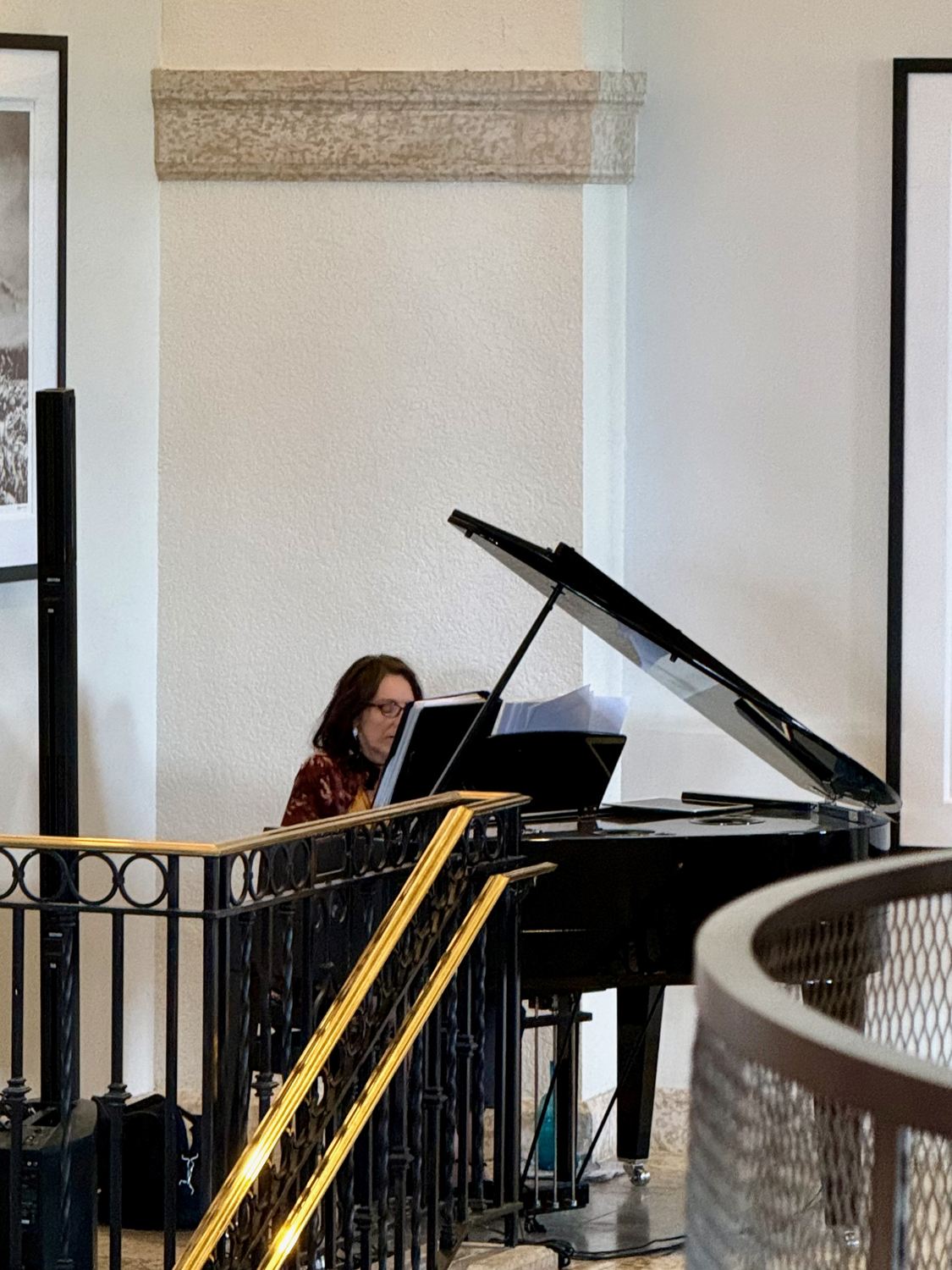
Tea is served upstairs, on the second floor, which means you spend the morning on a balcony looking down into the bar itself — the long marble counter, the bottles stacked up the wall of an arched niche, the black and white floor. Somebody was playing a grand piano across the same floor from us, on the side away from the windows, and kept playing for most of the time we were there. I had not expected it and would not have thought to ask for it, and it did more for the hour than any single thing on the stand.
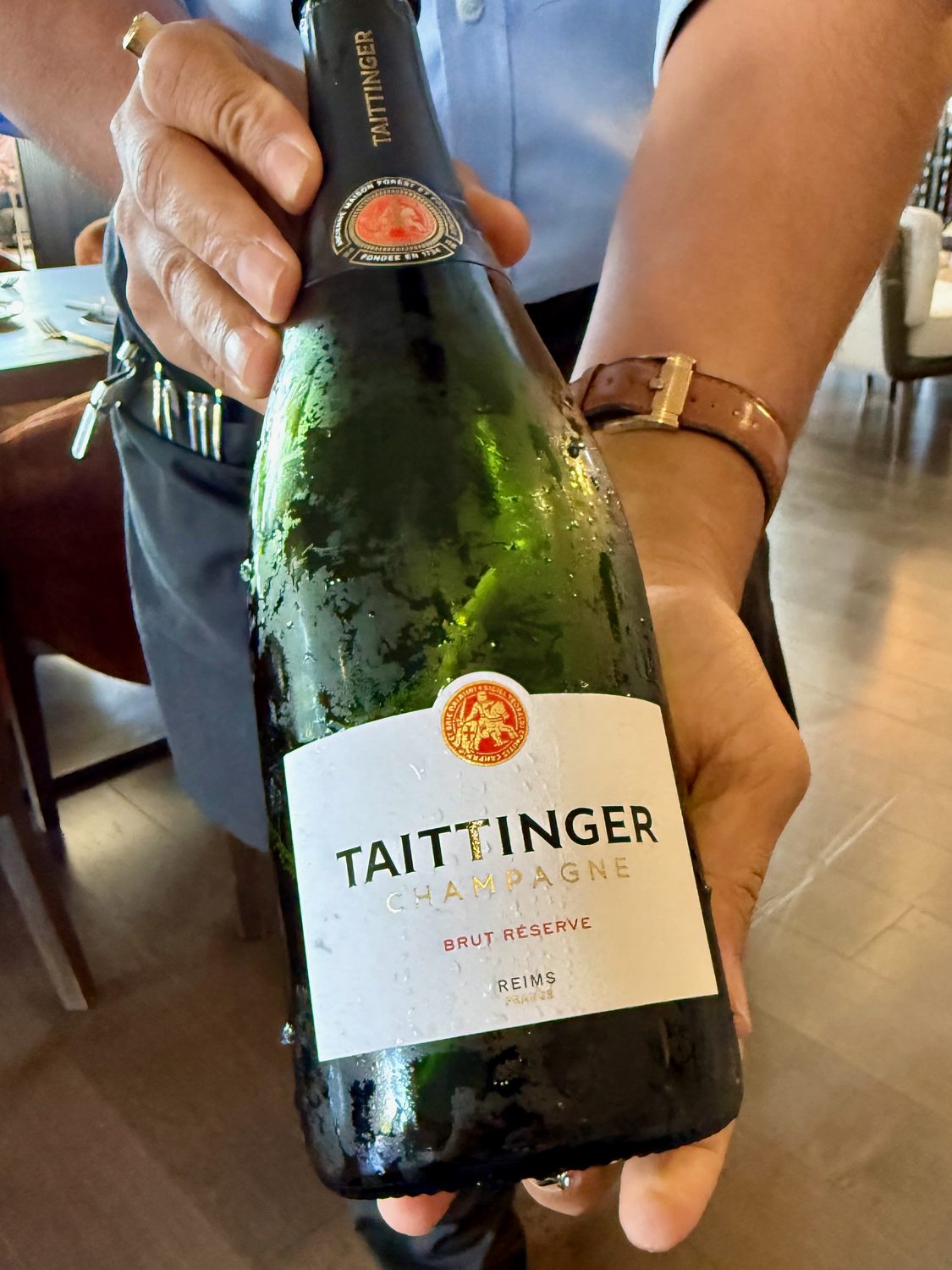
There is Champagne with the tea, or sparkling wine if you would rather, or a non-alcoholic French 75. We took the Champagne, a Taittinger Brut Réserve out of Reims, at an hour when most people are still on coffee.
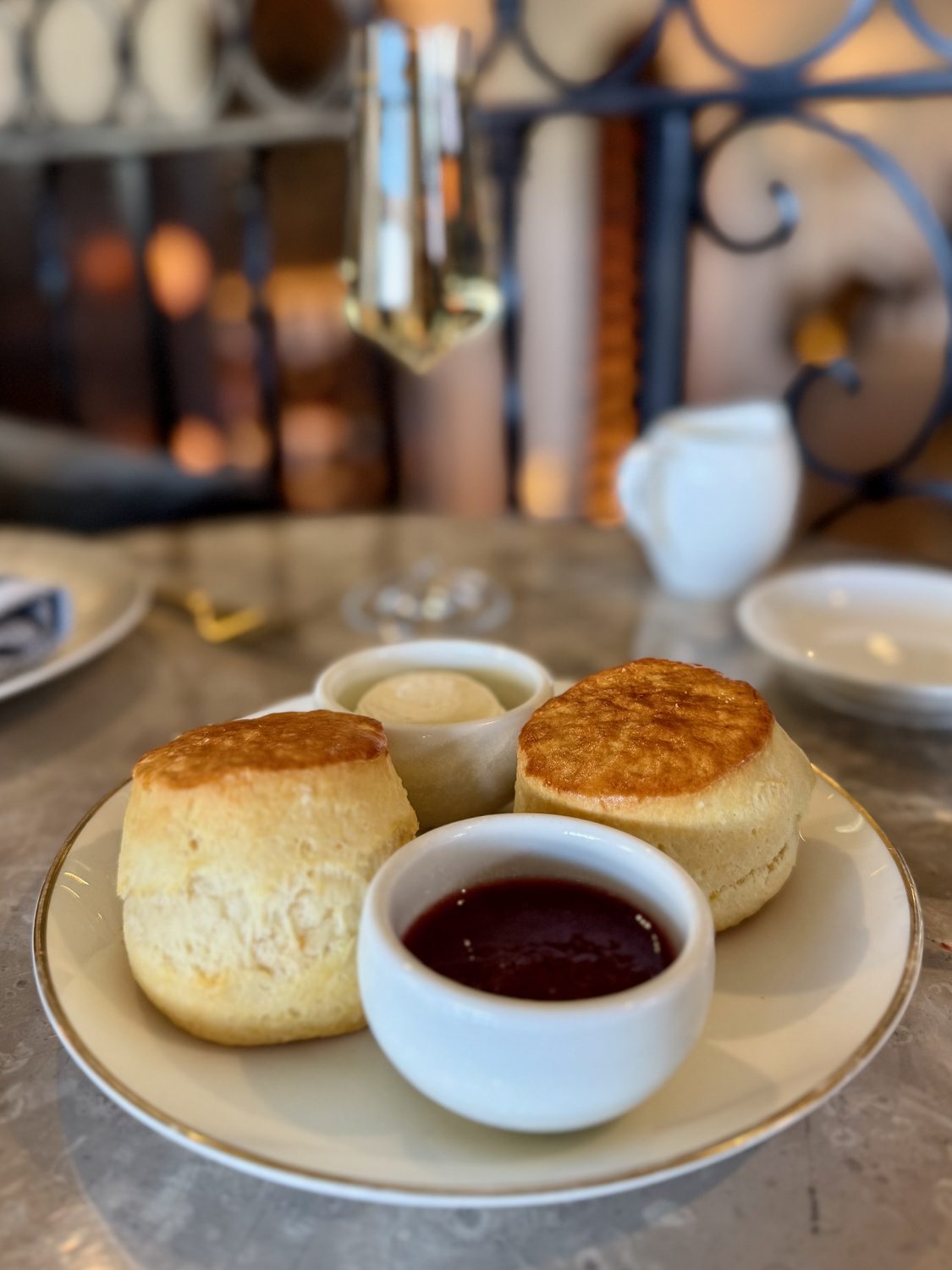
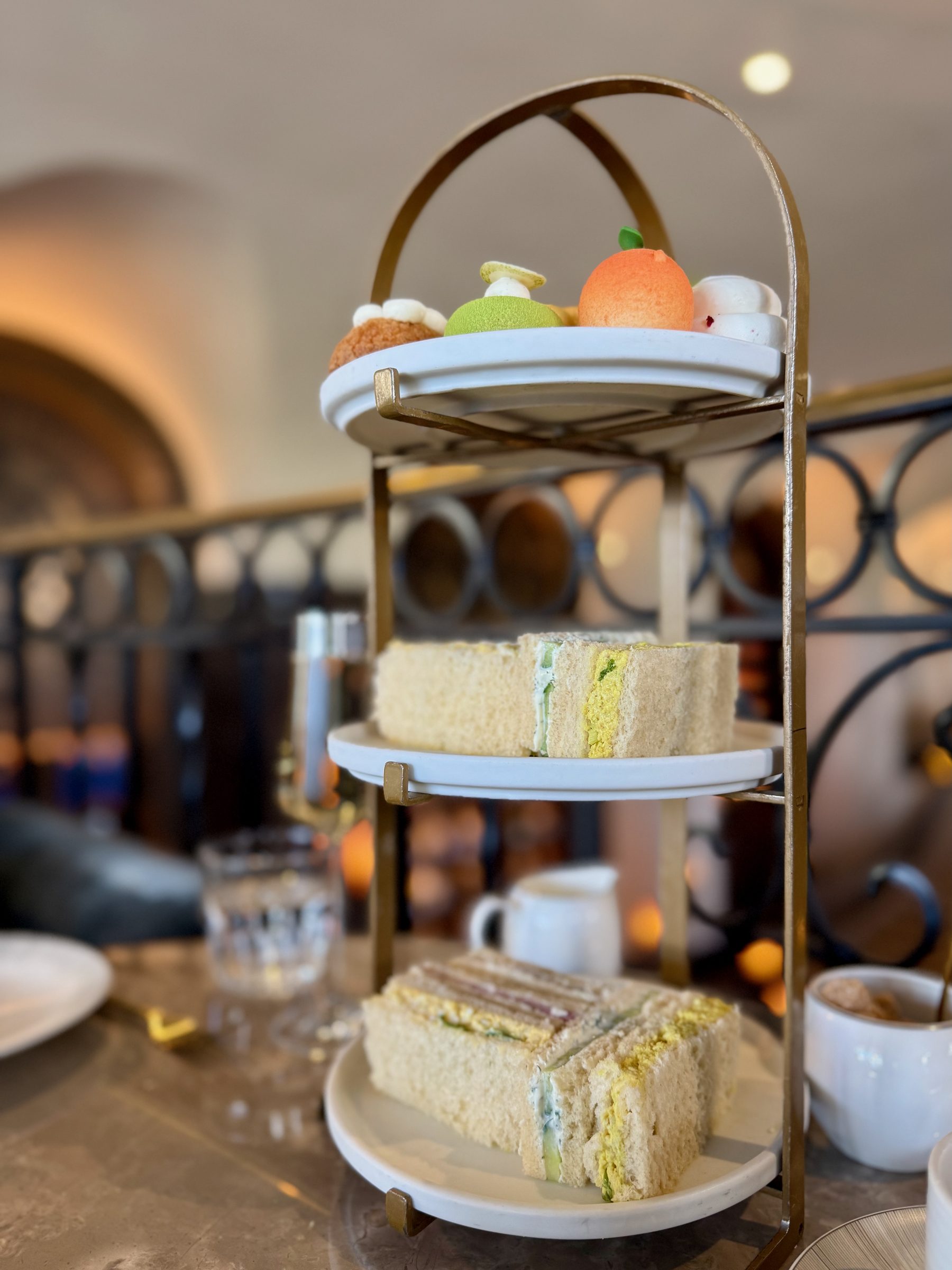
The scones come out first and they do not come on the stand at all. They arrive on their own plate, warm, with clotted cream and strawberry preserve in two small pots beside them — an appetizer, if the stand is the main course. I should be honest about what happened next: I demolished them. Orange zest through them, and nothing at all like the scones you get in a bakery, which in my experience tend towards the dry and the crumbly and want a drink to get down. These did not. I ate most of mine with clotted cream alone and only occasionally went back for the strawberry preserve, which is heresy in some quarters and I stand by it. If I am ranking the whole tea, the scones win, and it is not particularly close.
The sandwiches were fine. I want to be careful here, because I do not think that is this kitchen’s fault — I cannot remember ever having a sandwich at an afternoon tea that I thought about again afterwards, anywhere. The truth is I like a hearty sandwich and the tea sandwich is a delicate thing by design. My favourite sandwich in the world is the muffuletta at Central Grocery in New Orleans, a shop that has been making it since 1906: salami, mortadella, capicola, mozzarella, provolone and olive salad on a round sesame loaf, sold by weight and eaten with both hands. Set that against a crustless finger of cucumber and dill cream cheese and you can see the problem is mine, not theirs.
For the record, the Coronation Chicken was the best of the five. Karen picked out the golden raisins in it immediately and liked them, which is more enthusiasm than the tier got from me. And I have never in my life understood the cucumber sandwich. My friend Peter, who simply loves having afternoon tea, is better placed to explain it than I am.
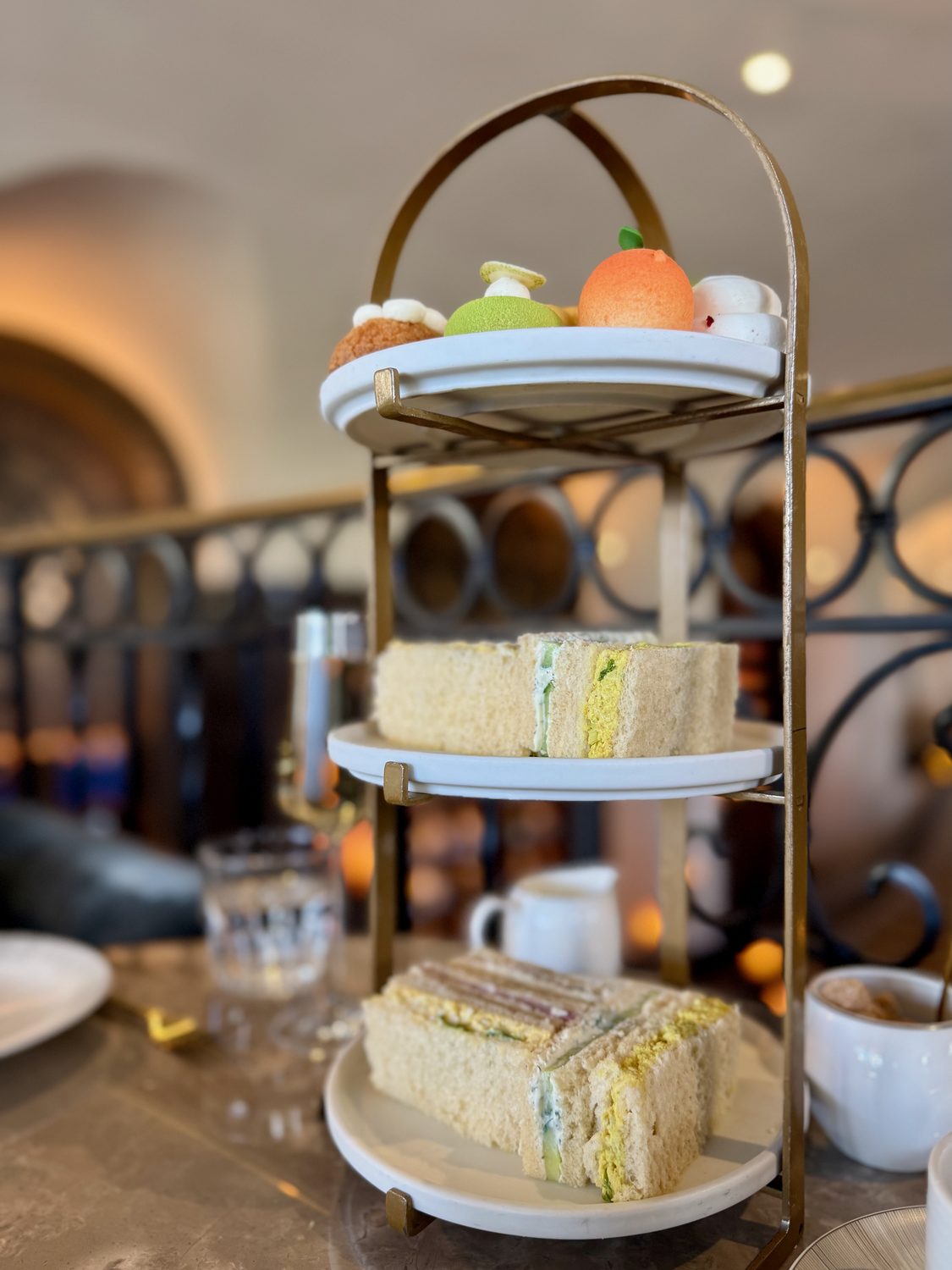
Then the desserts, which are the reason the whole stand exists and which Karen and I both stopped to look at before touching. Five of them: a Tiramisu Choux, an Orange Mousse, a Raspberry Pavlova, a Matcha Entremet, and Madeleines standing in for the canelé the menu promises — a substitution our server mentioned before the stand arrived, so it came as no surprise. Bright, colourful, and arranged with enough care that the plate was almost too pretty to eat. Almost.
I work through a plate of desserts the way I would a tasting menu, lightest first and heaviest last, so the pavlova went first. The meringue gave it real crunch and real texture, which is the whole point of the thing and the part most kitchens get wrong by making it chewy, and the raspberry purée was balanced exactly right — sweet enough to be a dessert, sharp enough to stop.
The Tiramisu Choux was the other one I kept thinking about. It is tiramisu taken apart and put back together: the choux pastry does the job the ladyfinger normally does, the espresso and chocolate sit in the middle as the filling, and the flower piped on top is the mascarpone, carrying the flavour where you would usually find it soaked through a sponge. Every component of a tiramisu is present and not one of them is where you expect it. That is a harder trick than it looks, because the dish has to still taste like tiramisu at the end of it, and it did.
We had two teas between us and they could not have been further apart. Mine was the Golden Yunnan Hills, which I have had before and go back to. It wants a longer steep than you would think, and the service here understood that — our server was precise about the times for both teas, and they bring a small set of timers to the table, three of them in one piece, so you are not guessing. What comes out is malty, which I suspect is what the menu means by its oak highlights, with earthy undertones underneath and something like cocoa at the edge. It is heavy for a tea, properly full-bodied. Reading that back, I am aware I have described a black tea exactly the way I would describe a red wine, which is probably just the language I think in.

Karen had the Dream Doves Silver Needle, a white tea from Fujian, and it is the opposite in every respect. It is made only from unopened buds, picked in a window of a few weeks in early spring, and it barely colours the water at all — I did not photograph hers, because it looked like a cup of hot water. What is in there is delicate and floral, honey first, with a hint of peach behind it.
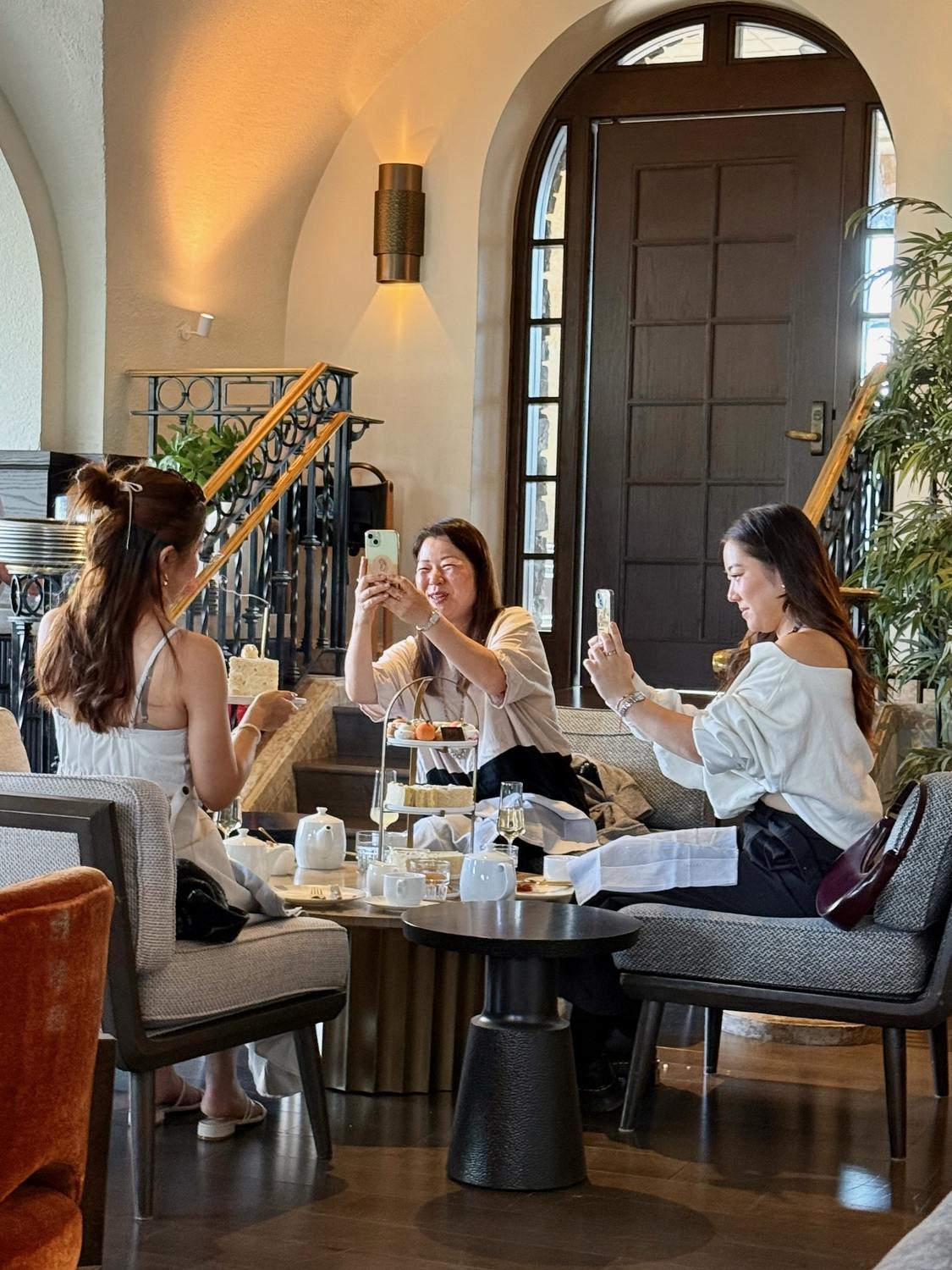
About an hour in, I noticed the table across from us. Three women, one of them celebrating a birthday, with their own stand between them and a tall slice of layered cake that had arrived from somewhere other than the menu. Before anyone ate anything, all three of them photographed it. It is an occasion to be remembered. Both the afternoon tea and the birthday.
And that is the argument, right there. Nobody photographs a sandwich because it is the best sandwich they will ever eat. They photograph the stand because the stand means something has been marked — a birthday, a trip, a Saturday morning that somebody decided to make different from the other Saturday mornings. Judge afternoon tea as a meal and you will find it uneven, because it is. Judge it as an occasion and it does precisely what it sets out to do.
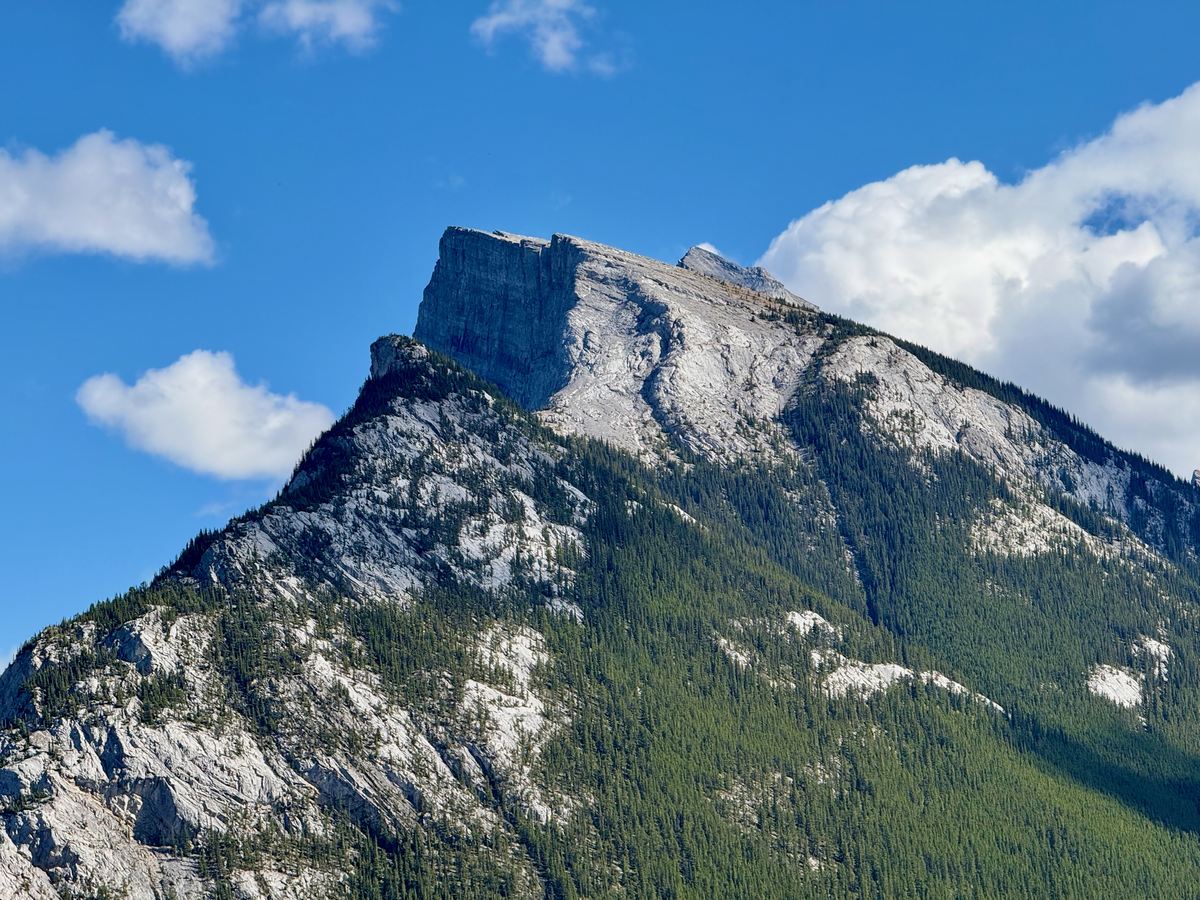
Our server was Mithlesh, and the service was the best we had all weekend in a hotel where the service was consistently good. He was the one who told us about the lookout on Mount Norquay, halfway up the mountain across the valley, which is where we went when we finally got up from the table. From up there you can see the whole town and the mountain the bar is named after, which is a tidy way to end a morning that began by looking at it through a window.
There is not much to order here. The stand is the stand, and the choices amount to a couple of upgrades — Champagne instead of the sparkling wine, a reserve tea instead of the house pour. Take the reserve tea; the Golden Yunnan Hills is worth the surcharge, and they will time the steep for you. Past that, the advice has nothing to do with ordering. Every so often it is worth doing the thing you would not normally do, and of the ways to spend a couple of hours doing something different, this is one you may genuinely enjoy. It also matters who is across the table. Mine was Karen. Down the room was a table of ten or so, three generations of one family, out to spend the day with grandma. Yours might be a friend. Nobody books two hours of this to eat alone. Book it for whatever hour they offer you, half past eleven in the morning included, because the hour was never the point.



The Newsletter
New pieces, plus what’s on my table next. Every few weeks.

An error has occurred somewhere and it is not possible to submit the form. Please try again later or contact us.


