


A Time Capsule in a Wok: How Chinese Food Took Root — and Stayed Put — in the Philippines

Jacob Ung
June 8, 2026

11 min read
A dish-by-dish look at how 17th-century Fujianese cooking became Filipino cuisine — and why it may preserve that heritage better than China itself.
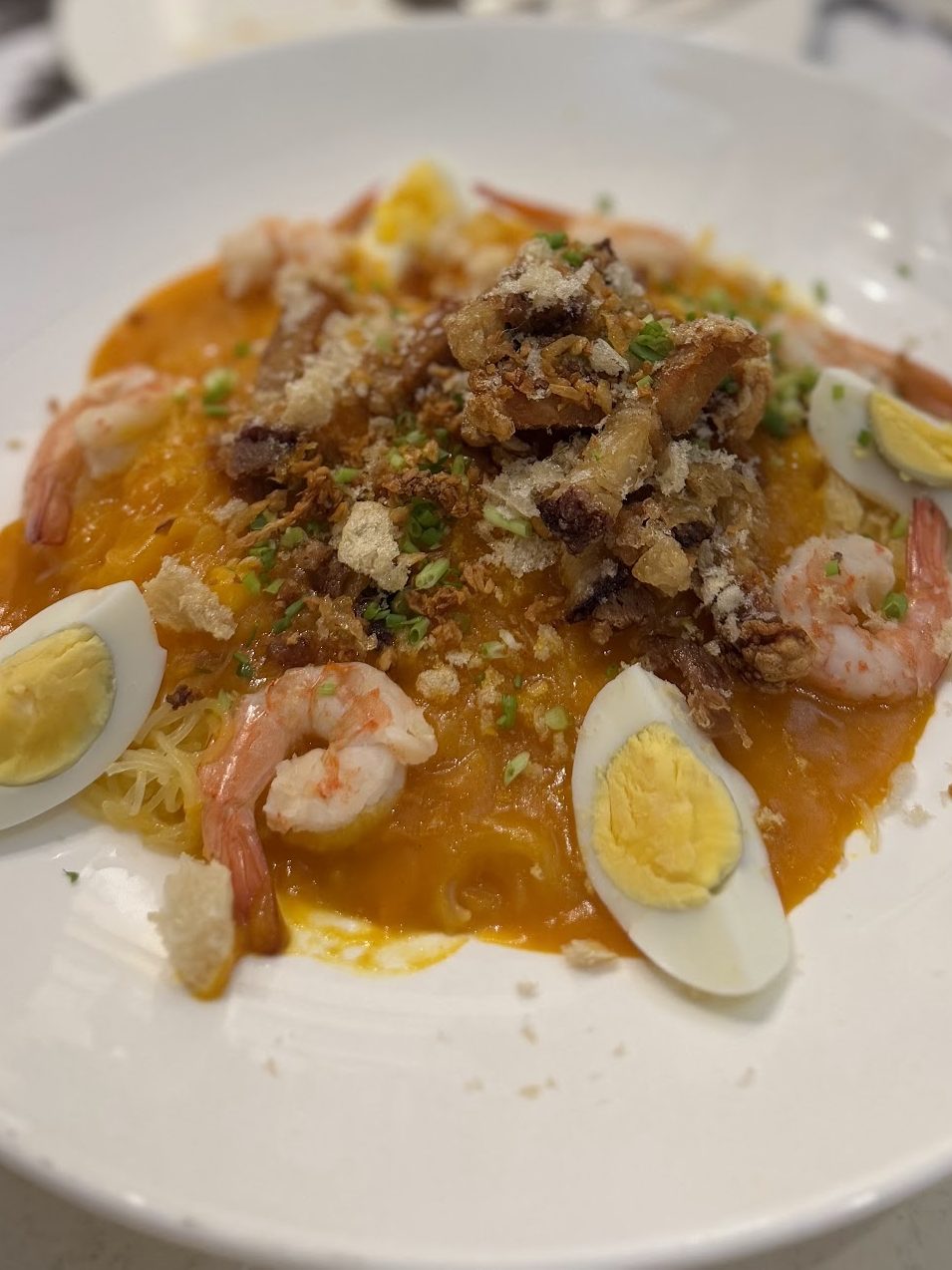
Walk into a decades-old panciteria in Manila’s Binondo district, order a bowl of mami, and you are, in a very real sense, tasting the 17th century. Not a recreation of it — the thing itself, carried forward almost unbroken through more than four hundred years of trade winds, colonization, war, and reinvention. Nowhere else in the Chinese diaspora has a regional cuisine been so thoroughly absorbed into a national identity while somehow keeping its oldest bones intact. Filipino food is unmistakably Filipino. And yet scratch almost any beloved dish — pancit, lumpia, siopao, taho, hopia — and Fujian is right there underneath it, preserved less like a memory than like amber.
I have a personal stake in this one, though it took me a while to see exactly what it was. I’m Chinese by ancestry and was born in Manila, though I only spent my first five years there before my family moved to Canada — which means my own relationship to this food was never a childhood constant so much as something I’ve kept returning to, on trips back to see my parents, who still live there, and especially every Christmas and New Year, which I spend in Manila almost without fail. Every time I’m back, I notice the same thing this piece is really about: how much of what I’m eating isn’t “Filipino food” or “Chinese food” in some vague, flattened sense, but something far more specific and far older than either label suggests.
This is the story of how that happened: who came, from where, when, how the food changed to survive — and, more surprisingly, how much of it refused to.
Long Before Legazpi: Trade, Not Conquest
Chinese contact with the Philippine archipelago predates the Spanish by centuries. Chinese ceramics recovered from sites across the islands trace back to the Tang dynasty, and by the Song dynasty (960–1279), merchants from southern China were sailing regularly to Ma-i, a trading polity believed to have been centred around what is now Manila Bay. This was commerce, not colonization — junks arriving with silk, porcelain, and ironware, departing with pearls, beeswax, and deerskin. The relationship between southern China and the archipelago was already old by the time Europe knew the Philippines existed.
When Miguel López de Legazpi took Manila in 1571, he found, by most accounts, around 150 Chinese traders already settled there. The Spanish, who needed goods they could not produce and could not easily ship from home, recognized the value immediately. They called these traders and settlers Sangley — from the Hokkien for “one who does business” or “one who comes frequently” — and in 1594, Governor-General Luis Pérez Dasmariñas designated a settlement across the Pasig River for Christianized Sangleys: Binondo, now recognized as the oldest continuously inhabited Chinatown in the world.
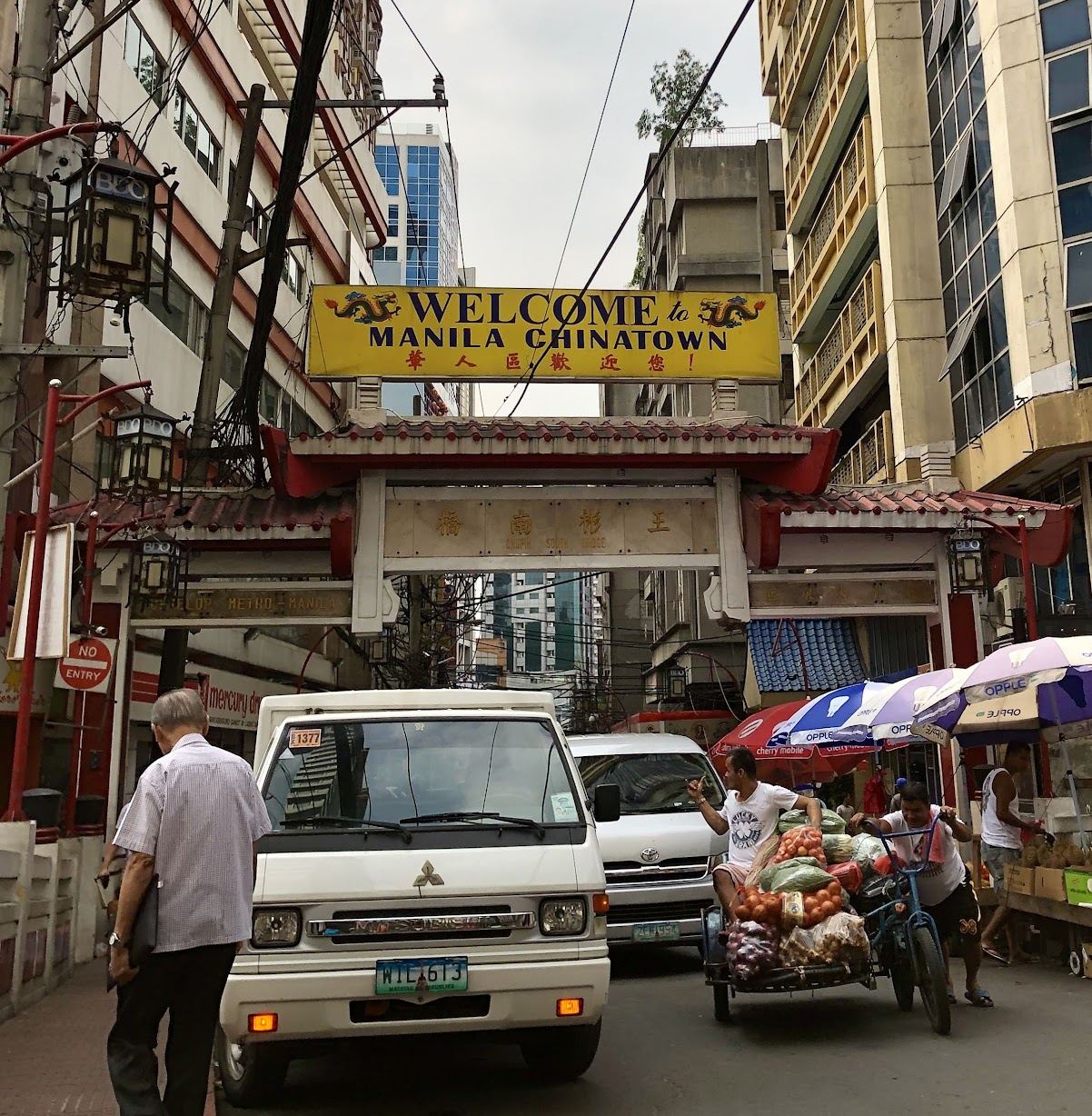
The overwhelming majority of these settlers came from a single, specific corner of China: the coastal prefectures of Zhangzhou and Quanzhou in southern Fujian province, the Hokkien-speaking heartland. This is not incidental trivia — it’s the reason Filipino-Chinese food tastes the way it does, and not, say, Cantonese. Fujian’s junks were closest, its merchants most established in regional trade, and its dialect — not Mandarin, not Cantonese — became the mother tongue of the community that would go on to shape Philippine foodways.
Growth was fast and the relationship was tense. By 1586, Chinese residents already outnumbered the colony’s Spanish residents roughly five to one — something like ten thousand Sangleys against a Spanish population of about two thousand; by 1603, the population had swelled to more than 20,000, dominating Manila’s retail and wholesale trade and provisioning the Manila–Acapulco galleon route that connected Asia to the Americas for 250 years. That imbalance of economic power against political powerlessness triggered repeated, brutal violence — the Sangley Rebellion of 1603, which alone killed somewhere between 15,000 and 25,000 people, and further uprisings in 1639 and 1662 that each brought further mass killing. And yet the community persisted, rebuilt, and kept trading, generation after generation, because the archipelago needed what it offered and — crucially — because intermarriage gave the community a permanent foothold.
Chinese men marrying Filipina women produced the mestizos de Sangley, a distinct social class with rights the Sangleys themselves were denied: land ownership, freedom of movement, access to the Church and its patronage networks. By some estimates, this mestizo population had grown past 200,000 by the late 19th century, and it was this class — culturally hybrid from birth, fluent in both worlds — that would go on to produce reformists, revolutionaries, and, eventually, José Rizal himself. Migration accelerated again through the 19th century as Spanish restrictions eased, with the Chinese population estimated to have climbed from around 30,000 in the 1870s to as many as 90,000 by the 1880s. Every wave brought a little more Fujian into the Filipino kitchen.
Adapting the Palate: What Changed on the Way Over
Fujianese food did not arrive and stay frozen — it had to survive contact with a very different climate, pantry, and palate. Filipino food is built on sourness and brightness (calamansi, vinegar, tamarind), on coconut, on a sweet tooth that runs deeper than in most of China, and on tropical produce Fujian never had. Chinese cooking, arriving via merchant kitchens and later via mestizo households, adapted accordingly, and you can taste the negotiation in almost every dish:
Sweetness moved to the centre. Local muscovado — unrefined cane sugar, heavy with molasses — pushed Filipino-Chinese dishes toward a caramelized sweetness that would read as unusual in Fujian itself: hamonado-style sweetness in braises, sweeter toyo-based glazes, a general softening of savoury-forward Hokkien profiles.
Souring agents were swapped in. Calamansi and cane vinegar took on the acidifying role that rice vinegar and fermented plums might play elsewhere, nudging dishes toward the sour-savoury balance that defines so much of Filipino cooking.
Ingredients localized where they had to. Kangkong (water spinach) stood in for bok choy; coconut milk worked its way into Visayan Chinese-influenced dishes in a way it never would in Fujian; native root vegetables, ubod (coconut heart), and saba banana became lumpia fillings alongside — and eventually instead of — the original pork and vegetable mix.
Even the tools localized. The Chinese wok became the Filipino kawali or carajay — still round-bottomed, still built for the same high, fast heat, but forged locally and sized for Filipino kitchens; the long-handled sian-se spatula for tossing noodles and stir-fries followed the same path from Fujian technique to Filipino tool.
None of this diluted the food’s Chinese-ness so much as it domesticated it. The techniques — stir-frying, steaming, braising, the whole grammar of wok cookery — moved over essentially intact. It was the vocabulary of flavour that adjusted to local taste.
What Chinese Food Gave Filipino Cuisine
If adaptation went one way, influence went the other, and it is hard to overstate how deeply Fujianese cooking is embedded in what Filipinos simply consider their own food today, often without any awareness of where it came from.
Noodles are the clearest thread: pancit — the umbrella term for the entire category — comes from the Hokkien pian i sit, roughly “convenient food,” and today spans dozens of regional variations, from Pancit Canton (named for Guangzhou but thoroughly Filipino) to Pancit Malabon to Pancit Habhab. Long noodles served uncut at birthdays, carrying the same longevity symbolism they carry in China, are one of the most literal survivals of Chinese cosmology in Filipino life.
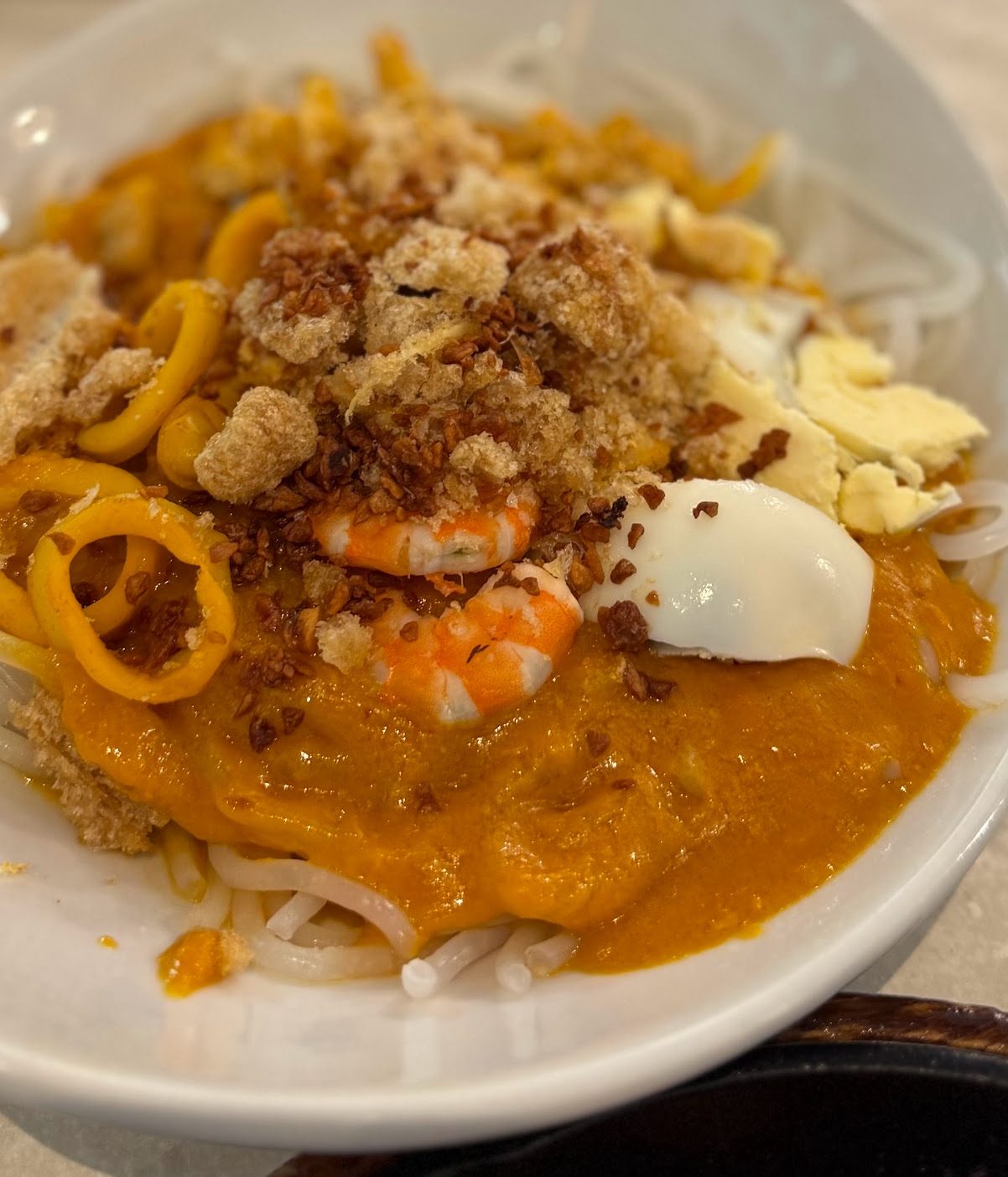
Lumpia traces to Fujian’s spring rolls, its name borrowed straight from Hokkien, and it has since multiplied into forms no Fujianese cook would recognize: Lumpiang Ubod with coconut heart, Lumpiang Sariwa served fresh and unfried, turon stuffing the same wrapper with saba banana and jackfruit for dessert. Siopao descends from Chinese bao; siomai from dim sum dumplings; taho from Chinese soybean curd desserts; hopia from Hokkien flaky mooncake-style pastries; tikoy, eaten at Lunar New Year for the same sticky-sweet “sticking the year together” symbolism it carries in Fujian, is now sold at Filipino bakeries alongside Christmas bibingka.
The influence runs into the pantry, too: toyo (soy sauce), tokwa (tofu), tausi (fermented black beans), taosi, bihon — all Hokkien loanwords that Filipinos use daily without registering them as foreign at all, the same way English speakers don’t clock “ketchup” as a Hokkien word for fish sauce (which, fittingly, it also is). That’s arguably the deepest form of influence there is: not a dish being labeled “Chinese food” on a menu, but a Chinese word sitting so comfortably in the mouth that no one remembers it arrived from anywhere.
Mami, the Filipino chicken noodle soup found on nearly every corner, has a folk-hero origin story. Ma Mon Luk left Guangdong for Manila in 1918 — a schoolteacher from Guangzhou, arriving with nothing — and sold noodle soup from a bamboo shoulder pole through Binondo’s streets before building it into something like an empire, styling himself the “Mami King.” Nationally famous by the 1950s, though never a national chain: the restaurants stayed in Manila and Quezon City. He claimed he had invented mami, and that the name meant “Ma’s noodles,” after himself.
But listen to the word. In Cantonese, noodle is min — chow mein, wonton mein, lo mein. In Hokkien it is mī. Mami ends the Hokkien way, and the linguists follow it there: Philippine Hokkien mah-mī, meat noodles, a word already in Filipino mouths before he ever stepped off the boat. Binondo in 1918 was a Hokkien town. Whatever he called it, he built his life on a bowl the Hokkien had already named.
I haven’t been in decades. The last time was with my uncle Isaac, at the branch on Quezon Avenue near Banawe — and it’s only in writing this that I see what that address was doing. Binondo is the Chinatown of 1594. Banawe is the Chinatown of the twentieth century, grown up around a much later arrival. We were eating a Cantonese man’s noodles in the newer Chinatown, and the bowl in front of us was the closest thing Manila had to what Hong Kong would call wonton noodle soup. For our family, that bowl simply was Chinese noodles.
That is the seam the whole story runs along, once you see it. Ma Mon Luk was never part of the migration I’ve been describing. The Hokkien came by junk from Zhangzhou and Quanzhou, centuries before the Spanish, early enough to sink below the waterline — pancit, lumpia, hopia, toyo, tokwa, tausi, words no Filipino experiences as foreign. The Cantonese came in the waves of the nineteenth and twentieth centuries, into a country that already had all of it. They arrived too late to dissolve.
So the two layers sit at different depths, and you can feel it at the table. Pancit isn’t Chinese food to a Filipino; it’s lunch. Dim sum is Chinese food, eaten in rooms that announce themselves as Chinese restaurants. The older layer became invisible by being absorbed. The newer one stayed legible because it never had to be.

The Time Capsule Thesis
Here is what makes the Philippine case genuinely unusual: this isn’t just influence, it’s preservation — and the clearest proof of it isn’t even on the plate. It’s in the language.
Philippine Hokkien, still spoken across generations in Chinese-Filipino households, is by linguists’ own account a living relic. Its earliest recorded form dates to the 1590s, in a Spanish missionary’s Doctrina Christiana, making it one of the oldest continuously documented Chinese dialects outside China itself. And it has held onto features — contracted numerals, colloquialisms, whole turns of phrase — now considered archaic or simply extinct in Fujian, where the dialect kept evolving on the mainland while the Philippine branch, isolated by an ocean and centuries of separate history, held its shape. It is not that Manila Hokkien stopped. It is that it kept what the mainland stopped keeping.
Food followed the same pattern. The wok technique, the fermentation methods behind tausi and tokwa, the specific sweet-savoury Hokkien flavour architecture underneath dishes like pata tim — these moved to the Philippines and then largely stopped changing at the pace they did back home, even as they were absorbing Filipino ingredients around the edges. Mainland Fujianese cuisine kept moving with China: through Republican-era shifts, through the upheavals of the 20th century, through the homogenizing pull of modern Chinese restaurant culture. The Philippine branch, meanwhile, kept its own internal logic — Hokkien technique fused permanently with the Filipino pantry it arrived into — and never fully reconnected with what Fujian became. The result is a cuisine that is, paradoxically, both completely Filipino and one of the more intact surviving windows into how southern Fujianese immigrant cooking actually worked four centuries ago, before it modernized at home.
The dish I’d point to is diok pit he — five-jeweled stuffed shrimp. Prawns split and packed with seasoned minced pork, wrapped in caul fat, fried until the fat renders away and leaves the shell of crust behind. Every technique in it is Hokkien. And yet you won’t find it in Fujian, and you won’t find it in Chinese restaurants anywhere else in the diaspora. It lives in Tsinoy kitchens and Tsinoy restaurants in Manila and effectively nowhere else on earth. It left, it changed, and it never went home to be corrected.
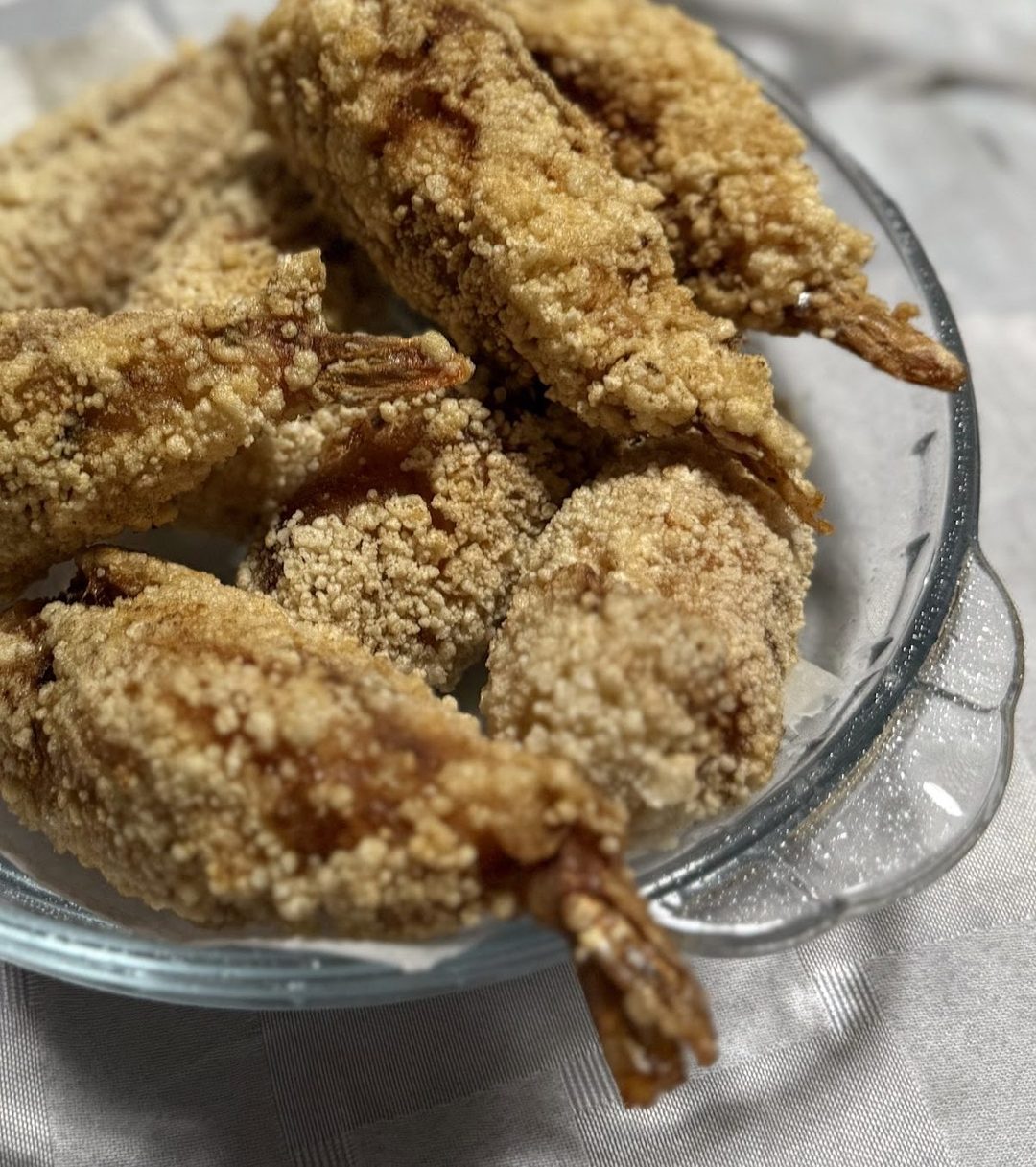
It’s the culinary equivalent of finding an old dialect only spoken now by expatriates — the “mother country” moved on, and the diaspora, without meaning to, became the archive.
Beyond Manila
While Binondo is the epicentre — the oldest Chinatown on earth deserves the title — the story isn’t only Manila’s. Cebu’s Chinese-Filipino community developed its own inflections, leaning further into coconut milk and Visayan sourness; provincial Chinese merchant families scattered by the 19th-century trade boom carried Hokkien cooking into towns with no Chinatown at all, where it simply became “how the store owner’s family cooks,” and eventually just how the town cooks, period. Chinese-Filipino identity itself has its own arc worth honouring here — from Sangley to the colonial-era slur “Chino” to the mass naturalization of 1975 (Presidential Decree No. 836, signed that December, granted citizenship to most of the community for the first time) to today’s self-chosen “Tsinoy,” a community that is simultaneously fully Filipino and quietly custodial of something much older.
Why It Matters at the Table
This isn’t really a piece about an institution, or even really about Fujian. It’s about what I keep learning, trip after trip, about the place I was born and the place my family came from before that: heritage doesn’t stay put by being protected — it stays put by being lived in, daily, by people who never thought of themselves as preserving anything. Nobody in Binondo set out to keep 17th-century Fujian alive. They were just hungry, resourceful, and far from home, and four hundred years later, that’s exactly what saved it.
A bowl of mami in Quiapo isn’t a diluted version of Fuzhou noodle soup; in some ways, it may be a more faithful survivor of it than anything currently being served in Fuzhou. That’s not a paradox to resolve. It’s the whole point — and if there’s a lesson in it for anyone chasing something new far from where they started, myself very much included, it’s that the oldest parts of you don’t need to be defended. They just need to be fed.



The Newsletter
New pieces, plus what’s on my table next. Every few weeks.

An error has occurred somewhere and it is not possible to submit the form. Please try again later or contact us.


