


Maido, Lima: The Nigiris Experience, Course by Course

Jacob Ung
September 15, 2026

6 min read
Every course of the twenty-item Nigiris Experience at Maido, Lima, photographed on 11 September 2015 and set down in the order the menu printed them.
This is the photographic record of one lunch: the twenty-course Nigiris Experience at Maido, in Miraflores, Lima, booked for one o'clock on Friday 11 September 2015. The courses appear here in the order the menu printed them, under the names the card gave them.
Two things sit outside that list. The Churo, an Amazonian river snail, arrived on the house near the end of the savoury run and was never on the printed menu at all. A chocolate dessert followed it, also unasked — I have no photograph of that one, and it is the only course of the day missing from this record.
The account of the day this belongs to, and of the thirty courses that followed at Astrid y Gastón the same evening, is in Ten Hours, Fifty-Two Courses.
The Nigiris Experience
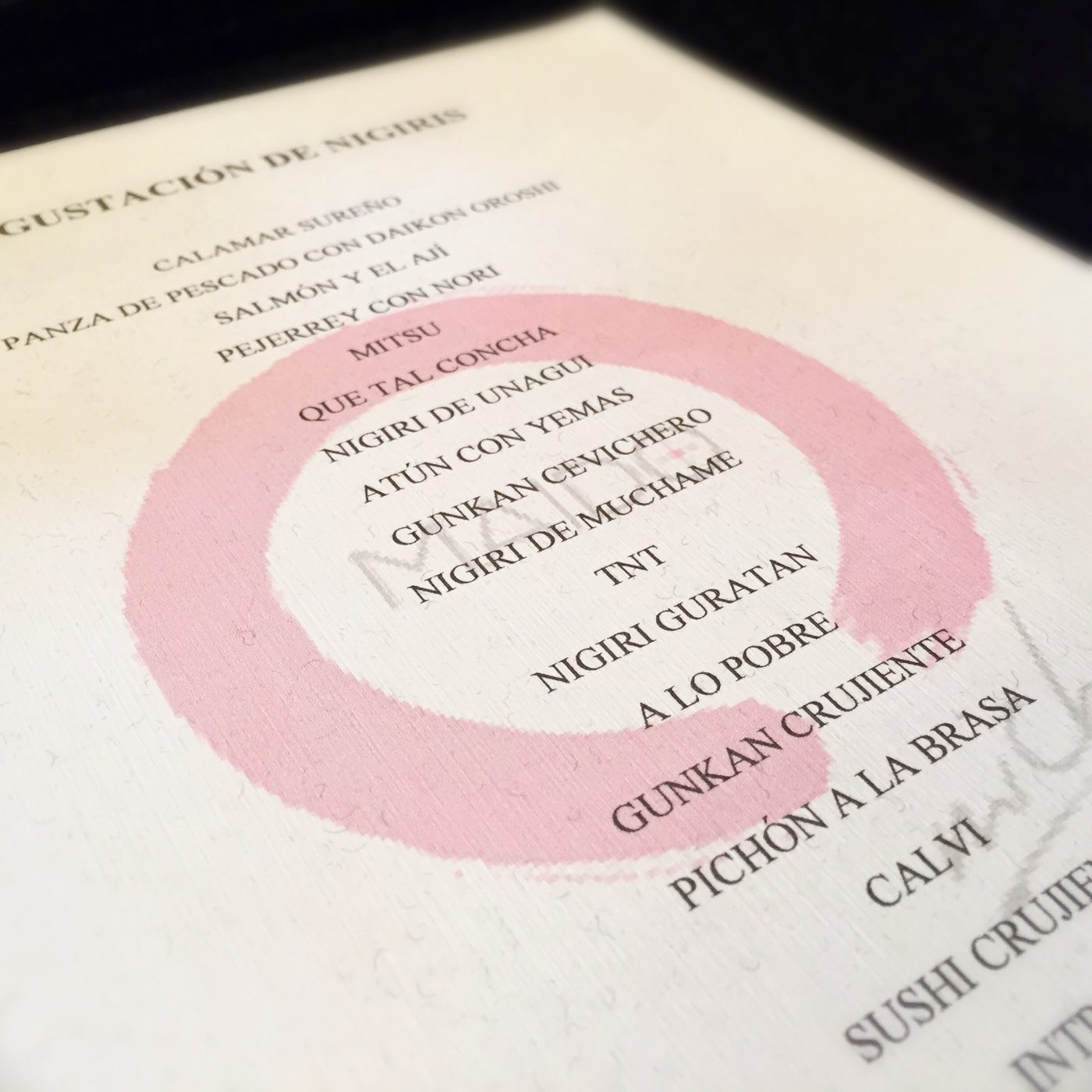
The Menu
This card is the source for everything below — the running order, the spellings, the names as the counter gave them. Twenty lines, printed over a pink brushstroke ring. It is also an incomplete source, and the gap is mechanical rather than mysterious: one line sits in the fold. Nineteen of the twenty names survive because I happened to photograph the card at all.
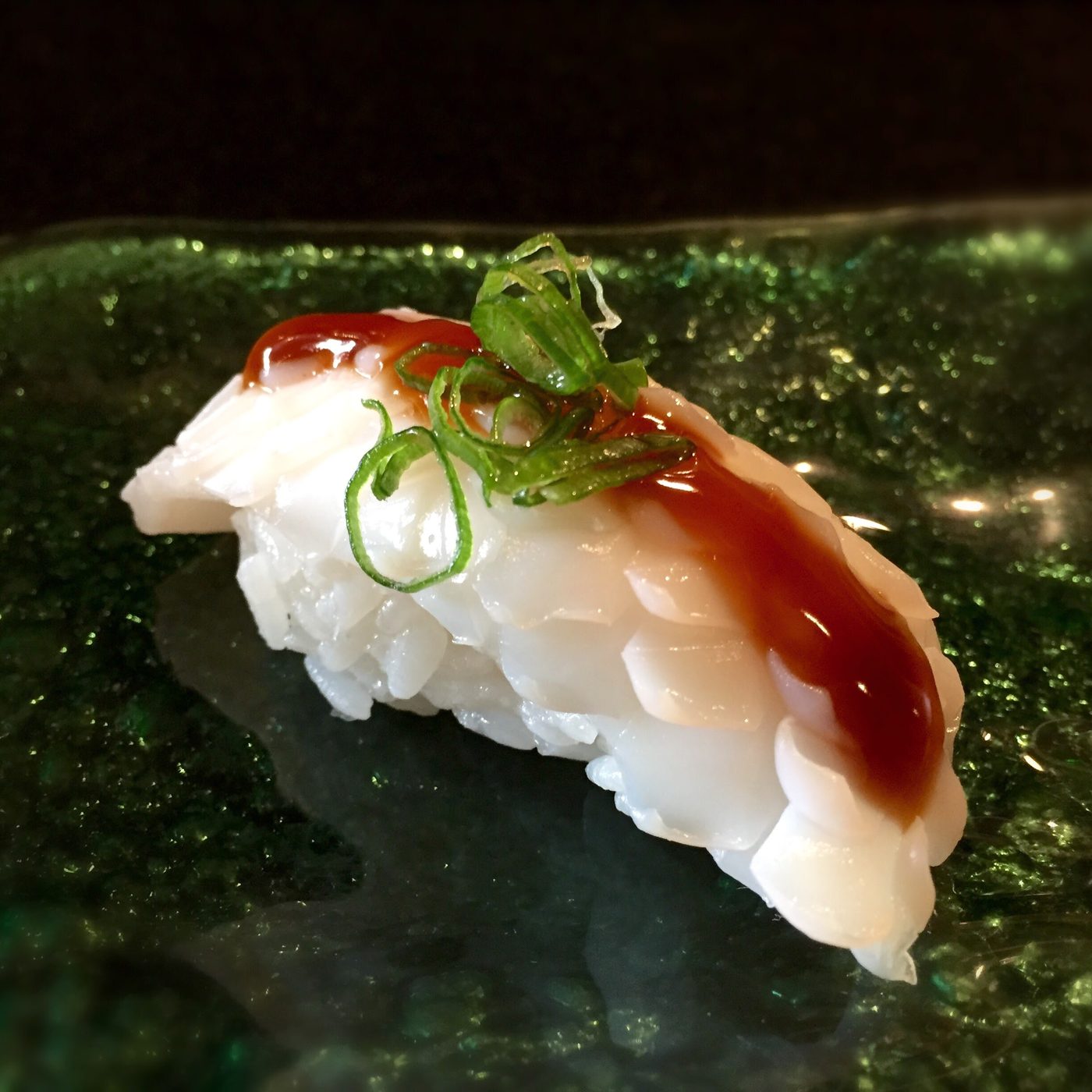
Calamar Sureño — Southern Squid
The squid is scored in a fine cross-hatch — the cut that lets a firm muscle take sauce and give under the teeth — then brushed with tare and finished with scallion cut to threads. First of twenty, and already the argument of the whole counter: Japanese knife work, and a glaze doing the talking.

Panza de Pescado con Daikon Oroshi — Fish Belly with Grated Daikon
The small orange-red dab is momiji oroshi — daikon grated through with chili until it takes colour, named for the red of maple leaves in autumn. In Japan that chili is tōgarashi. Here it is ají. The condiment is Japanese and arrives wearing a Peruvian colour, which is the whole cuisine in one teaspoon.
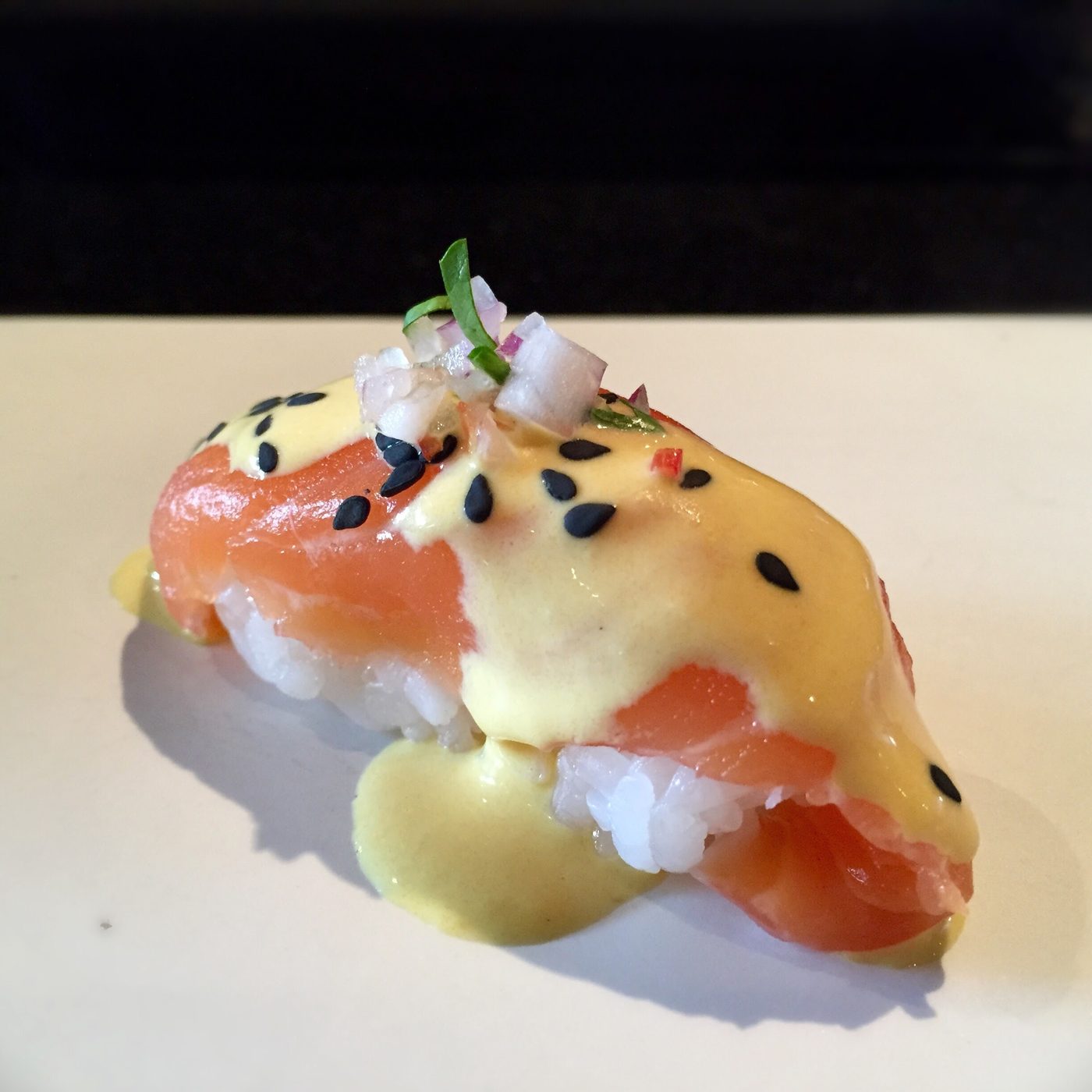
Salmón y el Ají — Salmon and Chili Pepper
Salmon under a yellow blanket of ají amarillo, black sesame, diced red onion. Ají amarillo is the backbone of Peruvian cooking and is not really about heat — it is fruity, almost apricot-like, with the burn well behind the flavour. Put it over raw salmon and you have the two halves of the counter in one mouthful, neither pretending to be the other.
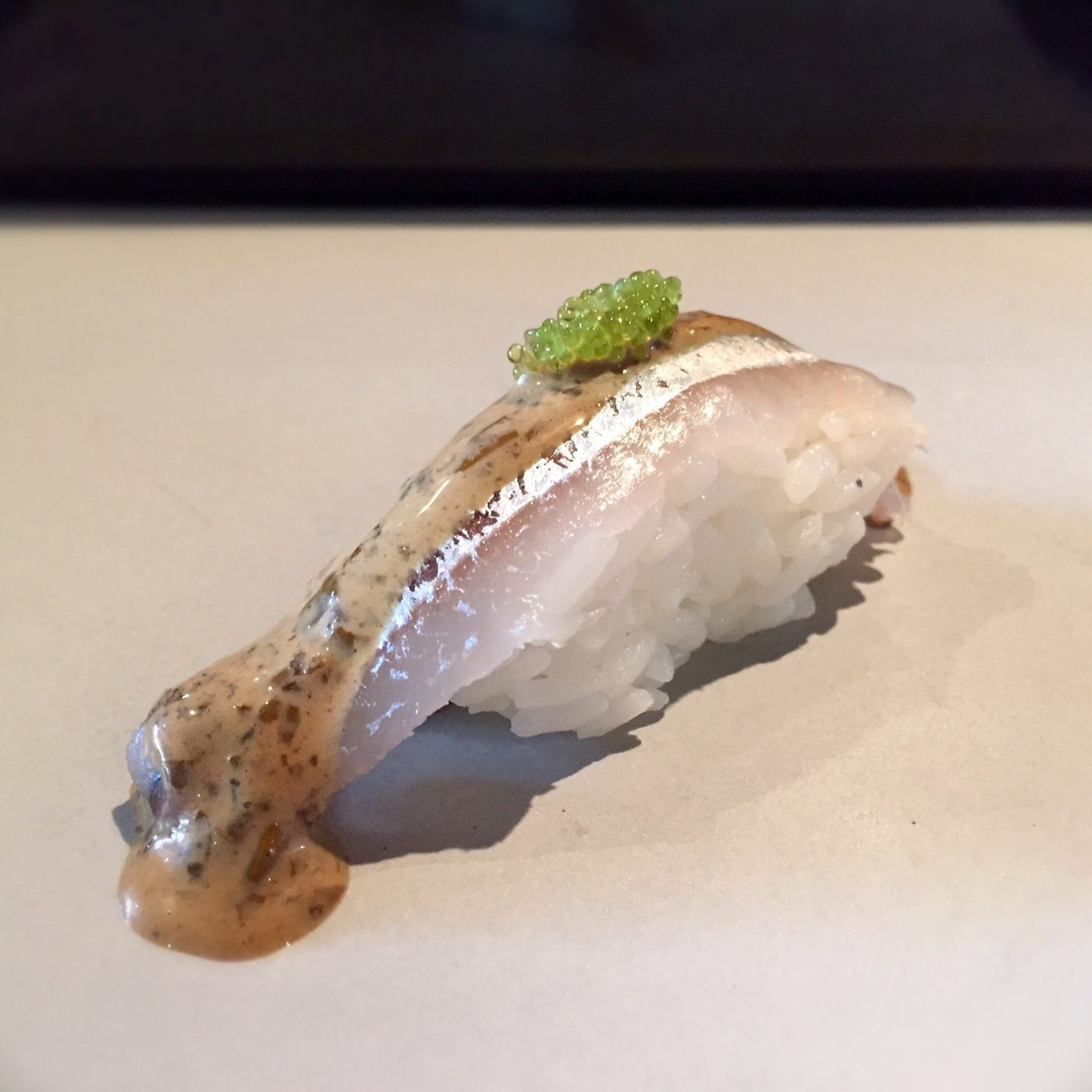
Pejerrey con Nori — Silverside with Seaweed
Pejerrey is the small silver fish of the Peruvian coast, eaten fried and whole in every cheap picantería in Lima. Here it is raw, silver skin left on, under a thin nori cream and a cluster of wasabi tobiko. Remember this sauce. It comes back at course nineteen, laid on heavily enough to run off the rice onto the stone.
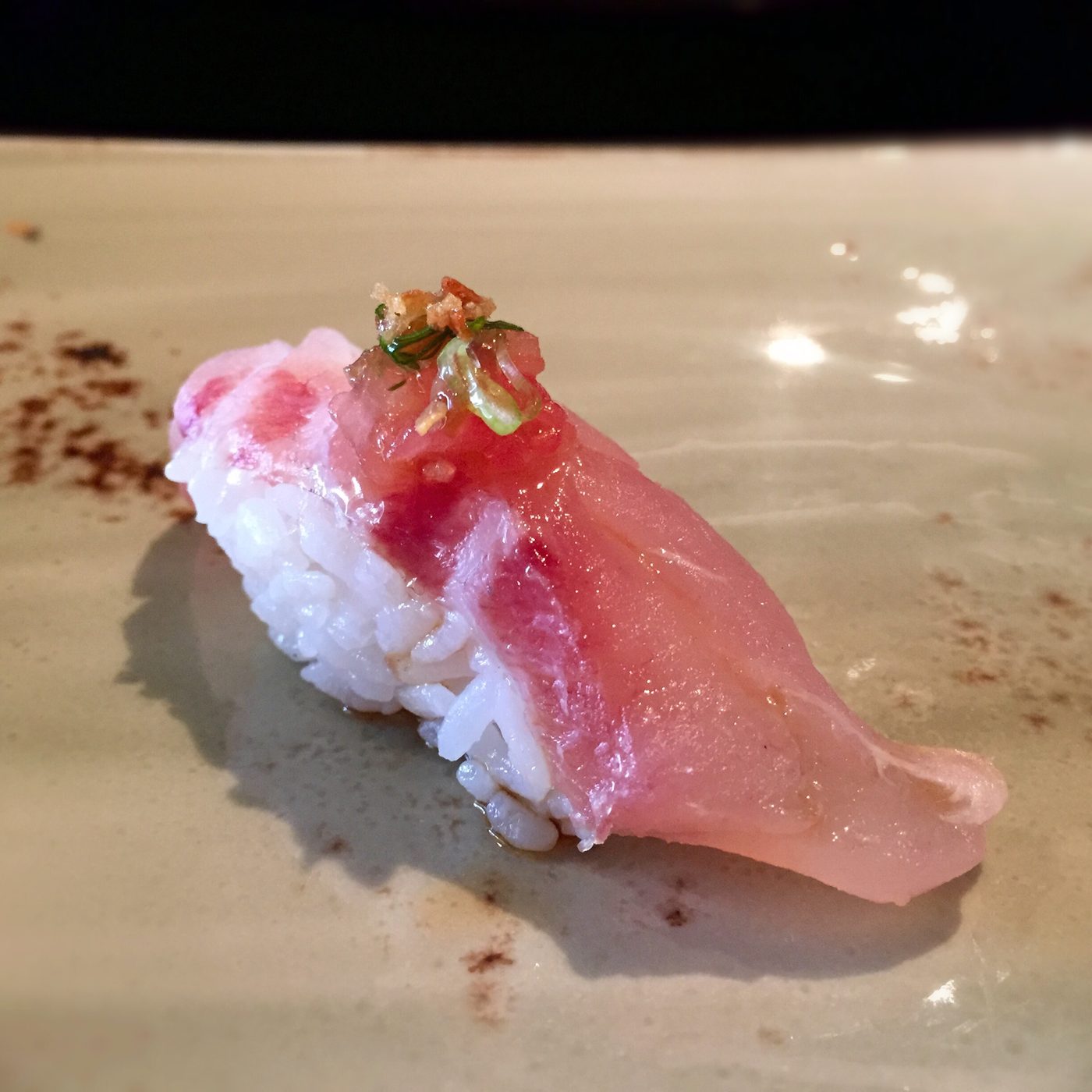
Mitsu
Every other name on this card is a pun, a loanword or a description. This one is a person. Micha trained at a sushi counter in Osaka called Seto before he opened here, and what that training bought is visible in the rice rather than the fish — grains still separate, barely compressed, holding their shape under a garnish that would flatten a tighter pillow. Pale pink, glassy, a seam of dark red through it, scallion threads, a few crisp fried shreds. The piece he attached his own name to is the one with the least on it.
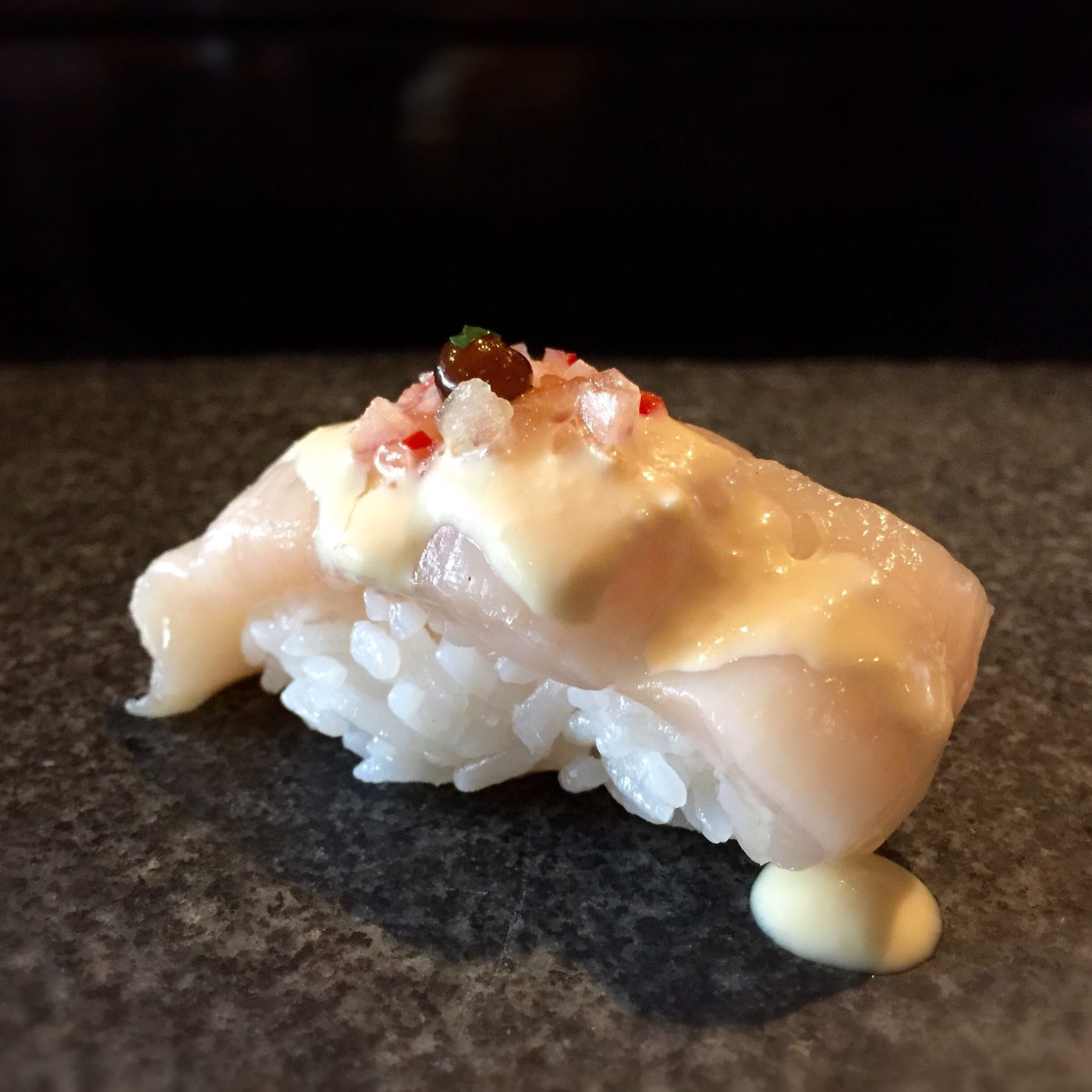
Que Tal Concha — How About That Scallop
Thick white flesh under a pale cream, scattered with pink-red flecks. The name is a pun, and a Peruvian would hear both halves of it. A counter that names a dish this way is telling you it does not take itself entirely seriously.
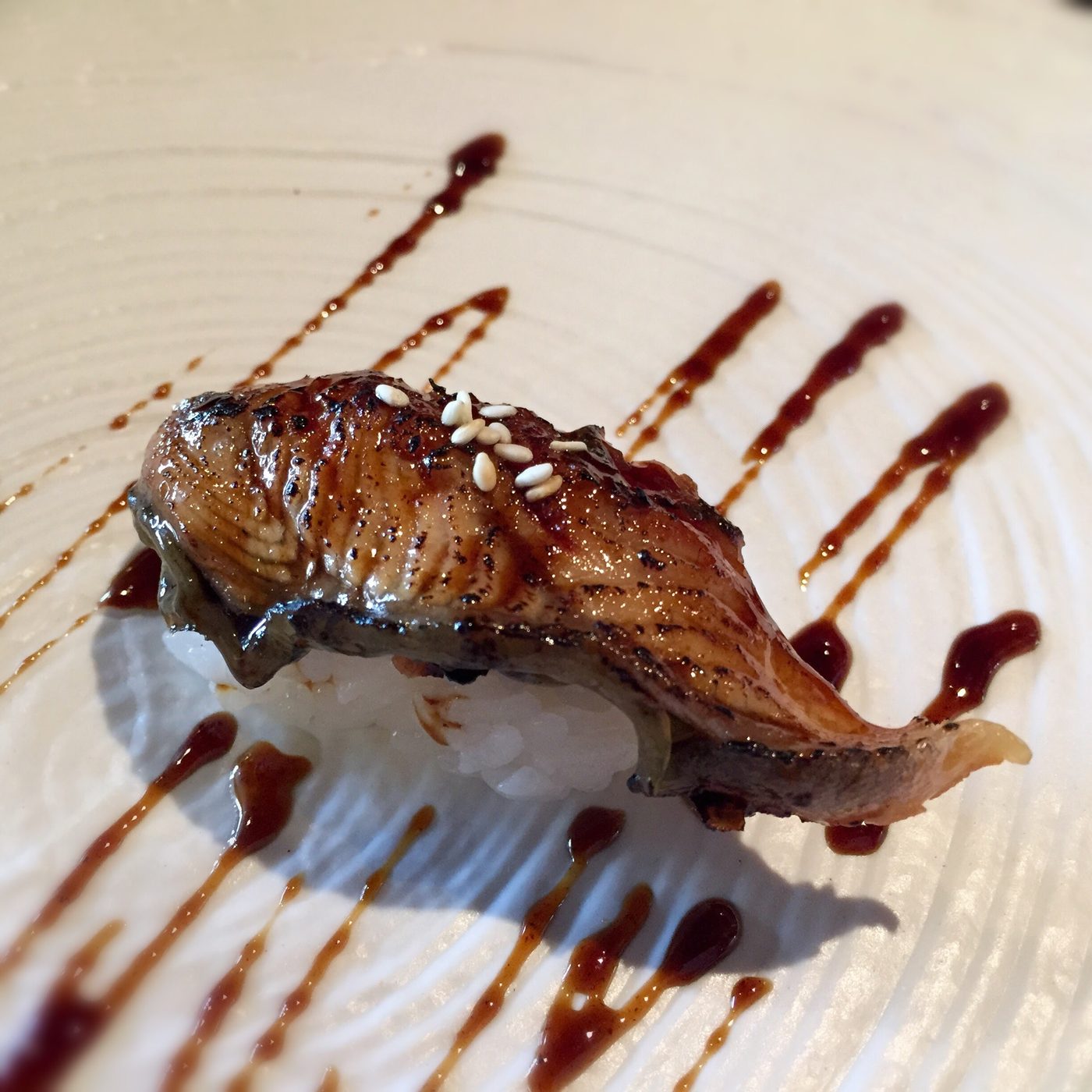
Nigiri de Unagui — Eel Nigiri
Grilled eel, lacquered dark, tare streaked across the plate. Note the spelling. Japanese is unagi, but a Spanish reader would soften that g to an h — so the menu writes unagui, borrowing the silent Spanish u that keeps the consonant hard. A Japanese word respelled so that Lima says it correctly.
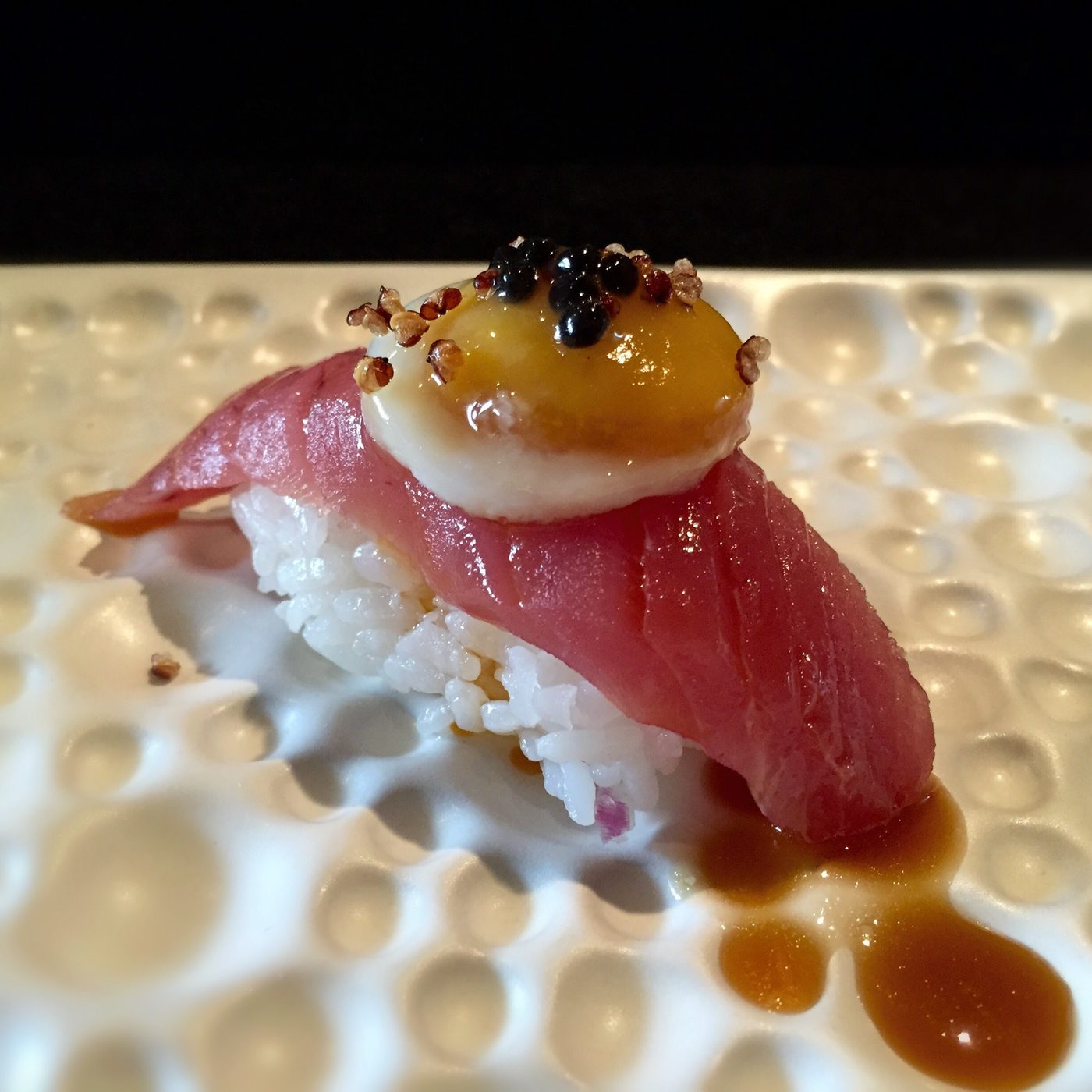
Atún con Yemas — Tuna with Egg Yolks
A quail yolk sitting whole on the tuna, black caviar beside it, popped quinoa scattered over. Three textures that all give way at once, and the only thing on the plate that is recognizably Andean is the quinoa — puffed, used the way a Japanese counter would use sesame.

Gunkan Cevichero — Ceviche-Style Battleship Sushi
A gunkan is the form where a collar of nori stands proud of the rice to hold something that will not sit still — roe, usually. Here it holds fried squid and dressed raw seafood. Which is exactly what the name says: a cebiche served in the architecture of a gunkan.

Nigiri de Muchame — Muchame-Style Nigiri
Muchame is a Peruvian cured-seafood preparation, pressed and dried, brought to the coast by Italian immigrants and long since naturalized. On the plate: a slice of grilled octopus, suckers still legible along one edge, over avocado, under diced tomato. Italian technique, Peruvian coast, Japanese form. Three passports on one finger of rice.
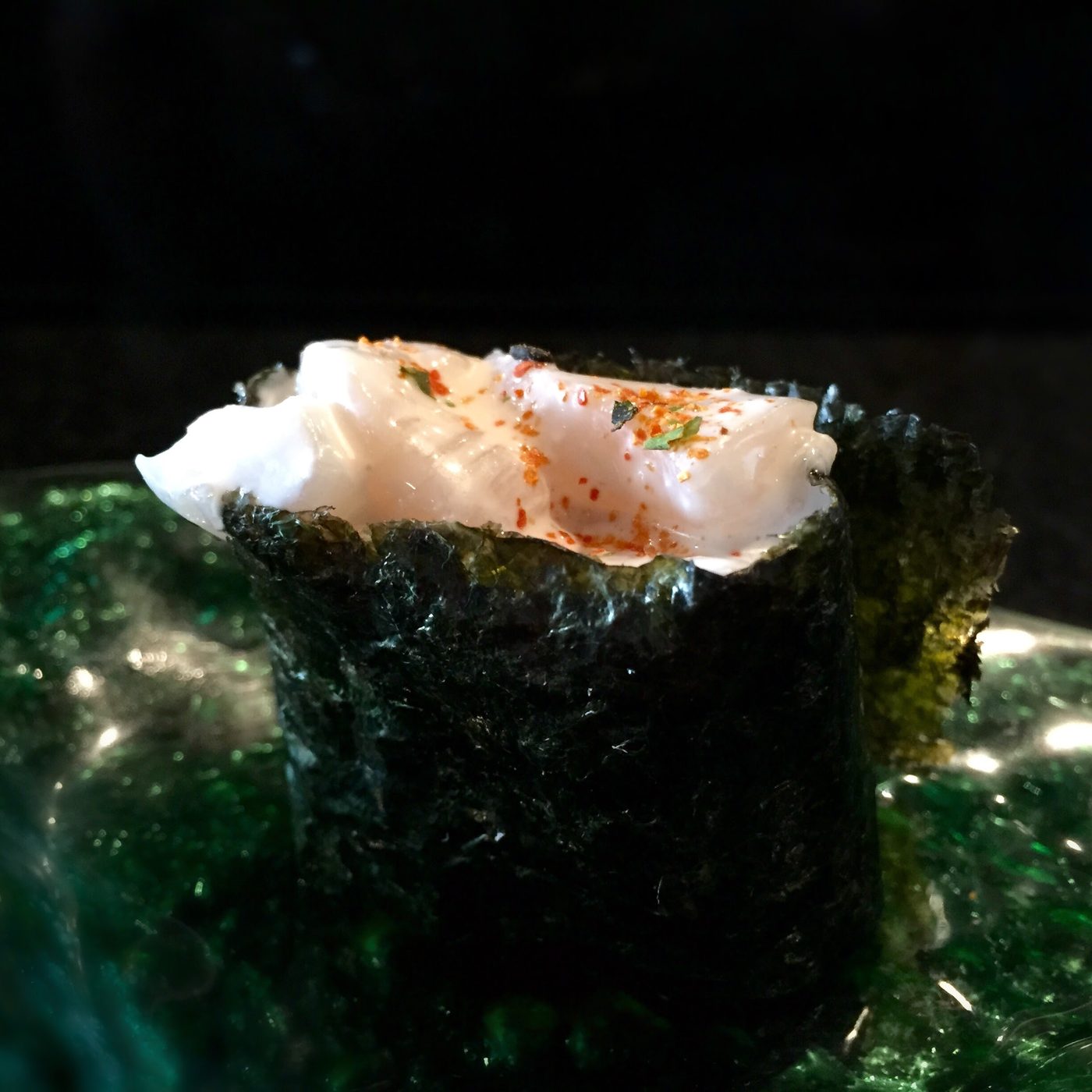
TNT
Most names on this card tell you what is on the rice. This one tells you what is about to happen. The gunkan collar exists to hold things that will not sit still — roe, usually. Using it to contain heat instead is a quiet joke about the form, and three letters are the only notice you get.
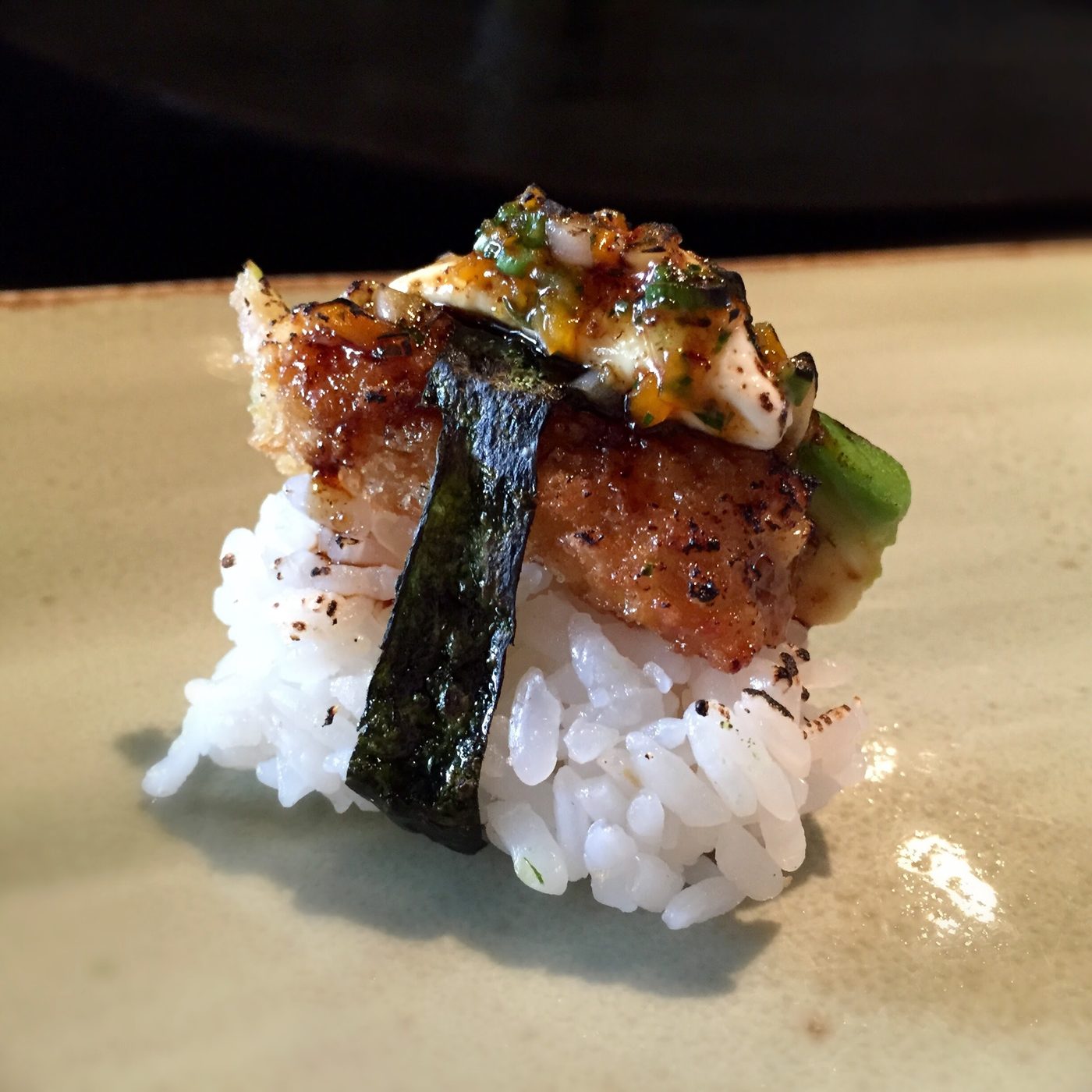
Nigiri Guratan — Gratin Nigiri
Gratin is French. Japanese borrowed it as guratan and made it a comfort food. Peru borrowed it from Japanese and put it on rice. What it means here is cream cheese torched brown over a breaded prawn — a French word that has been through two kitchens and come out the other side barely recognizable, and better for it.
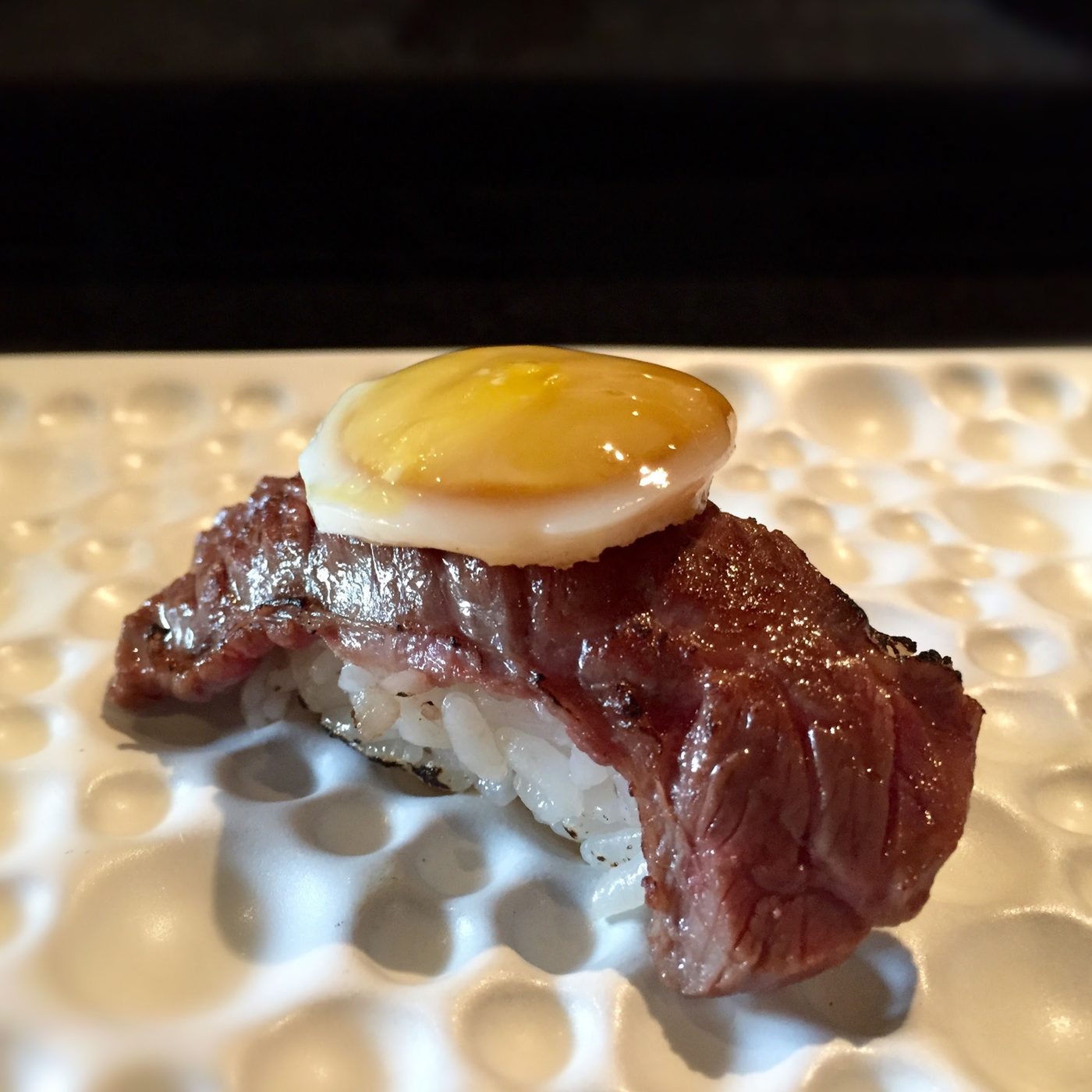
A Lo Pobre — Poor Man's Style
The phrase belongs to lomo a lo pobre — the limeño plate of steak under a fried egg, with plantain and rice, and nothing poor about it. Here the quail egg is injected with ponzu. A whole plate shrunk onto one finger of sushi. You are meant to recognize it, and the recognition is the dish.
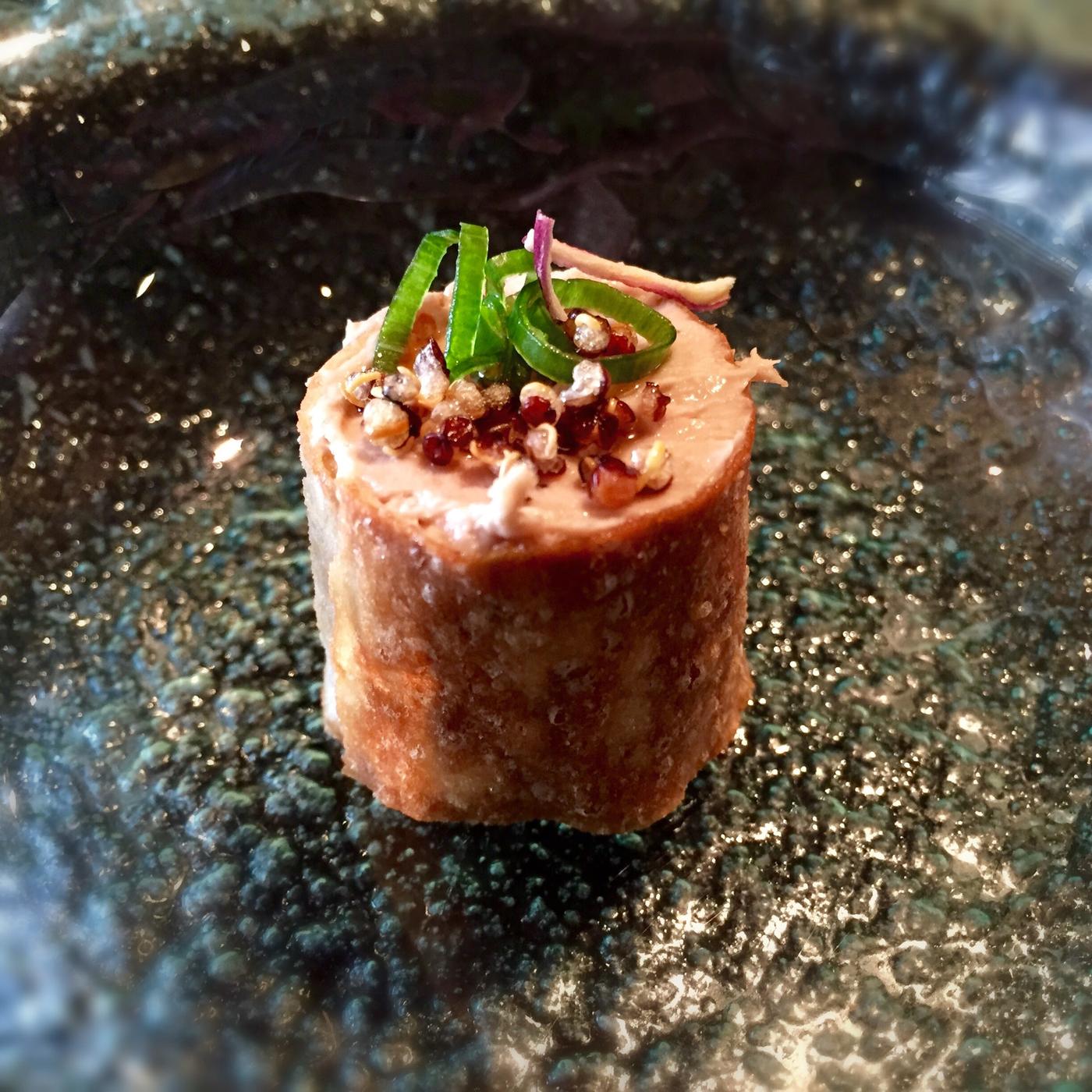
Gunkan Crujiente — Crispy Battleship Sushi
The gunkan collar is usually nori. Here it has been replaced by something fried almost to glass — thin, blistered, bubbled from the oil, holding its shape around a pale filling. Popped quinoa over the top, red and white. The Andes doing the work that sesame would do in Tokyo.
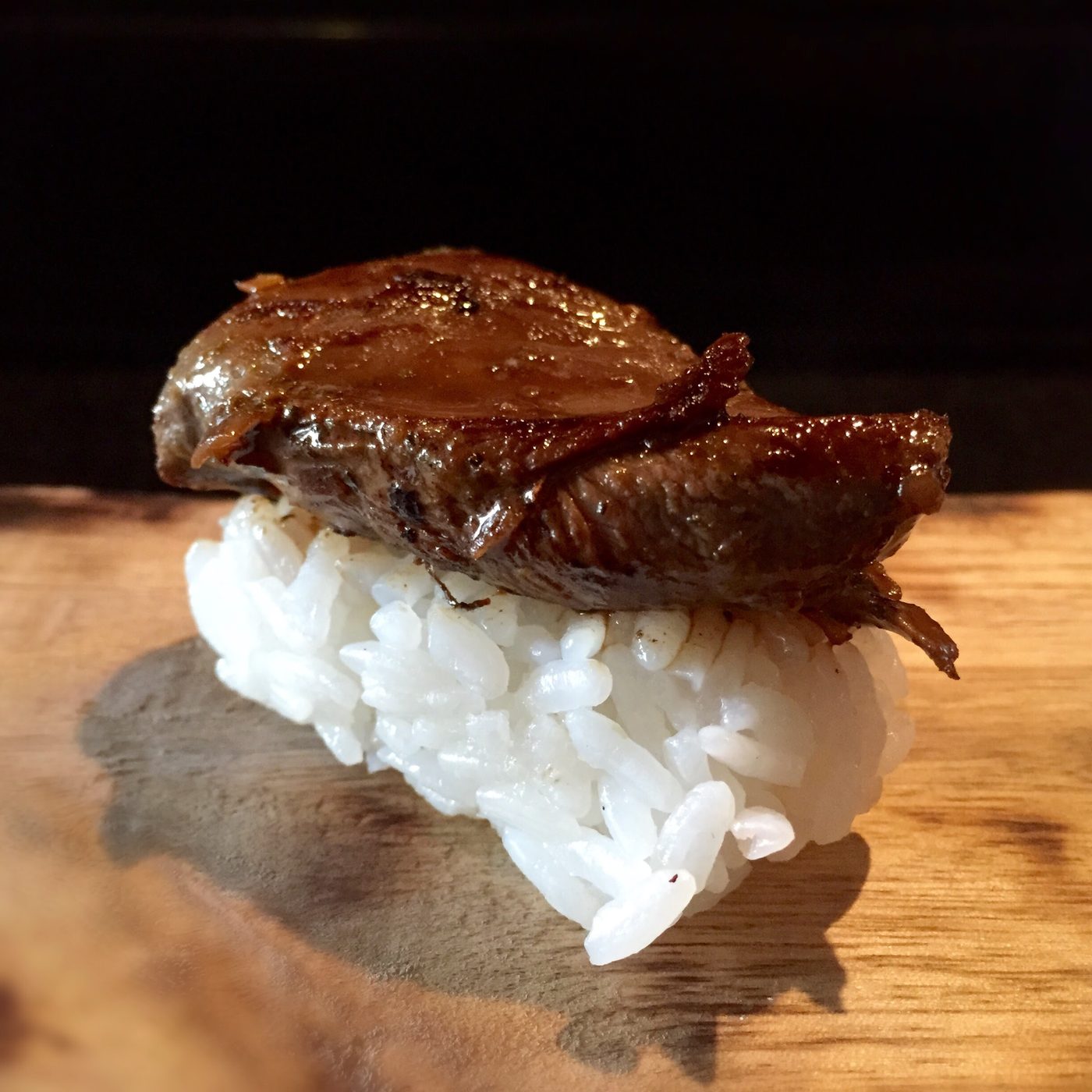
Pichón a la Brasa — Grilled Squab
A la brasa is not a neutral phrase in Peru. It belongs to pollo a la brasa, the charcoal-roast chicken that is the country's genuine national dish — the thing eaten on Sundays, not the thing served to visitors. Putting squab under that phrase, over rice, on a board with no nori at all, is the counter claiming a Peruvian idiom outright rather than translating one.
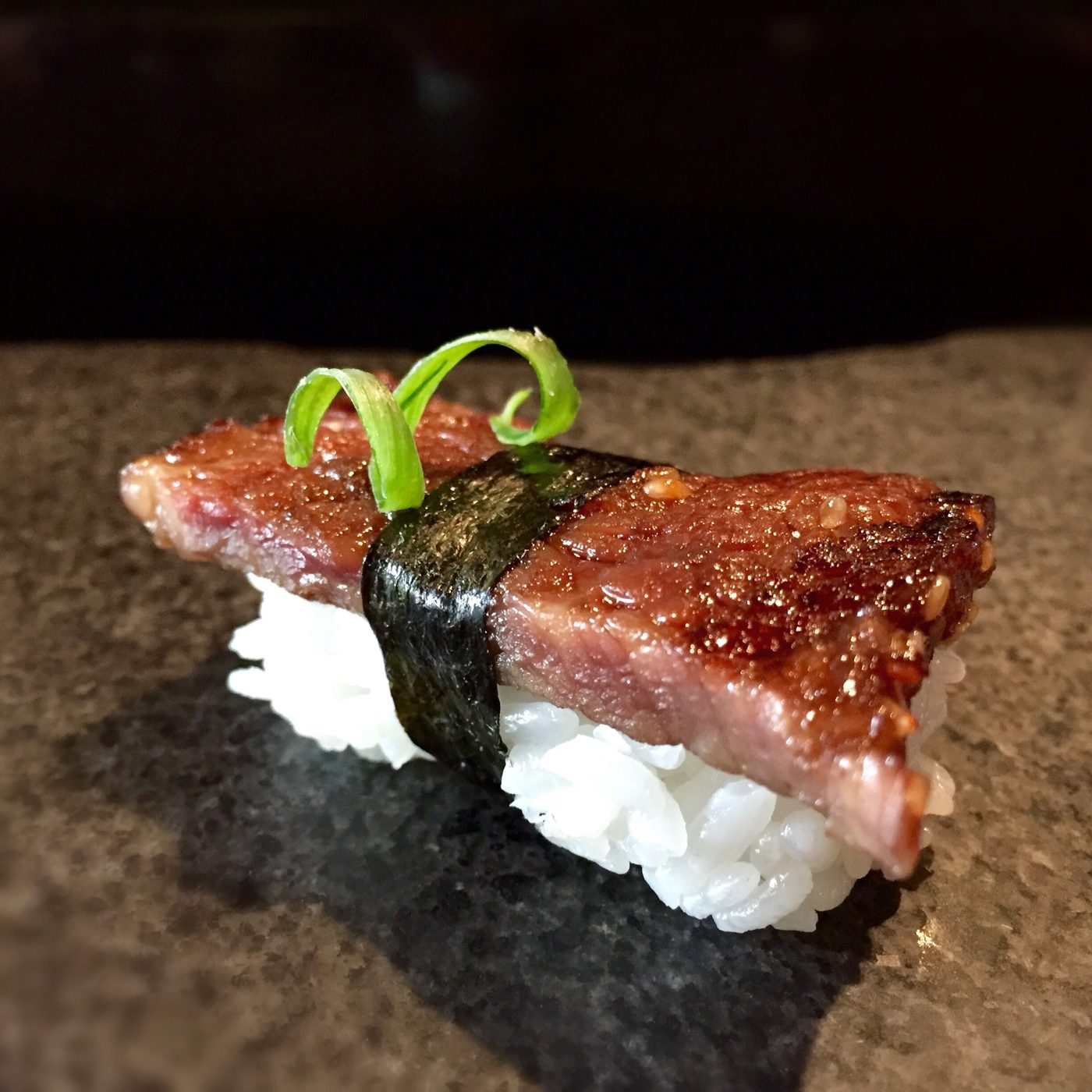
Calvi
Galbi, spelled for a Spanish mouth: b and v are the same sound here, so kalbi comes out calvi. It is the same instinct as unagui at course seven. Rather than import a standard romanization, the counter respells the borrowed word so that a limeño reading it aloud lands on the right sound. Two loanwords, two source languages, one spelling policy. The rib itself is the heaviest thing on the list — a slab thick enough that the rice underneath stops being a bed and becomes structural.
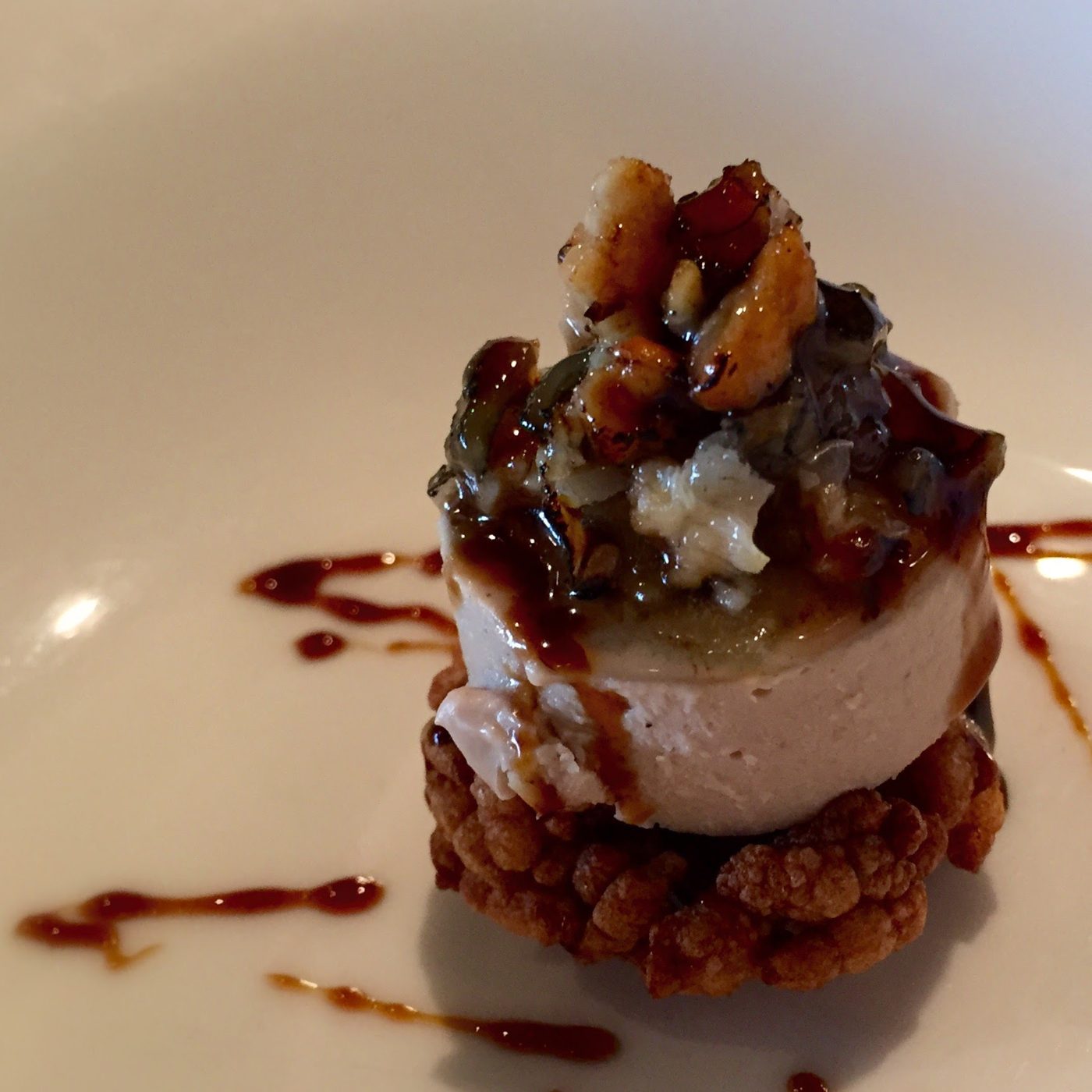
Sushi Crujiente — Crispy Sushi
The rice is not pressed here. It is puffed and deep-fried into a cratered disc and used as a base, with mousse above it and a pile of glazed seafood and greens on top. Which is the one piece on the list that stops being nigiri altogether. The rice has become a plate.
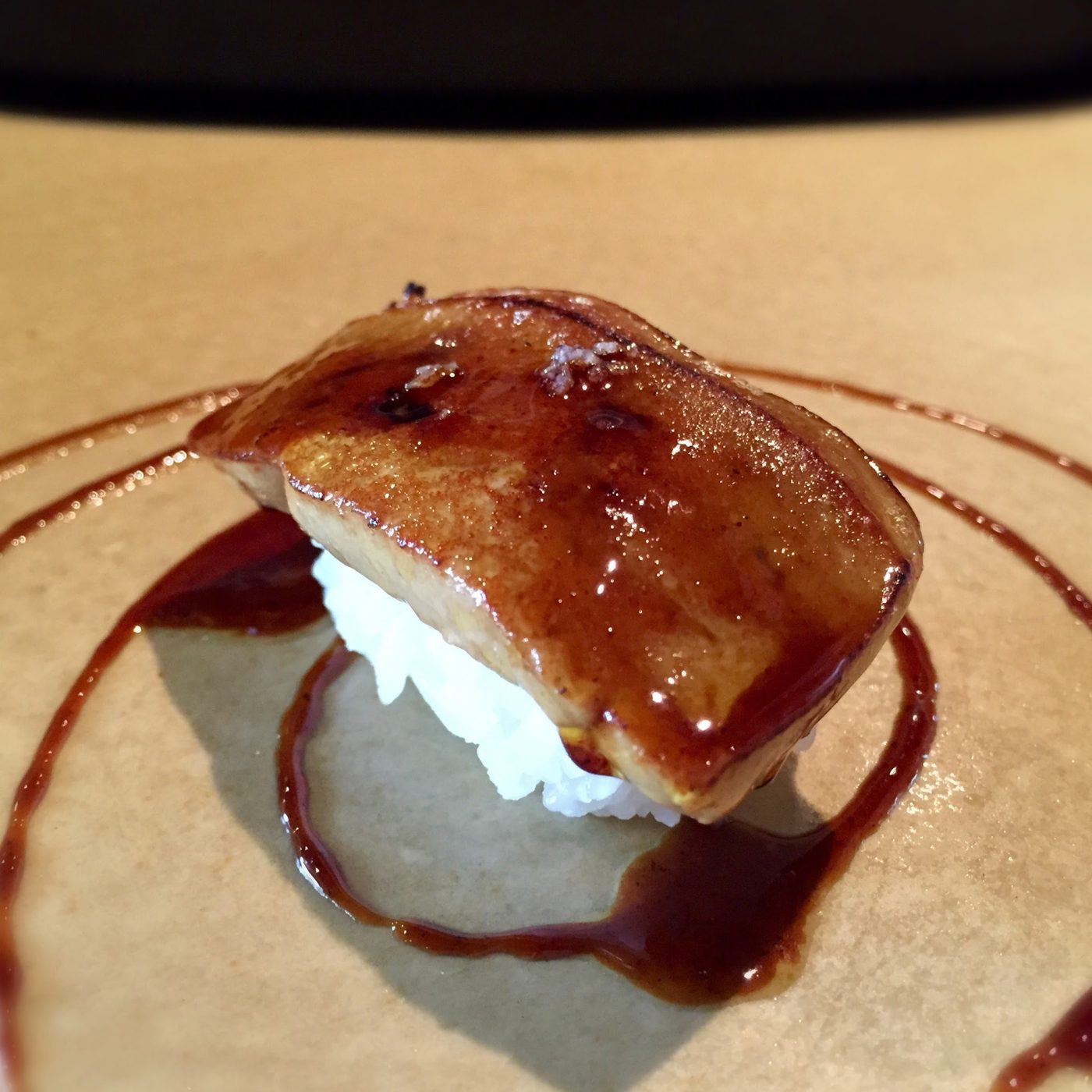
Intruso — The Intruder
Eighteenth of twenty, and the point where the counter stops being restrained. Foie gras over rice is a balance problem before it is a joke — fat that rich needs something dark and sharp against it, which is what the glaze is for. Arriving this late, after seventeen pieces of climbing weight, it reads less as provocation than as the top of the curve.
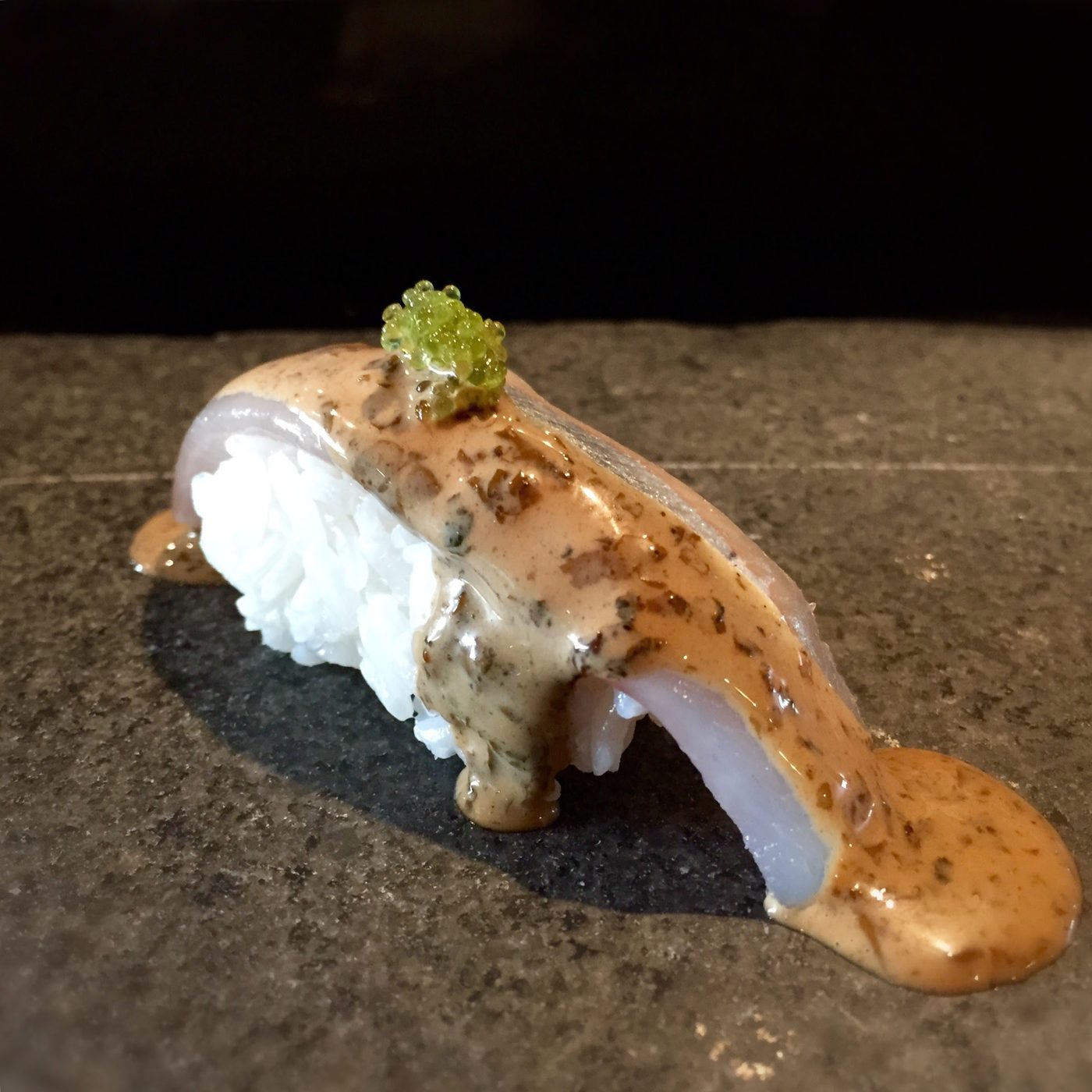
Unnamed
This is the line in the fold. What is on the plate: translucent white fish with a narrow silvered band along the top edge and a pink bloodline to one side, under the same heavy nori emulsion that dressed the pejerrey at course four, with wasabi tobiko over it. Enough to identify the dish. Not enough to name it. No copy of this carta exists anywhere I have been able to find — not one of its twenty names returns a result. Nineteen survive because they were in shot. This one is a crease.
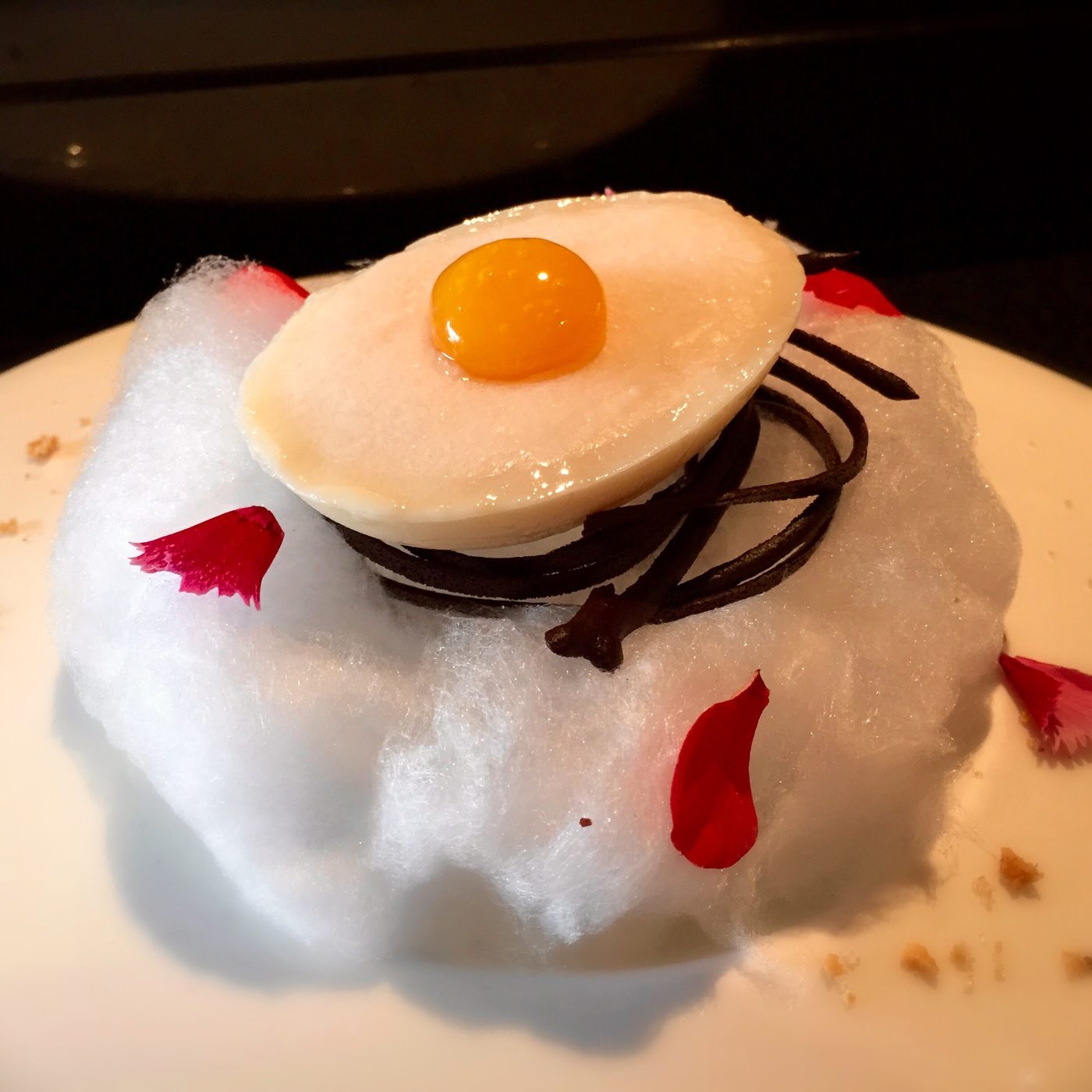
Huevo y Nido — Egg and Nest
Twentieth and last on the card, and it appears again on the separate dessert list the counter calls Happy Ending. Chirimoya is the custard apple — dense and white, somewhere between banana and pear — and here it plays the egg white under a white chocolate shell. The yolk is aguaymanto, the goldenberry, set as a gel and tart enough to stop the whole thing collapsing into sugar. That same fruit turns up again that evening at Astrid y Gastón, frozen into cylinders and doing the opposite job.
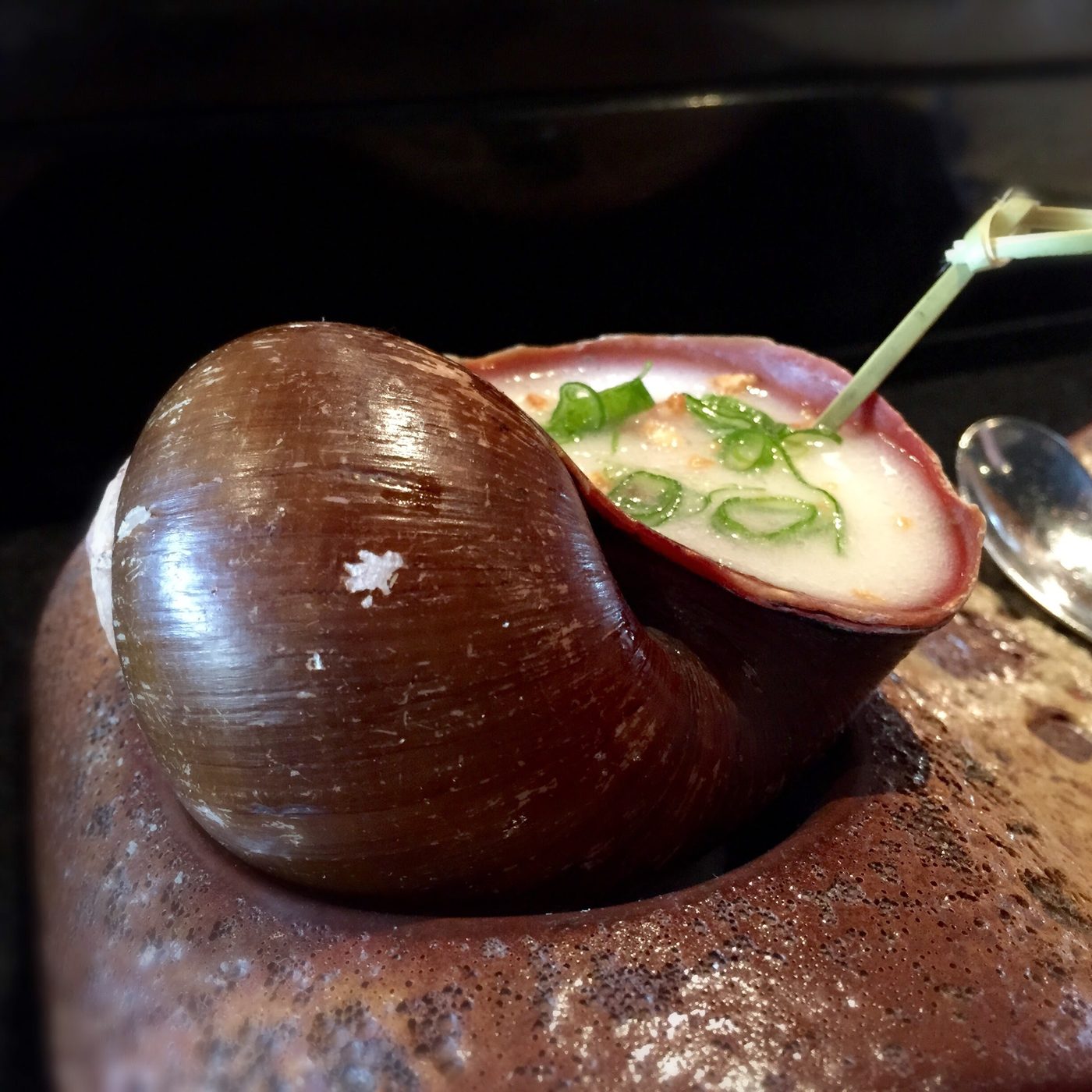
Churo
An Amazonian apple snail out of the rivers around Iquitos, about the size of a baseball, and nowhere on the printed menu. It is a pre-order item — the kitchen needs notice — which is precisely why it does not appear on a tasting menu. One went past our seats on a tray, we asked what it was, and a long while later two arrived, slotted into the place in the sequence where they belonged. Cooked the way the Amazon cooks them: the body lifted out, the meat worked into a cream and put back where it came from, with a bamboo pick to retrieve it. No announcement, no flourish.



The Newsletter
New pieces, plus what’s on my table next. Every few weeks.

An error has occurred somewhere and it is not possible to submit the form. Please try again later or contact us.


