


Red Scarves in Vancouver: Inside North America's 50 Best Bars

Jacob Ung
April 24, 2026

13 min read
About twenty spirits houses, one convention-centre stage, and a two-in-the-morning conversation about agave with the bartender everyone else in the room had just voted for.
The first time the North America’s 50 Best Bars Awards came to Vancouver, in 2025, I missed it — I was in Shanghai when it happened. A missed opportunity.
So when the awards returned in 2026, I knew I had to be there. Chen-Wei Lee of Southern Glazer’s Wine & Spirits and Rémy Cointreau asked his colleague Richard Blanchard whether I might be invited; Richard invited me and hosted the evening. Chen-Wei was in Montreal that night and missed it himself. My thanks to both of them.
It was my first time at one of these, and about as close to the centre of that world as a person can stand without working in it: Cointreau, part of the same house, was the ceremony’s orange liqueur partner and the sponsor of the red scarf, its colour drawn from the ribbon that has sat on every Cointreau bottle since 1849. Which is the long way of saying something I keep relearning: the best rooms aren’t the ones you buy your way into. They’re the ones an insider brings you into as one of their own.
Pre-party at Miku
It began at five, at Miku on the Coal Harbour waterfront, where Richard and Southern Glazer’s had put on a pre-party — a civilized way to start an evening that had no intention of ending civilly.
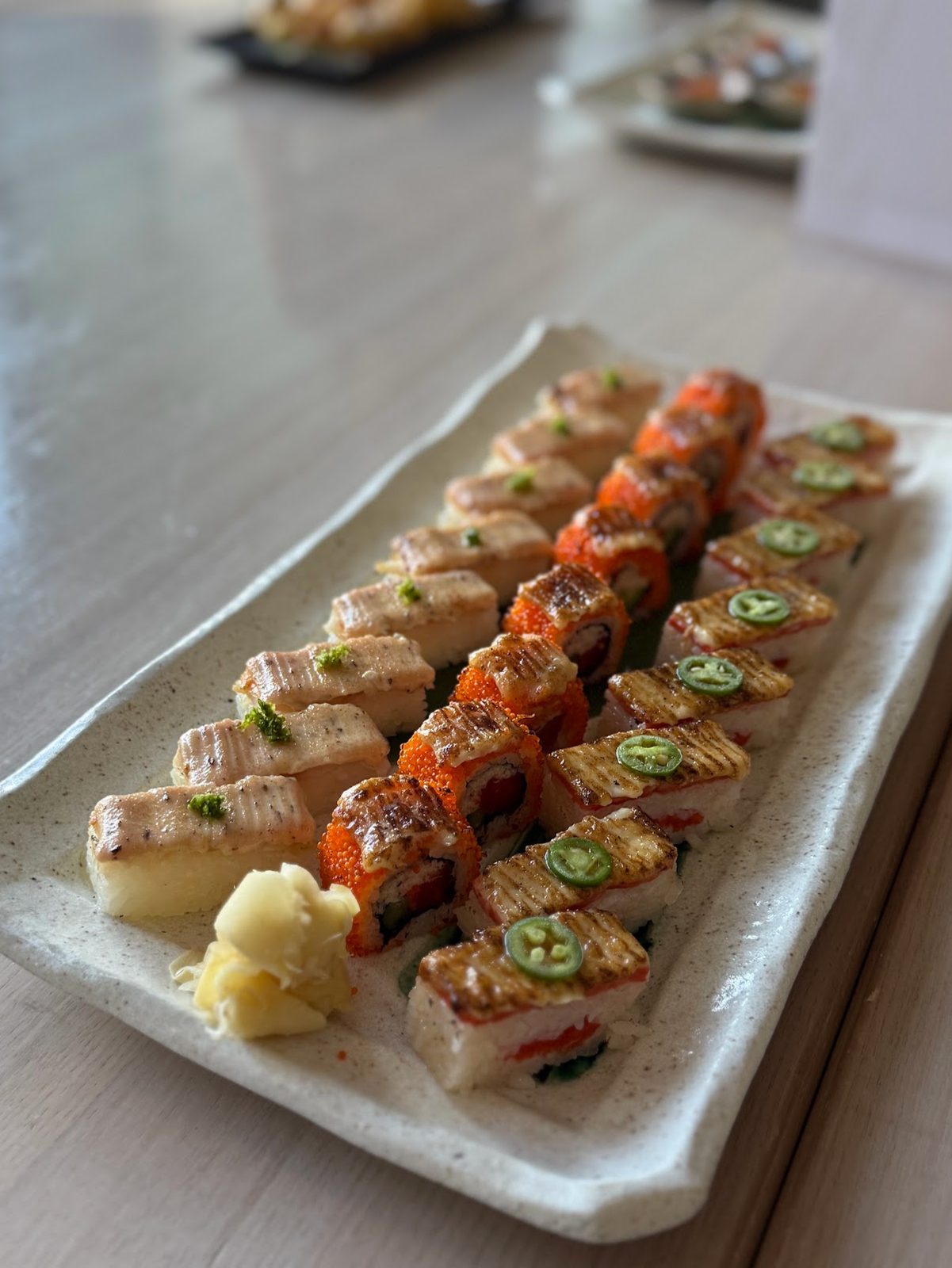
Miku built its name on aburi, the flame-searing of pressed sushi, and that’s exactly how it started: long ceramic platters with three different types of seared aburi sushi in rows. Around it, a spread of otsumami — the small Japanese dishes that exist specifically to be eaten alongside a drink rather than before a meal, which is a distinction English doesn’t really have a word for and probably should.
There were several wines open to choose from, but we started the other way, with the cocktail Miku had created for the evening around Rémy Martin: the Vieux Verger Nagano, which the restaurant described as evoking “an afternoon spent under old orchards in the Japanese countryside.” It arrived amber in a cut-crystal glass with a fan of apple slices laid across the top, and a chocolate macaron on a small plate beside it.
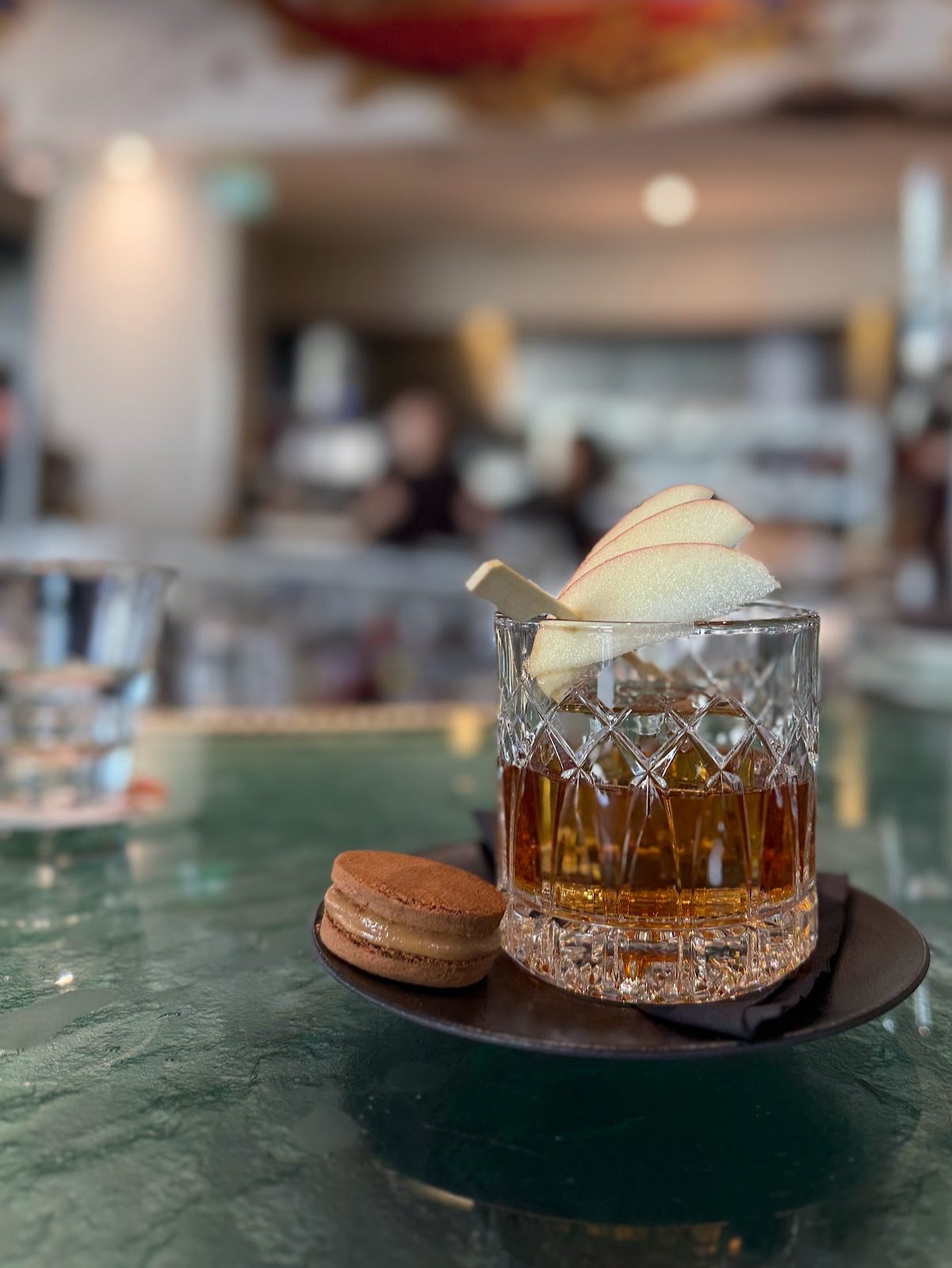
That macaron is worth pausing on. Nobody needed to send a cocktail out with a macaron on the plate at a five o’clock pre-party that most people would treat as a holding pattern before the real event. Somebody decided to anyway. Which turned out, as the night went on, to be the whole theme.
Vancouver Convention Centre West
Five minutes along the waterfront, then, to the west building of the Vancouver Convention Centre. Doors were at six; we arrived fashionably late, just before half past.
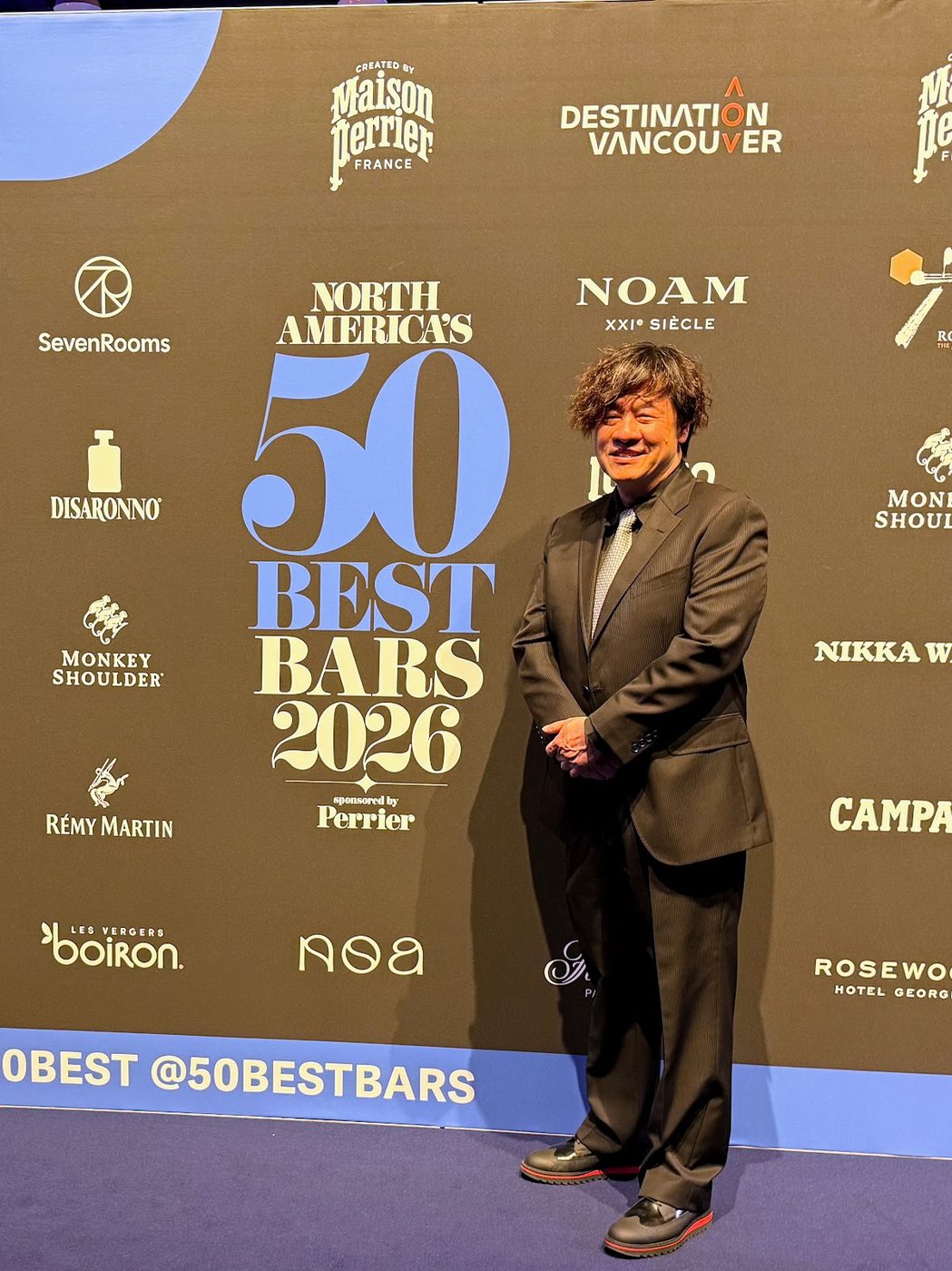
The scarves are the first thing you notice. They aren’t handed out on stage — every bar on the list collects them at the door, whole teams at a time, and each team stops at its own photo wall for a group shot on the way in. So the room you walk into is already half red, and you can tell at a glance who made the fifty. Nobody in a scarf knows yet where they placed.
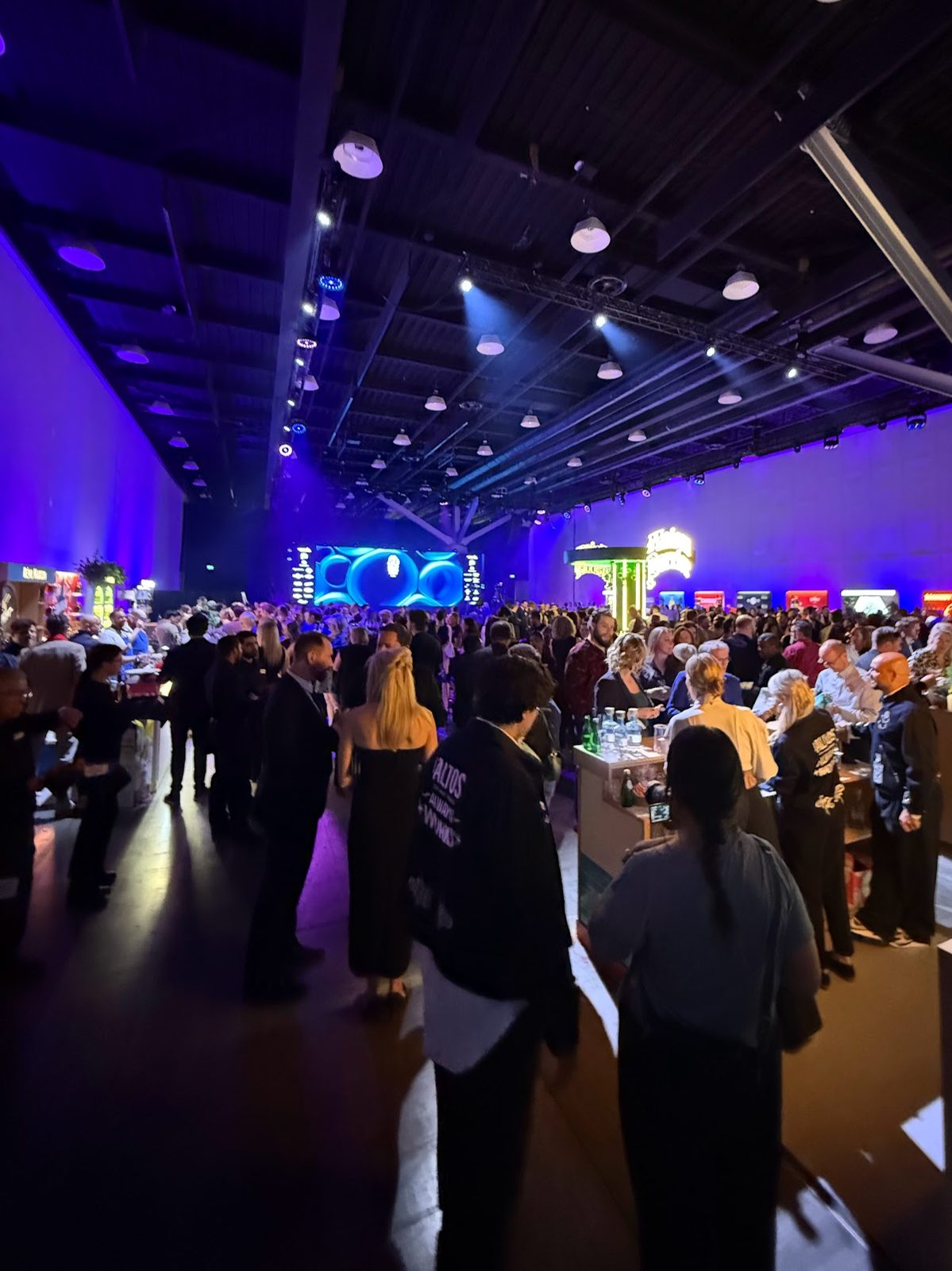
The room itself read as a club long before it read as an awards ceremony — dark, washed in blues and purples, spotlights swinging over a floor that had already filled up. And it was loud, but never deafening, which I’ve come to think was a deliberate and rather generous piece of design. You could hold a conversation. You had to raise your voice to do it and lean in a little closer than usual, but you could hold one, and for the next hour and a half very nearly everybody in that hall did.
Here is the part nobody warns you about, and the part I’d argue is the actual event.
Before the lights go down, the entire perimeter of the hall is lined with bars — one per spirits house, somewhere around twenty of them, each with a couple of bartenders and a barback working it, most flown in from somewhere else on the continent for the night. Every station was pouring two drinks of its own devising, which is arithmetic worth doing before you start: two apiece across twenty-odd stations is something like forty cocktails standing between you and the first award. That isn’t a tasting. That’s a decision about pacing you either make early and keep, or don’t make at all and regret at around eleven.
It was a party. A real one, and unmistakably a celebration rather than a marketing exercise, because the overwhelming majority of the room worked in the industry and had come to see each other. Very little of what I overheard was transactional. People were comparing notes on techniques, arguing amiably about ice, introducing one bar’s team to another’s, and generally behaving like colleagues who happen to be scattered across a continent and only get one night a year in the same room. Collaboration is the word I keep landing on, and it’s not a word I expected to apply to an evening built around a numbered list.
Not that anyone was pacing themselves especially well. At one point I was at a table with Fred Lee and his partner Joshua McVeity behind a small forest of glassware — mint, shiso, lavender and a strawberry among the garnishes — none of which any of us could entirely account for.

Roku had built their station around the season — a Spring Leaf Negroni with sakura-infused gin, Campari, watermelon, agave and salt; a Salt & Coco that ran green Chartreuse and white cacao against grapefruit, milk and cracked pepper; a Roku Gin Fizz finished with shiso — all created by Takuma Watanabe, and all printed on a little card in a brass frame, like a menu in a room that expected you to read it.
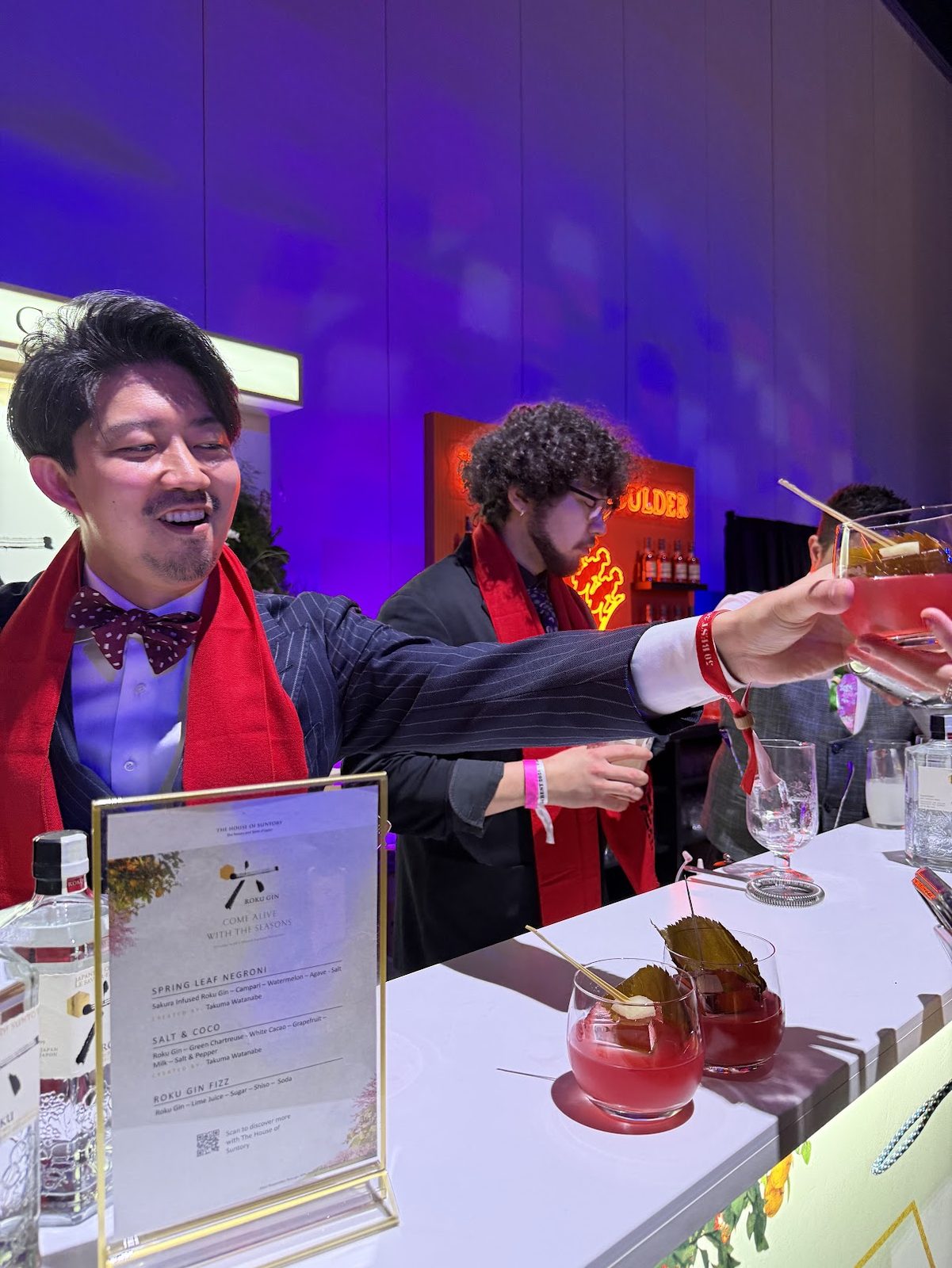
Cassandra Anderton, who writes Good Life Vancouver, went straight for the Spring Leaf Negroni, which is the one in the photograph — sakura leaf and all.
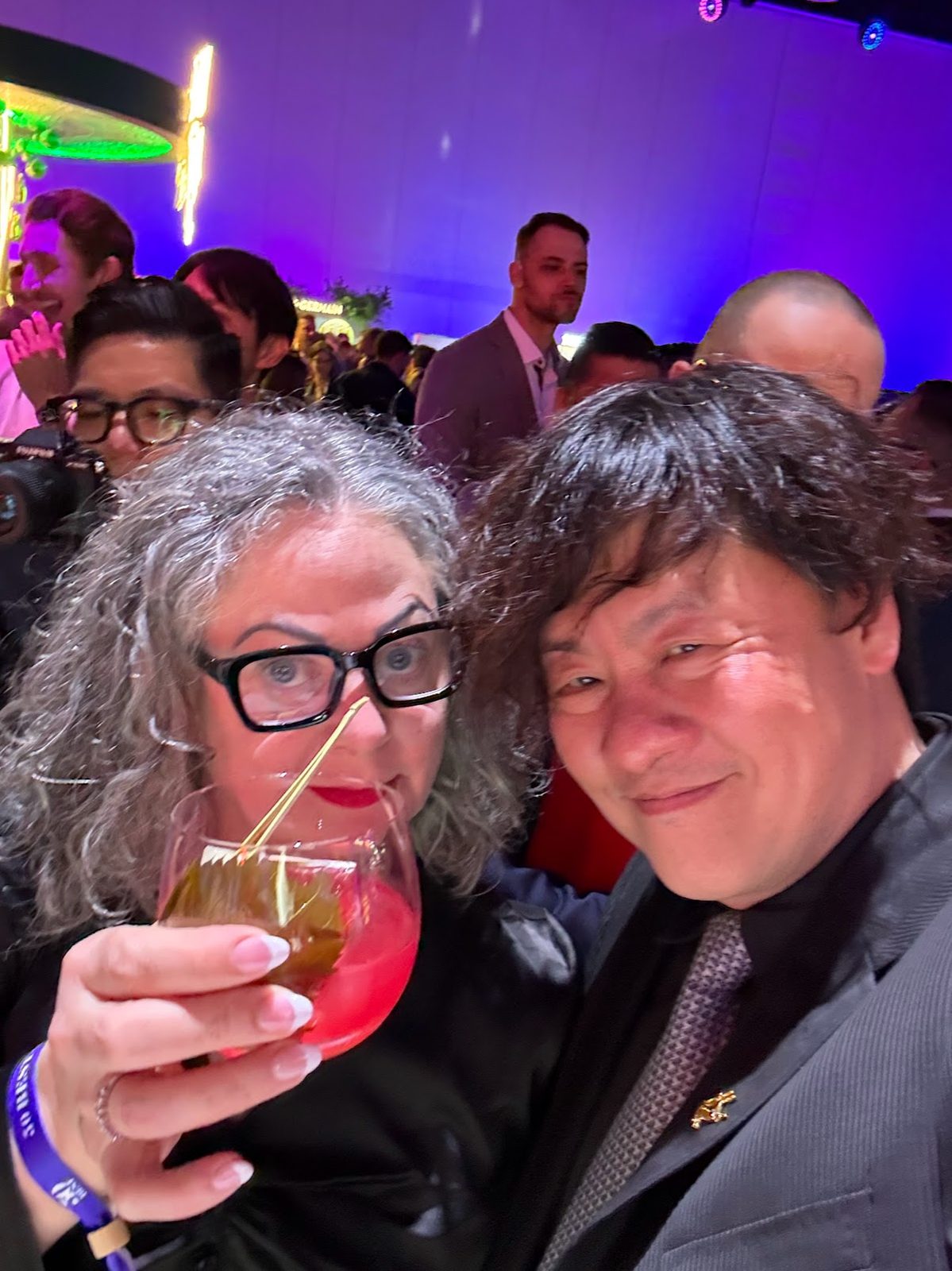
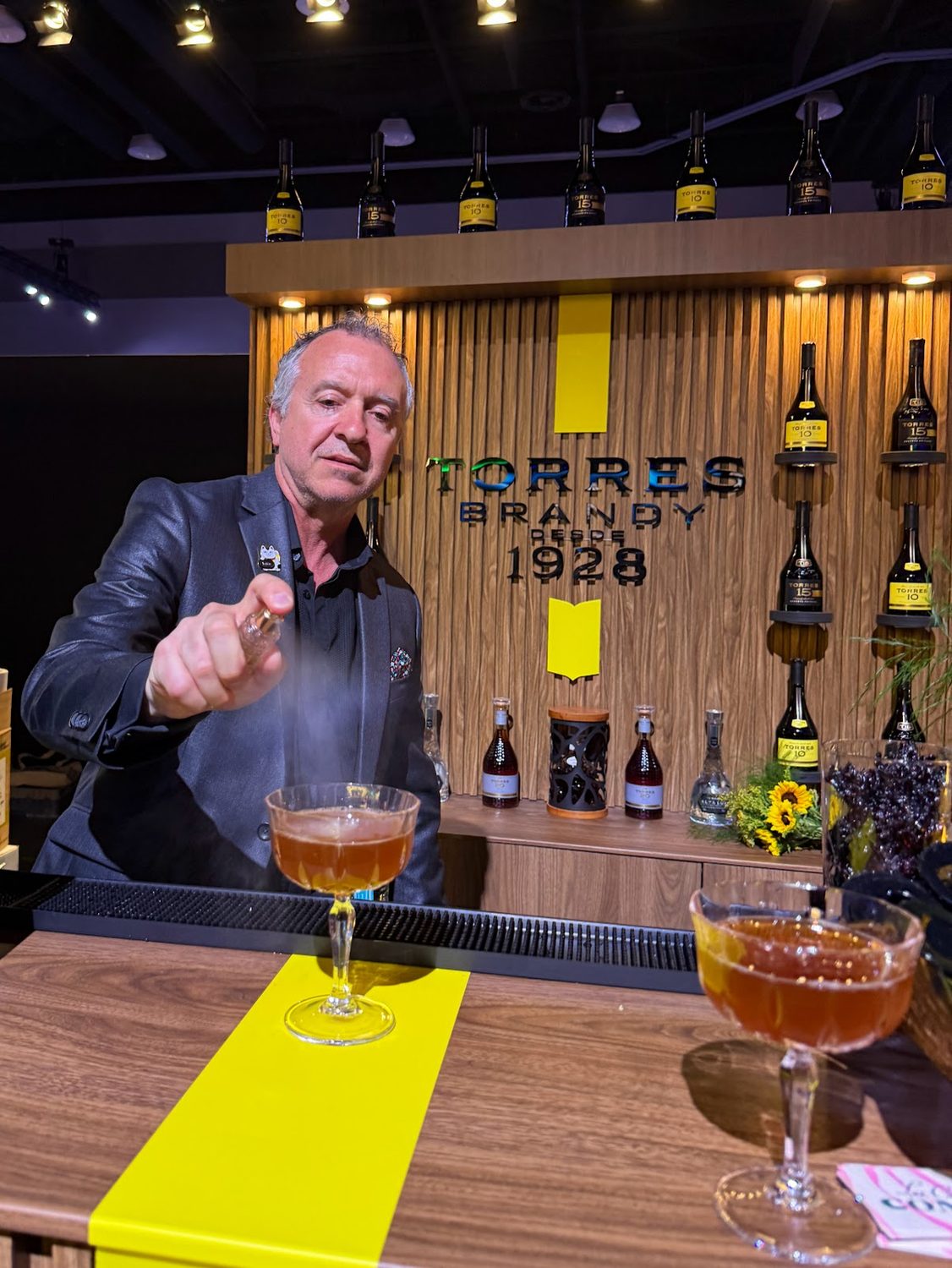
Torres was pouring a Perfect Concha and a Parlor Pomme 75, and the bartender working it misted the surface of each coupe before handing it over, unhurried, the way you’d do the last step of a much longer recipe rather than a flourish for a crowd.
Rémy Martin had gone somewhere unexpected with raspberry and tomato, and again with passionfruit. Cointreau had a spicy margarita built on a new special edition. Les Vergers Boiron — who make fruit purées rather than spirits, and were therefore the most quietly interesting bar in the room — had clarified something with chestnut, vanilla and raspberry. Ketel One was pulling nitro espresso martinis. Siete Misterios had a full mezcal bar running with two bartenders stirring in tandem, which is a genuinely calming thing to stand and watch for a minute when the rest of the room is at volume.


But the detail I keep returning to isn’t any of the drinks. It’s who was actually behind each station. Monkey Shoulder’s was being run by Civil Liberties out of Toronto and La Cantina Concha. St-Germain’s was being run by Meo, from Chinatown. These are people whose entire working life is hosting other people, and they had flown across a continent, or driven in from across the river, to spend one of their few nights off hosting each other. That’s the part that doesn’t photograph, and it’s the part that made the evening.
The Stage
Then the lights go down, and it starts further back than you’d expect: a recap of the extended list, 100 counting down to 51 — the bars that landed just outside the fifty, already published online. Only then do the fifty themselves begin, read backwards from No. 50, the countdown breaking off every so often to hand out one of the special awards.
Every single name got cheered. Not politely, and not only the ones near the top — each announcement pulled a roar out of the hall, often from several directions at once, and it held the whole way. That is not what a competitive room sounds like. It’s what a room sounds like when the people in it are genuinely pleased for one another, and after an evening of watching bartenders host each other in somebody else’s city, it was consistent with everything I’d already seen.
I won’t pretend I watched it neutrally. The moments I still have are the ones I had some links to.
Handshake Speakeasy, out of Mexico City, took the Rémy Martin Legend of the List — the award for what a bar has meant to the list over time rather than where it placed this year. I’d drunk there in 2024. Handshake had been the No. 1 bar in North America two years running; in 2026 it settled at No. 12 and was handed the trophy that says, in effect, we all know what you did. Both things were true in the same ten minutes, and the room seemed to understand that without anybody having to explain it.

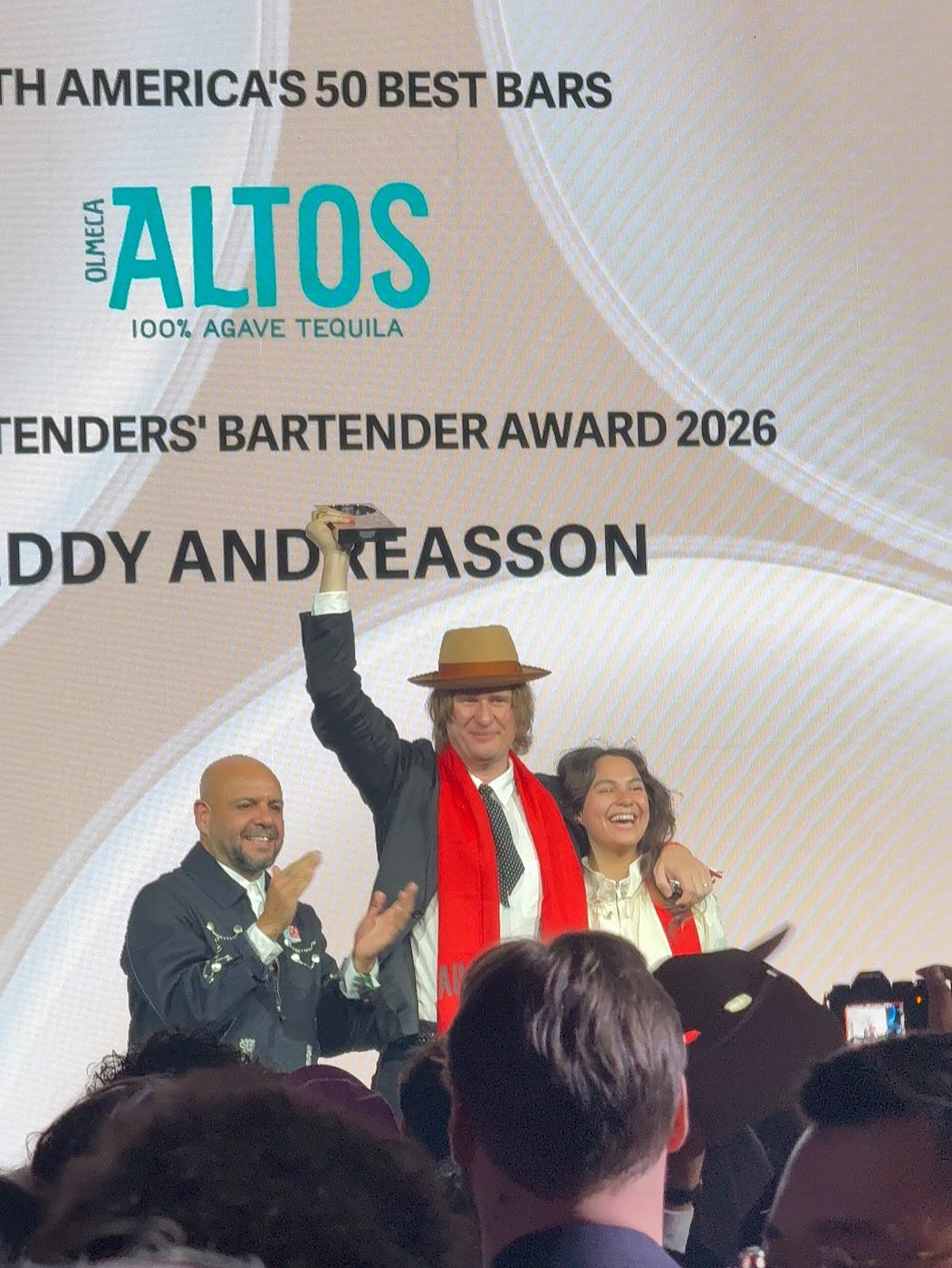
Freddy Andreasson of El Gallo Altanero in Guadalajara took the Altos Bartenders’ Bartender award — the one voted on by the people who actually do the job, for the person they’d most like to be. I didn’t know him then. I would by two in the morning.
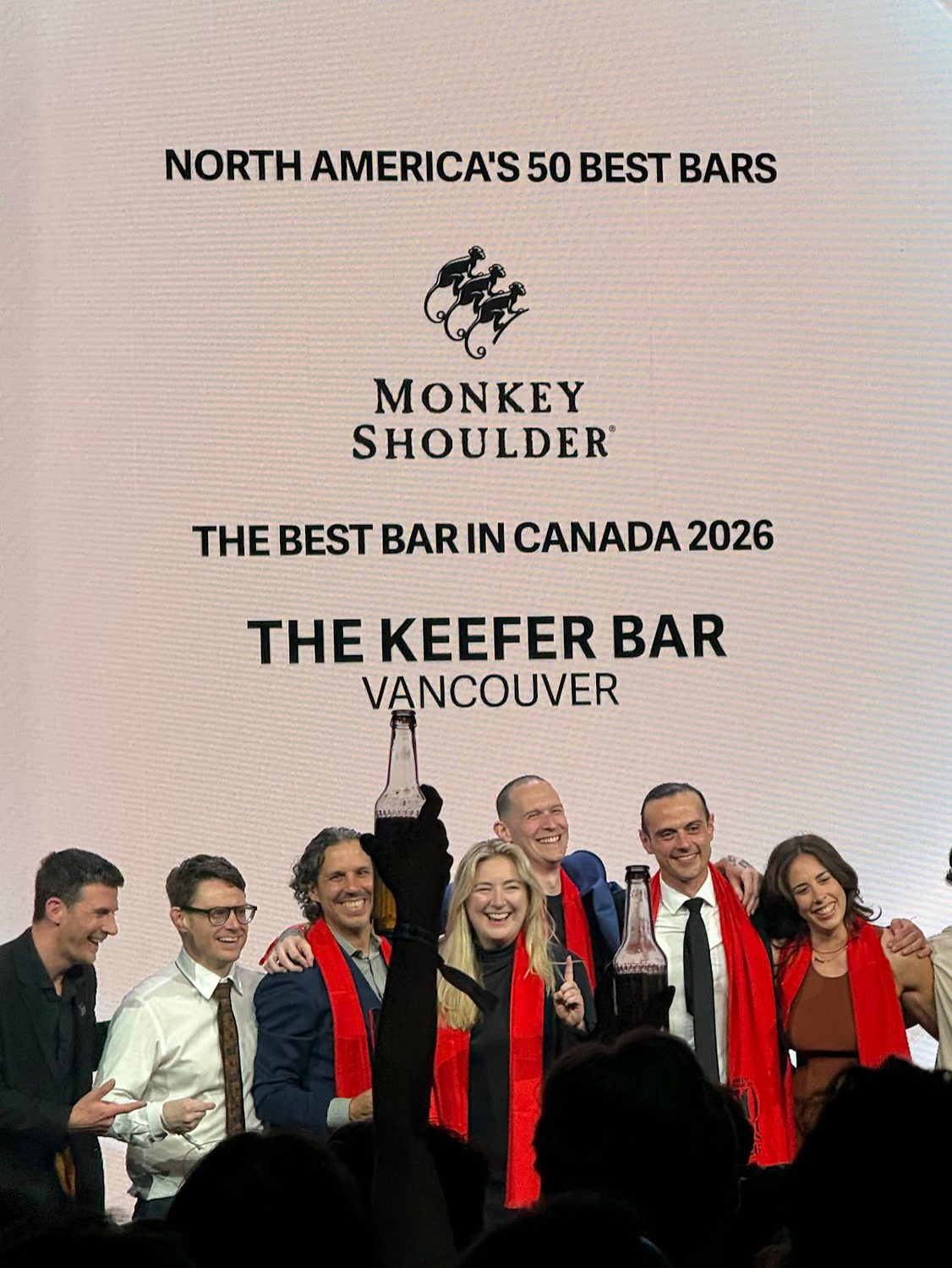
And then the one I’d have driven a great deal further for. The Keefer Bar — a bar I drink at, in Chinatown — was named the Best Bar in Canada and placed at No. 7, the highest any Canadian bar has ever ranked on this list. The year before, it had been No. 28. You can hold whatever view you like about rankings and still recognize that twenty-one places in twelve months is not a rounding error; that’s a room being seen properly, possibly for the first time, by people who spend their lives comparing rooms. June on Cambie came in at 17, Prophecy at 32, Botanist at 38 — eight Canadian bars in the fifty, four of them in Vancouver, and I’ve spent evenings in all four.
And then they announced No. 1, and confetti came down on Sip & Guzzle out of New York.
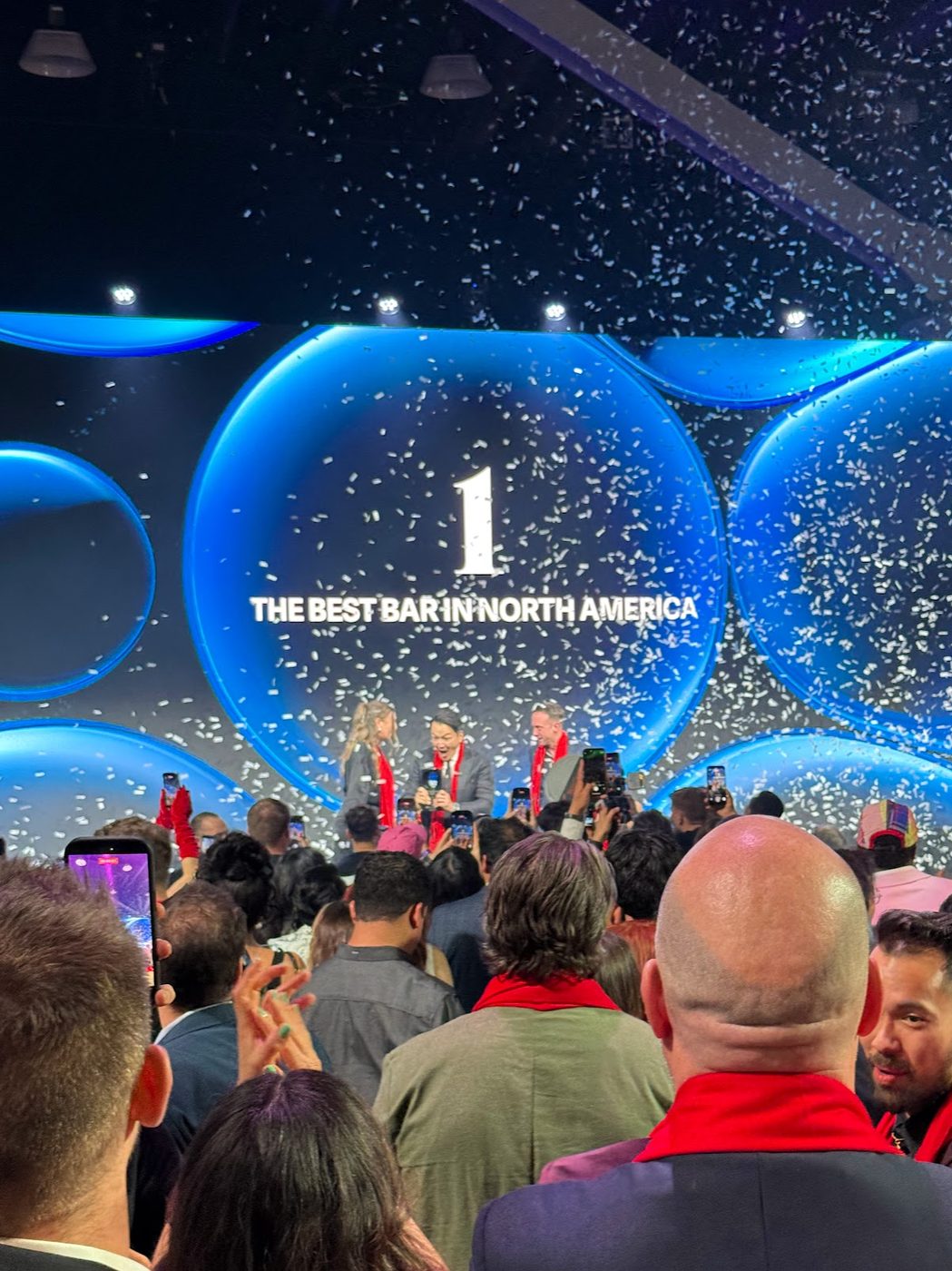
Sip & Guzzle is worth understanding, because the win isn’t the story so much as the shape of it. It’s Shingo Gokan and Steve Schneider’s bar in Greenwich Village — two floors running two entirely separate philosophies. Guzzle upstairs is Schneider’s room, highballs and beer and drinks you can order without a conversation. Sip downstairs is Gokan’s, a Japanese whisky lounge where things take longer on purpose. It opened in January 2024, debuted on this list at No. 5 the following year, and reached the top of the continent in its third calendar year of existence.
Gokan I’d argue is the most quietly consequential bar operator working anywhere right now. His SG Group runs The SG Club in Tokyo, Speak Low, Sober Company and The Odd Couple in Shanghai, The Bellwood, SG Low — several of which have appeared on World’s 50 Best Bars and Asia’s 50 Best Bars in their own right, which is a difficult thing to do once and a very difficult thing to do repeatedly across two continents. The Odd Couple, as it happens, he built with Schneider too, back in 2018. So the New York win isn’t a first act at all. It’s a body of work that has finally landed on this continent, and it says something about where the centre of gravity in this industry actually sits that it took this long for most of North America to notice.

North America’s 50 Best Bars 2026 — The Full List
- Sip & Guzzle — New York
- Bar Mauro — Mexico City
- Bar Snack — New York
- Schmuck — New York
- Tlecān — Mexico City
- Jewel of the South — New Orleans
- The Keefer Bar — Vancouver
- Bar Pompette — Toronto
- Superbueno — New York
- El Gallo Altanero — Guadalajara
- Kumiko — Chicago
- Handshake Speakeasy — Mexico City
- Form + Matter — Mexico City
- True Laurel — San Francisco
- Clemente Bar — New York
- Best Intentions — Chicago
- June on Cambie — Vancouver
- Mecenas — Guadalajara
- Library Bar — Toronto
- Licorería Limantour — Mexico City
- Cure — New Orleans
- Mother — Toronto
- Martiny’s — New York
- Bekeb — San Miguel de Allende
- Kaito del Valle — Mexico City
- La Factoría — San Juan
- Gus’ Sip & Dip — Chicago
- Mírate — Los Angeles
- Civil Works — Toronto
- Bisous — Chicago
- Angel’s Share — New York
- Prophecy — Vancouver
- Overstory — New York
- Press Club — Washington DC
- Double Chicken Please — New York
- Bar Madonna — New York
- Attaboy — New York
- Botanist Bar — Vancouver
- Service Bar — Washington DC
- Maison Premiere — New York
- Pacific Cocktail Haven — San Francisco
- Café La Trova — Miami
- Selva — Oaxaca
- Daisy Margarita Bar — Los Angeles
- Employees Only — New York
- Viceversa — Miami
- Bandista — Houston
- Baltra Bar — Mexico City
- Library by the Sea — Grand Cayman
- Bon Vivants — Nassau
The Special Awards
- Legend of the List (Rémy Martin) — Handshake Speakeasy, Mexico City
- Industry Icon (Roku) — Chris Hannah, Jewel of the South
- Art of Hospitality (Michter’s) — Kumiko, Chicago
- Bartenders’ Bartender (Olmeca Altos) — Freddy Andreasson, El Gallo Altanero
- Best New Opening (Three Cents) — Schmuck, New York
- Highest New Entry (Disaronno) — Bar Snack, New York
- Highest Climber (Nikka) — Cure, New Orleans
- Sustainable Bar (Ketel One) — Library Bar, Toronto
- Best Cocktail Menu (Siete Misterios) — Allegory, Washington DC
- Best Bar Design (SevenRooms) — Daydream Rum Bar, Albuquerque
- One To Watch (Campari) — Identidad, San Juan
The After, After, and After Parties
The schedule I’d been sent ran out at ten. Miku at five, reception at six, ceremony at eight, post-awards reception at half past nine, after-party at Mount Pleasant Vintage & Provisions at ten. Whoever put that itinerary together knew exactly what they were doing, and also knew there was no point pretending to plan anything past it.
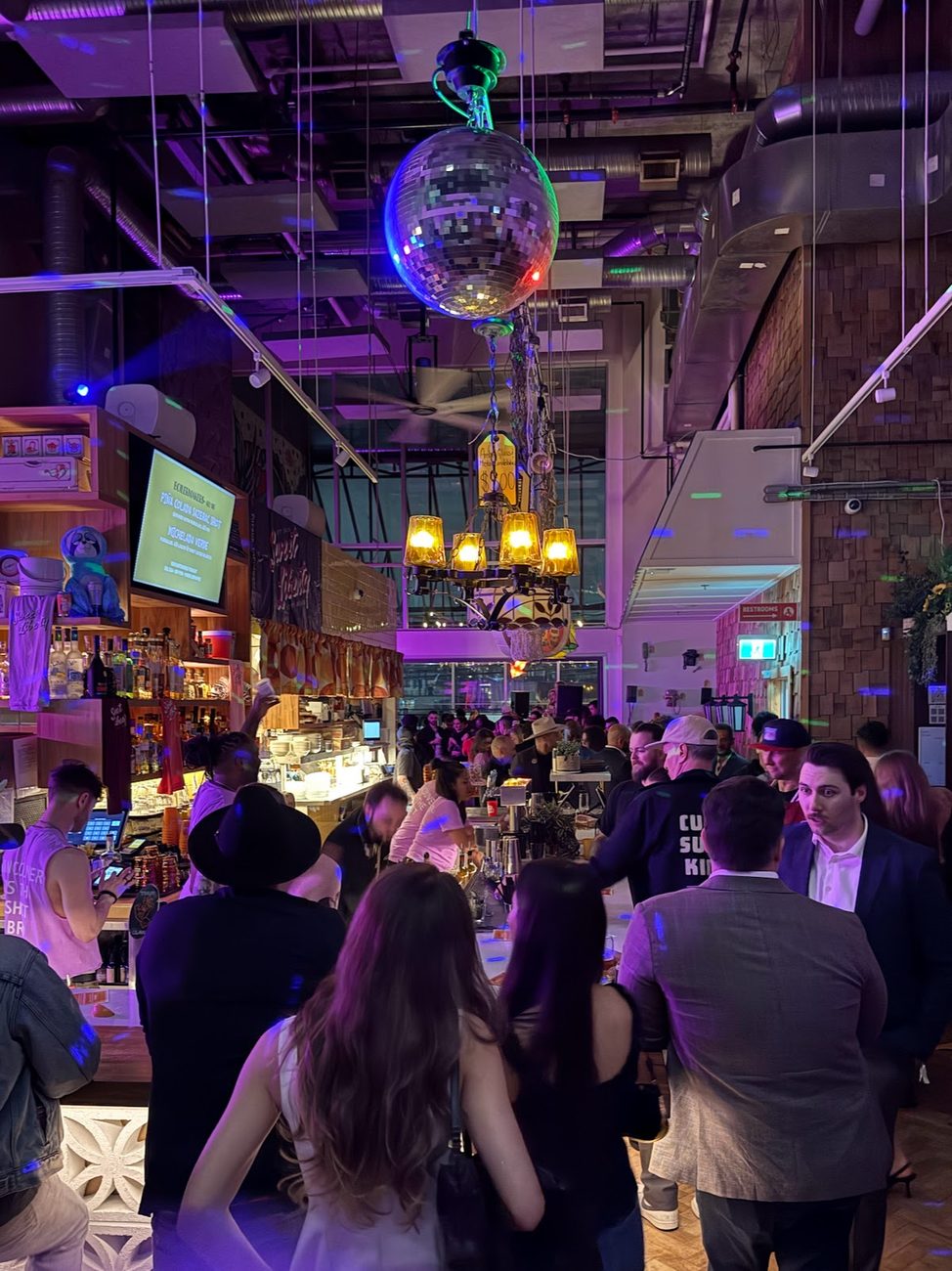
By twenty to midnight I was still at Mount Pleasant, under a disco ball and a brass chandelier, in a room loud enough that everyone had given up on conversation and moved on to affectionate shouting. There was a Piña Colada Jazzercise on the screen behind the bar, which I did not order and now slightly regret. Nobody in that room was talking about the rankings. Two hours earlier the entire industry had been ranked one to fifty in front of each other, and by midnight it had been comprehensively forgotten in favour of working out where everybody was going next.
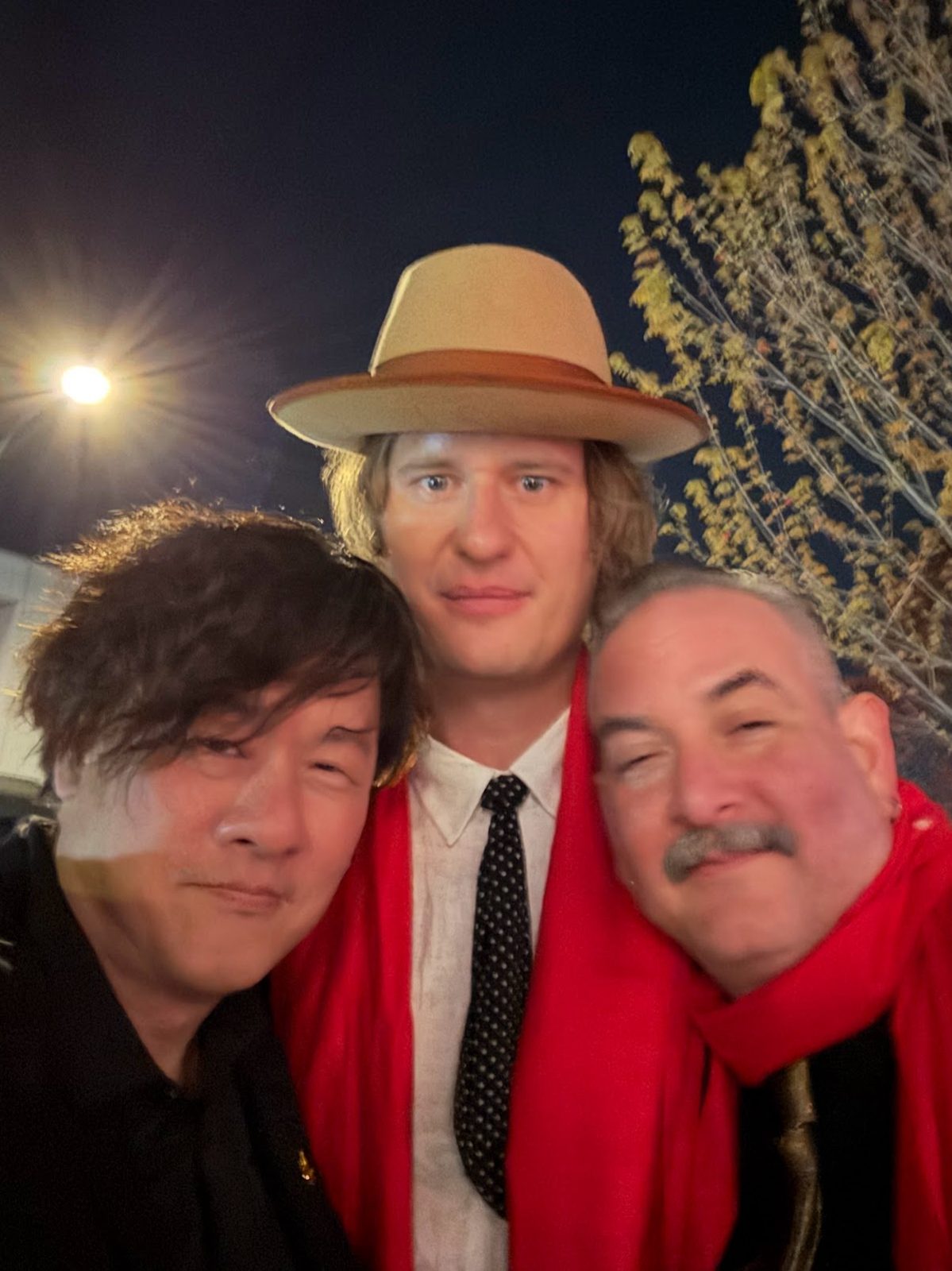
At about a quarter to two in the morning I ended up standing on a sidewalk with Freddy Andreasson, still in the tan fedora and the red scarf he’d been wearing on stage six hours earlier, talking about agave. Not about the award — we barely touched it. He has spent the better part of a decade building El Gallo Altanero into something people describe, without any embarrassment, as a shrine to independent tequila and mezcal, and he is protective of it in the specific way that people are only protective of things they genuinely understand.
It struck me later that of everything handed out that evening, his is the award that most closely measures the thing I actually care about. Not whether a room is good — plenty of rooms are good — but whether the person standing in it is someone that other people doing the same job would like to be. That’s not a ranking. That’s a reputation.
Half an hour after that, past two in the morning, I was in a much smaller room hung with a Canadian flag and rum merchandise, with a bartender who was still wearing his red scarf, searching for the top of his shaker tin trophy. He’d been on the convention centre floor that evening like the rest of us — he’d come up from one of the Caribbean bars on the list, and the following morning I forgot his name, which I’d rather admit than guess at. If he ever reads this: you know who you are, contact me.
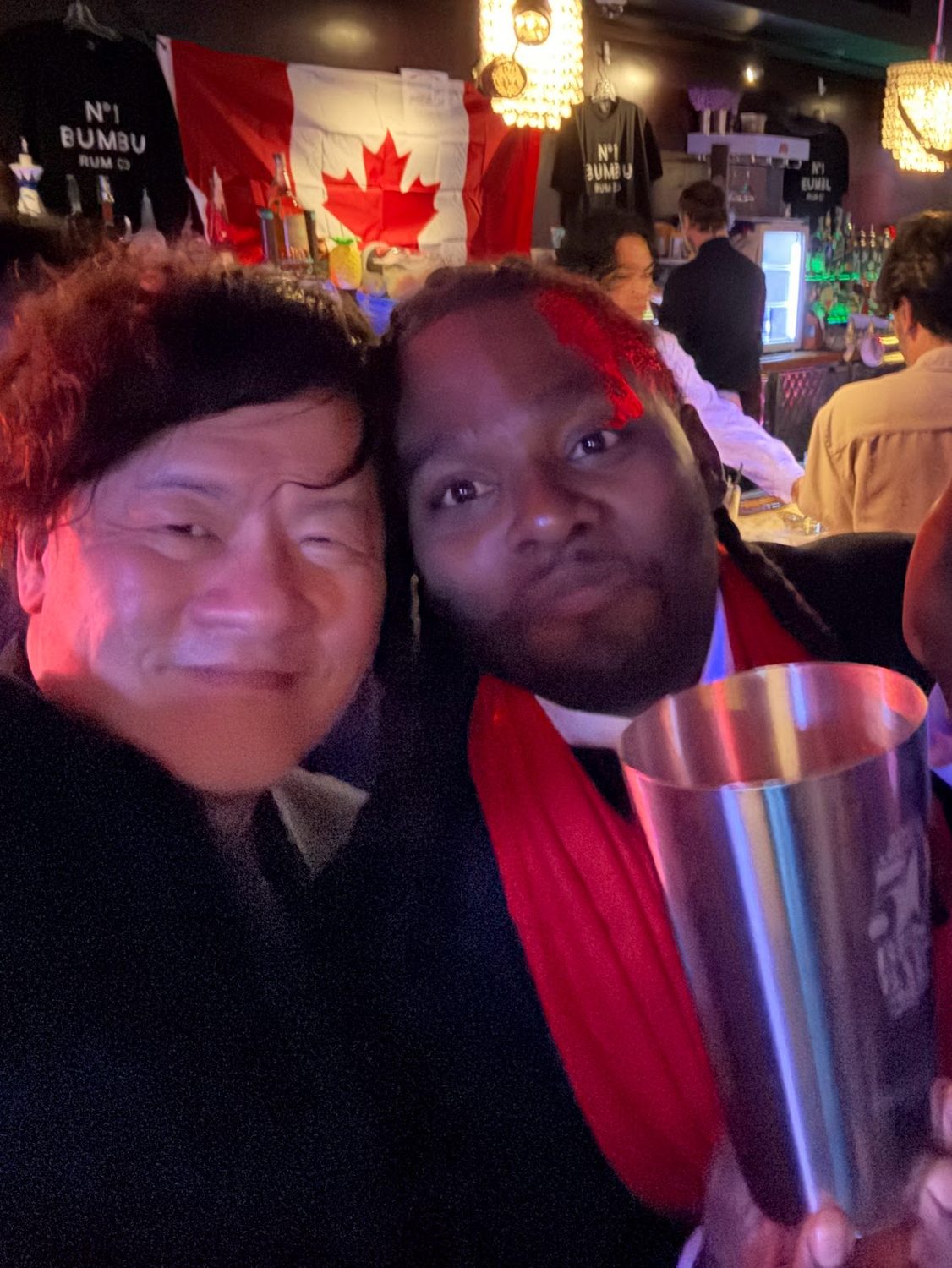
That’s the image I’ve kept from the whole night, and not the confetti. A small room past two in the morning, a man still in his scarf, holding up the broken trophy he’d been carrying since the stage, and not one person in that room asking anybody where they’d placed. Nobody was working by then and nobody was being hosted. We were drinking with strangers and turning them, over the course of an hour, into people we knew. I’ve thought a lot about the line between service and hospitality — service being what’s expected of you, hospitality being everything past it — and what struck me at that hour was that the second one doesn’t clock off when the shift does. It’s just how these people are with each other, and with whoever happens to be standing there. Nine hours earlier it had been a macaron on a plate at Miku. Before that, it was someone in Montreal asking a colleague whether there was room for one more. Same instinct, running the entire length of an evening.
I have a bar I call home in each of the cities I frequent. Project Vino Reserve in Manila, like the television show Cheers, where everyone knows “my name”, and Bar Anthem in Ginza: no menu, no food, drinks built to your mood, and a room of regulars I can only really talk to with a translation app open on the counter we share. They have never appeared on any of these lists, but both were recommended to me by bartenders who have. What surprised me about this ceremony is how much it turned out to be the same thing at scale — the ranking is really just the pretext, and what you actually go for is the chance to stand in a room where hospitality is the first language, and to discover that people who have never met you will put a drink in your hand and then explain, at length and with real pleasure, exactly why it’s built the way it is.
I missed this once. I don’t intend to make that mistake twice — not with this list, and not with the rest of the calendar these things sit on. World’s 50 Best Bars is on it now too.



The Newsletter
New pieces, plus what’s on my table next. Every few weeks.

An error has occurred somewhere and it is not possible to submit the form. Please try again later or contact us.


