


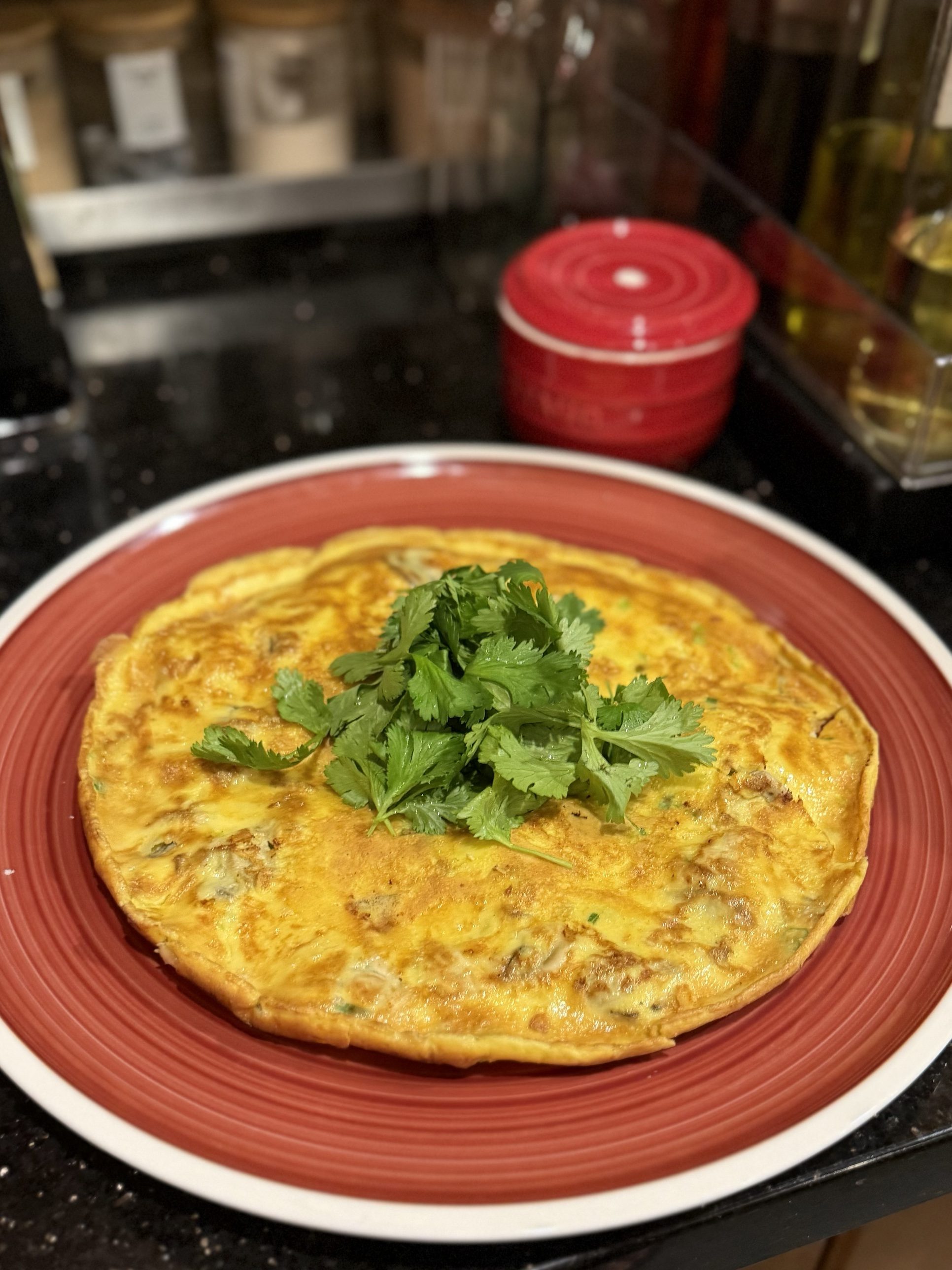


Look for an oyster omelette recipe online and you’ll mostly find the Taiwanese version: soft, loose and a little gooey, held together with sweet potato starch and finished with a sweet red sauce, usually built on ketchup. It’s a great dish and one of the definitive dishes of Taiwan’s night market culture. It just isn’t the one I grew up with. In my family we call ours by the same name, Oh Ah Chian (蚵仔煎), but it’s a different dish: closer to a pancake, firmer and crisper. I’ve found almost nothing written down about it, so here it is.
Like Hong Bah, this is a simple, everyday dish, and every family probably has its own version. I’ll also admit it’s mostly one I cook for myself. My wife doesn’t eat oysters, so when I make it, I make it the way I like it.
One pancake serves about eight as one dish among several, cut into eighths, or two on its own with rice. The units are imperial, with metric in brackets.
Ingredients
Batter
- 2 tbsp (30 ml) rice flour
- 1 tbsp (15 ml) potato starch
- A pinch of salt
- A dash or two of ground white pepper
- About ½ tsp (2.5 ml) fish sauce
- About 3 tbsp (45 ml) cold water, or the oyster nectar the oysters were packed in
- 3 large eggs
Filling
- About 10 to 12 oz (280 to 340 g) fresh shucked oysters: 3 or 4 if they’re large, 12 to 16 if they’re small
- At least 2 green onions, white and green parts, sliced
- Preserved radish (optional), 3 to 4 tbsp (45 to 60 ml) at most, rinsed and dried
For the Pan
- About 1 tbsp (15 ml) neutral oil (such as canola), plus a little more for the flip if needed
To Finish
- A handful of cilantro leaves and tender sprigs
A word on the oysters. Most Chinese grocery stores sell them already shucked, in jars in the refrigerated section near the fish counter, which saves you the shucking. How many you need depends on their size, so think of it this way: you want enough to spread across the pan so that every bite has an oyster in it. They’re the main ingredient, so don’t skimp. Smaller ones are ideal. If yours are larger, cut them into bite-sized pieces, about 1 in. (2.5 cm) square. Before you cut them, pat them completely dry.

Keep the liquid they come packed in. I wouldn’t even call it brine. It’s the oyster nectar, the same juice you find in the shell when you shuck an oyster yourself, and it carries a lot of flavour. I usually use it in place of the water in the batter, and it adds a little of the sea to the pancake. The fish sauce adds depth too, and it’s where the Philippines shows up in this Hokkien dish.
Preserved radish, Chai Poh, comes in packets at most Asian grocery stores. It’s optional, but it adds a salty crunch. I rinse it first, then spread it on paper towel to dry before it goes in.
Method
1. Make the batter. Whisk the rice flour, potato starch, salt, white pepper, fish sauce and cold water (or oyster nectar) together until there are no lumps left. Get the lumps out now, before the eggs go in.

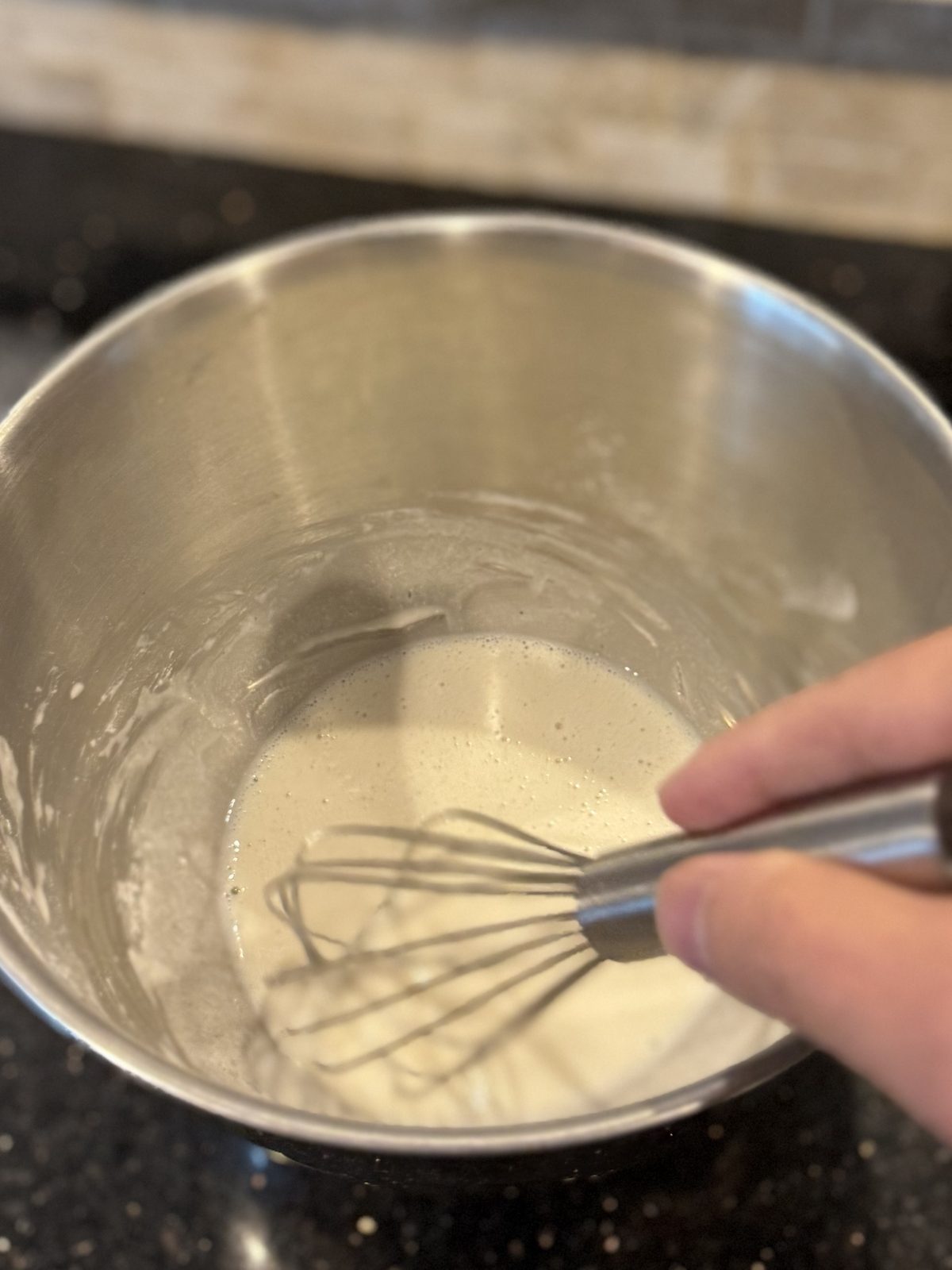
2. Add the eggs. Crack in the three eggs and whisk until everything is smooth and evenly combined. Don’t over-whisk, though. You don’t want the batter frothy or full of bubbles.
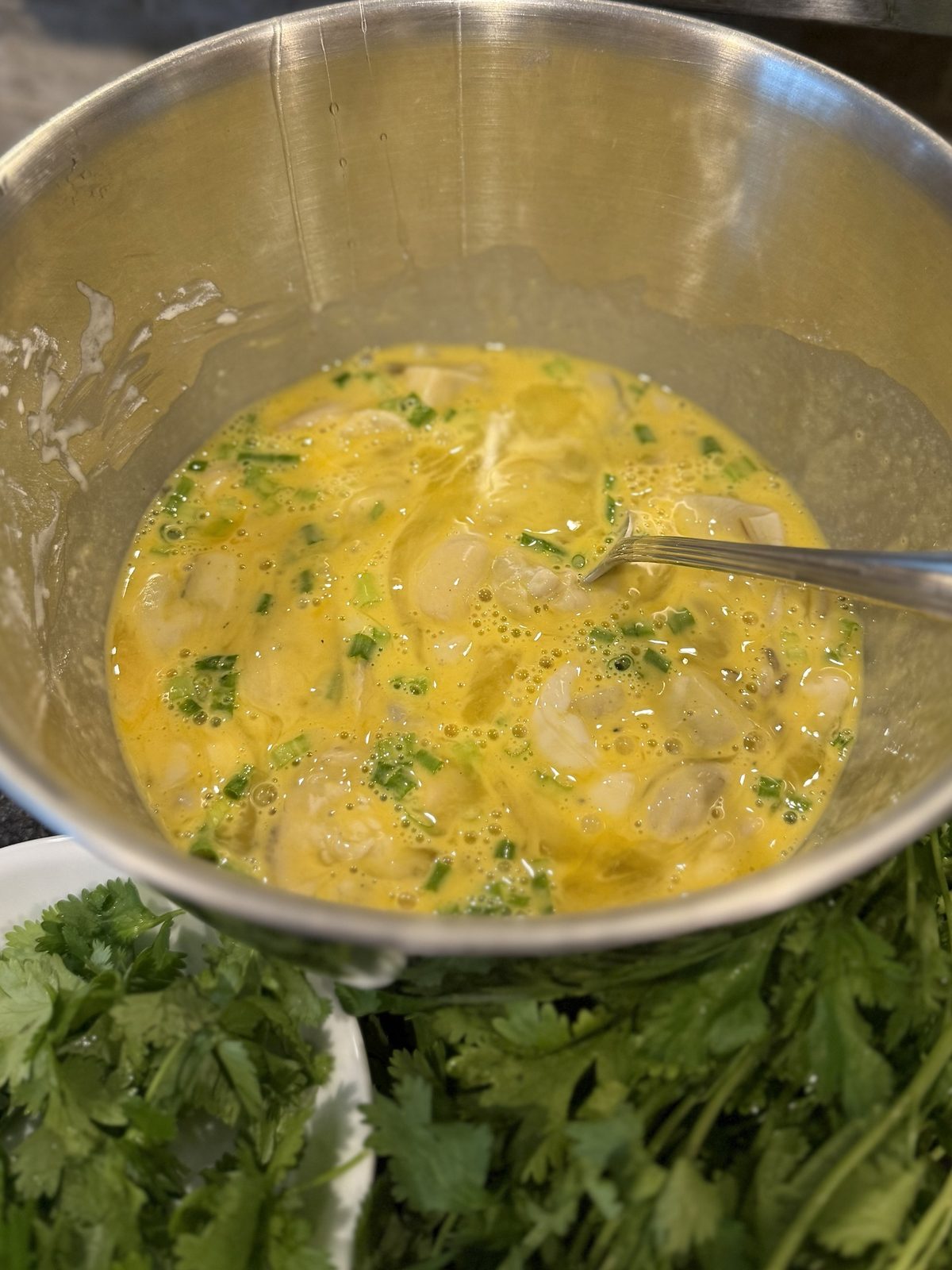
3. Fold in the filling. Put the whisk down. Add the oysters, green onions and preserved radish, if using, and fold them in gently with a spatula or spoon. Don’t whisk or stir hard, or you’ll break up the oysters.
4. Heat the pan. I use a non-stick frying pan, 11½ in. (29 cm) across, which gives a finished omelette of about 9 in. (23 cm). Set it over medium-high heat and add about a tablespoon of oil, as you would for any omelette.
5. Stir, then pour. Give the batter one more stir just before it goes in. Potato starch sinks to the bottom quickly, and you want it mixed through when you pour. Pour it into the pan and spread the oysters out evenly, so every bite gets one.
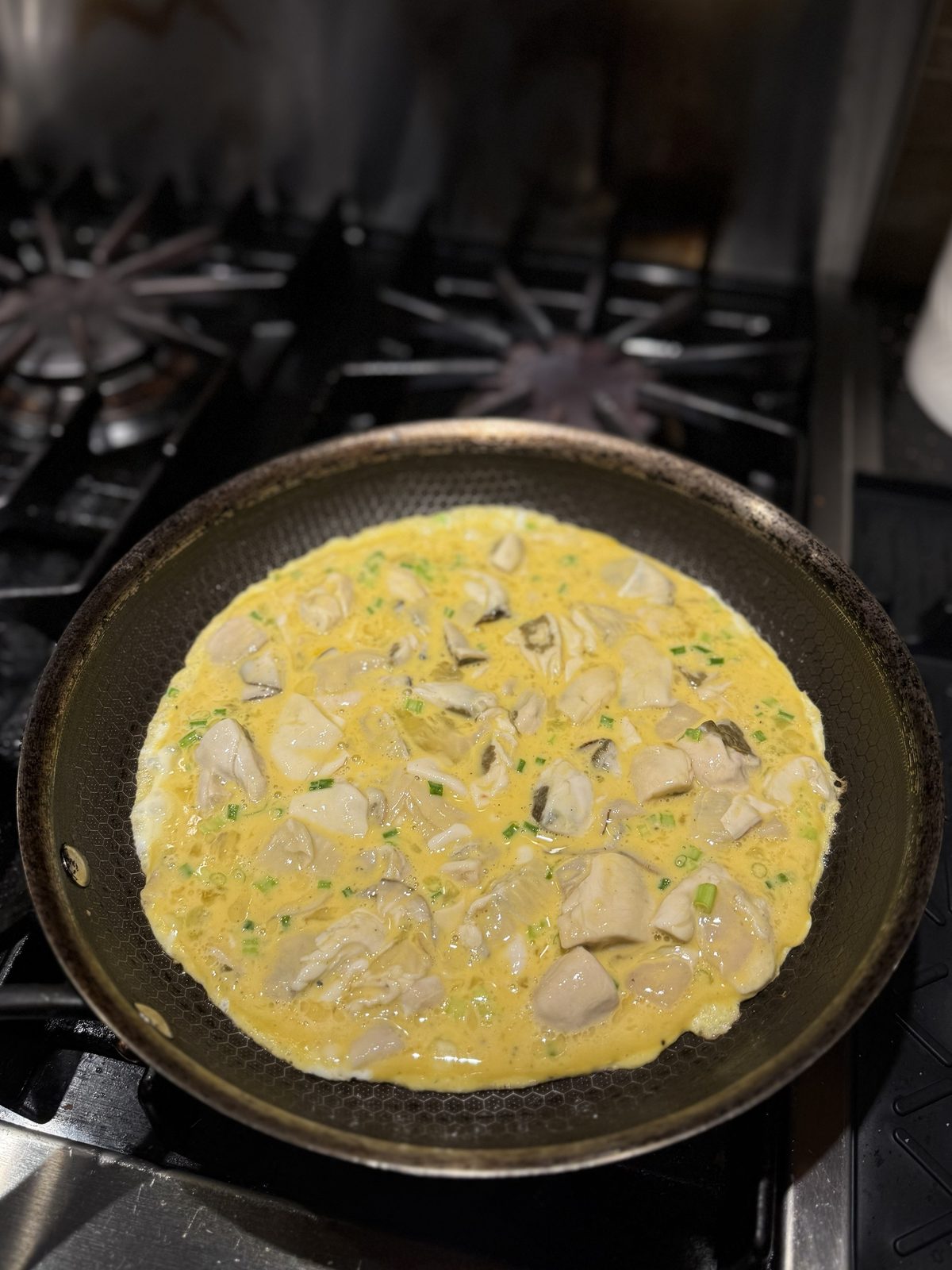
6. Cook the first side. From here you cook it much like an omelette. The first side takes a little longer, about 1½ to 2 minutes. You’re waiting for it to firm up. Lift an edge with a spatula to check the colour underneath; you want a little golden brown. Make sure it’s cooked enough to hold together. If it isn’t, and you try to flip it, you’ll end up with a big mess.
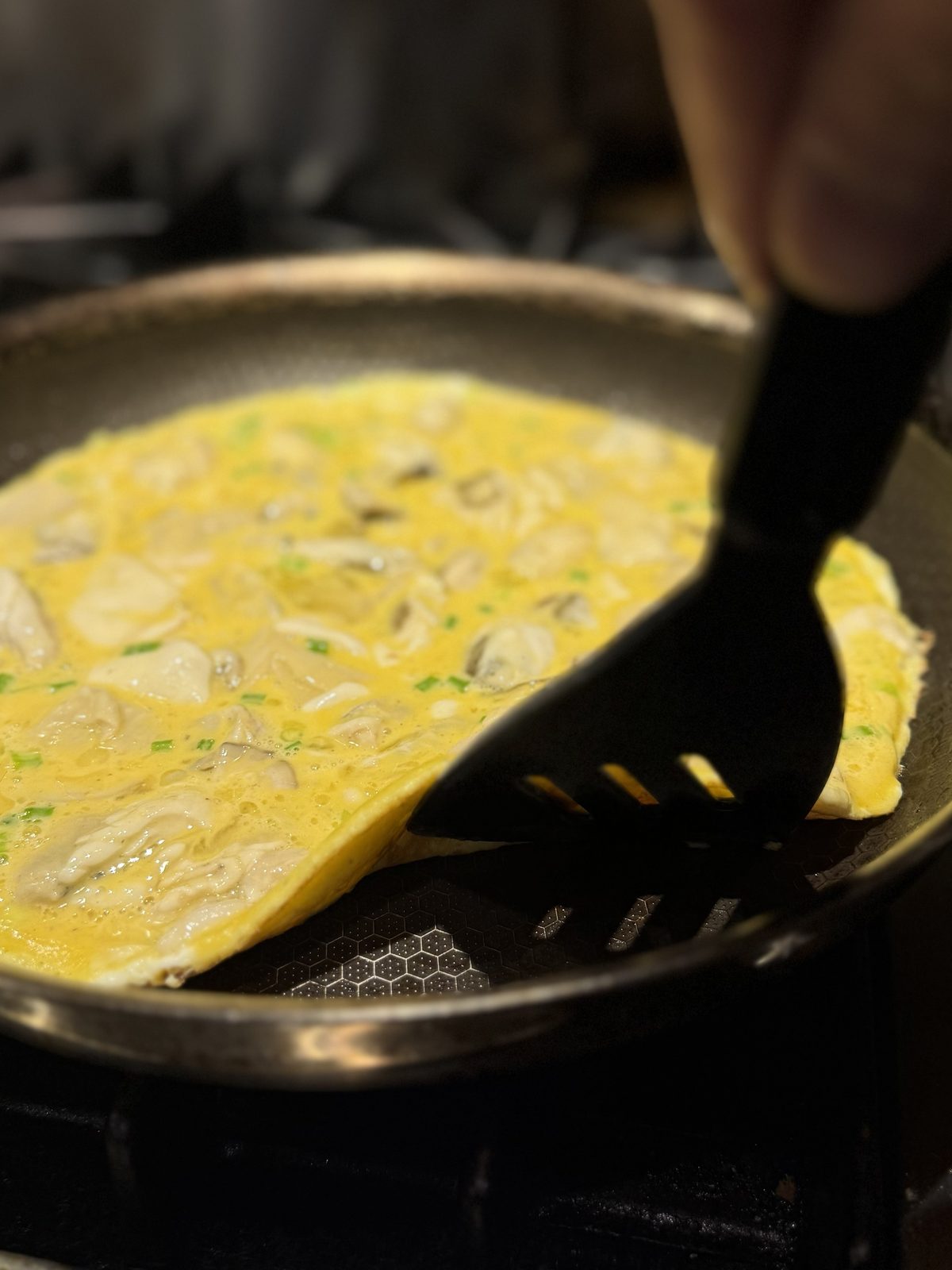
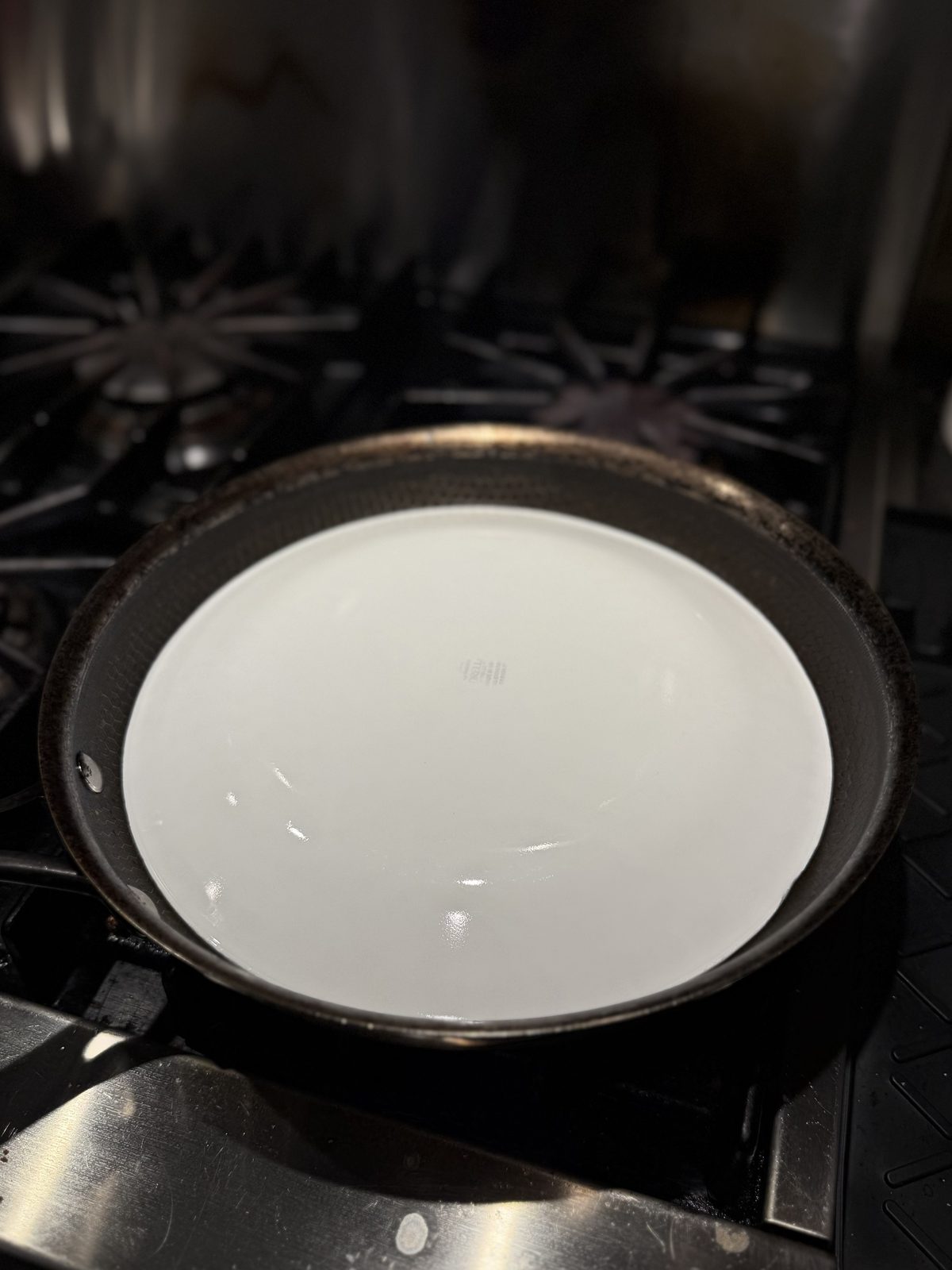
7. Flip it with a plate. Flipping is the hardest part, and I do it with a plate. Put a plate over the pan and turn the pan and plate over together, so the omelette lands on the plate. Before returning the omelette, check the pan; if it looks dry, add a little more oil. Then slide the omelette back in, cooked side up.
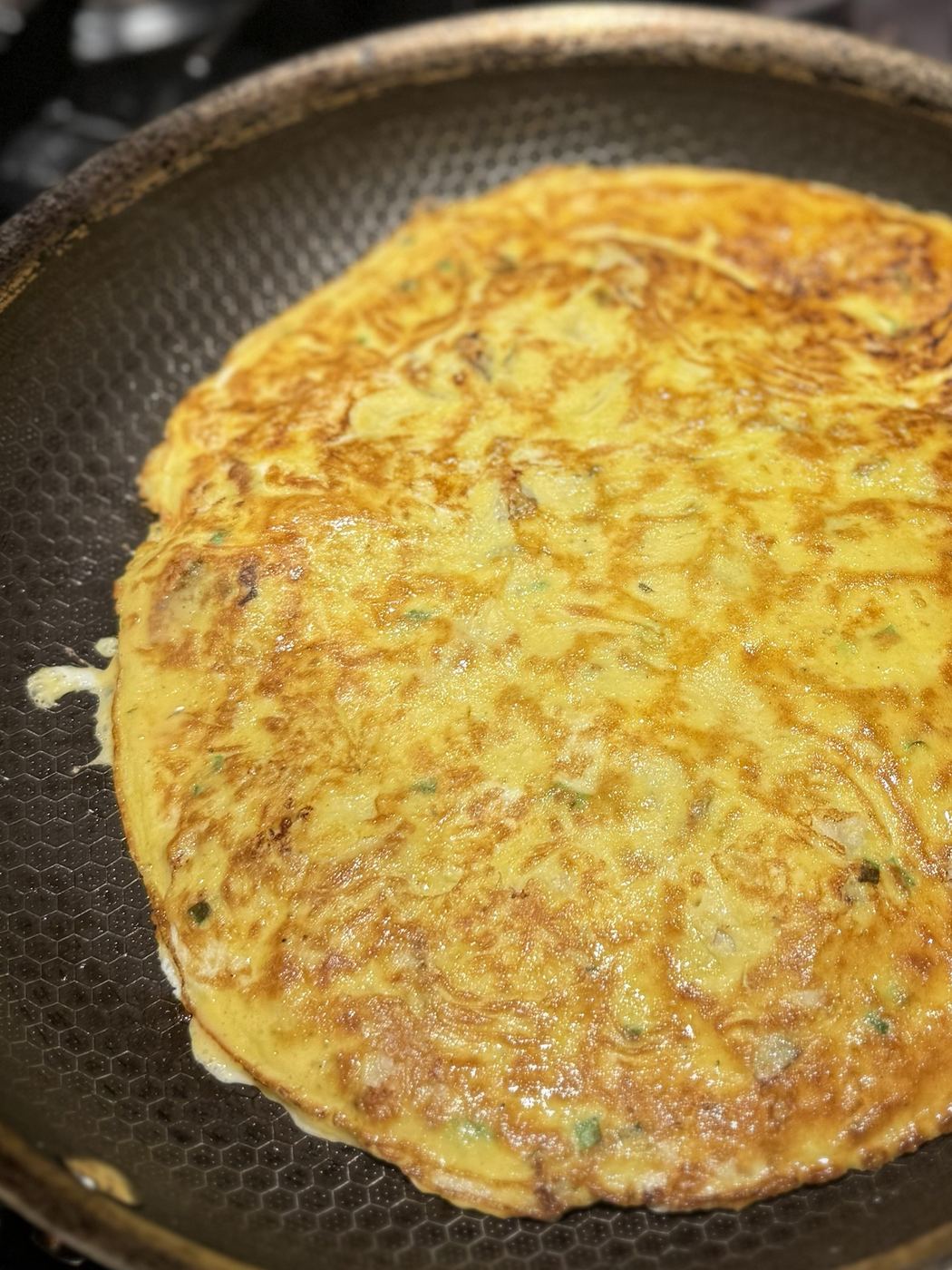
8. Cook the second side. This side is quicker, about 1 to 1½ minutes, and it’s done. Don’t be tempted to leave it longer. Overcooked oysters turn firm and hard to chew.
To Serve
Slide it onto a plate and pile the cilantro in the centre. Some cooks mix the cilantro in with the green onions and oysters so it cooks with the rest. I like it on top, as a garnish, because cilantro is one of those things people either love or can’t stand, and this way everyone can decide for themselves.
There’s nothing formal about serving it. Cut it into eighths and it’s one dish among the others on the table, or have half of it with a bowl of rice.
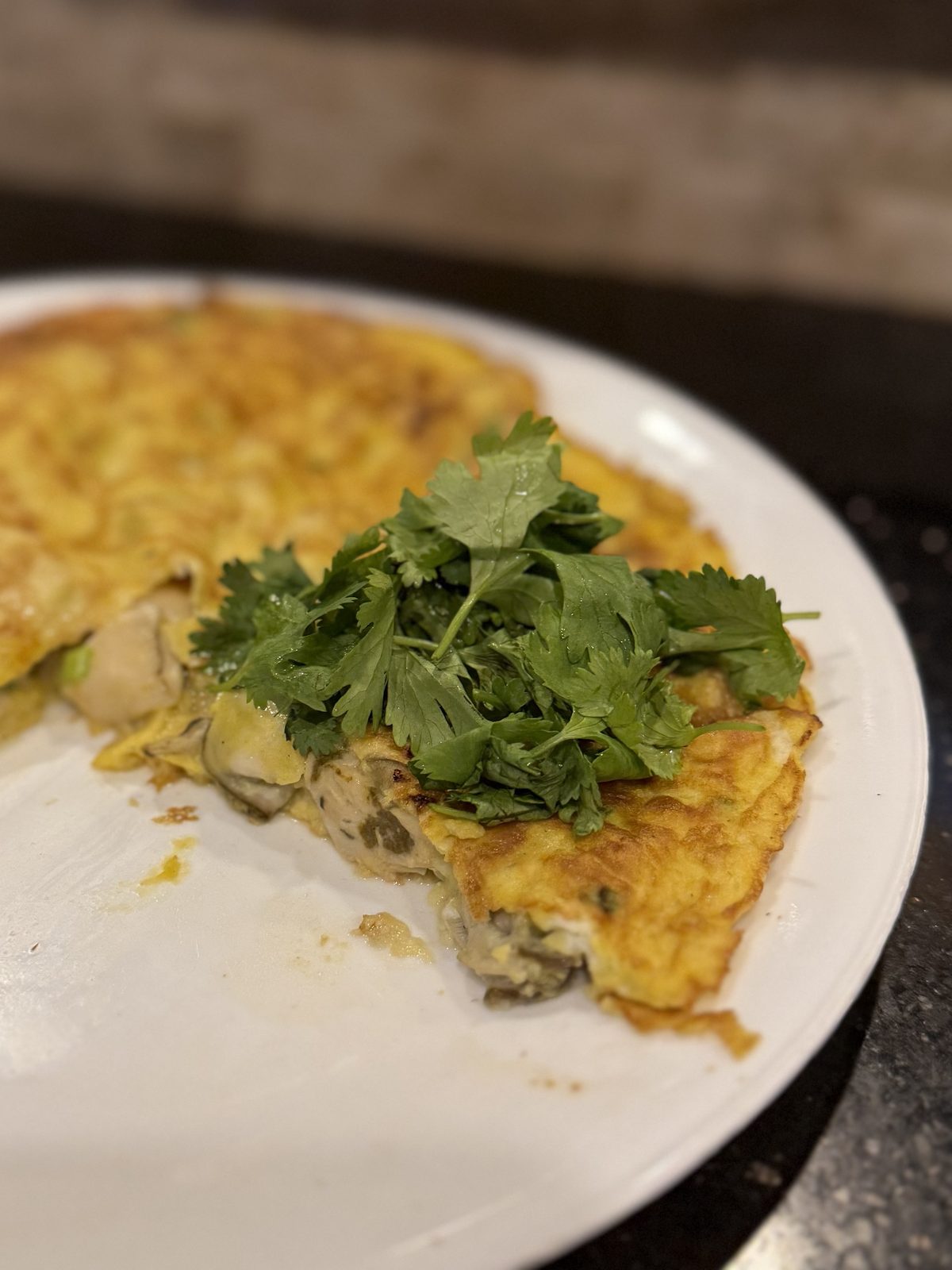
I usually eat it just as it is. But I tried it with a few different sauces, and ketchup works best: tangy and sweet.
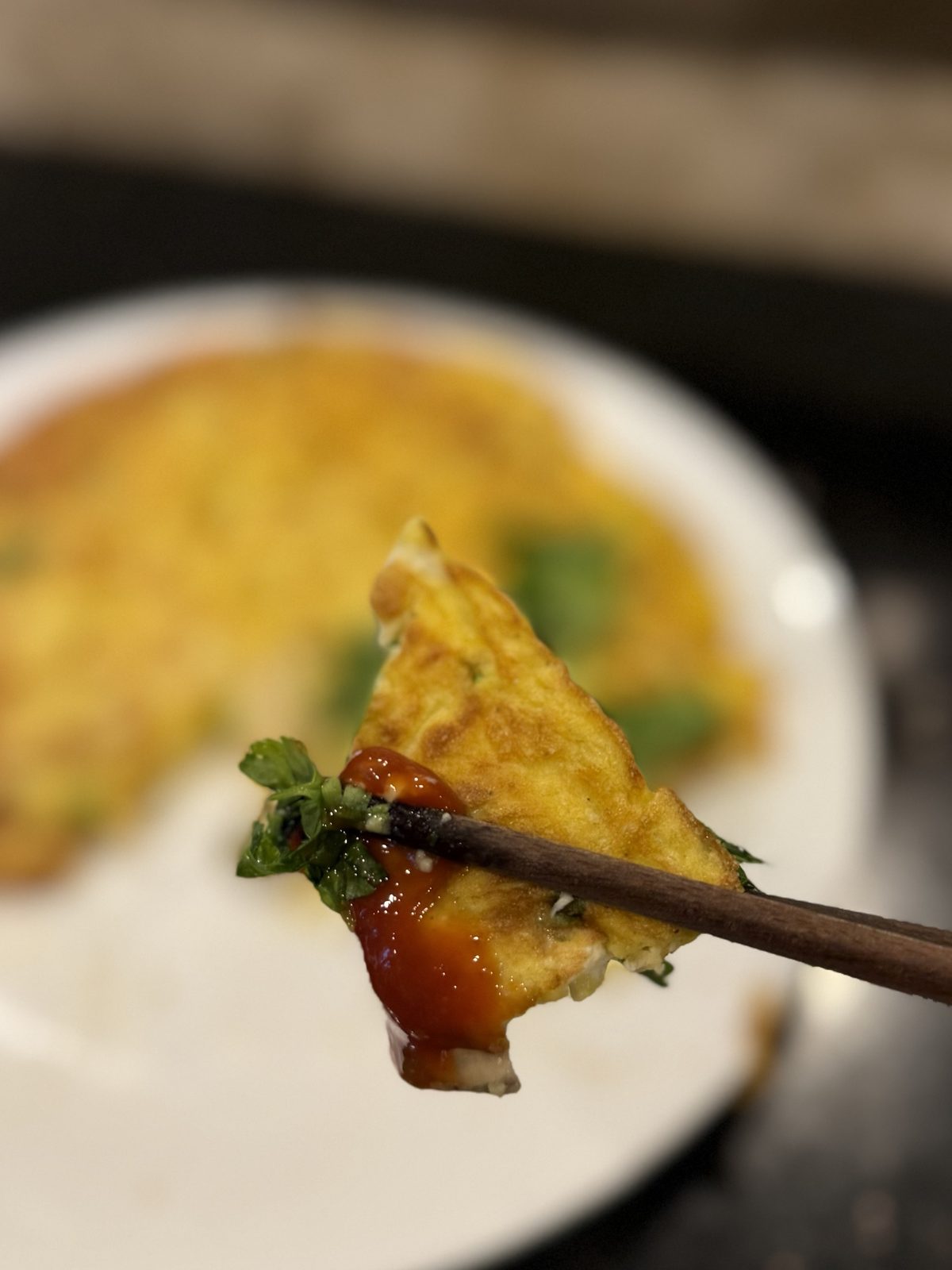
Others like a Filipino-style or sweet chili sauce with it, or banana ketchup, and yes, that’s ketchup made from bananas. Some keep it simple with a little more fish sauce, watered down so it isn’t so strong.



The Newsletter
New pieces, plus what’s on my table next. Every few weeks.

An error has occurred somewhere and it is not possible to submit the form. Please try again later or contact us.


