


Musang, Seattle: Upscale-Casual Filipino Done Right

Jacob Ung
August 31, 2026

6 min read
Dinner before a Mamamoo concert turns into an argument for what Vancouver still doesn't have: an upscale-casual Filipino restaurant, full stop — not a pop-up, not a special occasion, just somewhere this good on an ordinary Tuesday.
There’s a nice kind of good fortune in walking into a restaurant already half-known to you. That’s how it went at Musang, in Seattle’s Beacon Hill neighbourhood, on an early dinner run ahead of Mamamoo’s 4WARD show in Kent — a stop that traces back, in a roundabout way, to a pop-up dinner in Vancouver five months earlier.
That earlier night was Popup Tayo, a recurring pop-up dinner series my friends Chef Rafael Racela and Chef Erwin Abenes co-founded and run several times a year, which landed at Kavita Restaurant in Vancouver this past spring. At the end of the dinner I met Kiki — Kyle Ronquillo, Musang’s chef de cuisine, who runs the kitchen day-to-day alongside chef-owner Melissa Miranda — down from Seattle for the night, and, as it turns out, Chef Rafael’s cousin. We closed things out with a couple of rounds of Lakan Gold, the top tier of Lakan’s three lambanogs — a Filipino spirit distilled from coconut nectar that is, for reasons I’ve never quite understood, close to impossible to find in Canada — and before the night wrapped, the Musang team asked me to come see them in Seattle sometime. So when I found myself headed that way for a concert with my friend Ann five months later, taking them up on it was an easy call. We didn’t end up crossing paths with Kiki again that particular night, but that was fine — we hadn’t come for any one person. We’d come because I’d been asked to, and because the food sounded worth the detour.
Musang has earned that detour many times over on its own merits. Founder Melissa Miranda opened it as a brunch pop-up in the summer of 2017 before landing in its current Beacon Hill home in early 2020 — the same year Seattle Met named it Restaurant of the Year. Eater Seattle followed with a Best Community-Focused Restaurant nod in 2021; Food & Wine put Miranda on its list of the eleven best new chefs in the country in 2022, the same year The Infatuation named Musang one of the city’s 25 best restaurants outright. It made Seattle Met’s 50 Best Restaurants list again last year — the kind of restaurant that keeps getting recognized rather than just once.
What struck me most, sitting down, was how much I wanted this exact thing in Vancouver. Upscale-casual Filipino food — plated with real intention, served family-style, in a room that still feels like a neighbourhood spot — barely exists north of the border outside of pop-ups, and my two friends doing it best at home, Chef Rafael Racela and Chef Mark Singson, are still working pop-up to pop-up rather than out of a room of their own. Musang is proof of what that could look like a few years from now.
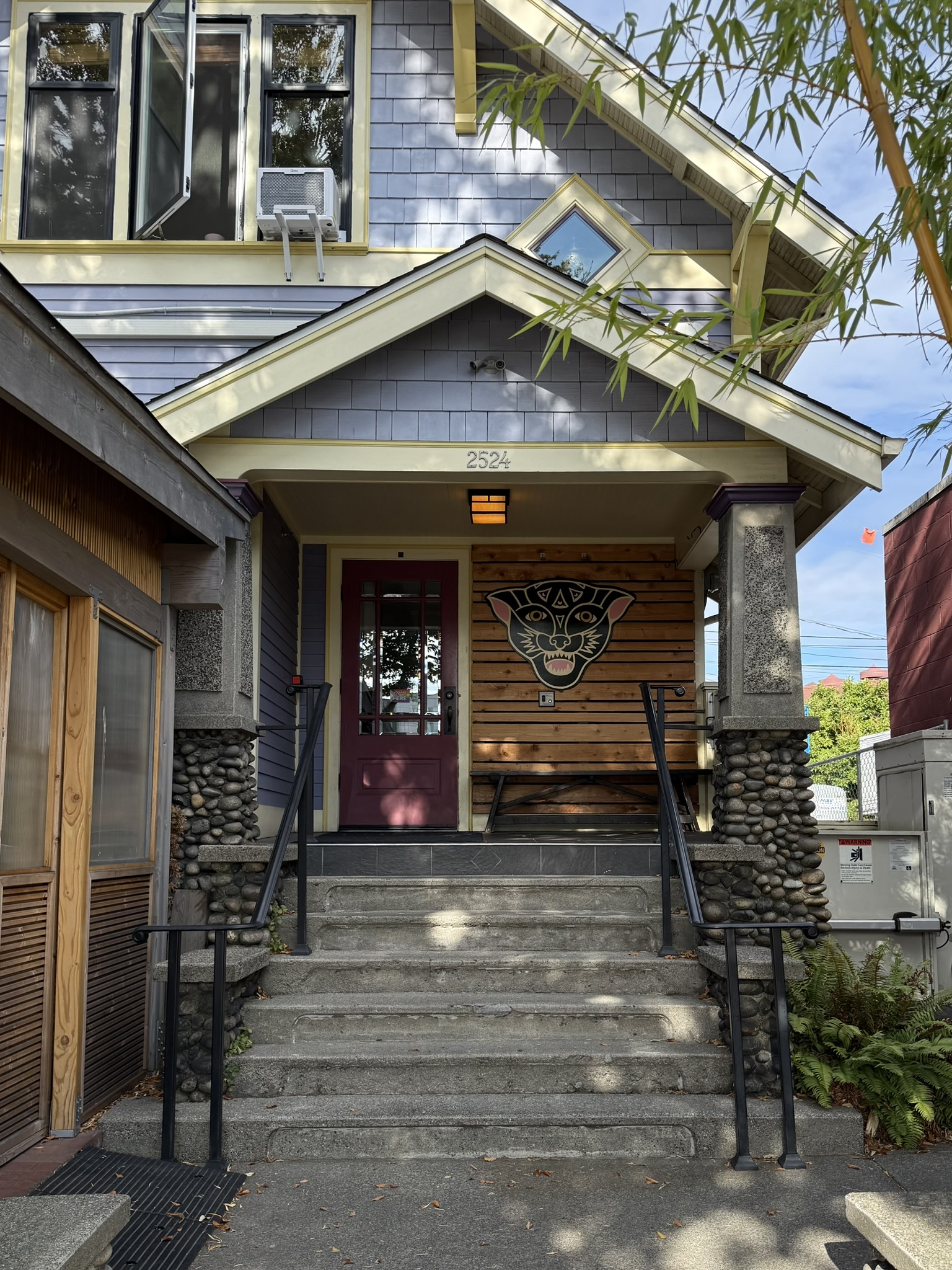
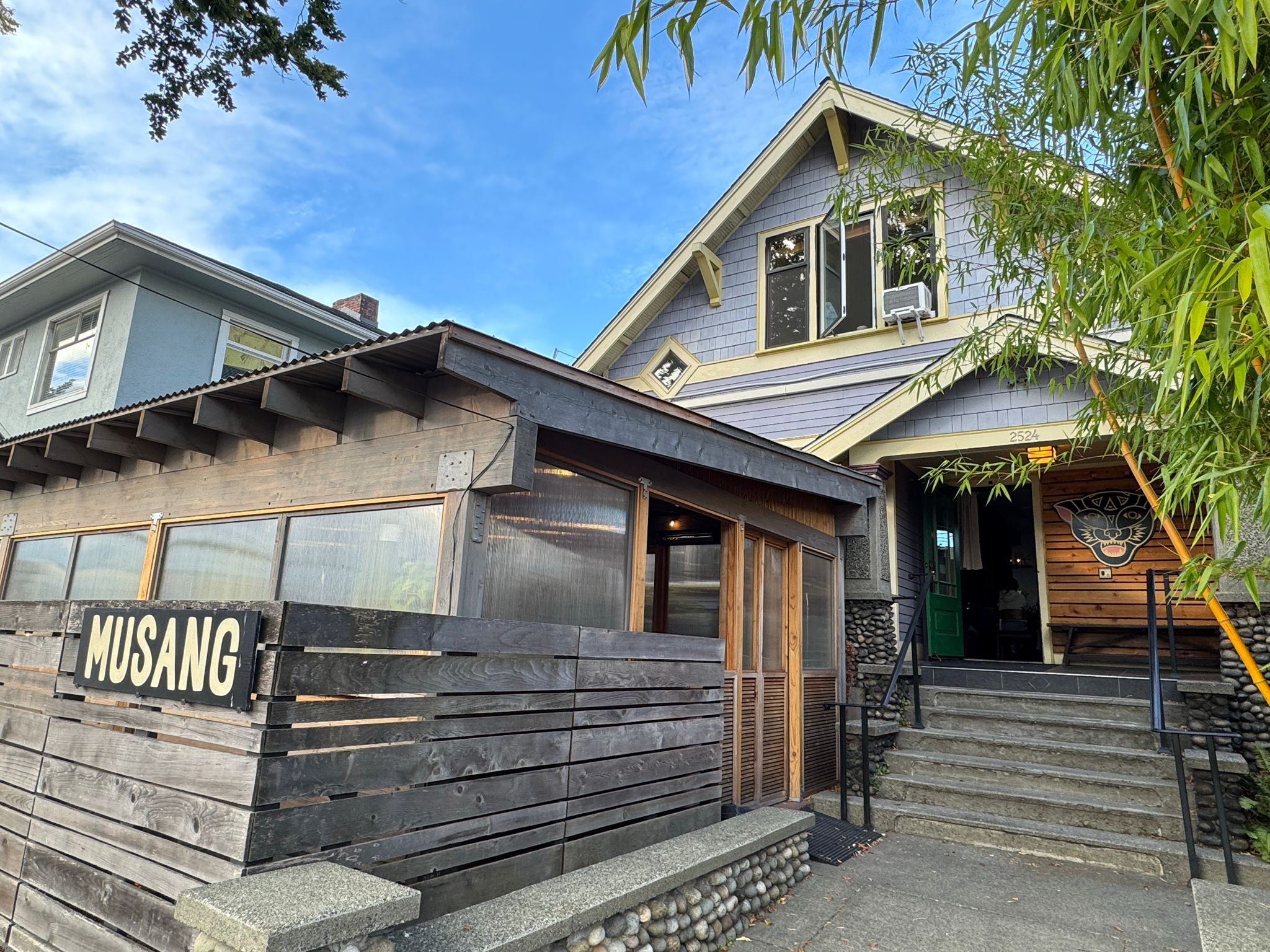
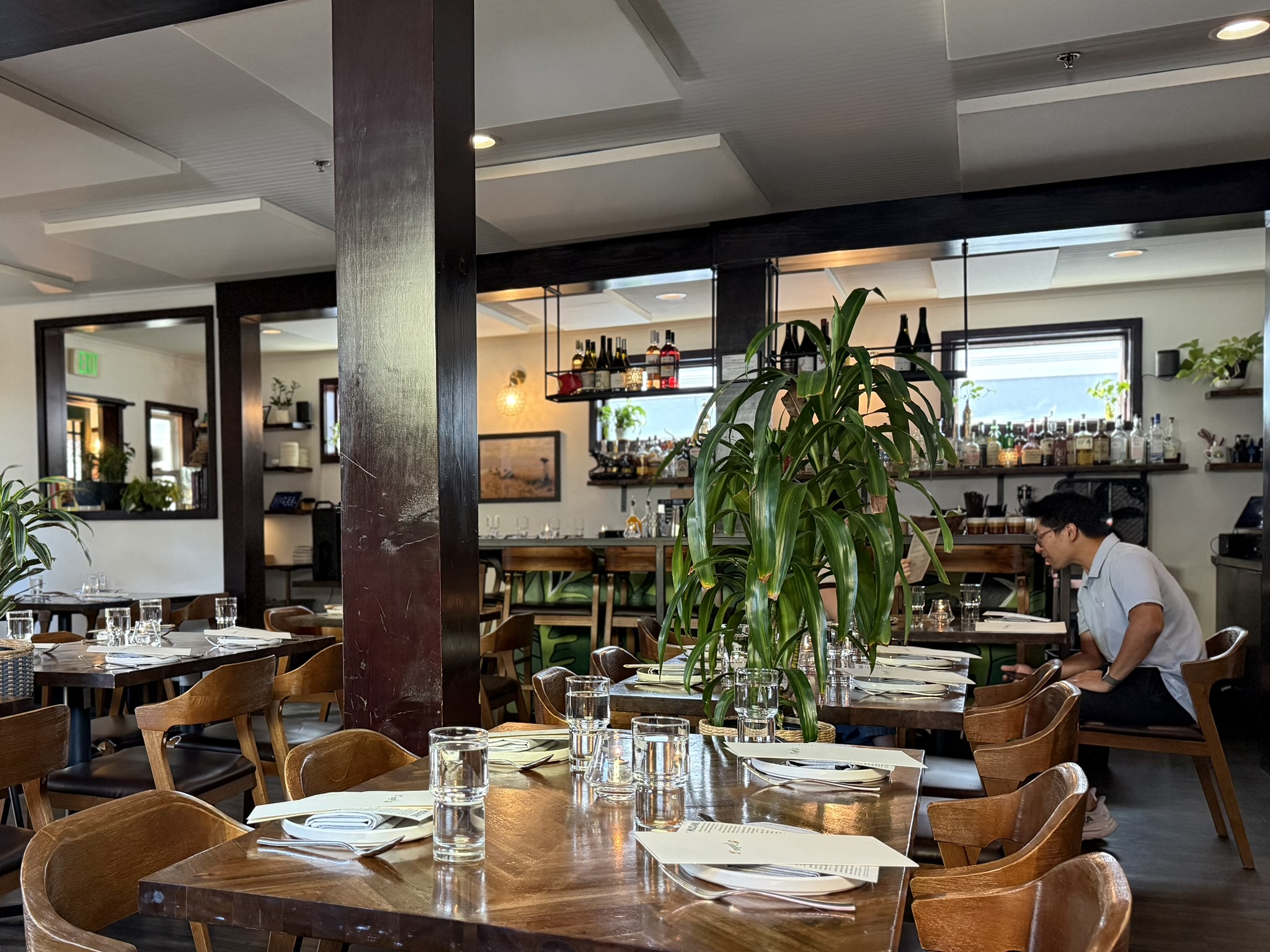
The building itself is a converted Beacon Hill craftsman, grey-shingled with yellow trim, a black-and-gold MUSANG sign hung out front and the restaurant’s civet-cat mascot — the musang the name comes from — mounted on the cedar slats by the door. Inside, it’s warm and plant-filled, dark wood and an open shelf of spirits behind the bar, the kind of room that reads as upscale without asking you to dress for it. The kitchen is open to the dining room, which I always take as an invitation — my favourite seat in almost any restaurant is a counter overlooking the cooks at work, and Musang doesn’t have one. It’s a small thing to wish for in an otherwise excellent room, but an open kitchen with nowhere built to actually watch it always feels like an opportunity left on the table.
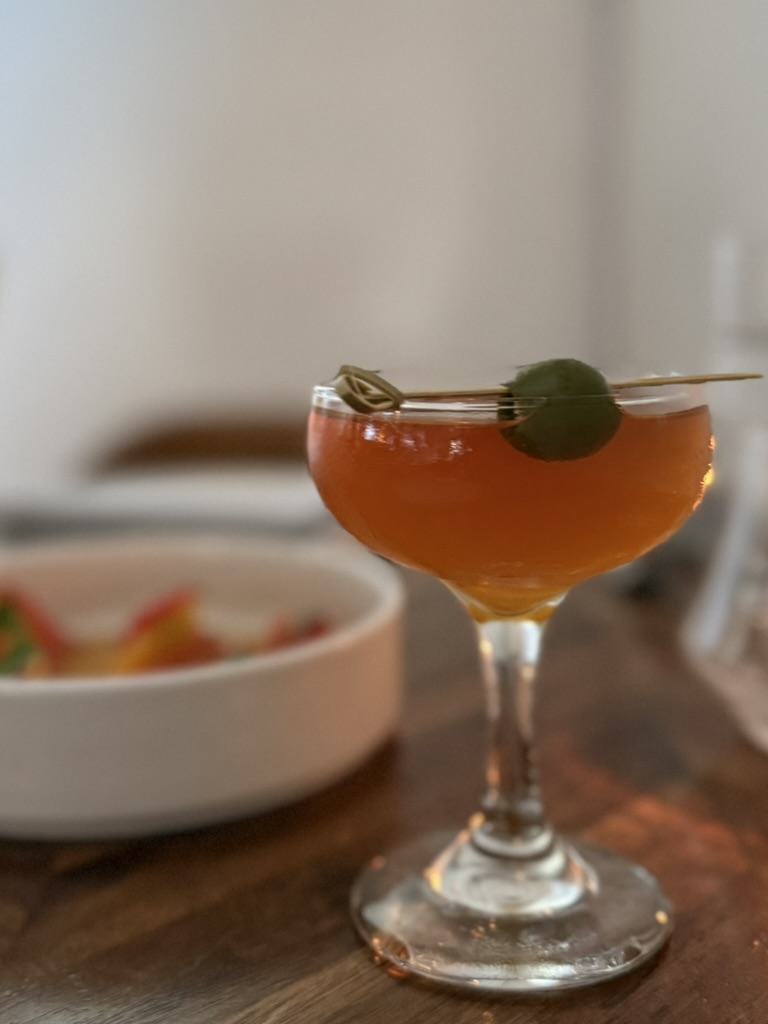
We started with two cocktails — an Adobo Martini and a Jeepney Sour — savoury and bright against each other in a way that set the tone for how seriously the kitchen takes its own culture’s ingredients even at the bar. The Adobo Martini, pictured here, comes amber and glossy in a coupe, a single olive doing the savoury work you’d expect from its namesake.
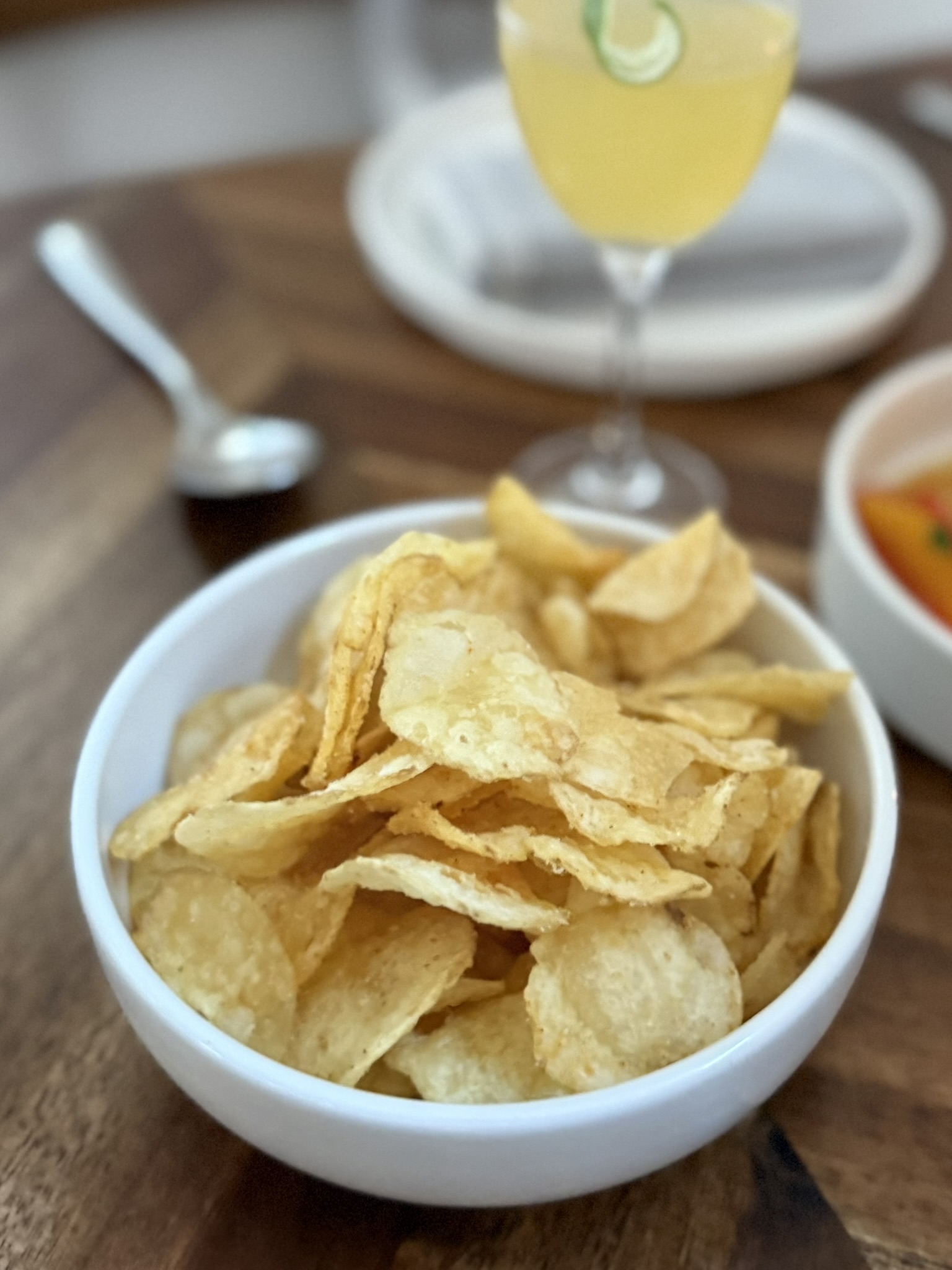
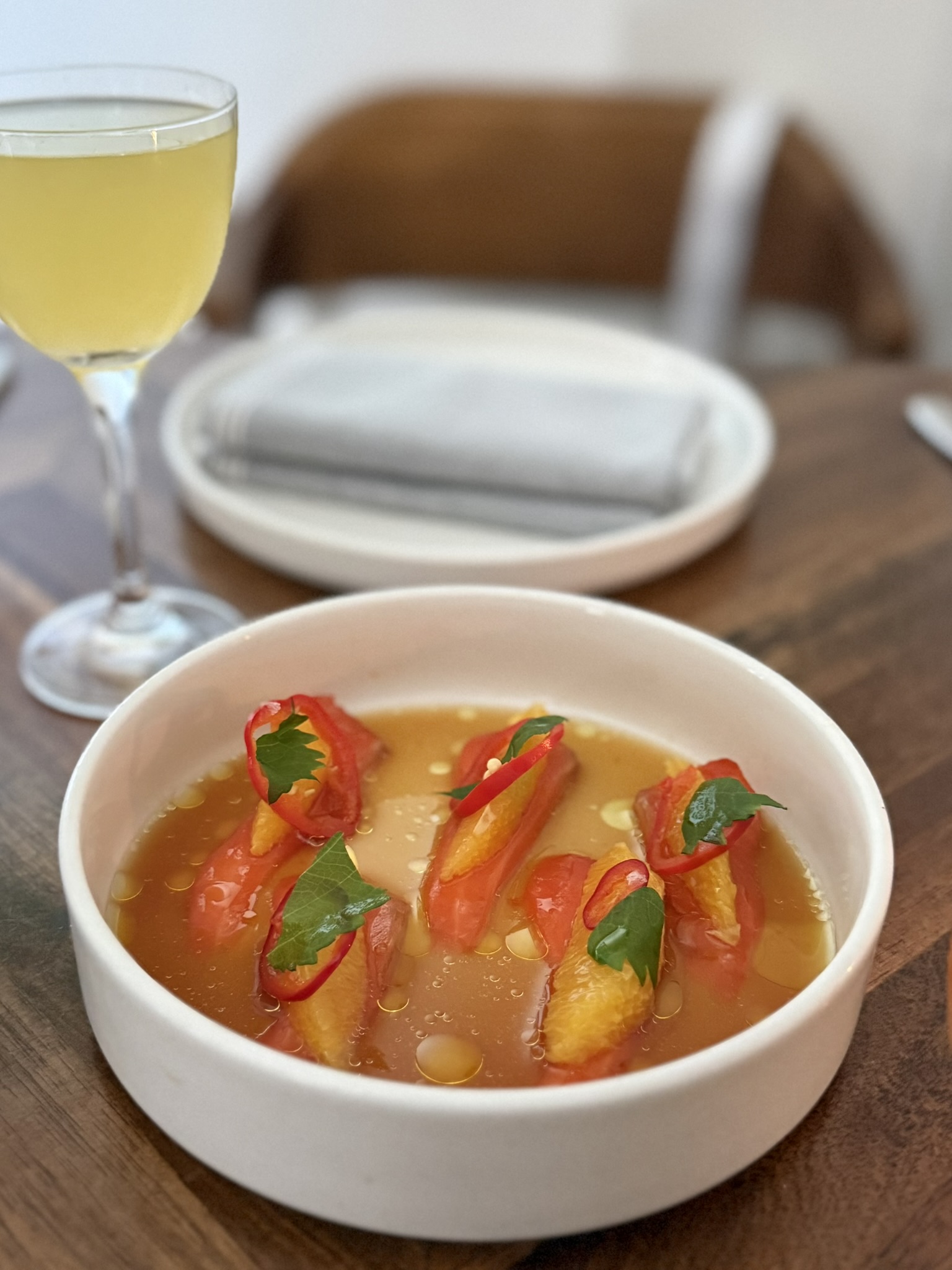
Sinigang Chips arrived first, a bowl of thin potato chips dusted with the sour, tamarind-forward seasoning of the soup they’re named for — an easy, well-executed snack that told you the kitchen doesn’t treat a starter as an afterthought. The Kinilaw followed: king salmon this time, cured Filipino-style in vinegar and citrus and served in a shallow pool of coconut-vinegar broth with orange, tomato, and chili. Kinilaw stays on Musang’s menu essentially year-round, with the protein rotating by season — salmon was the pairing on the current summer menu, and the acid-forward broth did exactly the work a good Kinilaw is supposed to do: waking up the palate rather than filling it.
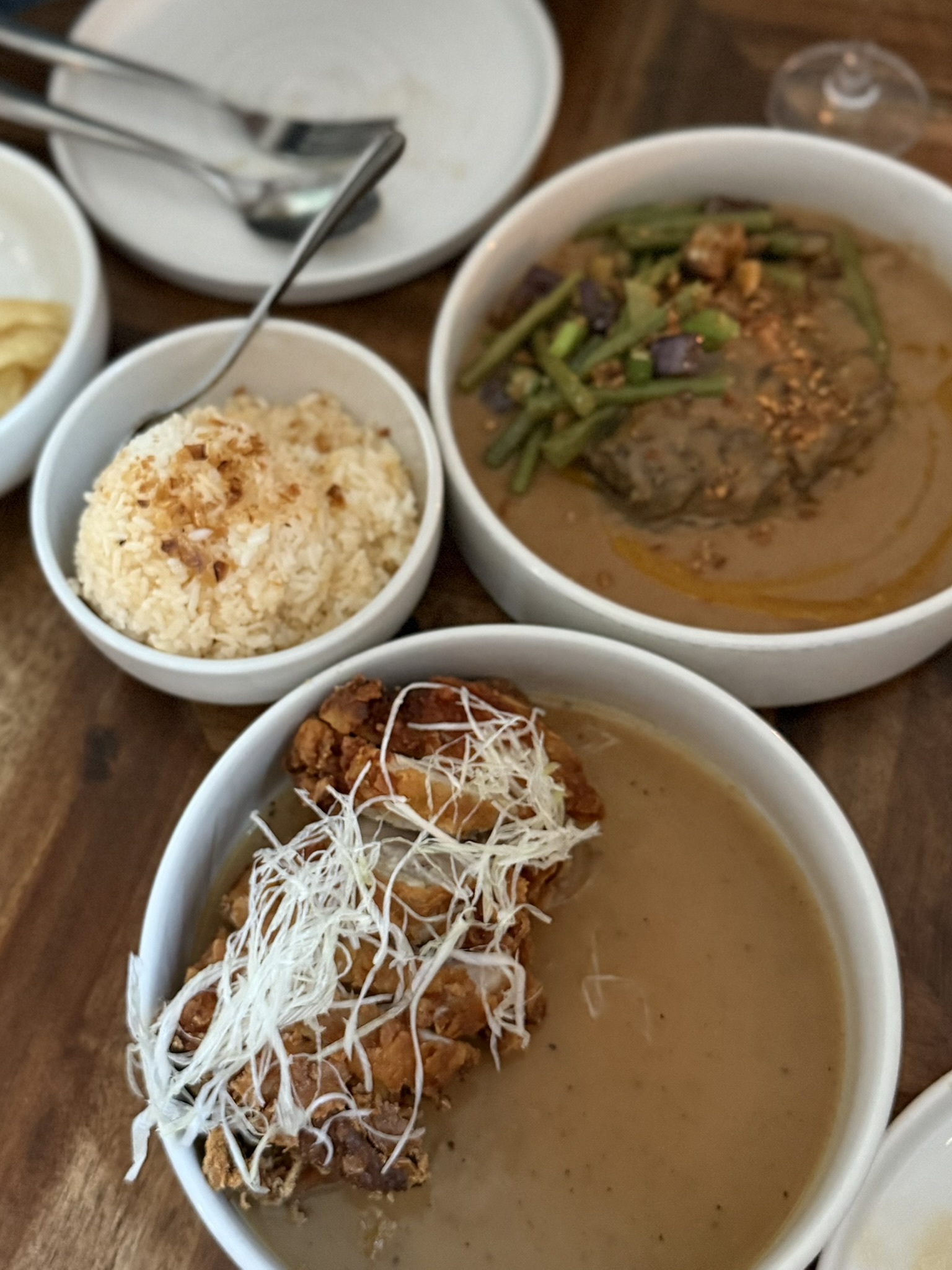
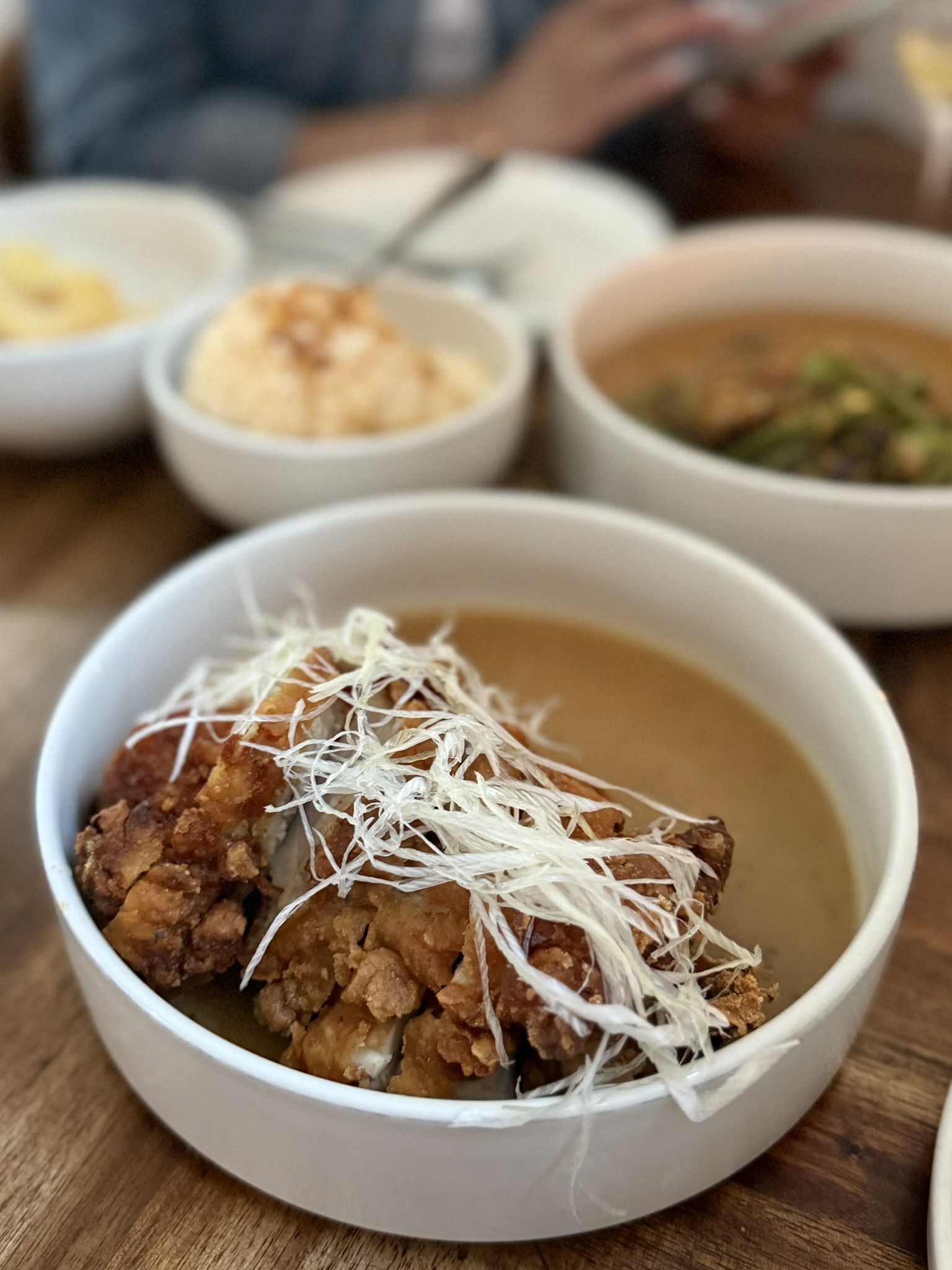
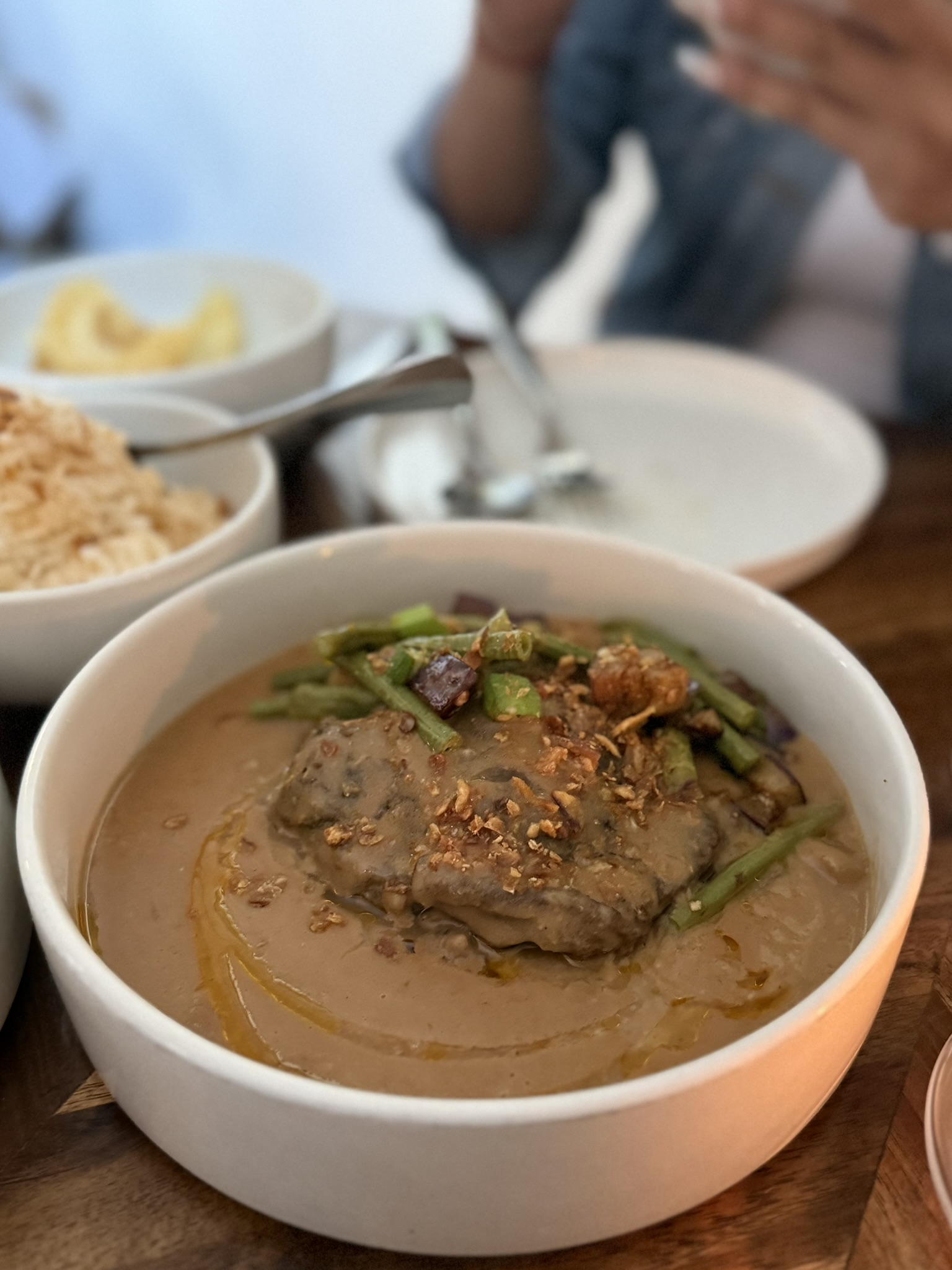
The two house signatures did the heavier lifting. Fried Chicken Joy came as boneless chicken thighs, set in Kiki’s gravy and topped with a scatter of green onion, julienned, white part only — the kind of dish that reads as comfort food until you notice how much technique is actually holding it together. The Beef Cheek Kare Kare followed Musang’s own description closely: braised beef cheek in a peanut butter sauce given real depth by ginisang bagoong (sautéed fermented shrimp paste), rounded out with sitaw (long green beans), eggplant, and greens, finished with fried garlic and a thread of annatto oil. The cheek gave way at the fork, and the bagoong did exactly what fermented shrimp paste always does in a dish like this — deepening it rather than announcing itself.
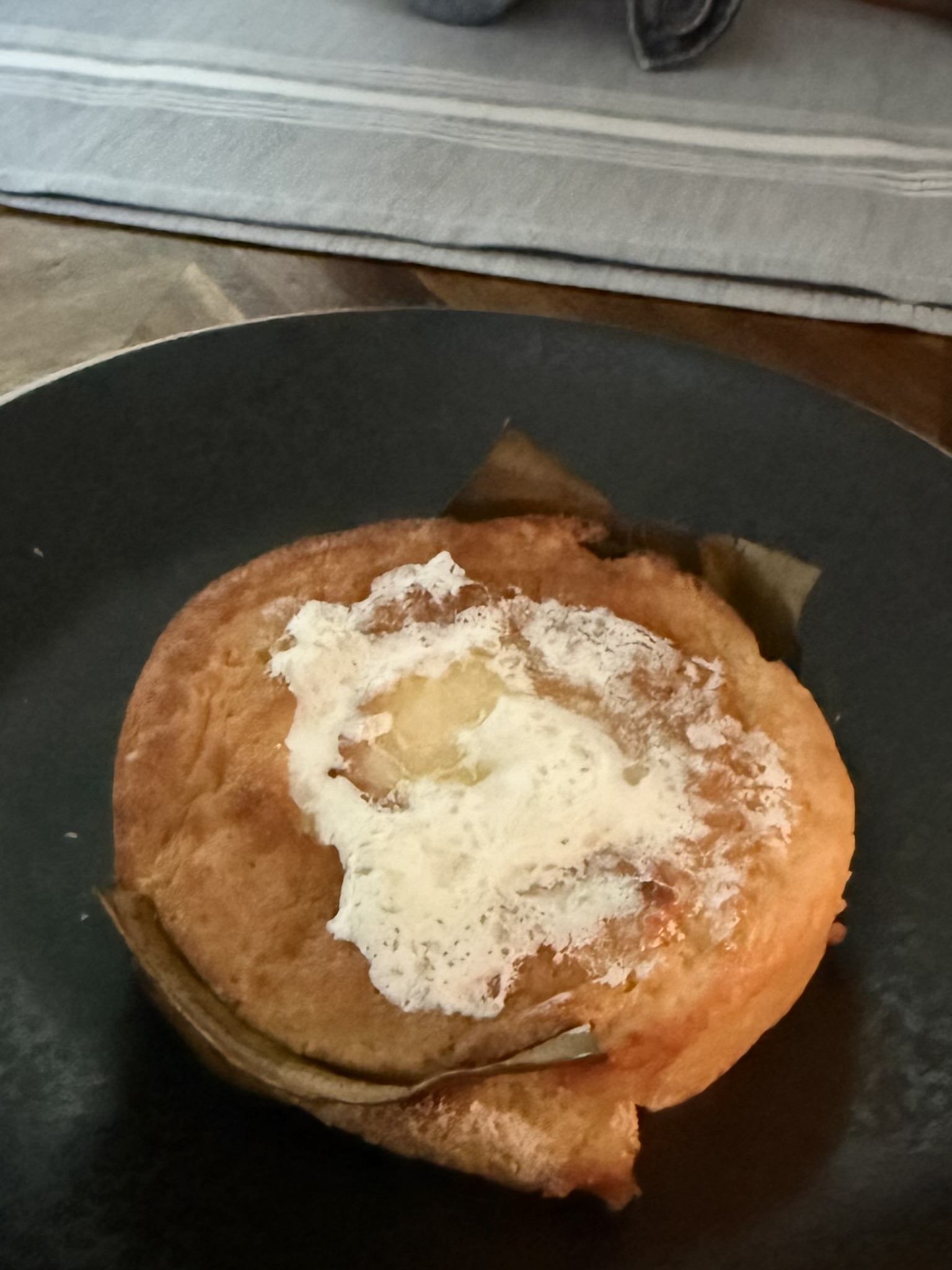
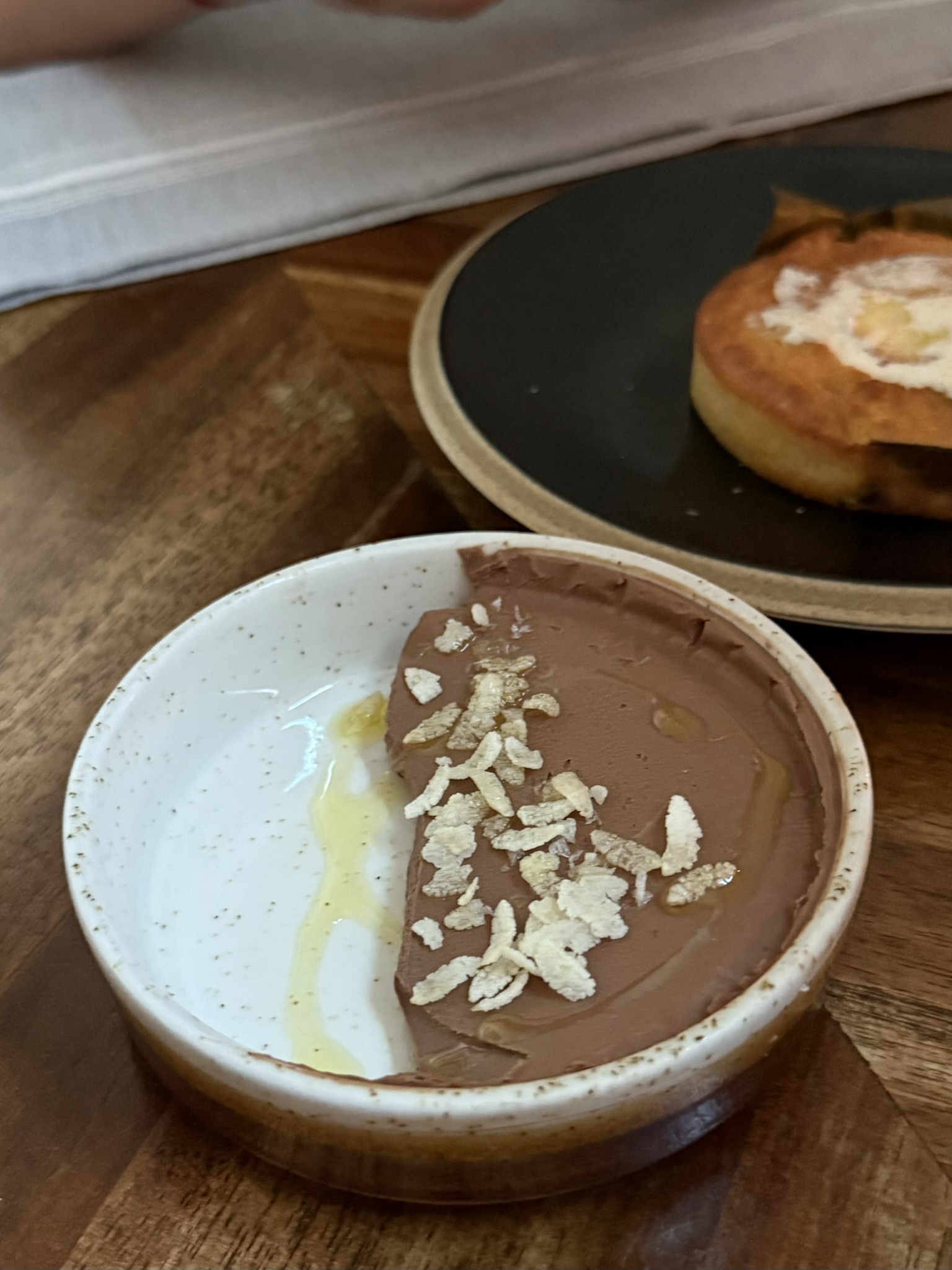
Dessert closed the meal on two notes. The OG Bibingka, per Musang’s own menu, is grilled coconut-and-corn rice cakes topped with salted duck egg, whipped honey butter, and Maldon salt — the duck egg’s salinity and the Maldon salt keeping it true to bibingka’s traditional balance of sweet and savoury, rather than tipping it toward straight dessert. Then the kitchen sent out a Tsokolate Mousse on the house: dense, dark, barely sweetened, a small but generous close to a meal that had nothing to do with anything we’d actually ordered.
We made the concert on time, which was really the whole point of building an early dinner into the trip in the first place — but Musang would have been worth the detour with or without Mamamoo waiting in Kent. It’s the kind of restaurant Just Savour Life keeps returning to as a thesis: that a serious kitchen and a comfortable room aren’t actually in tension, and that the best version of a cuisine’s next chapter often starts exactly the way Musang did — as a pop-up nobody was under any obligation to keep believing in.
Update, September 21st: the loose thread is tied — I’m going. Popup Tayo returns to Kavita in Mount Pleasant on Monday, October 5th, billed for the night as TAYO: A Collaborative Filipino Tasting Experience: a seven-course menu led by Chef Rafael Racela, built around nostalgia, heritage and community. Tayo is Tagalog for us, which tells you most of what the evening is after. Two seatings, 5:00 and 8:30 p.m., $130 a head before tax and gratuity, with beverages available at the venue. Tickets are on OpenTable — there were still seats when I checked, and mine are already bought. I’ll write the night up afterwards. This piece argued that Vancouver is still waiting for a room like Musang’s; October 5th is an evening spent with the people it’s waiting on.
Order this: the Kinilaw, whatever protein is on it when you go, and don’t skip the Kare Kare — and ask if there’s a table close enough to watch the kitchen, even if Musang doesn’t have a proper counter for it yet.



The Newsletter
New pieces, plus what’s on my table next. Every few weeks.

An error has occurred somewhere and it is not possible to submit the form. Please try again later or contact us.


