




A restaurant tells you what it thinks matters by where it puts the kitchen. Most hide it. Kong built the room around it.
The kitchen sits in the middle of the room at their restaurant located at the Ayala Triangle Gardens, with a long U-shaped counter surrounded by seats. There are tables at the front, and they have an argument of their own, though only past a certain number: two of you can talk perfectly well side by side at a counter, and it’s the third and the fourth who end up leaning down the line to be heard. For a group that size the tables may be the better option. Almost every seat in the house has a view of the fire, though, and the ones that don’t are the exception rather than the arrangement. We dined at the counter, in front of the grill section. I nearly always take the counter when a restaurant offers one — dinner with a show, and the difference between being served a meal and watching one happen — though here it hardly counts as a preference, because it’s simply where the room points you.
Kong had been on my list for a while, and for one reason: my good friend Jasper Tiu, who eats here often and knows exactly where to eat in this city. So when Chef Mark Singson came out from Vancouver, this is where I wanted to bring him. We walked in to find Jasper already at the first table by the front door with his own group, close to the end of his meal. He introduced us to Tommy Woudwyk, who co-owns the place and who was moving at some speed — it was a full house — long enough to welcome us and hope we enjoyed what was coming. Then, before we had ordered anything at all, Jasper came over with a bottle.
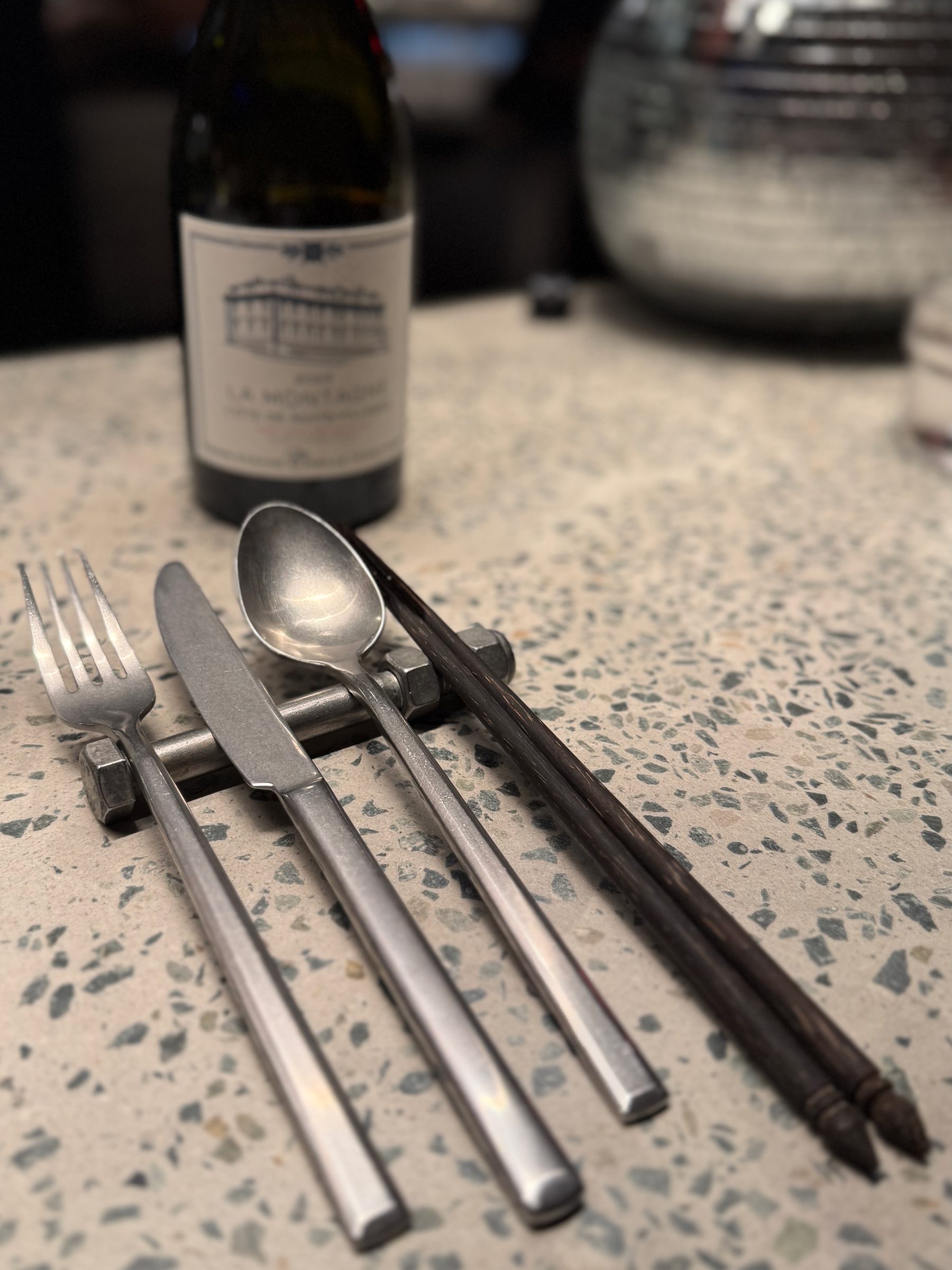
It was the 2022 Domaine Camille Thiriet Côte de Nuits-Villages “La Montagne” Blanc, and it is a small oddity twice over. A white from the Côte de Nuits is unusual to begin with: that stretch of Burgundy is red country almost to the exclusion of anything else. And this one was made in three barrels — 832 bottles in all, which makes it scarce as well as odd. It stood open on the counter before the first course landed, and the front half of the menu — pomelo, prawns, dumplings — turned out to be pitched exactly where a white like this wants to be.
There was one other thing on the counter before any of it started, and I’ve thought about it since. Laid across a cutlery rest someone had improvised from a bolt and a couple of nuts were a fork, a knife and a spoon — and beside them, a pair of dark wooden chopsticks. Most restaurants pick one and set the table accordingly. This one had decided the question wasn’t worth asking.
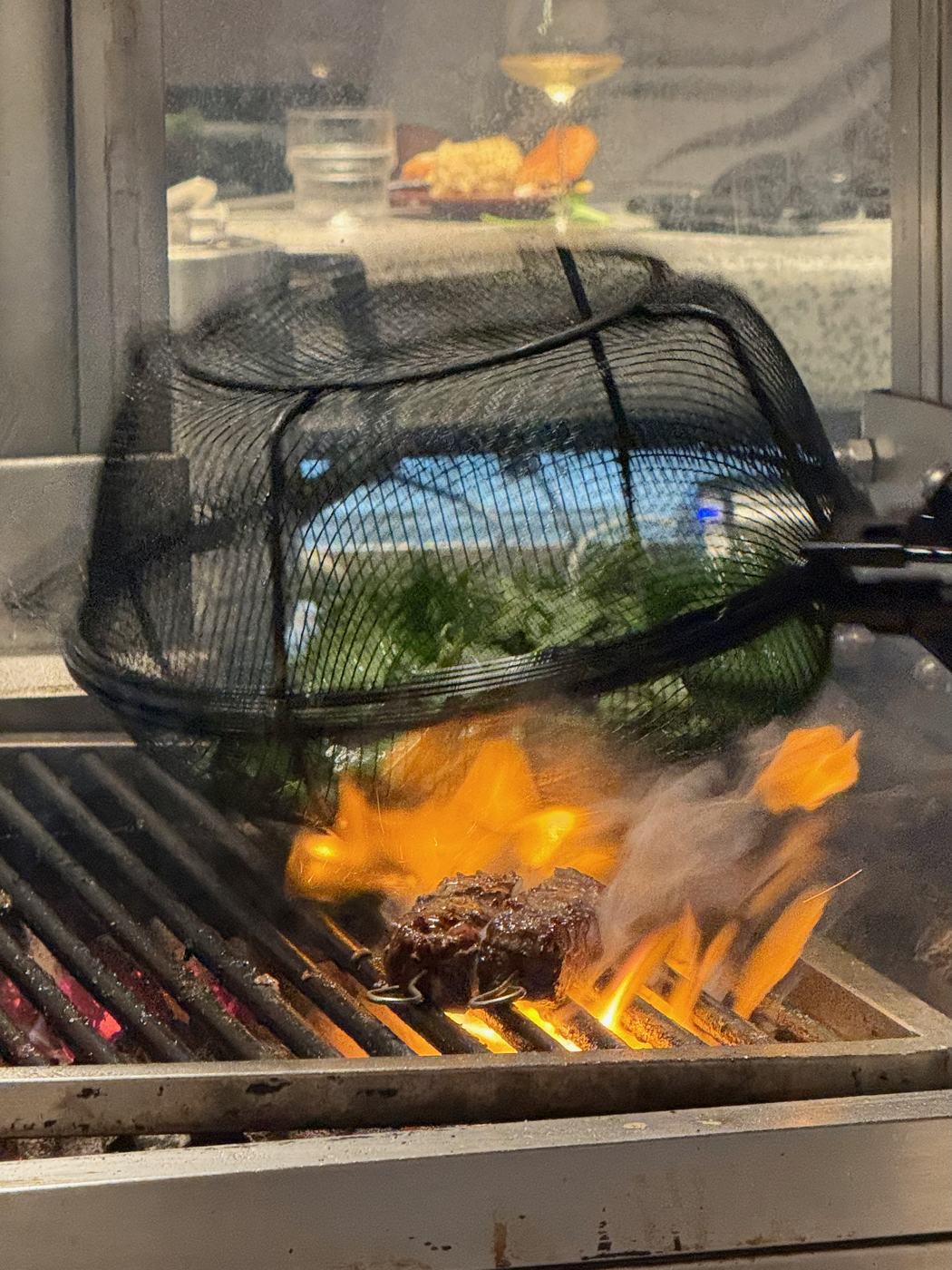
What you watch from the counter is charcoal and open flame: baskets of greens suspended over the coals, skewers going up, a wok working somewhere off to the side, and all of it close enough to hear. Kong calls itself Australasian, which in most rooms would be a style borrowed off a template. Here it’s just biography. Woudwyk is Australian — Brisbane, by way of Sydney and Melbourne — and the restaurant cooks the way an Australian room cooks, ranging across Southeast Asia without appearing to feel it needs permission, with Chinese technique at the centre of it and Thai and Malay flavours around the edges.
The room stayed full the entire evening, which I gather is simply what it’s like here now; getting a table takes planning rather than luck. That’s worth knowing before you try.
The menu is called Freestyle 9: six individual and sharing courses, then three premium shared plates, with beverages paired alongside — not all of them wine, which I liked. Nine courses is a long evening at a counter, and the pacing is what makes or breaks it. Ours ran from seven to ten, which for nine courses is brisk. You are watching your own food being cooked, which means there is nowhere for a slow kitchen to hide.
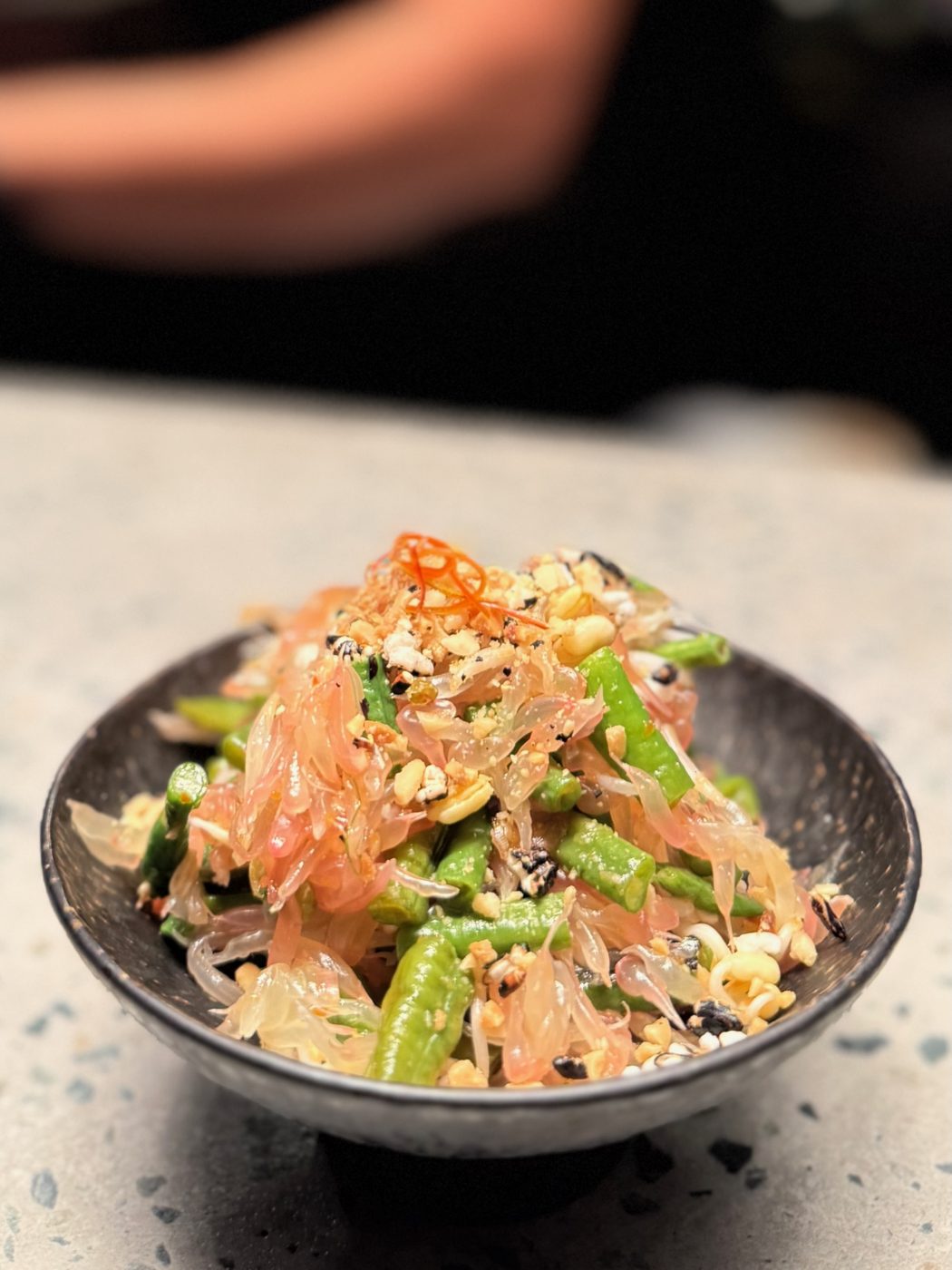
It opened on Som Tam — shredded green papaya tossed with pomelo segments and snake beans, the papaya and beans holding their crunch, the pomelo bursting against them. Spicy, sour and fruity-sweet all at once, and cold, which is exactly the right way to start a menu that is going to be hot and smoky for the rest of the night.
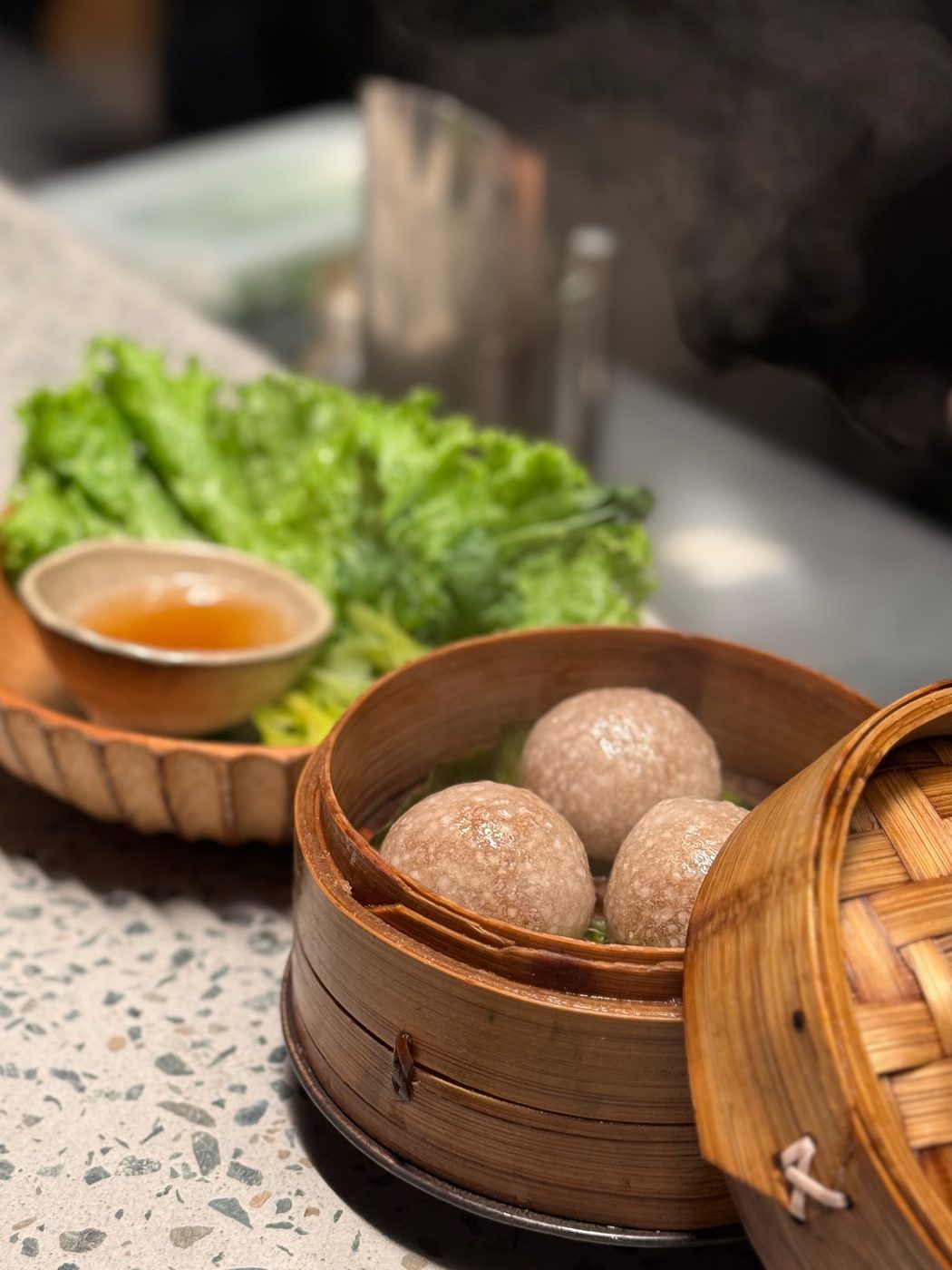
Then Dumplings — minced pork with XO, steamed in bamboo, with a subtle sweetness under real savoury depth. The wrapper is the surprise: chewy, almost mochi-like, nothing like the thin skin you brace for. They come with lettuce leaves, coriander, chili and a sweet vinegar sauce, and the way to eat them is to build the whole thing — dumpling into the leaf, herbs and chili on top, the lot dipped — which turns a three-bite course into something you assemble yourself. XO itself is a Hong Kong invention of the 1980s rather than an heirloom, a reminder that traditions are still being made while we eat them.
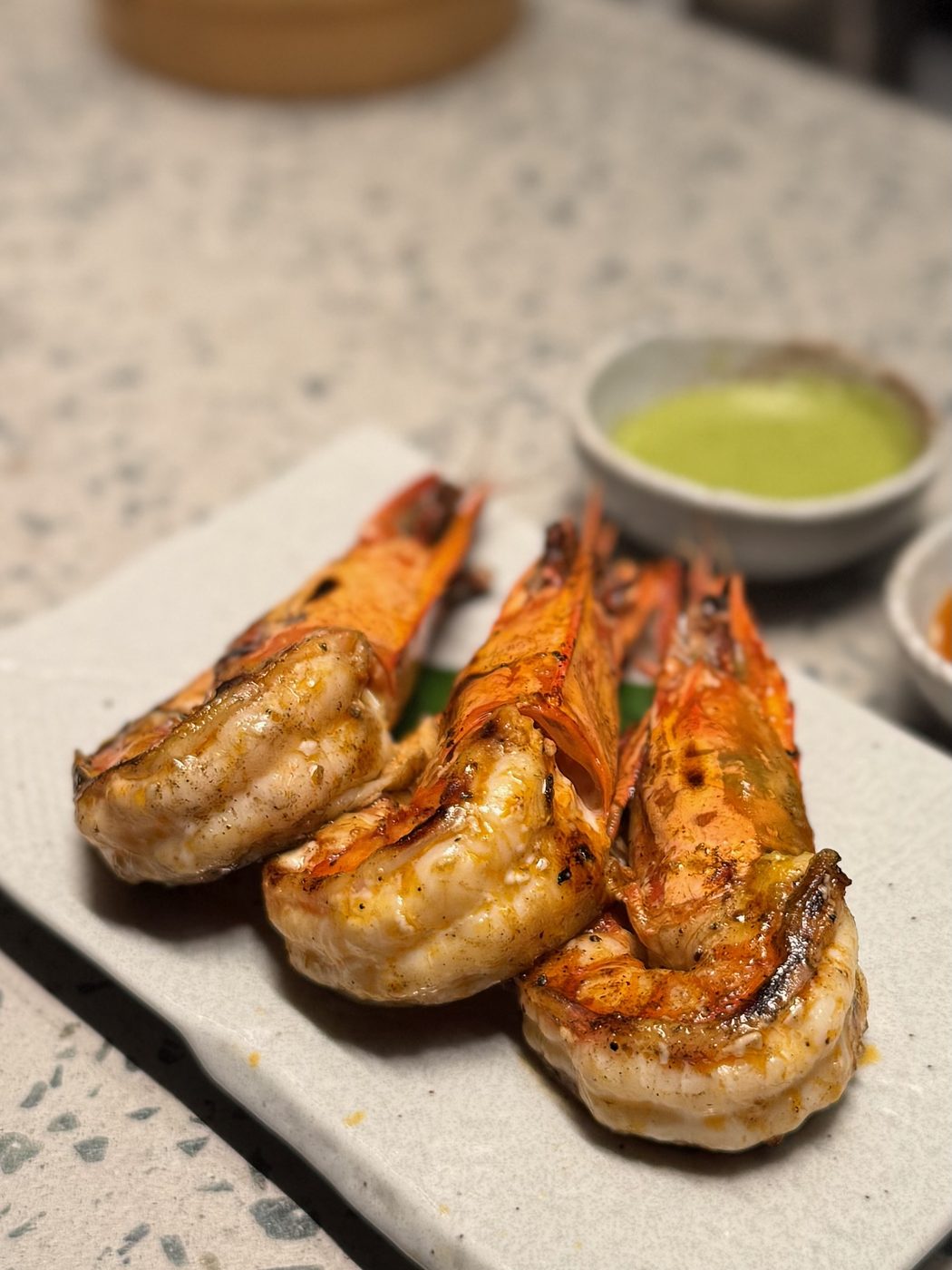
The Grilled King Prawns came split and head-on straight off the coals, on a ceramic plate, smoky and properly charred at the edges. Head-on is not a presentation decision. The head holds the good part — the head butter, sucked out or picked out with whatever is nearest to hand — and it may be my favourite thing about a prawn. Several sauces arrived alongside with no instruction about which belonged where, diner’s choice, which is the same idea as the fork and the chopsticks turning up on a plate instead of in a place setting: cook the thing properly, then leave the rest to the person eating it.
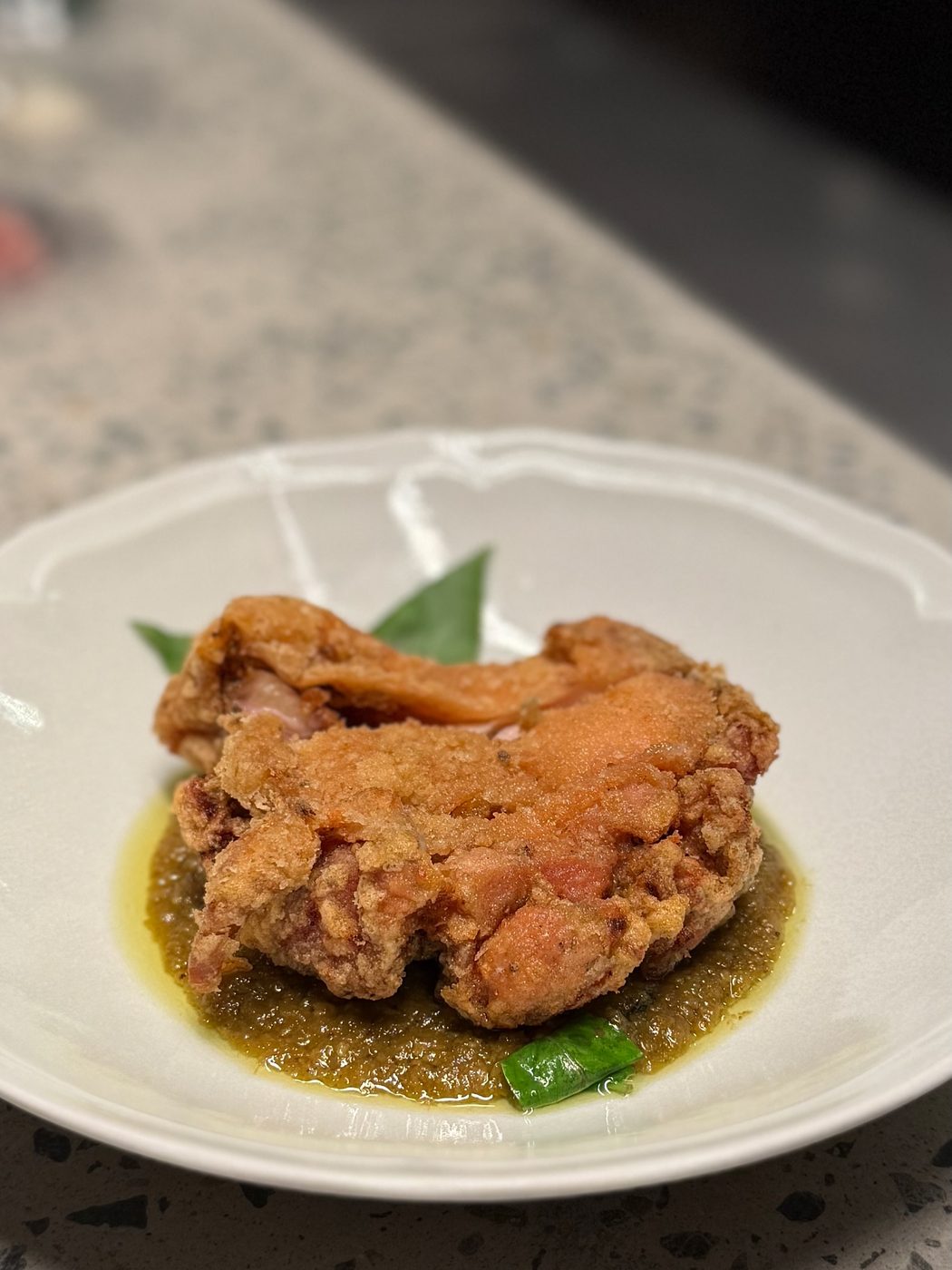
The Fried Chicken came craggy and golden brown, sitting on a dry green curry sauce with curry leaves tucked underneath. The heat is in the sauce rather than in the bird — a kick rather than a blow, and balanced with it, so the curry sharpens the chicken instead of shouting over it.
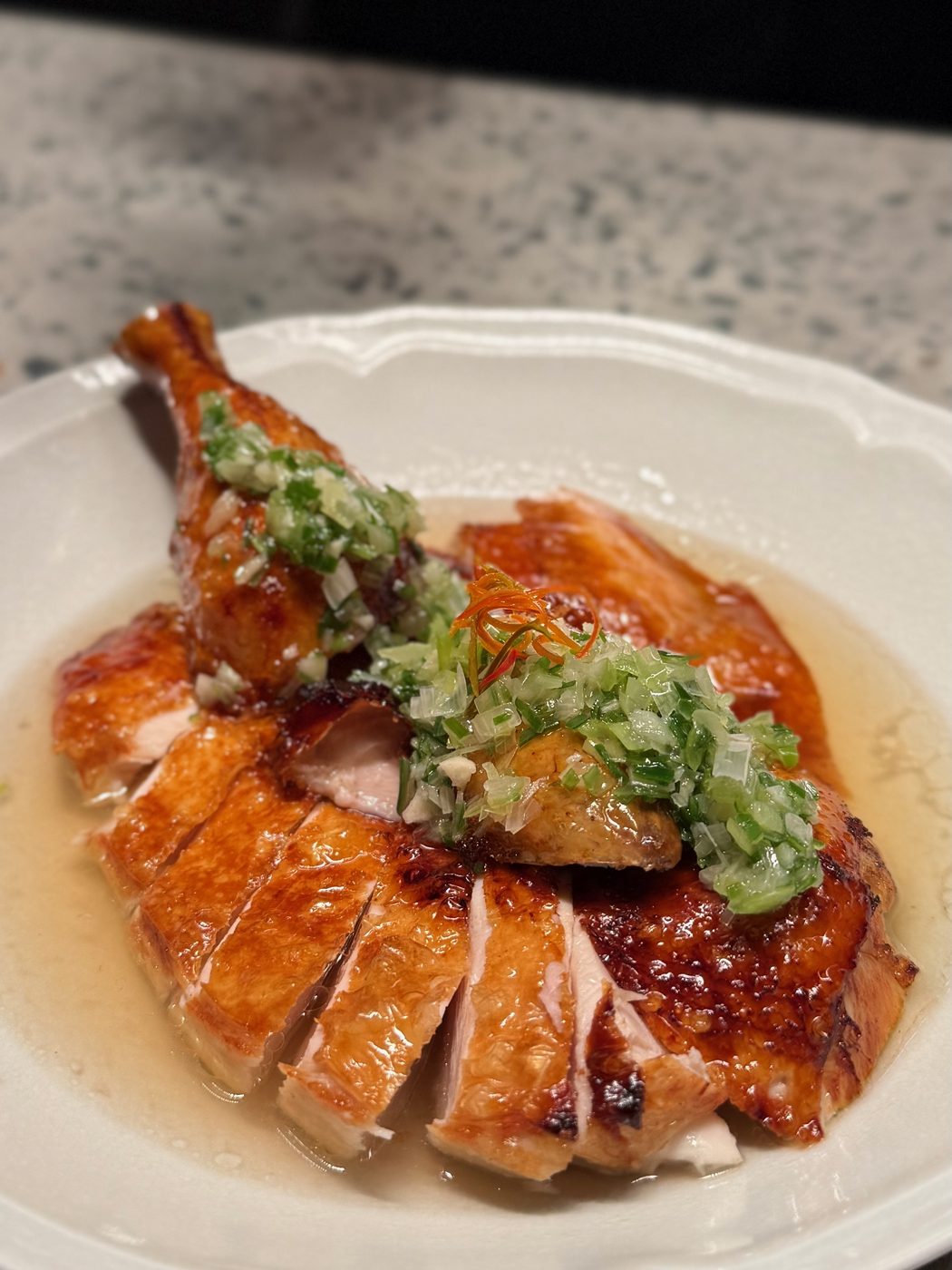
The Shan Tung Chicken is the set-piece, and it earns it. Five days: brined, scalded, dry-aged, roasted, then fried. What arrived was half a bird, sliced, and we couldn’t get over how juicy it was — crackling skin over meat that had somehow given up nothing at all, which after five days of drying is close to a contradiction. The sauce spooned over it is spring onion, ginger, salt and oil, near enough to the ginger-scallion sauce that comes with Hainanese chicken rice; underneath, what I took to be white wine vinegar, cutting the richness from below while the relish worked from above.
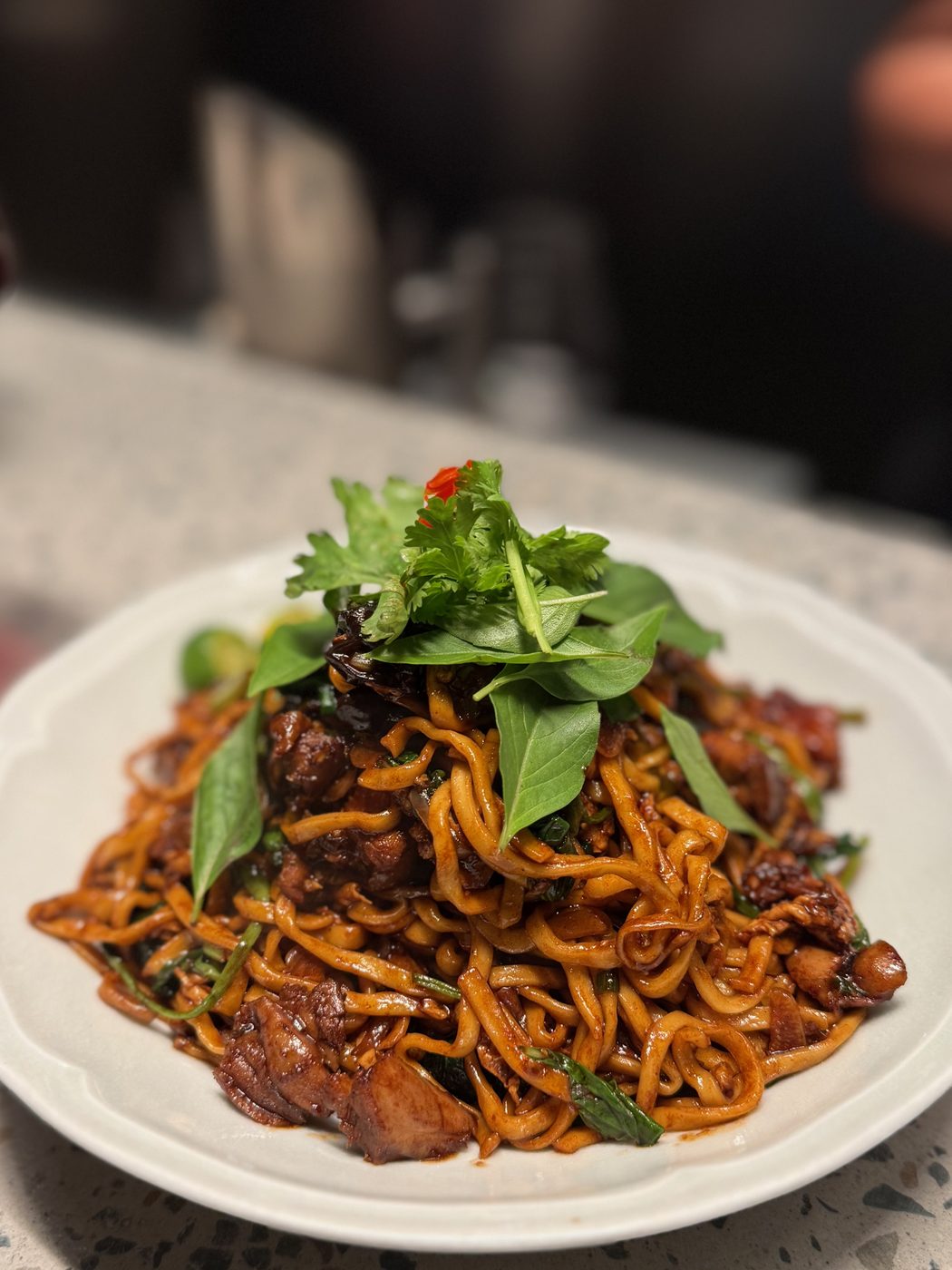
The Egg Noodles came tossed in sambal with black fungus, under a haystack of Thai basil and coriander piled on at the last second. The sambal is aromatic and balanced rather than punishing — spice used for flavour instead of for a point — and the noodles had real structure, springy, nowhere near mushy.
The best thing I saw all night wasn’t a dish. Late in the evening, with the room finally thinning, Chef John Baquir stood directly across the counter from us holding a whole raw duck while another cook steadied it, working compressed air under the skin to lift it away from the flesh — presumably for the next day. Empty hooks hung above him, waiting for it. That’s the Peking method, and the reason for it is entirely practical: with the skin lifted off the meat, the fat sitting underneath it renders out in the heat and runs away rather than staying put, and what is left behind dries and crisps. It’s a technique with centuries behind it, being done in Makati at the end of a long service because it’s the way that works.
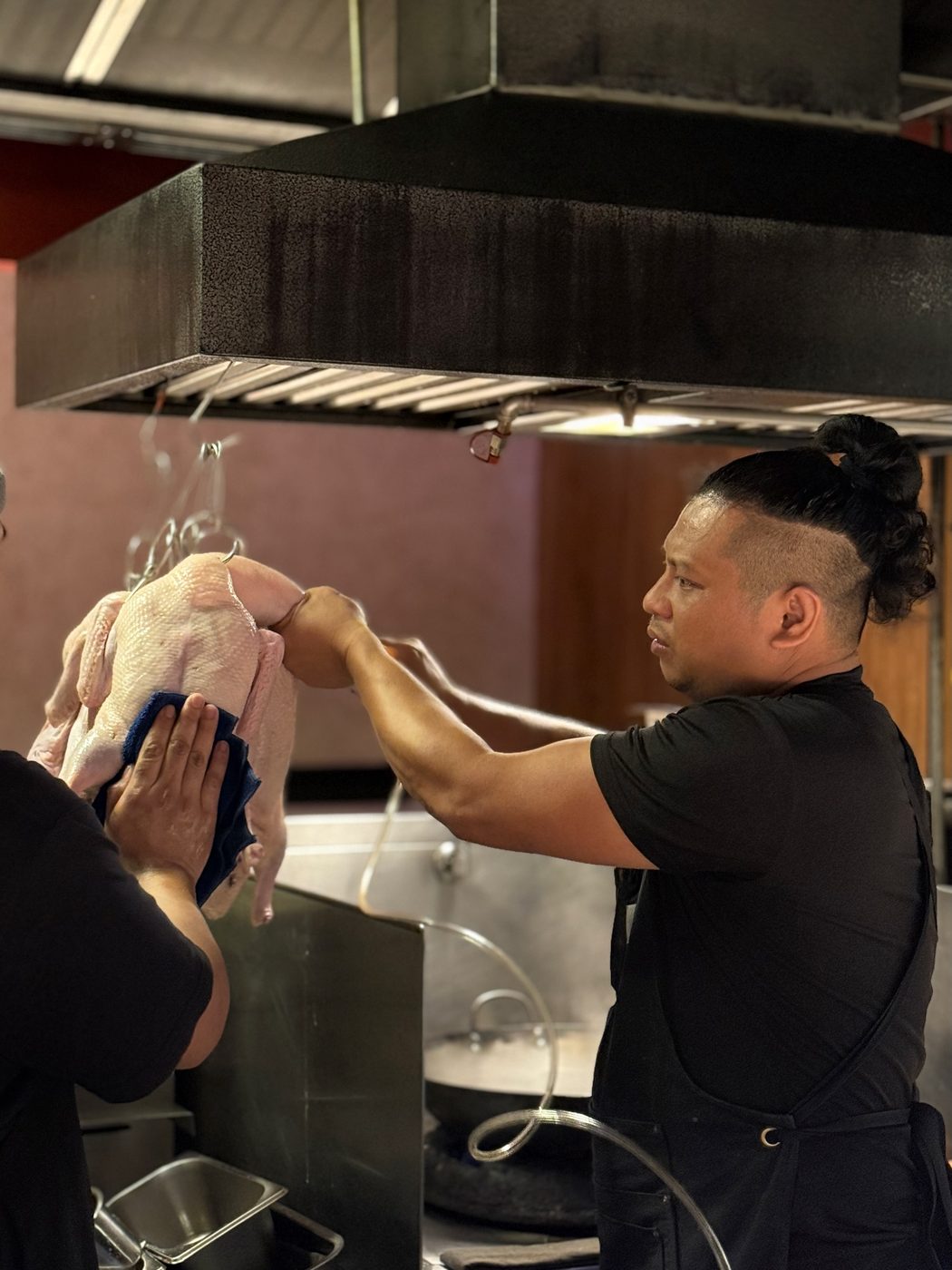
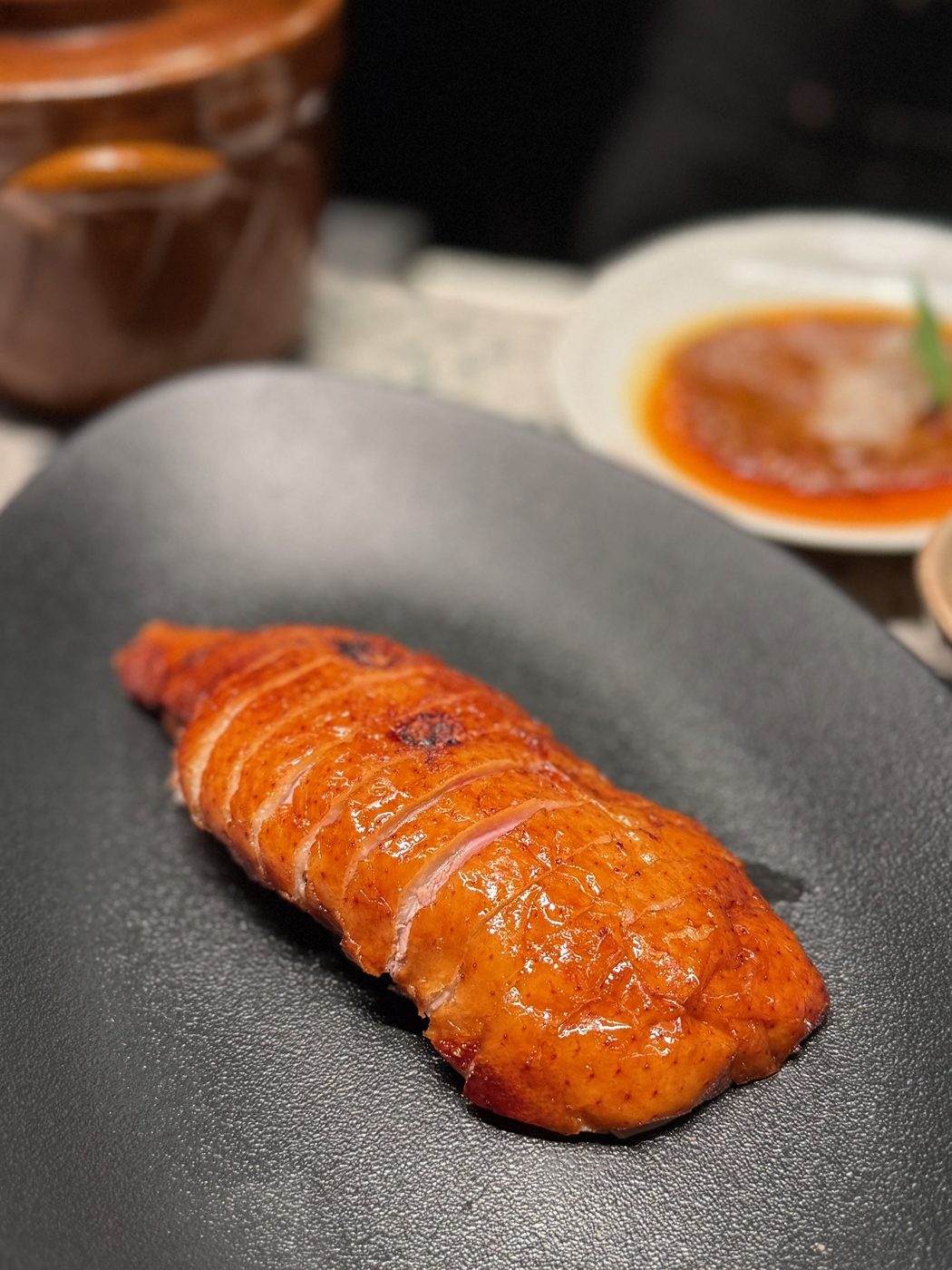
You could see the result on the plate we’d had earlier: the breast dry-aged before it ever went near the fire, sliced, the skin lacquered and thin over the meat with the fat cooked out from beneath it — which is what the air was for.
Then the beef, which is usually where I stop being objective. Tajima Wagyu Picanha, over charcoal, cut thick, set beside a Thai salad I could not tell you a single thing about, because the beef was there. Picanha carries a thick ribbon of fat along its top, and putting it over open flame is the entire reason that matters: the cap renders as it cooks and runs back down through the meat, basting it from above, holding the juices in and leaving depth behind. Which is the same story as everything else out of that kitchen — a cut and a fire chosen to do one job together — and it was rich enough, and tender enough, that nothing else on the counter stood a chance.

Dessert was a whole banana, blackened in its own skin over the same coals and split open, with toasted coconut and a scoop of cold vanilla ice cream. Roasting is the entire point of it: the fruit goes soft and creamy in a way a raw banana never manages, and the cold cream against the warm fruit does the rest. I should admit that dessert isn’t really where my attention goes — that’s my wife’s department, and she wasn’t with me on this trip — so I’ll leave it there rather than claim a closer reading than I gave it.

I should be straight about the pairings. Something came alongside every one of the nine courses, and I wrote down none of it. I was at the counter watching a kitchen, and by the time it occurred to me that I ought to be taking notes we were four courses in and I had quietly decided I would rather keep watching. What I can tell you is that the list deserves attention on the way in rather than as an afterthought. It has earned recognition well beyond the Philippines, and it reads as the work of someone who loves wine rather than someone who merely stocks it.
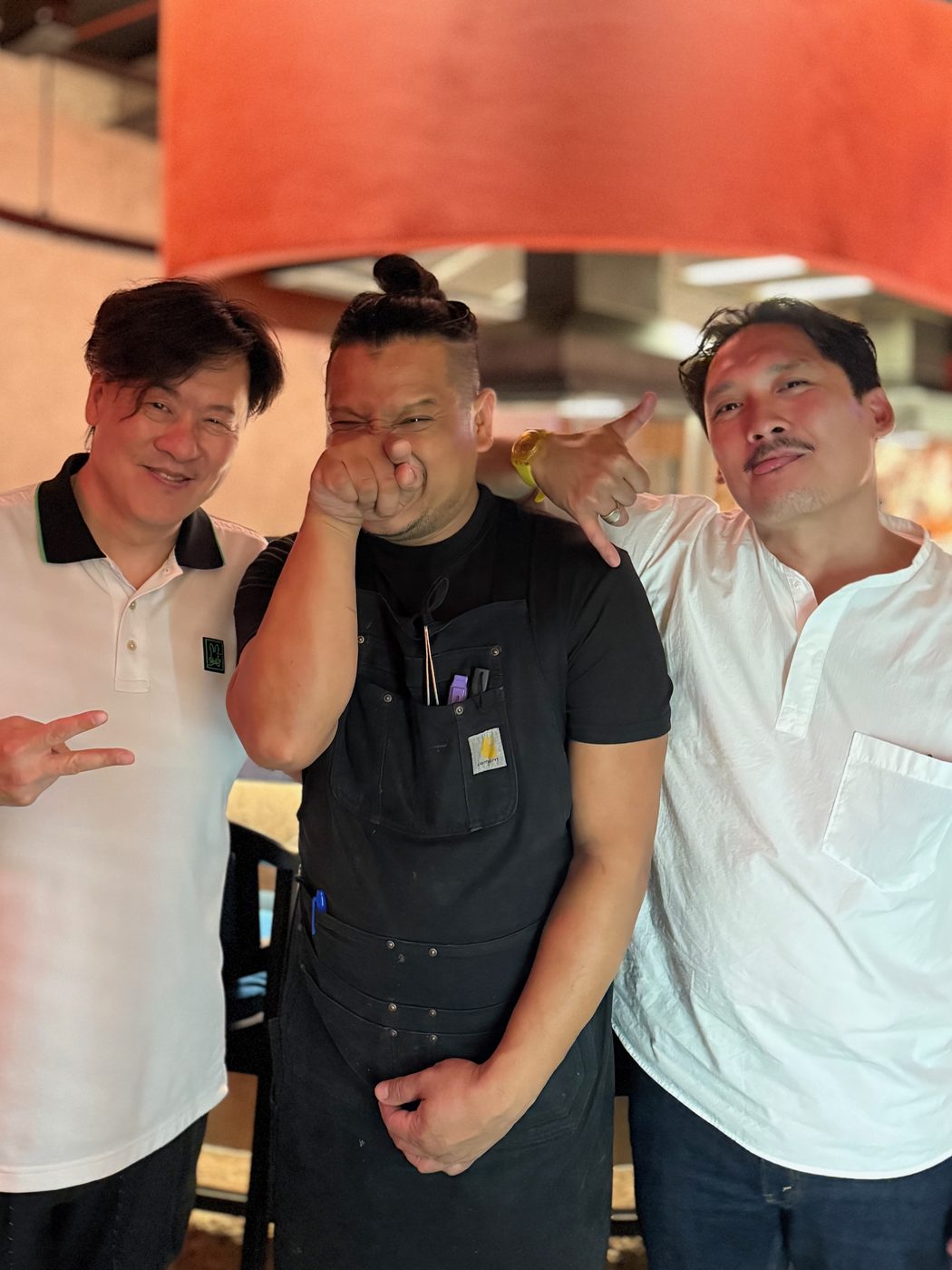
Nine courses at a counter is three hours spent alongside a kitchen, and I don’t think that’s incidental to what’s being served. Every technique on that menu had a reason behind it — the five days, the compressed air, the coals, the fat cap — and none of it was there for effect. That’s rarer than it should be, and it is most of why I’d go back. Which brings me back to the fork and the chopsticks, sitting there together before any of it arrived. It would have been easy to read them as a hedge. By the end I read them as an invitation: use whichever one you like, because that was never the interesting question.
Order this: the Shan Tung Chicken, and the duck if it’s available. Or do what we did and take the Freestyle 9 — there is a Freestyle 6 as well, for lighter eaters. Book further ahead than you think you need to, take the counter if there are two of you and a table if there are more, and give the wine list more time than you normally would.



The Newsletter
New pieces, plus what’s on my table next. Every few weeks.

An error has occurred somewhere and it is not possible to submit the form. Please try again later or contact us.


