


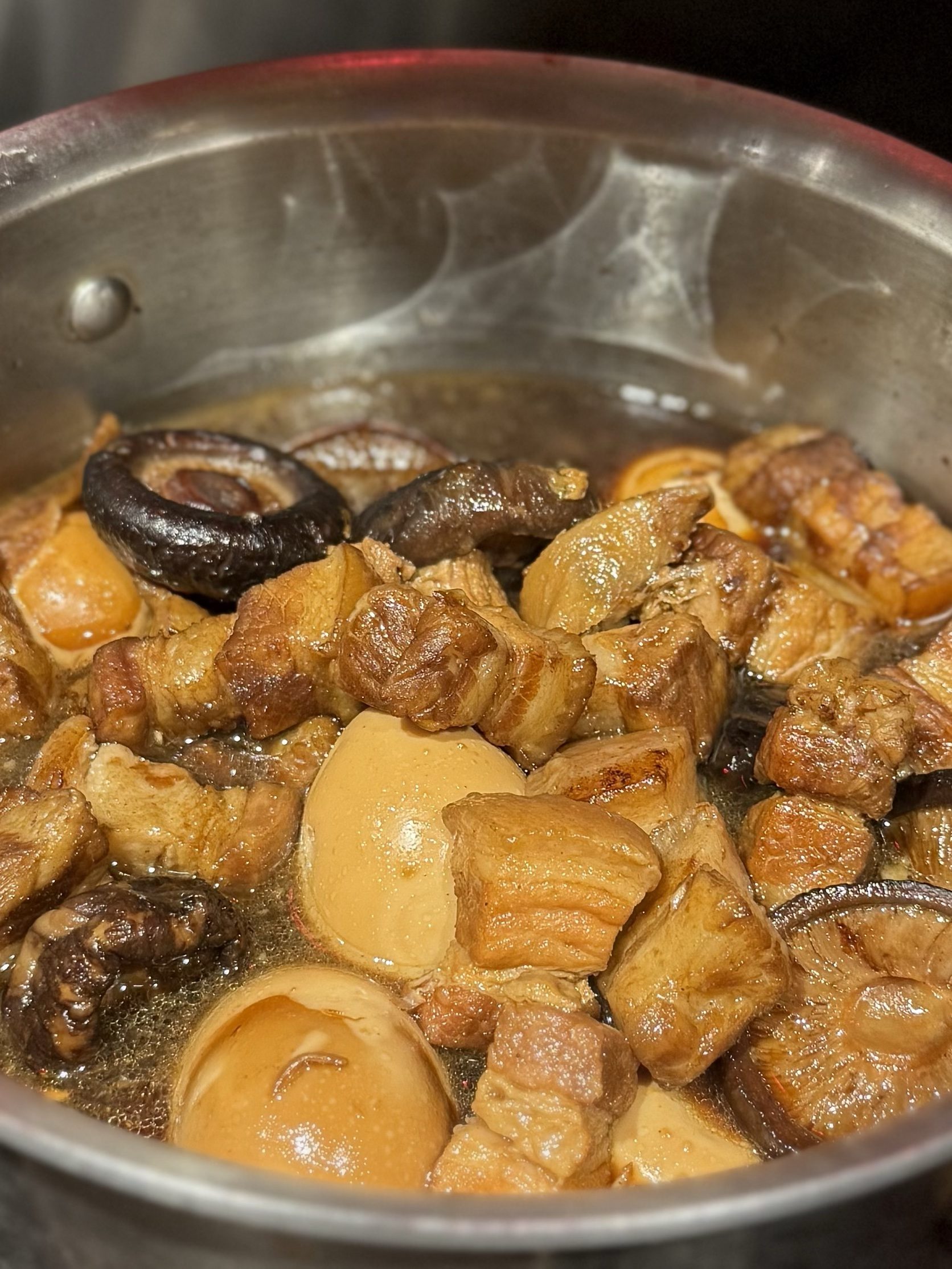


Hong bah at the end of the braise: pork belly, shiitake and whole eggs in a sauce that coats the back of a spoon.
Hong bah is one of the basic dishes that the Chinoy, Chinese-Filipino, community has held on to. You may know the version it grew into: humba, the Filipino braise, whose name still carries the Hokkien. The main difference is that humba is a little tangier, because it uses vinegar and pineapple juice. Hong bah goes the aromatic way instead, with Shaoxing wine, five-spice and star anise, plus the earthier notes of shiitake, which the Filipino version leaves out. Taiwan has its own version too, khòng-bah, usually braised in thicker slabs and served over rice.
My mother made it, and my late grandmother made it before her. It isn’t a special-occasion dish. We eat it regularly, and for me it’s comfort food.
A note on measuring. I don’t really measure when I cook Chinese food, or anything I know well. I’ve done it here for your sake, and remember that every family probably has its own version. The units are imperial, with metric in brackets.
Ingredients
Main
- 1½ to 2 lb (700 to 900 g) pork belly, cut into bite-sized pieces about 1½ in. (4 cm) long and ¾ in. (2 cm) thick
- 6–8 dried shiitake mushrooms, rehydrated in warm or hot water. Keep the soaking liquid. Use more if yours are small, and halve or quarter them if they’re large. Each piece should be one bite.
- 4–6 hard-boiled eggs, peeled, or more if you love eggs. Quail eggs make smaller bites, and canned ones are perfectly fine.
- Neutral oil (such as canola), for the wok
Aromatics
- 1 head garlic, peeled and lightly crushed
- About 10 slices ginger: 5 for blanching the pork, 5 for the aromatics
- 1 whole star anise
- About ½ tsp (2.5 ml) five-spice powder
- ¼ cup (60 ml) Shaoxing wine
Braising liquid
- ¼ cup (60 ml) light soy sauce, for salt
- 2 tbsp (30 ml) dark soy sauce, for a deeper, darker colour
- 3 tbsp (45 ml) yellow or brown rock sugar
- 2 cups (500 ml) water: the mushroom soaking liquid, topped up to 2 cups
A word on two of these. Shaoxing wine is a traditional Chinese rice wine made from fermented glutinous rice, water and a wheat-based starter. It’s nuttier and slightly sweeter than plain rice wine, and more aromatic and complex overall. Rock sugar gives a rounder sweetness. It isn’t sharp, and it isn’t a slap-in-the-face sugar, so it doesn’t taste as sweet on the first hit.
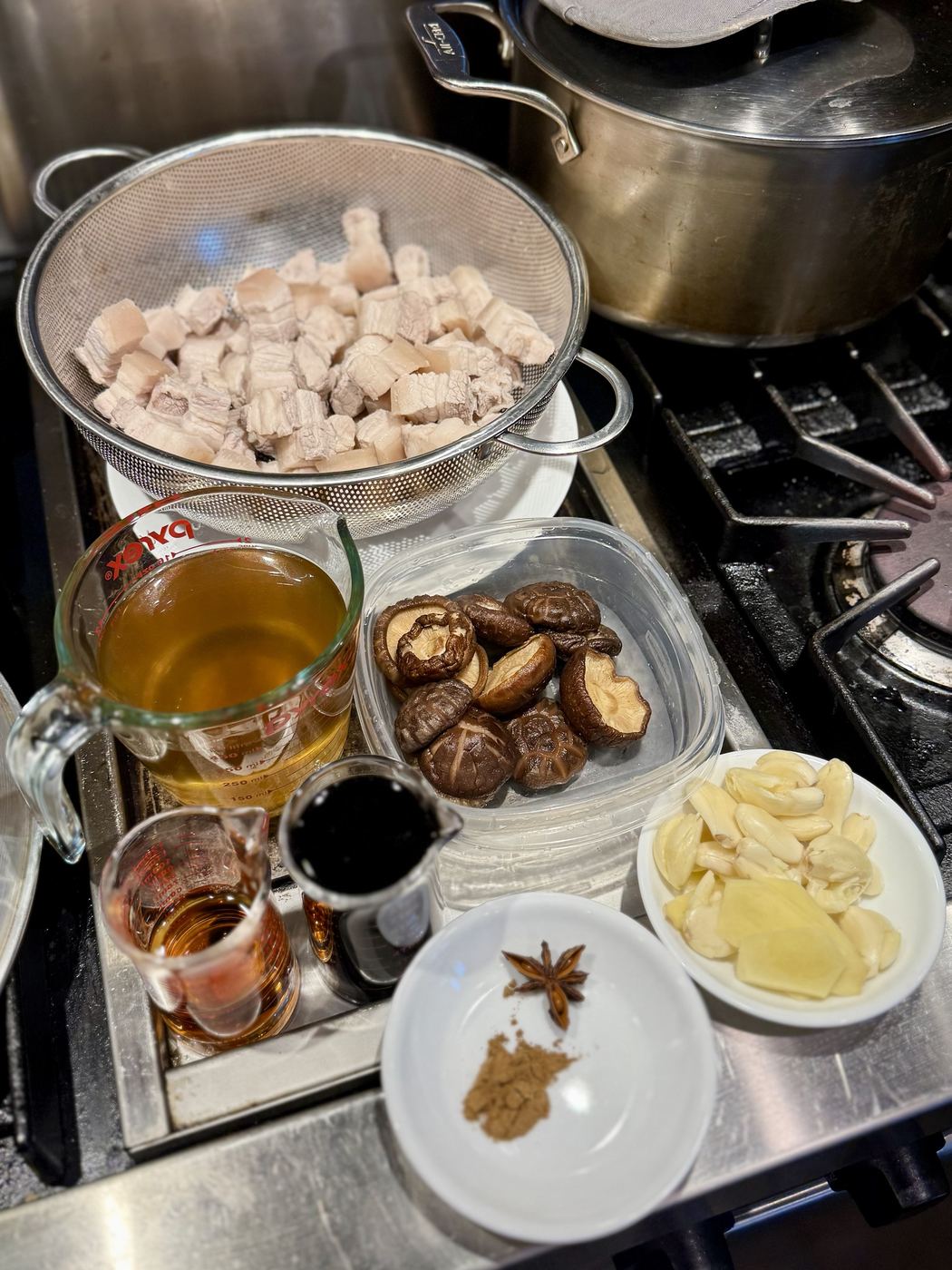
Rock sugar is hard to measure, so I measure it by displacement. I pour the light and dark soy into the same measuring cup, which comes to 6 tablespoons, then drop in lumps of rock sugar until the level rises to 9. Mine holds 8 tablespoons at the line and about 9 near the top, which makes it easy to see.
Before You Start
I believe in what’s commonly called mise en place: prep and portion everything before you start, so you can cook quickly. That especially matters when cooking with a hot wok, where things happen fast. I group ingredients by when they go in. The garlic and ginger share one small dish, the star anise and five-spice have their own, and the soy and rock sugar sit together in the measuring cup. I used to portion every ingredient in its own container, but that meant a lot more washing up.
Method
1. Blanch the pork (optional, but worth it). A lot of people skip this step, and that’s your call. Blanching is a traditional Chinese technique that draws out the surface impurities and that scummy foam you tend to get when you boil pork.
Put the pork belly pieces and about five slices of ginger into a wok or pot of cold water. But why the ginger? It neutralizes any gamey odour, or, as my mom would say, it “gets rid of the porky smells.” I use a wok, and I use it a lot, sometimes even when I’m not cooking Chinese food. Mine is probably over 40 years old, handed down to me by my mother. It’s been well used and a little bit abused, and if you look closely at the front edge in the photo of the braise, you’ll see it’s bent and isn’t perfectly round anymore. I like it because it has a flatter bottom than most Chinese-style woks, so it sits well on a gas stovetop without using a wok ring.
Bring it to a boil over high heat, then let it go for 4 to 5 minutes. Drain the pork in a colander and rinse it under cold water. The cold rinse firms up the pork and gives it springiness. It is important to pat it dry.
2. Sear the pork. Rinse out the wok, dry it, and put it back on the heat. I like to get my wok very hot, to the point of smoking, then add a neutral oil (I tend to use canola oil) and swirl it around to coat, creating a temporary non-stick surface. Pour off the excess oil into a container for recycling.
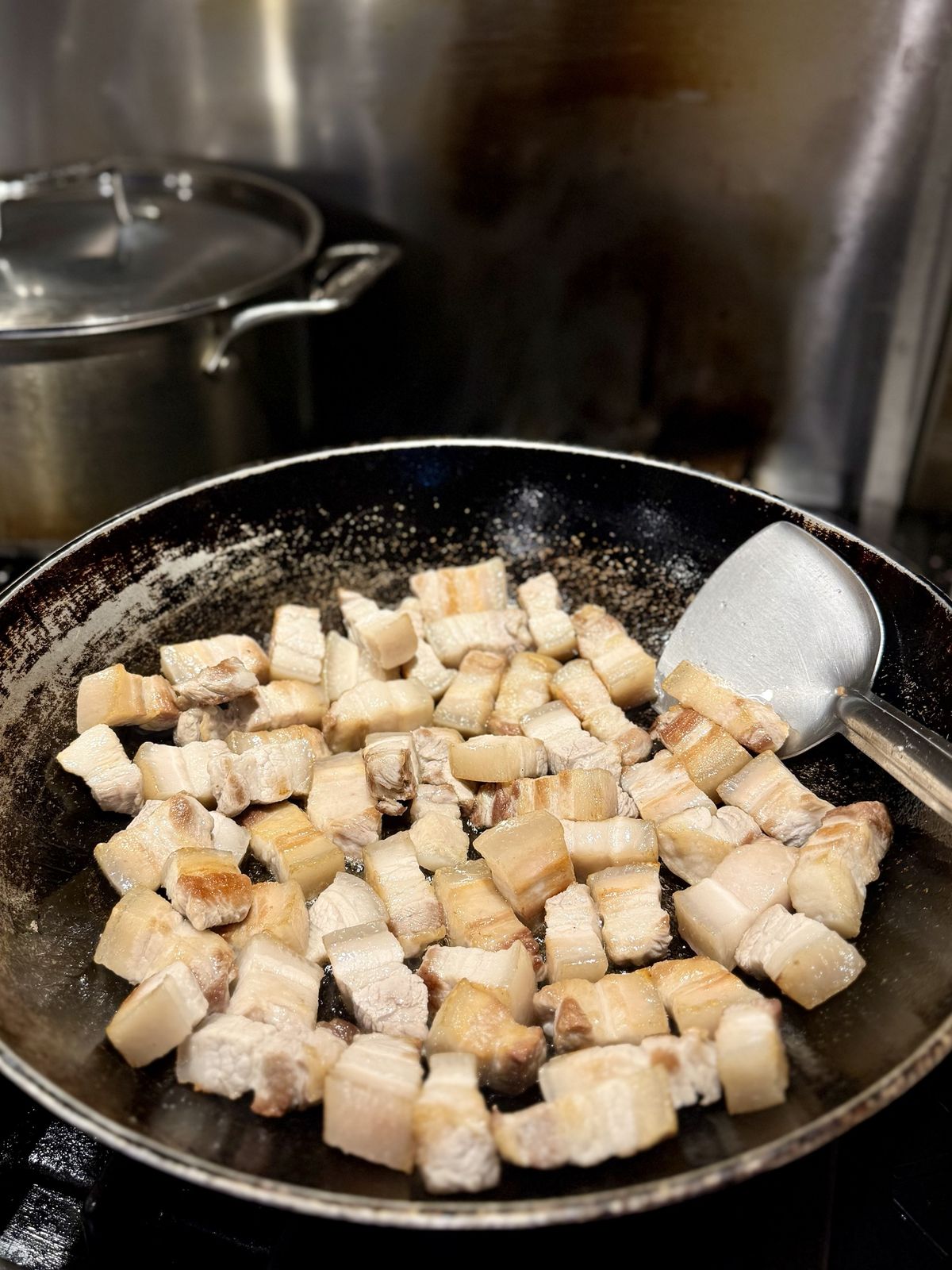
Lower the heat to medium-high, add a little fresh oil, and carefully add the pork. Water and hot oil don’t mix, so if there’s any water left on the pork, or in the bowl you’re moving it in, expect some spatter. Push the pieces around until they lie flat and every one touches the wok. That’s what gives you a good sear. Sear for about 5 minutes, turning them at least once, until some of the fat starts to render and the outside turns a little golden brown. Move the pork to a metal bowl, then pour off the excess fat, leaving just a thin coating in the wok.
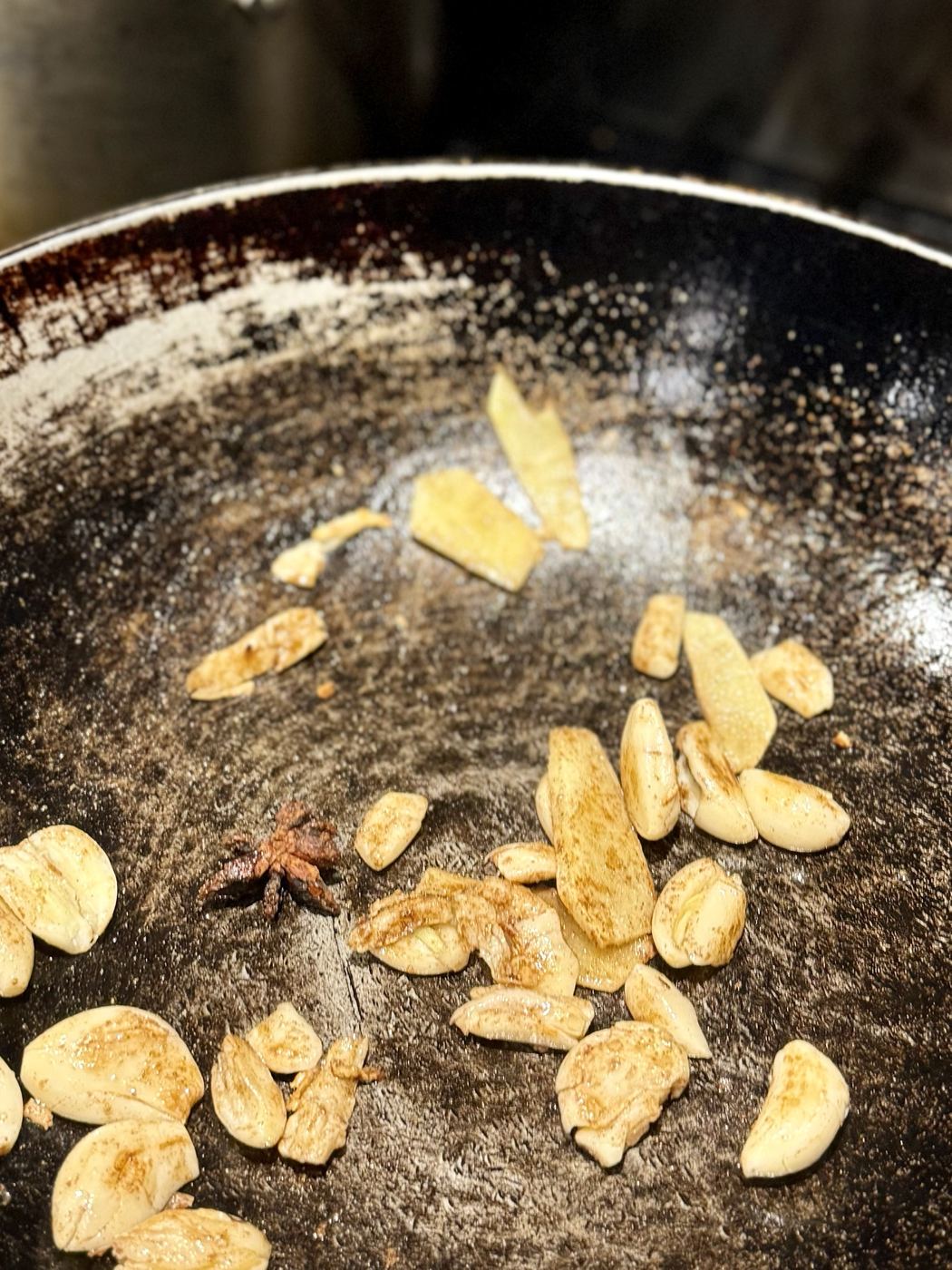
3. Bloom the aromatics. I do this with a lot of aromatics: a quick burst of heat to wake them up. Turn the heat to medium and add the garlic and the remaining five slices of ginger. Toss for about 30 seconds, then add the star anise and five-spice. Keep everything moving, or the spices will scorch. This is why everything needs to be ready to go in. Your kitchen will start to smell almost like sweet licorice and cinnamon. After another 30 seconds or so, move on.
4. Start the braise. Return the seared pork to the wok along with the shiitake, and toss everything to coat it in the aromatics. Pour the Shaoxing wine around the edges of the wok to deglaze and bring the spices together. After a few seconds, the raw alcohol smell should cook off. Add the soy and rock sugar and the two cups of mushroom water, and bring it all to a boil.
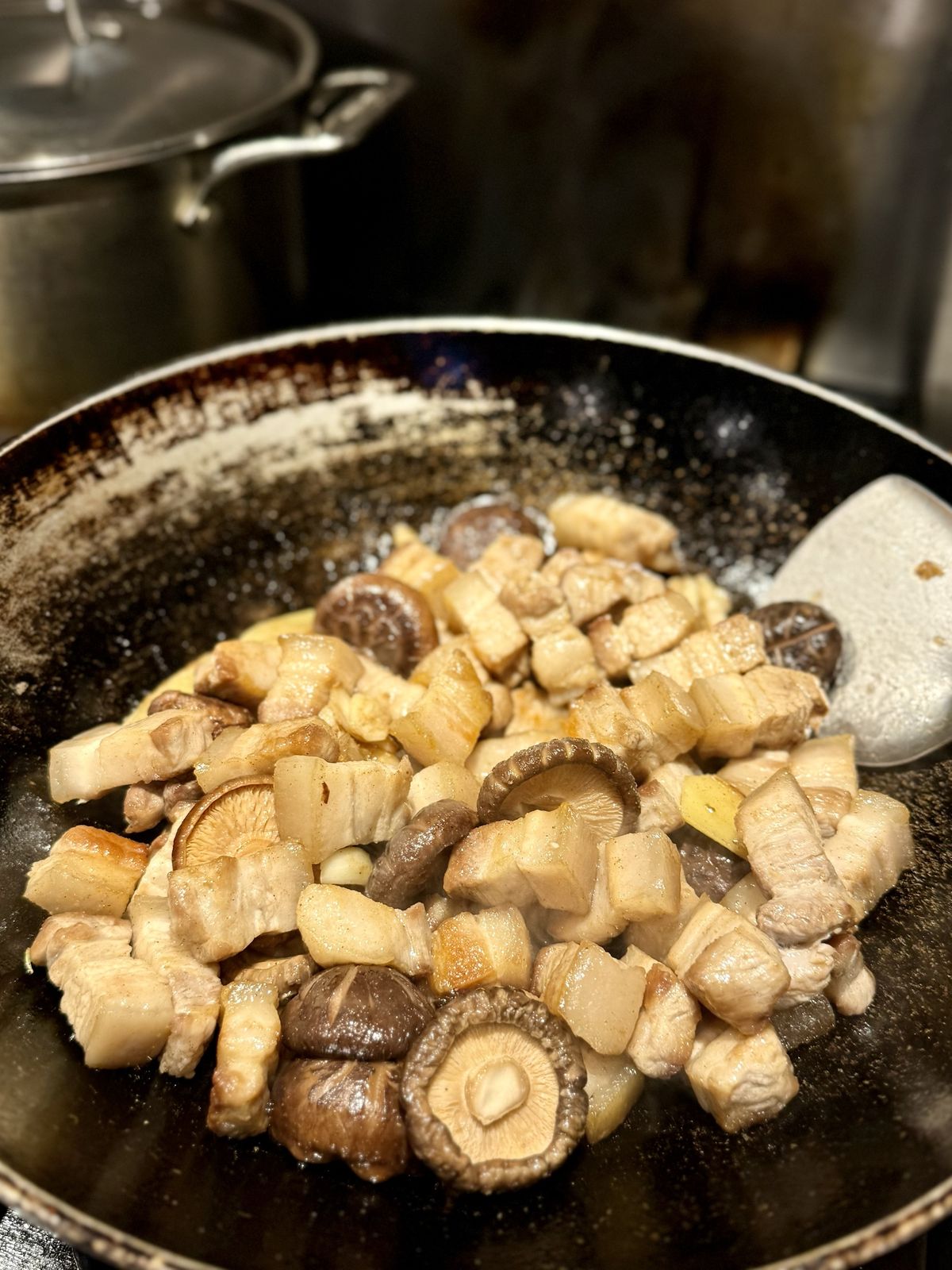
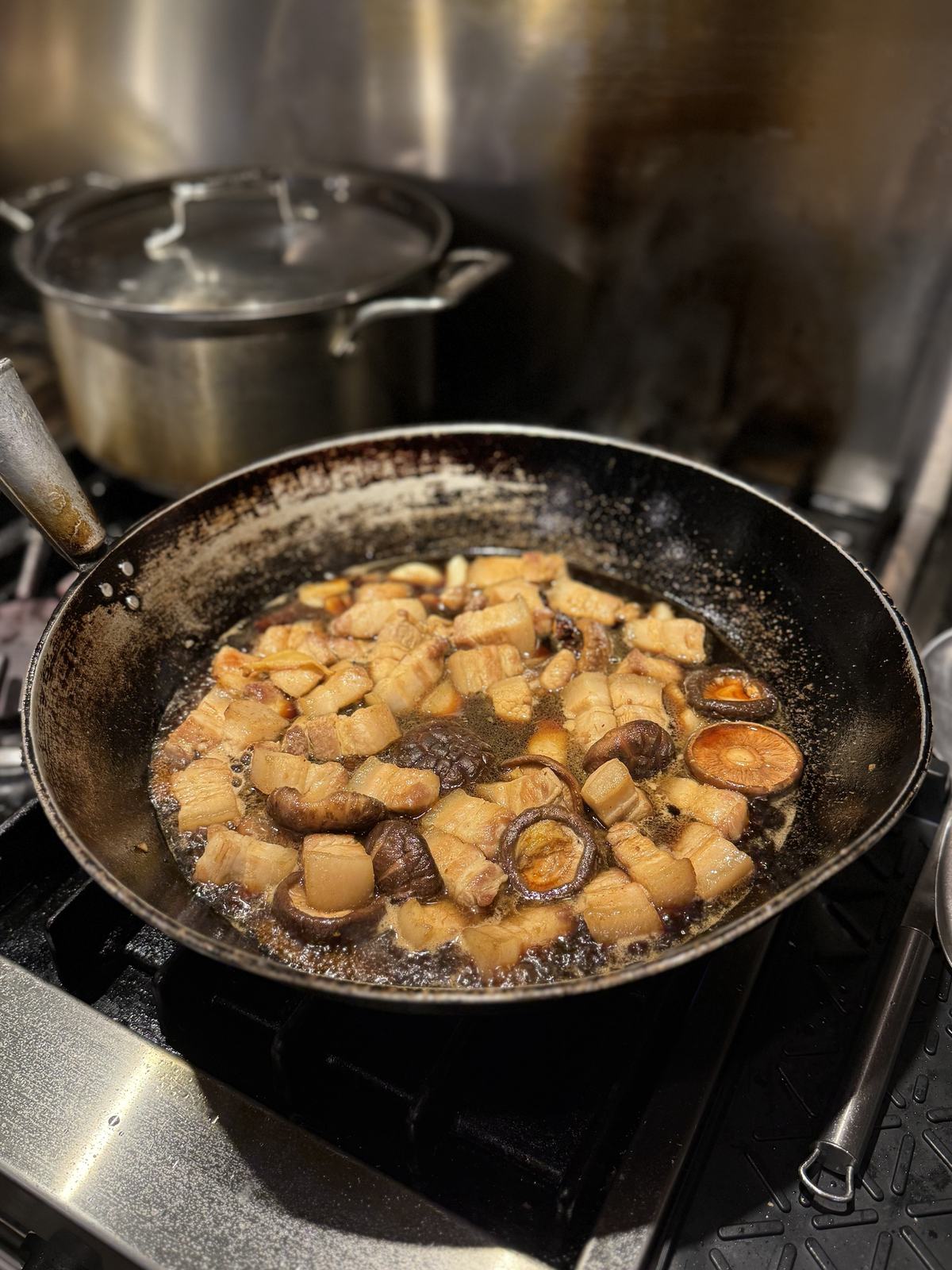
5. Low and slow. Once it boils, give it a quick stir. Then turn the heat down to a gentle simmer, cover the wok, and let it braise for about 45 minutes. Come back now and then to stir it so everything cooks evenly. The pork should be really tender by now, and you’ll be able to see it too: the fat layers turn translucent and gelatinous.
6. Add the eggs and reduce. Add the peeled eggs, tucking them under the pork so they’re fully submerged. Leave the lid off and simmer for about 15 minutes more, stirring gently so you don’t break the eggs. The sauce will thicken as it reduces. It doesn’t need to be a thick glaze, just enough to coat the back of a spoon, with plenty left to spoon over rice. As it drops, turn the eggs, especially any that are no longer fully under, so they colour evenly. Then turn off the heat. You’re done.
To Serve
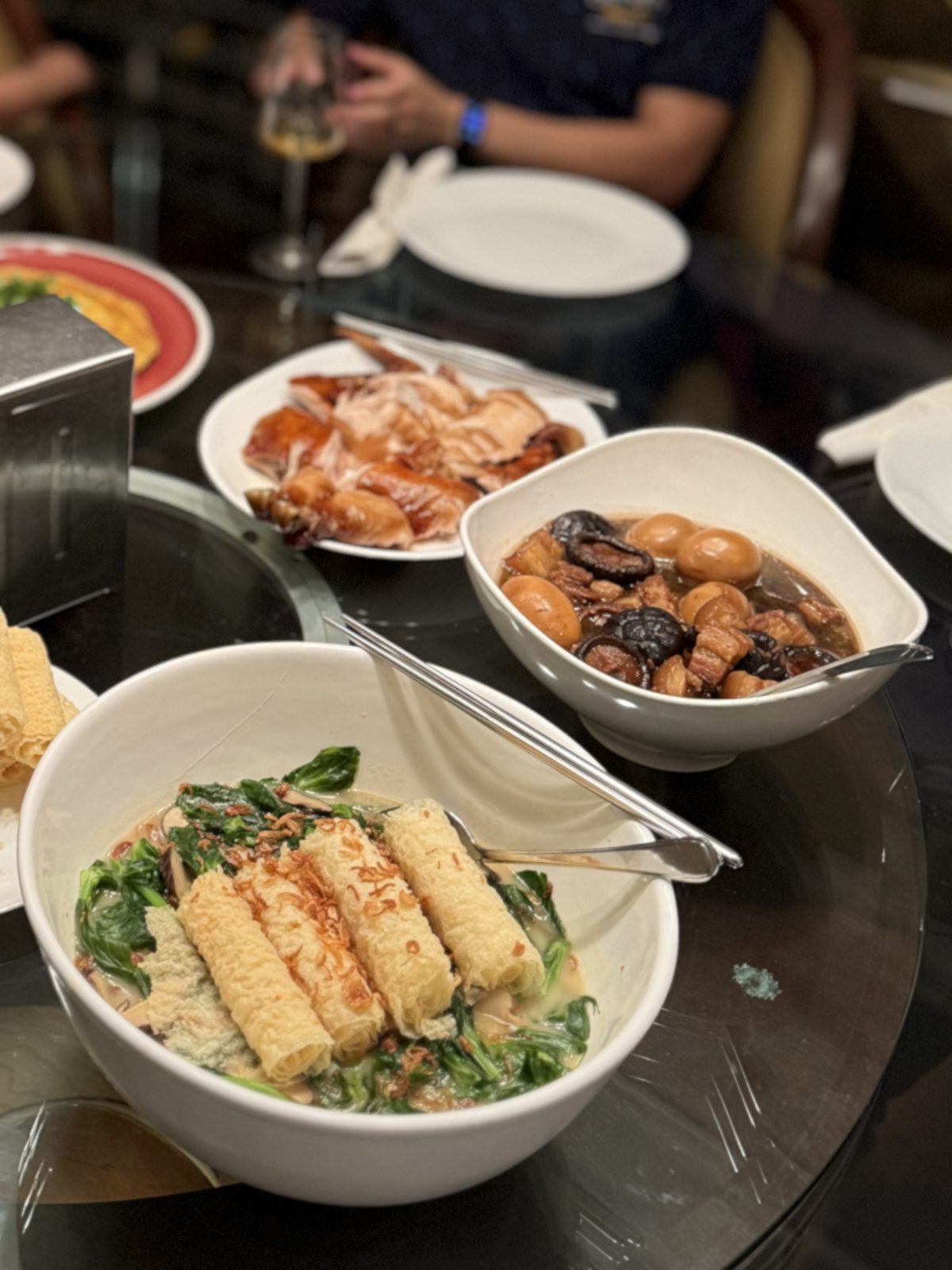
I usually serve this with steamed jasmine rice and perhaps a vegetable side dish. The last time I made it, that was garlic pea tips (pea shoots) with bean curd rolls. Some cooks garnish it with chopped green onions. My wife and my dad don’t like them, so I generally leave them out, or add some to my own plate. It’s completely optional.



The Newsletter
New pieces, plus what’s on my table next. Every few weeks.

An error has occurred somewhere and it is not possible to submit the form. Please try again later or contact us.


