


Divers’ Catch, Steveston: Dinner in the Cannery

Jacob Ung
September 19, 2026

12 min read
Nine chefs, three hand-harvested BC seafoods, and an evening in the Steveston cannery, four blocks from the engine shop my family once helped run.
The three animals at the centre of this evening are brought up from the bottom of the BC coast one at a time, by hand, by divers. Geoduck, sea urchin and sea cucumber. It is about as careful as a fishery gets, with next to nothing caught by mistake.
The Divers’ Catch Festival puts the people who harvest them and the chefs who cook them in a room with the people who eat them. On Saturday that meant two kinds of guest: people who already know these three well and came looking for new ways to eat them, and people tasting them for the first time. This was the festival’s second year. The first, last September, sold out. So did this one: two ninety-minute sessions, nine chef stations, and the harvesters and their families in the room to talk to. It is put on by the BC Dive Fisheries Society, a non-profit, and it is held in the Gulf of Georgia Cannery in Steveston, which is where the evening started to mean more to me than a tasting.
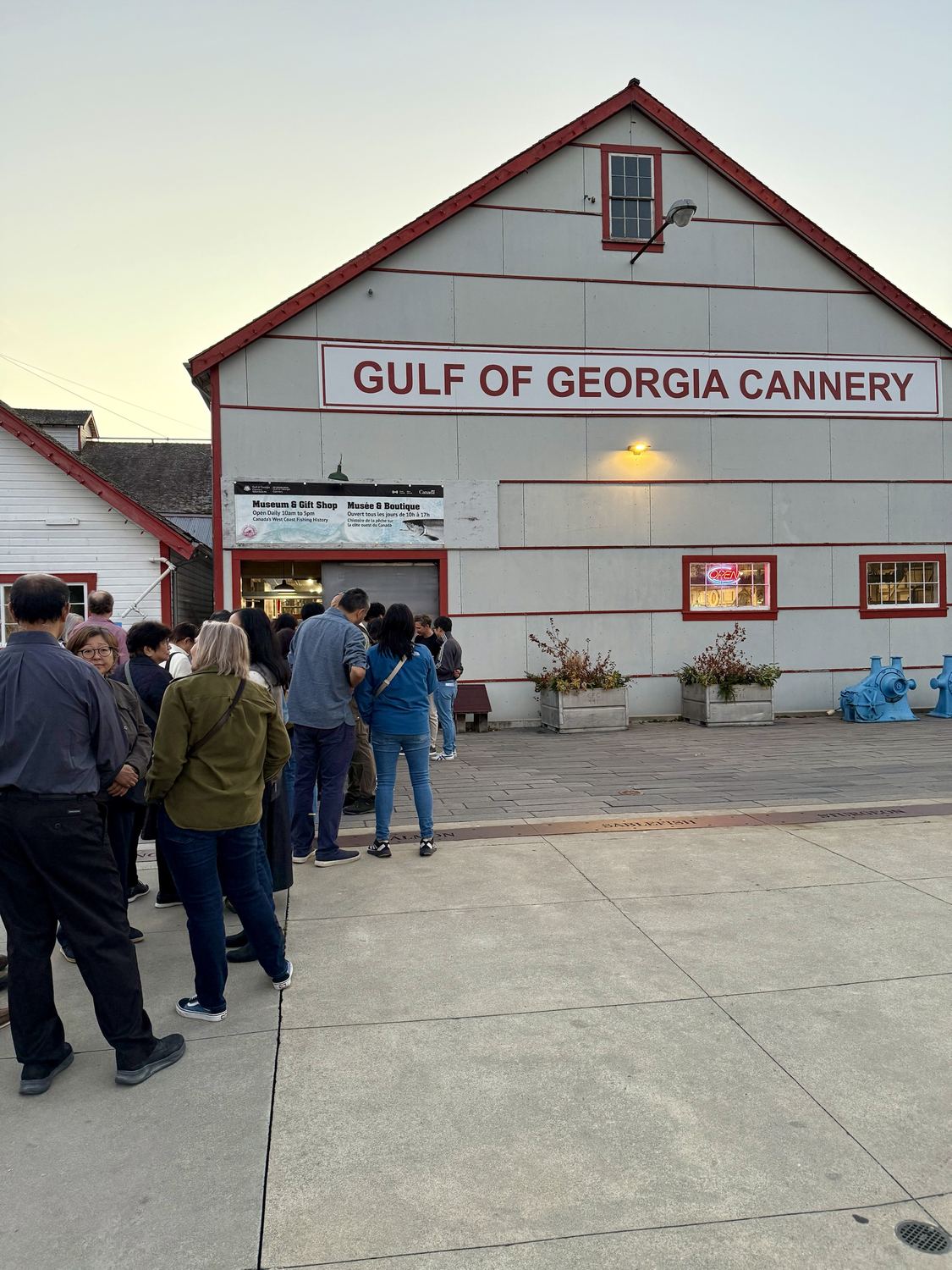
We had tickets for the second session, 7:30 to 9:00, and by 7:15 there was already a line out the front. It moved quickly. Staff walked it checking tickets and handing out wristbands while we waited, so that when the doors opened at 7:30 there was nothing left to check, and we were all inside in a few minutes. The first person we saw was my long-time friend Jenice Yu, who met us with a warm hug. She is one of the busiest people I know. Most of her time goes into Eatfish, and she is also co-executive director of the BC Dive Fisheries Society, so this evening was partly hers to run. Organizing an event like this is challenging, and it takes a certain kind of person to pull it off. She is one of them.
The cannery opened in 1894 and was, for a few years, the largest in the province. They called it the Monster Cannery; in 1897 it packed more than two and a half million cans of salmon. It is a museum now, and the organizers did not cordon off a hall and put the food in it. The stations were set out through the museum itself, among the machines and the timber, so that you ate a plate of geoduck standing next to the equipment that used to process the fleet’s catch. The gift shop stayed open, in case anyone wanted to buy anything.
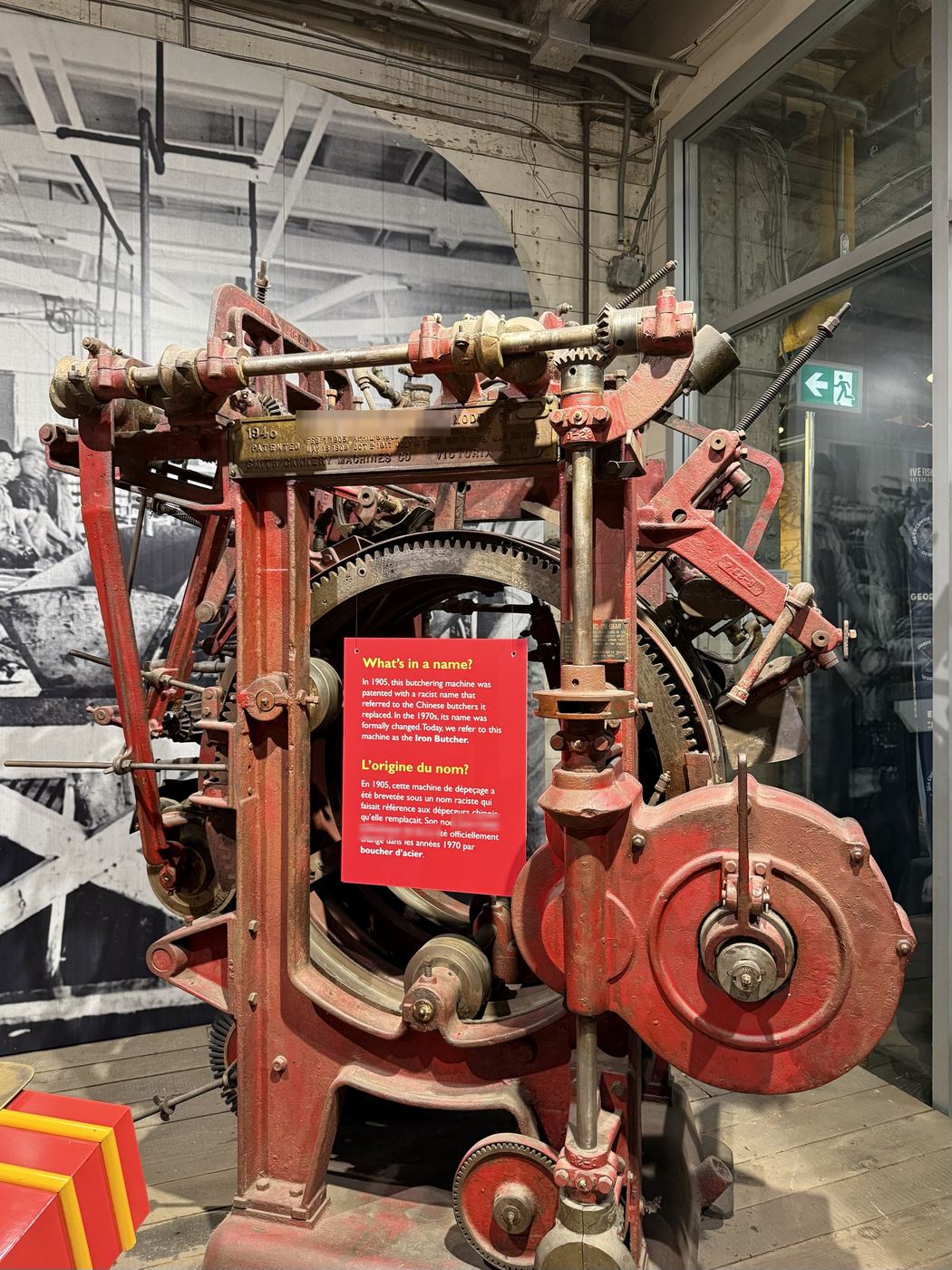
The museum is candid about its own history, too. One of the old fish-butchering machines carries a panel explaining that it was patented under a racist name for the Chinese workers it replaced, and renamed only in the 1970s. Steveston has been trying to tell that part of its story honestly, and it is better for it.
My own piece of that story is four blocks up No. 1 Road, about a seven-minute walk from the cannery. When I was in high school, my father and his brothers helped run Easthope Marine Engines, which built engines for the fishing boats that worked out of Steveston Harbour. The company’s sign said “Since 1897,” and by the 1980s it had been making the Easthope engine for the better part of a century. The ones I remember were big single-cylinder motors. Opened up closer to full they went bang-pop-pop, but in the harbour the boats ran slow, and at low speed an Easthope chugged like a train. That chug was the sound of the whole harbour. The Easthope brothers had sold the business on when they retired, and in the 1980s it passed to my family’s company. An Easthope was still in the shop when I was there.
My older brother and I spent our spring breaks doing inventory. Every small part in the shop lived in wooden bins on a rack, and we had to count nearly all of them. I remember a lot of those parts, the nuts, the bolts, the washers, the tensioners, but the throttle springs are the ones that stand out, because they tangled with each other. You could not simply count them: every handful had to be pulled apart before you could see how many you were holding. After a few spring breaks of this the two of us changed the system. We bagged them in batches and weighed them, and worked the count out from the weight. We hated counting those springs enough to fix it.
We could not turn it around. The salmon fishery was in decline, and the fleet that had bought those engines was shrinking with it. We closed the company on July 31, 1987. The building is still there on No. 1 Road, clad in clapboard now, with the same six windows across the upper floor and the front door where it always was. It is a chocolate shop today, Sinfully the Best, under the Steveston Heritage Market sign. There are two annex buildings on the property: one is now Windsor Meats Steveston, and the other a new restaurant, Enishi Japanese Kitchen. There is also a short road named Easthope Avenue, one block east of the original building. And the cannery we ate in on Saturday has an Easthope engine on display, beside a model wheelhouse in its Fishing the West Coast exhibit, under the company’s own sign: Easthope Quality Marine Products, Since 1897. Its collection also holds Easthope’s old machine patterns, donated by the Easthope family. I have seen that display on earlier visits, and I knew it was there that night, somewhere in the building, while I ate my way around the stations. It is a strange and rather good feeling, eating geoduck in the same building as a small piece of the company my father and his brothers helped run.
That is why a festival about a fishery that is still working, still careful and still local landed the way it did. Not every story on this waterfront ends well. This one, so far, is going the right way.
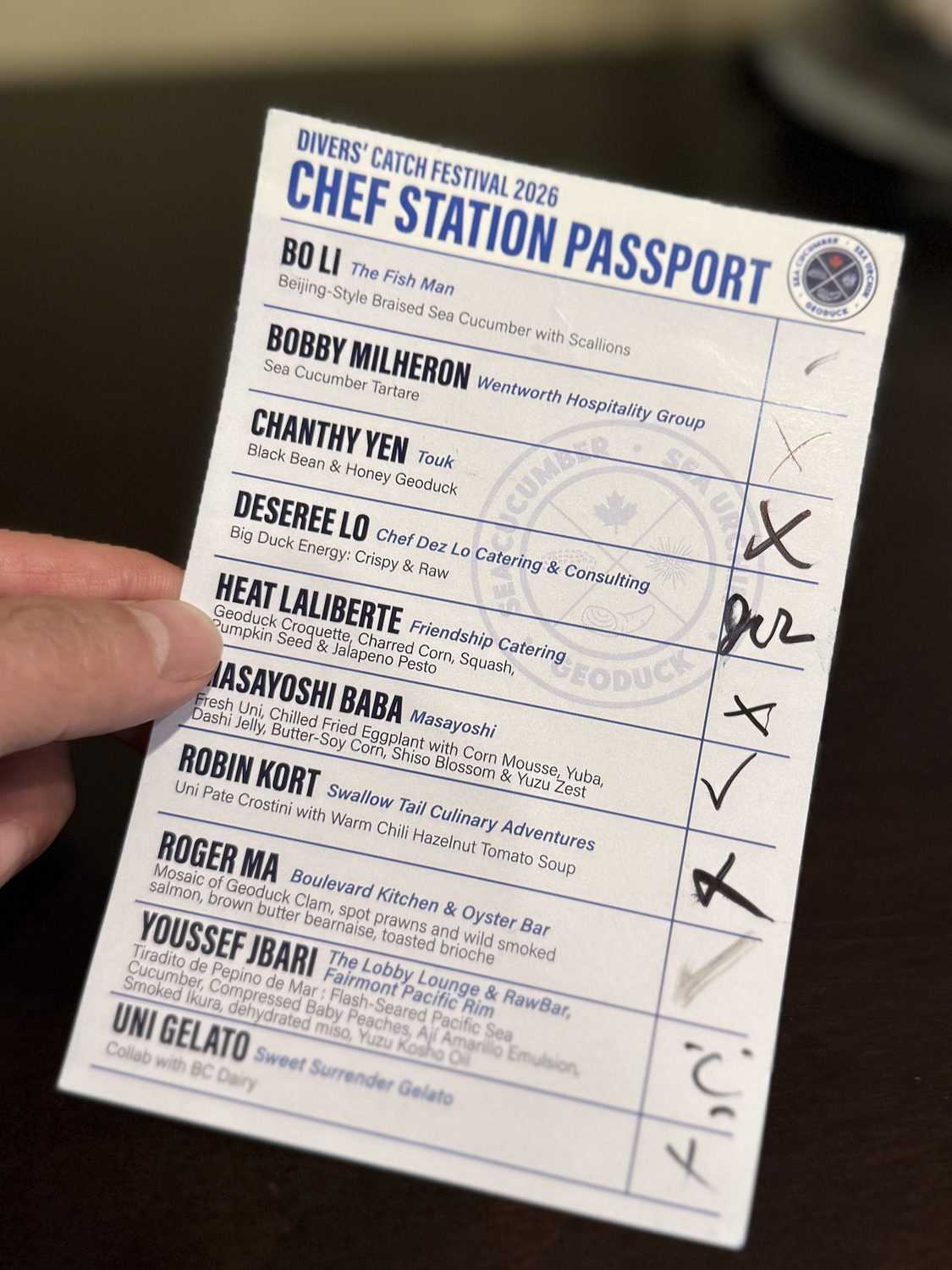
The passport they hand you at the door lists ten stations: nine chefs, alphabetically by first name, and an uni gelato at the end. We ate at every one of the nine. Four cooked geoduck, three sea cucumber and two sea urchin. If you are trying them for the first time, that is roughly the order I would suggest coming to them in. I like a passport at these events. Each station marks your card when it serves you, so nobody can go back for three of the dish they liked best while someone further down the line misses out. For a sold-out night the numbers felt well judged, too: there were people in front of every station all evening, and it did not feel overcrowded.
A word on the order that follows. I am not judging these dishes on how they were cooked or on their merit as dishes. The order is simply my own preference, and preference is personal. My wife, Karen, does not like uni, so hers was different: she agreed with me on Roger Ma’s, then put Bo Li’s second and Youssef Jbari’s third.

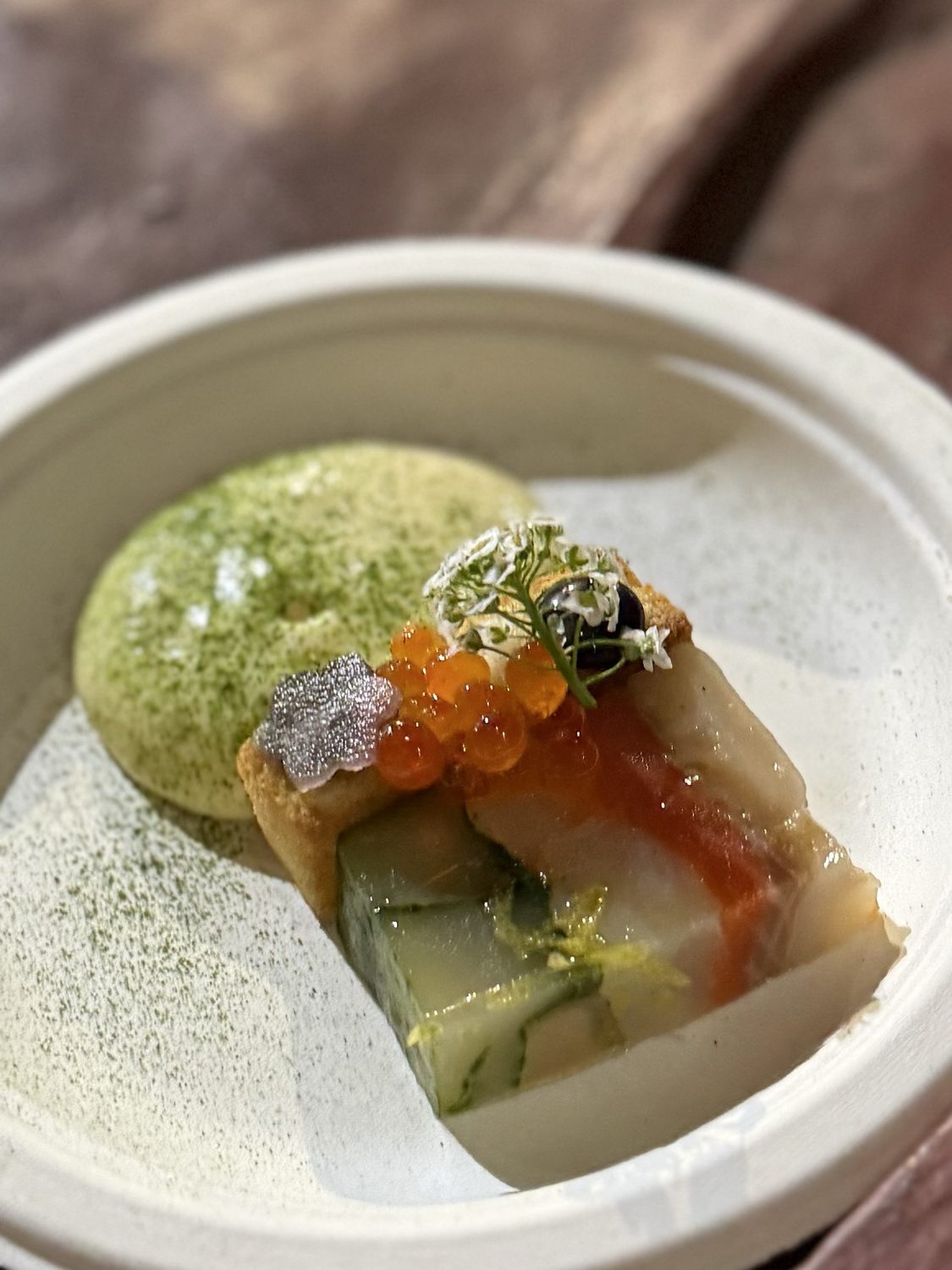
My favourite plate of the night was Roger Ma’s, from Boulevard Kitchen & Oyster Bar: a Mosaic of Geoduck Clam, Spot Prawns and Wild Smoked Salmon, with Brown Butter Béarnaise and Toasted Brioche. It was also the prettiest, and you could see the effort that had gone into it — layers of seafood pressed into a neat block, with a strip of brioche running along one edge. A lot was going on, and at a standing event, with people in front of the station all night, I could not have told you every component. What I could tell you was the texture, which is where the dish was really built. Geoduck is usually blanched only for a moment, just long enough to slip off its outer skin, and done properly it keeps a little crispness, a small crunch. I did not ask how this one was cooked, but it had exactly that. The spot prawns were soft — it is September, months after the season, and live spot prawn eaten raw has a crunch these did not; this was softer, a texture I think Japanese kitchens actually favour in a raw prawn. The smoked salmon was soft and firm at once. Every forkful was different depending on how you cut it and whether you took the bread, seafood bite after seafood bite. The béarnaise was nice to have, but the terrine stood on its own without needing it.
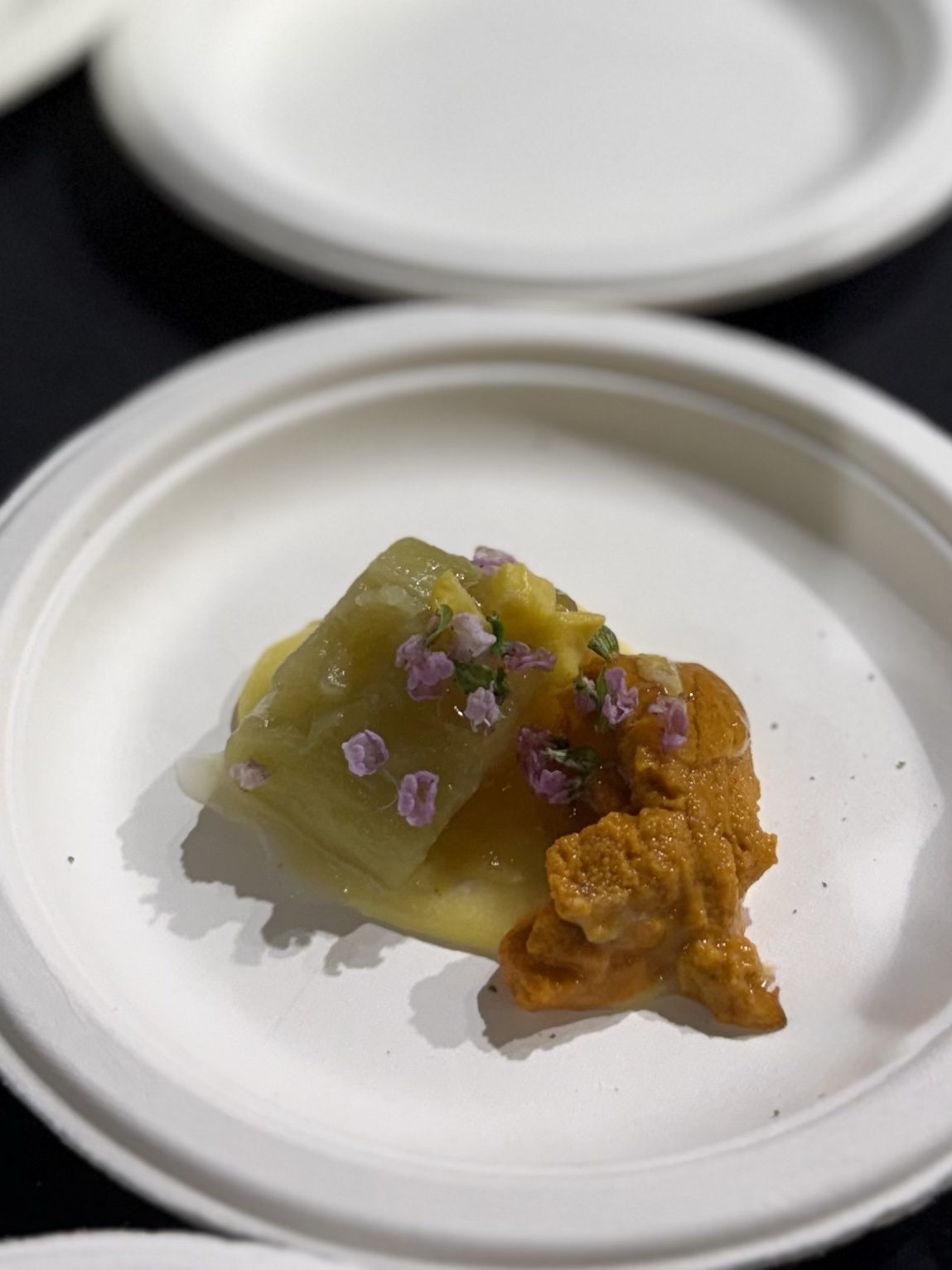
Second, for me, was Masayoshi Baba’s, which is what you would expect from a chef who has a Michelin star over the door of a restaurant bearing his own name. I love fresh uni, and I think the best thing you can do with it is very little. The Italian dishes I love most with it, uni butter toast and uni butter pasta, barely cook it at all; it is warmed in the sauce rather than cooked. Chef Masayoshi works around the uni instead of on it. The lobes sat raw and whole on the plate, and everything else was built beside them: Chilled Fried Eggplant on a Corn Mousse, with Yuba, Dashi Jelly, Butter-Soy Corn, Shiso Blossom and Yuzu Zest. The eggplant was the clever part. Cooked eggplant tends to go soft, and so does raw uni; put two soft things together and you have a plate with no structure. Chilling the eggplant after frying gave it some back. What tied it all together was the yuzu, which brought brightness, and the shiso flowers, which have that faintly minty, peppery, almost basil-like flavour, and which lifted the uni rather than competing with it.
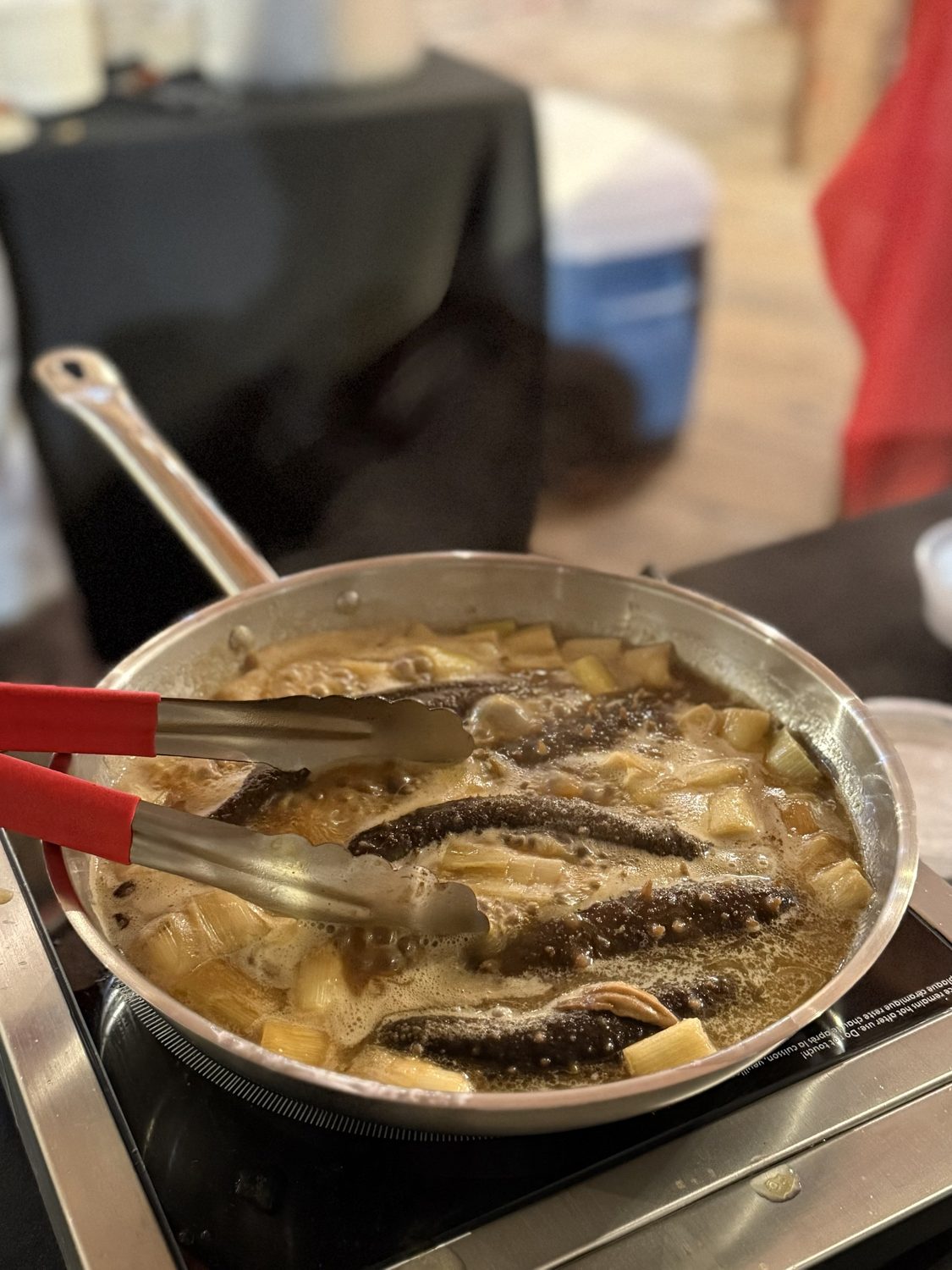
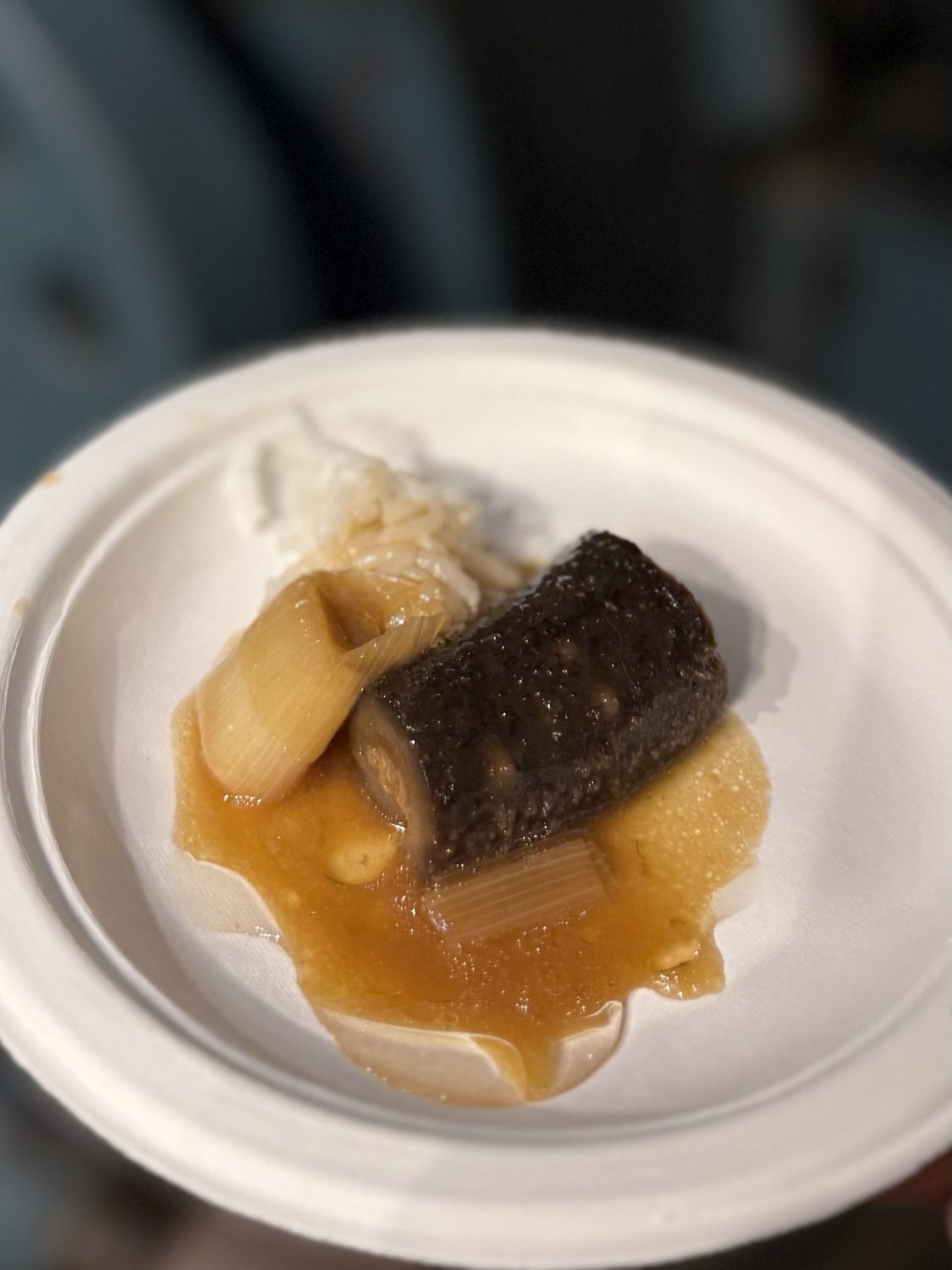
The third was what appeared to be the simplest dish in the building. Bo Li, of The Fish Man in Richmond, was braising whole sea cucumbers with scallions in a pan on an induction burner at his station and serving them straight from it, a Beijing-Style Braised Sea Cucumber with Scallions. Sea cucumber is unforgiving: undercook it and it is rubbery, overcook it and it falls apart. His was braised perfectly. Most of it was very soft and tender, with a slight chew left in it and a springy, bouncy bite that is exactly what you are hoping for from sea cucumber. He really knows what he is doing with seafood, and it showed most in the dish with the least to hide behind.
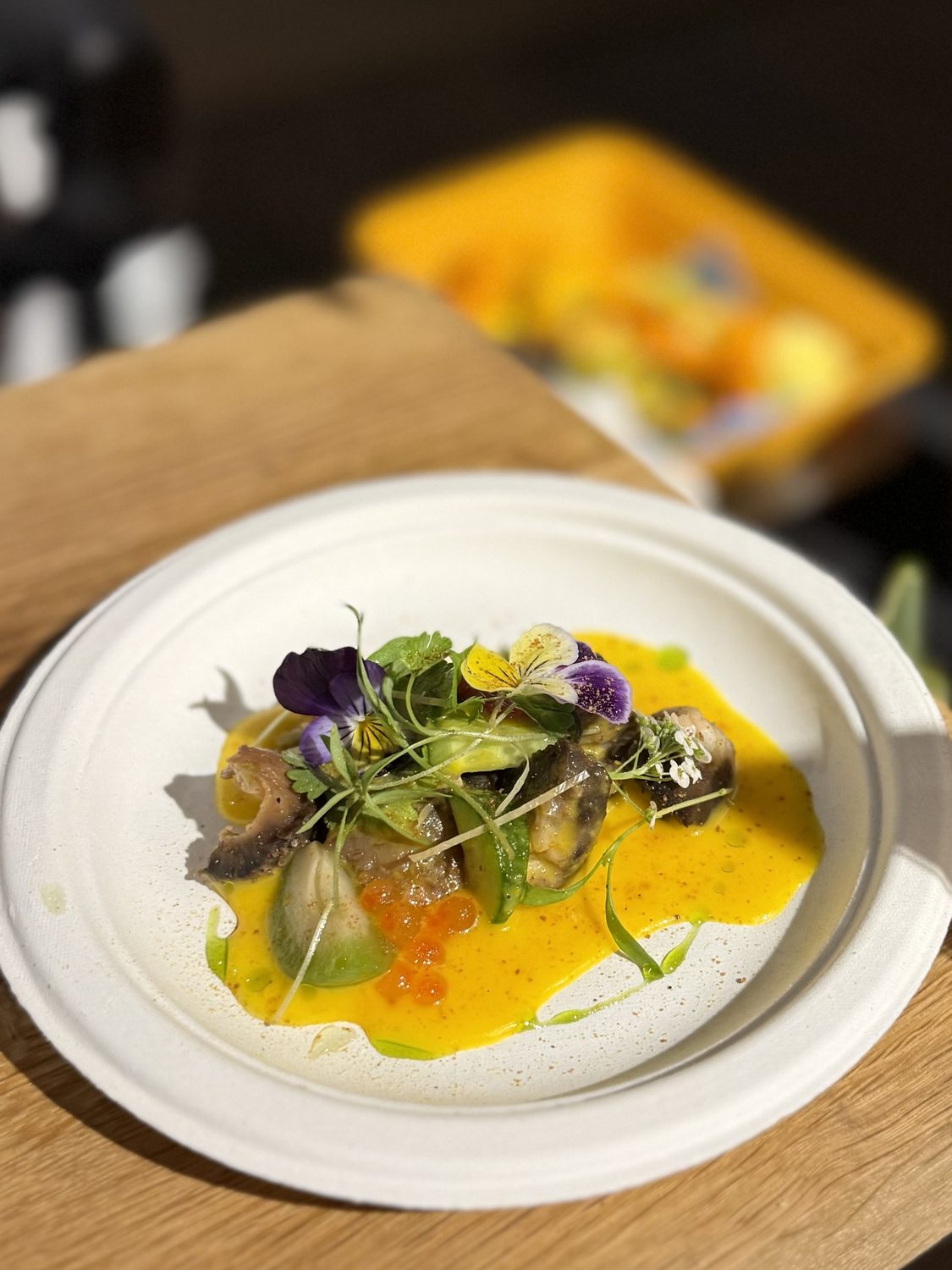
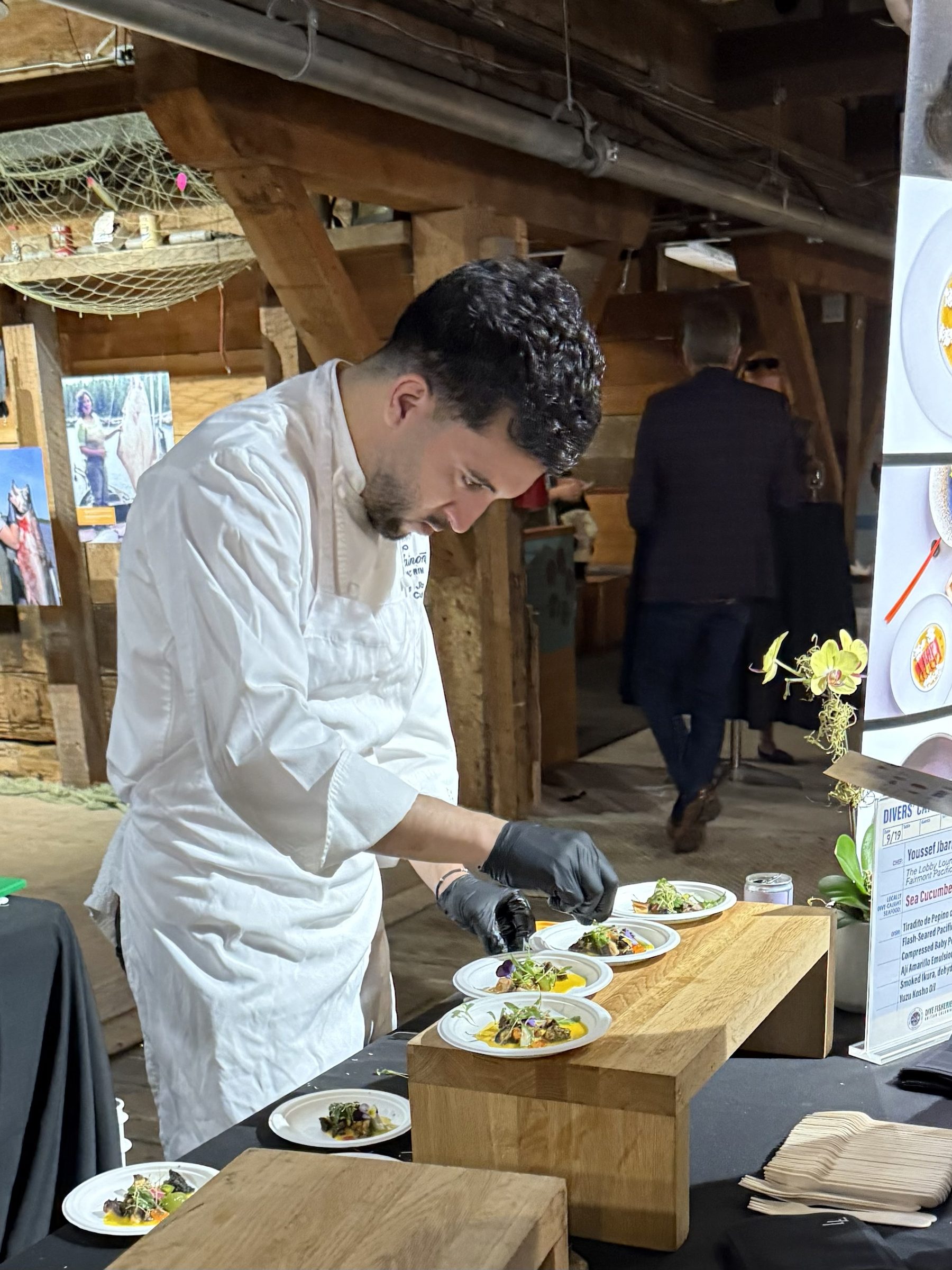
Youssef Jbari’s dish was very solid, and a connection I had not expected. He runs the kitchen at The Lobby Lounge & RawBar at the Fairmont Pacific Rim, a place I end up at often for last-minute meetings, and was previously executive chef at Nobu in Marrakech. His Tiradito de Pepino de Mar was Nikkei in spirit — flash-seared Pacific sea cucumber in an Ají Amarillo Emulsion, with Compressed Baby Peaches, Smoked Ikura, Dehydrated Miso and Yuzu Kosho Oil. It sits naturally beside Chef Masayoshi’s plate, and not by accident: Masayoshi once held a residency at the same lounge, and in March he came back to cook a one-night omakase there with Youssef.
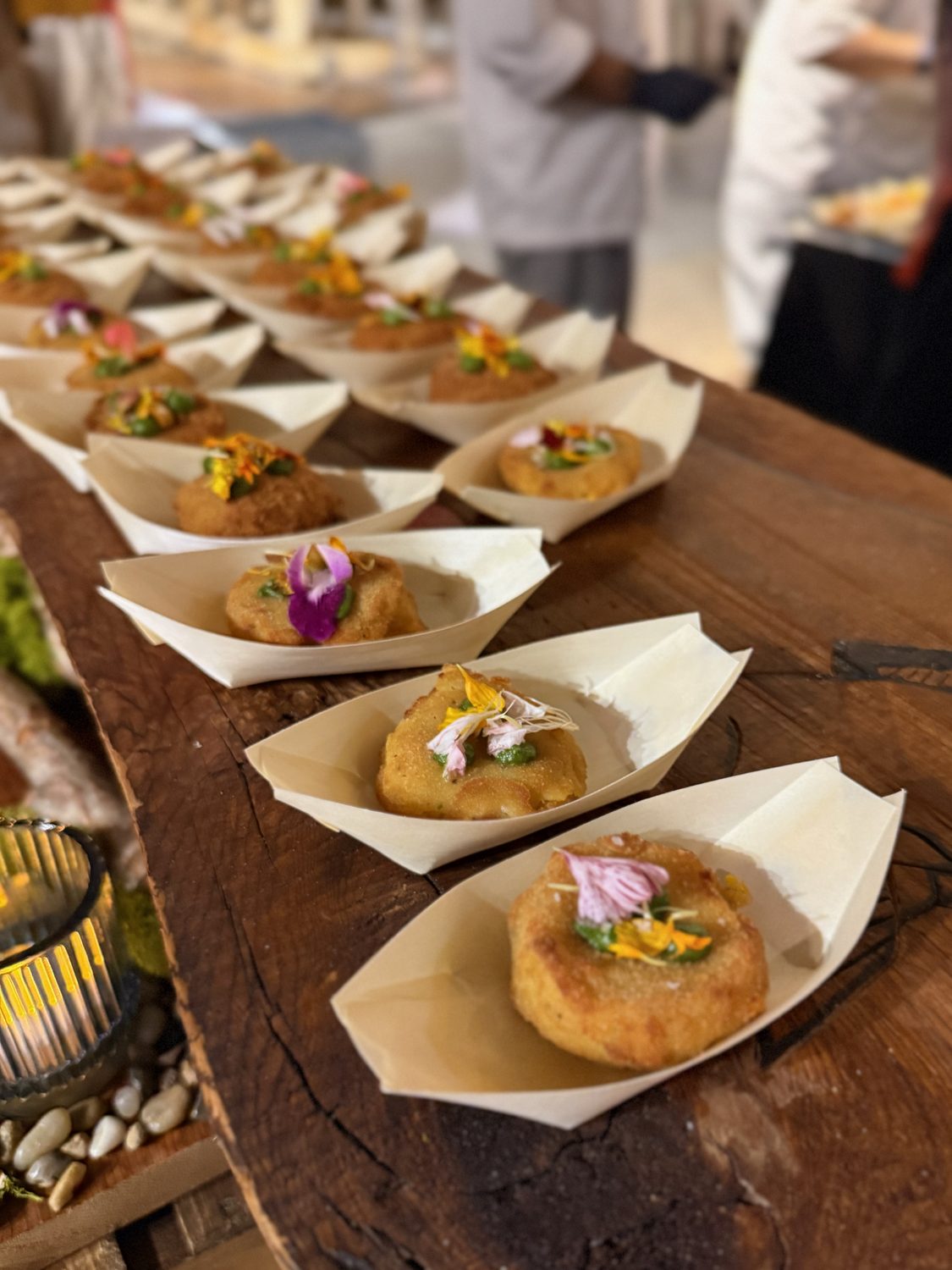
The rest of the evening’s range was wide. Bobby Milheron of Wentworth Hospitality Group made a Sea Cucumber Tartare; Chanthy Yen of Touk a Black Bean and Honey Geoduck; Dez Lo a geoduck done two ways, crispy and raw, under the name Big Duck Energy; Heat Laliberte of Friendship Catering a Geoduck Croquette with Charred Corn, Squash, Pumpkin Seed and Jalapeño Pesto; and Robin Kort of Swallow Tail an Uni Pâté Crostini with a Warm Chili Hazelnut Tomato Soup. Cooking for a crowd at a station in a museum is its own discipline, and none of it is easy.
The drinks were all British Columbian too. I kept going back to the Haywire Chardonnay, from Okanagan Crush Pad in Summerland. My friend Cassandra Anderton, the artisan cider ambassador for Sea Cider Farm & Ciderhouse on the Saanich Peninsula, was pouring her ciders, and Karen enjoyed those more than anything else in her glass that night. I also ran into Kurtis Kolt, a former Vancouver International Wine Festival Sommelier of the Year, who had no table of his own. He was there because he is friends with the chefs and the organizers, and he spent the evening running around doing whatever needed doing. It was great to see how the people in this industry support each other.
The surprise was the coffee. Cristina Dias founded Mogiana Coffee to roast the beans from her family’s farm in the Mogiana region of Brazil, which has grown coffee for five generations, since the 1890s, and she roasts them locally in Burnaby. She was pouring a milky cold brew, and I asked whether I could try the coffee without the milk. She obliged, with a warning that it was strong: she normally cuts the brewed concentrate one part coffee to one and a half parts water. I drank it without the water. It was really good, not too bitter and smooth enough to drink even at that strength, with something like cocoa underneath. It was her Rio Roast, a dark roast, and I will be placing an order. I remember seeing her coffee on the shelf at the Gourmet Warehouse, but I would rather order it from her directly and get it as fresh as it comes.
Our last conversation of the night, and the longest with any chef, was with Chef Ned Bell. He was the festival’s Chef Ambassador and had no station of his own; we found him standing near the stage. We have met many times before. I have followed his work since he was executive chef at the Four Seasons in Vancouver, and then through his years as the Ocean Wise executive chef at the Vancouver Aquarium, from 2016, when he was one of the loudest voices in this province for sustainable seafood.
Karen got him talking about hospital food. In 2019 his wife had surgery at Vancouver General and spent several days recovering there, and he could not understand how the food served to patients could be that bad, at the one time in their lives when what they ate mattered most. Instead of just complaining, he went and did something about it: he became the culinary director of a pilot menu at the hospital, built around dishes that are better for the patient and for the planet. There is a longer story there than a festival conversation can hold.
We also talked about working together. I mentioned that I help run the Chinese Restaurant Awards, and that a great deal of my time is spent elsewhere in the world, which is where I think the gap sits: we could use ambassadors like Ned in other places. In much of the world I travel through, sustainability means drawing a line on a map — a reserve or a preserve, where nobody is allowed to fish or hunt. Fewer organizations do what Ocean Wise does and go into the industry itself to teach chefs and buyers what to ask for and what to look for. The first approach protects one patch of water. The second changes what happens in all the water around it.
This is why his work continues to interest me. Between Hatch Hospitality and his role as Buy BC Chef Ambassador for the provincial government, he is in a position to carry this province’s products outward and to bring people back the other way, to come and eat where the catch comes from. We left promising to reconnect, and I would like to hear the rest of it properly.
On the way out, we picked up the tenth station, the uni gelato, from Sweet Surrender Gelato with BC Dairy. Sweet Surrender is on No. 1 Road, three buildings down from where Easthope used to be, and Karen and I have been to the shop a few times. Don’t go looking for this flavour there, though: the gentleman serving it told us it was made just for the festival and won’t be sold in the shop. It came already portioned into cups with lids on, and Karen wanted to share hers with our eldest son, who loves uni, so we brought them home, and I ate mine later that night. It carries a faint scent of uni before you taste any, faint because anything frozen gives off very little aroma. The first spoonful tastes like vanilla ice cream and nothing more, and then it builds, and the more of it you eat the more the sea urchin comes through. Which is not a bad description of the whole evening.
It will sell out again next year. Buy early, take whichever session you can get, and plan to eat at every station. Wander the museum between them. And when you find a diver, a harvester or someone from one of the fishing families in the room, ask them about the work. It is a fishery worth knowing, in a town that has watched another one decline.



The Newsletter
New pieces, plus what’s on my table next. Every few weeks.

An error has occurred somewhere and it is not possible to submit the form. Please try again later or contact us.


