


Chishuru, London: A Michelin Star for West African Cooking

Jacob Ung
July 15, 2026

6 min read
Lunch at the UK's first Black female-led Michelin-starred kitchen, where a self-taught chef turns West African tradition into some of the most confident cooking in London.
There’s a particular kind of quiet that follows the words “first Black female chef to earn a Michelin star in the UK” — not because the sentence needs decoration, but because it’s the sort of fact that makes you want to sit with it a moment before you order. Adejoké Bakare earned that distinction in 2024, and she did it the hard way: self-taught, no formal culinary school, no famous kitchen apprenticeship to point to — just a genuine, stubborn belief that West African food belonged on the same plane as anything else London was celebrating, and the skill to prove it.
These days the kitchen’s day-to-day is run by head chef Christine Walsh, who arrived by way of Loam in Galway and then Éan — an Irish chef building her own range under a Nigerian-British one, which is its own quiet argument for what a serious kitchen actually looks like when it isn’t worried about pedigree matching geography.
Chishuru didn’t start as a Michelin-track restaurant. It started as a three-month pop-up in Brixton Village Market in 2020, the kind of low-stakes, see-if-it-works experiment that most ventures never outgrow. This one did — Time Out named it London’s best restaurant of 2022 while it was still there, market stall and all, before it moved to a permanent home in Fitzrovia with the room to match the ambition. That trajectory matters more than it might seem: it’s proof that the food was never waiting on a nicer address to be good.
I picked it without telling my wife where we were headed — a surprise, and deliberately something completely different from what we usually order. We’ve been to parts of the African continent before, South Africa and Morocco among them, and I don’t think anything from those trips prepared either of us for what came out of this kitchen. That’s not a knock on any of those places; it’s more a reminder of how much ground the word “African” gets asked to cover when it’s used as a single food category. Southern African braai, Moroccan tagine, and West African jollof aren’t cousins so much as entirely separate conversations, and I wanted her to taste one we genuinely hadn’t had before.
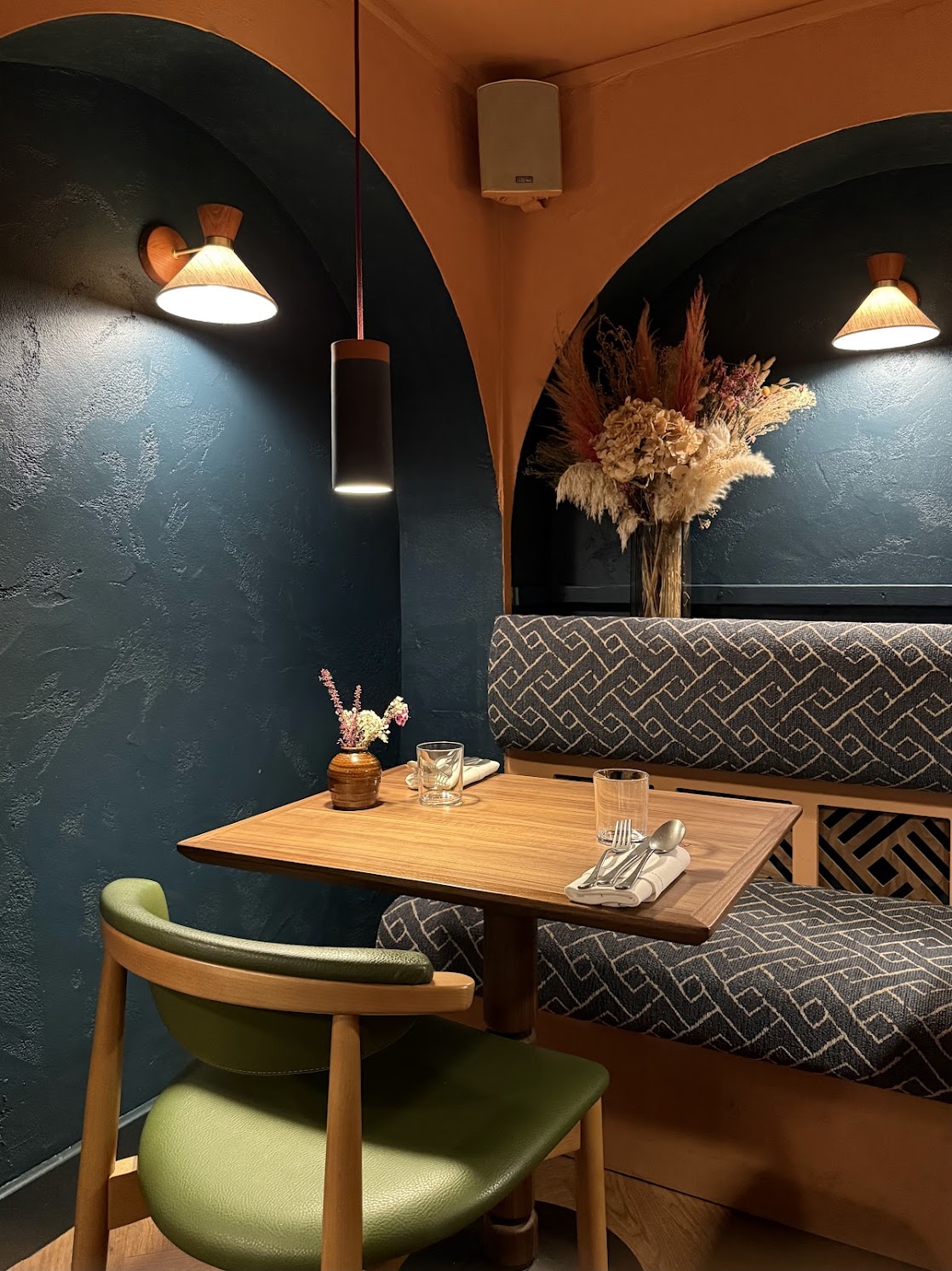
We went for lunch on our first full day in London, a Wednesday in early July 2026, seated in one of the restaurant’s booths — deep blue plaster walls, a warm orange archway, dried flowers in a little glazed vase on the table. It’s a considered room without trying too hard to tell you so, which tracks with everything else about the place. Starting a trip with a reservation this deliberate wasn’t an accident — if the surprise was going to work, it needed to be the first thing on the itinerary, before jet lag or a more conventional first-night dinner talked me out of it.
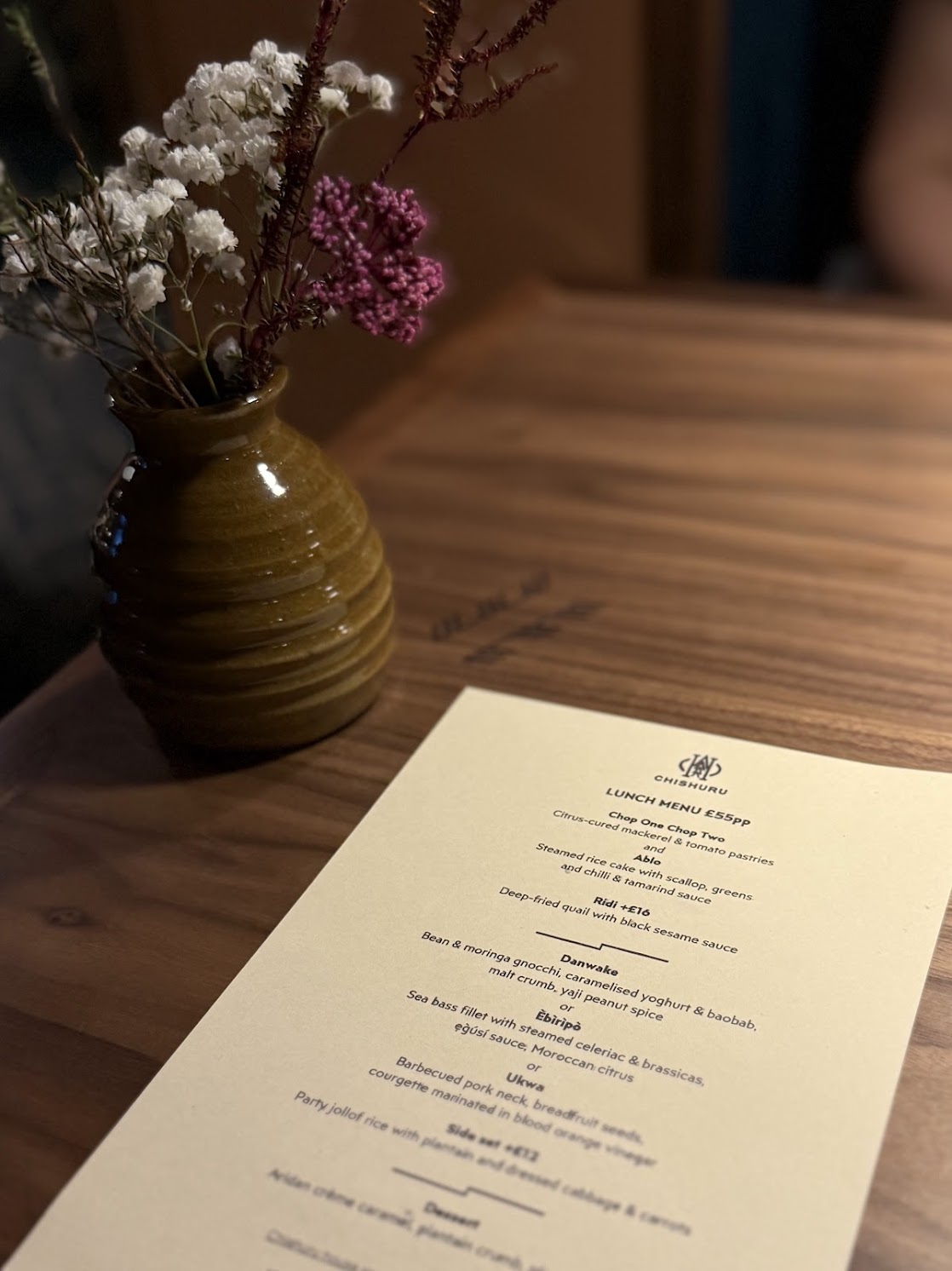
The lunch format is a £55pp three-course menu, choose-your-own-adventure between two set starters, a choice of main, and dessert — plus a short list of supplements if you want to go further. We did: the Ridi, and the Side Set.
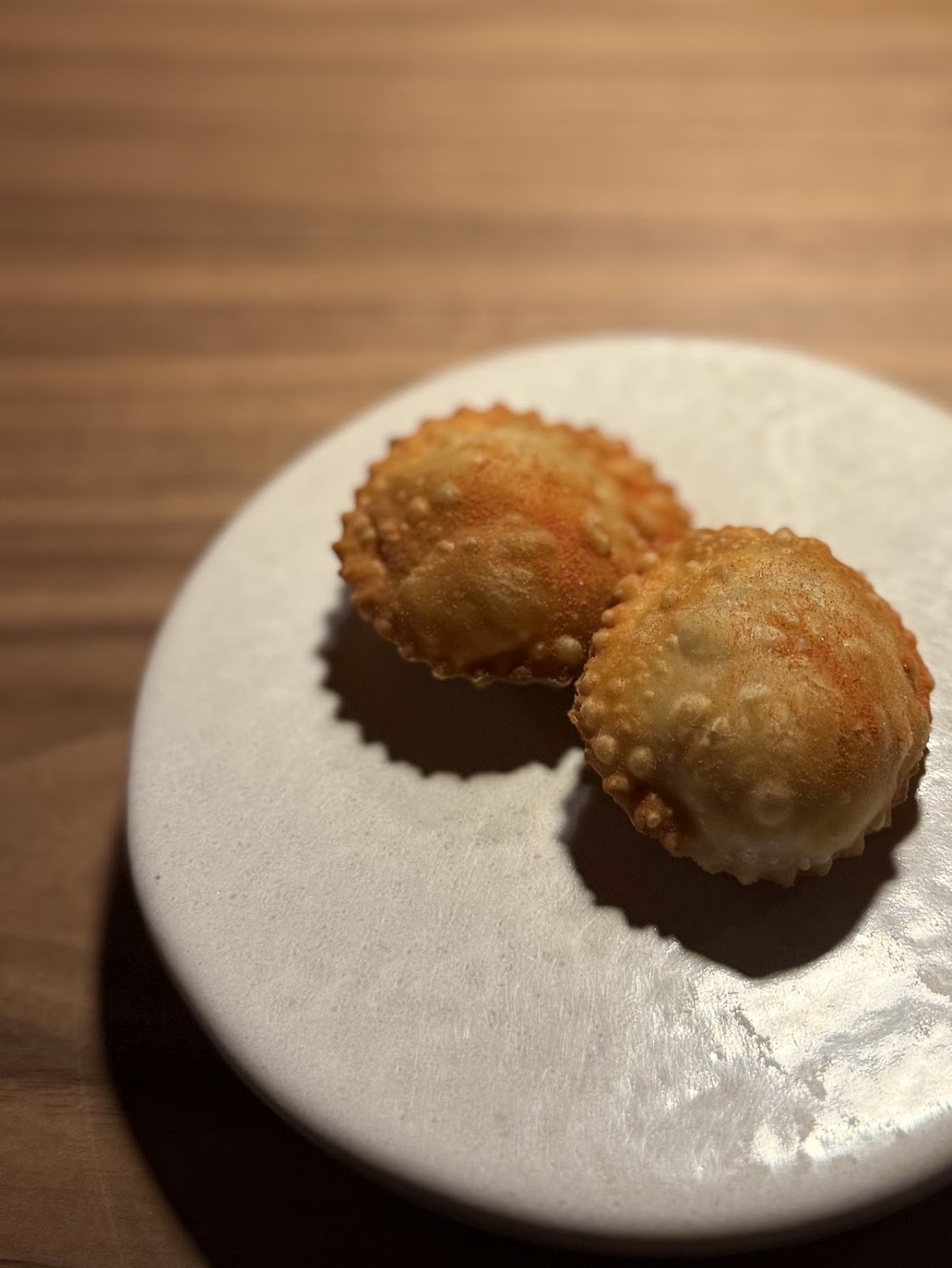
We started with Chop One Chop Two — citrus-cured mackerel and tomato pastries, two small, scalloped-edge parcels that landed more delicate than the name suggested, the citrus doing exactly the work you’d want it to against the richness of the fish.
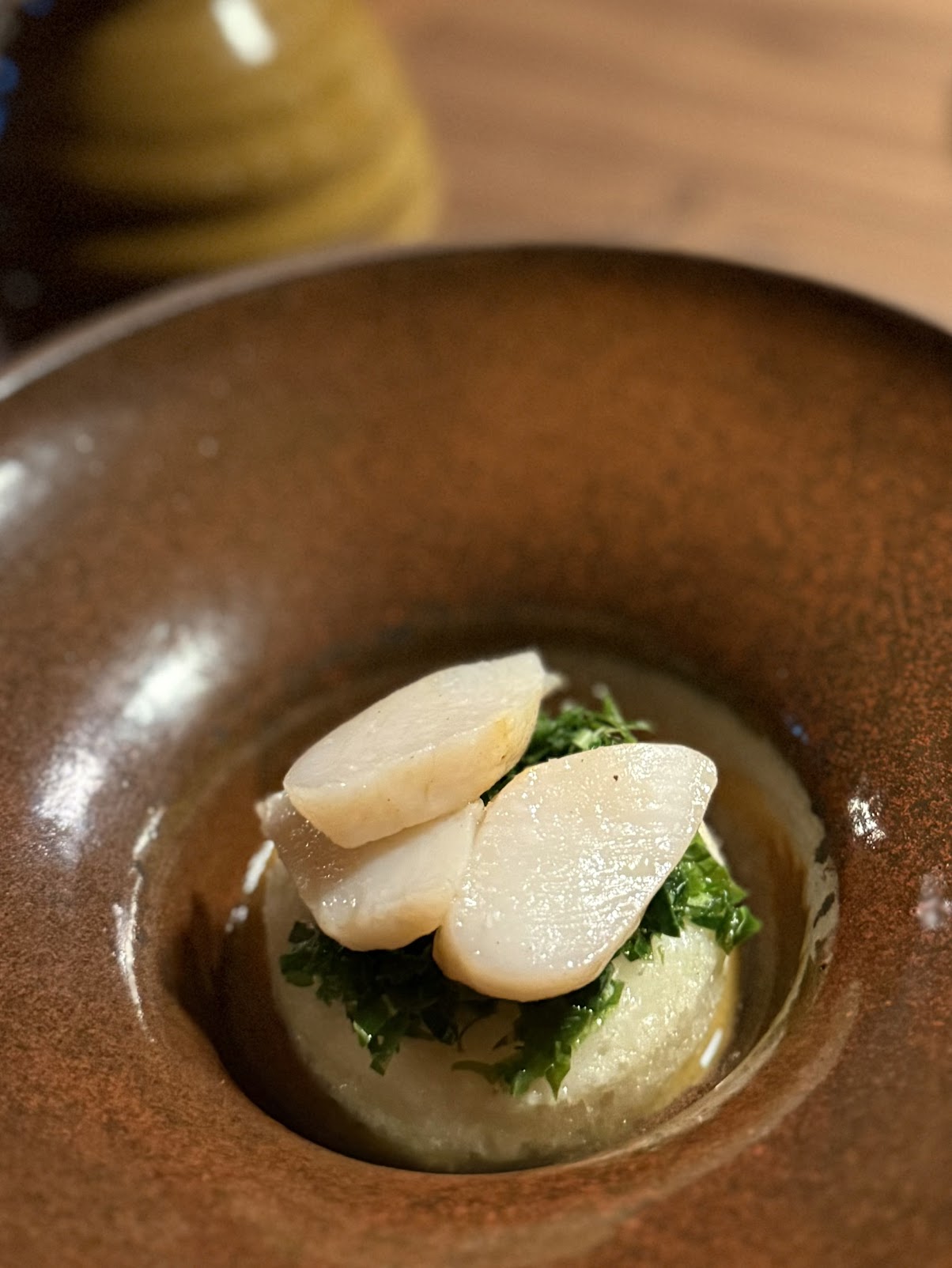
Alongside it came Ablo, a steamed rice cake with scallop, greens, and a chili-and-tamarind sauce — the kind of dish that reads simply on a menu and then arrives doing three or four things at once. The rice cake itself is a quiet, absorbent base; the scallop stays clean and sweet against it; and the tamarind sauce is where the dish actually announces itself, sour and warm in a way that never tips into aggressive. It’s the sauce, more than any single ingredient, that told me this kitchen knows exactly how much heat and acid a plate can hold before it stops being generous and starts being a dare.
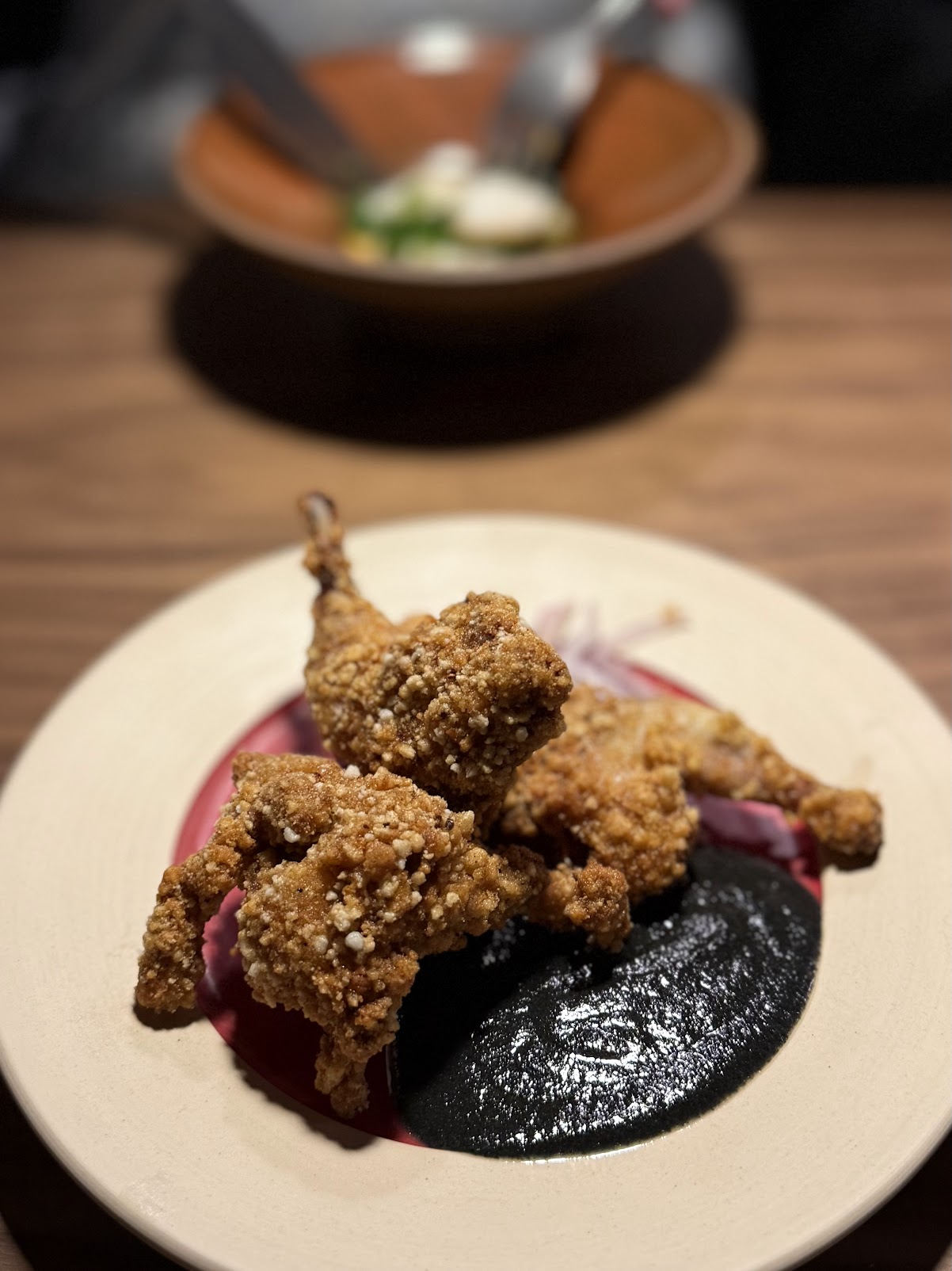
We added the Ridi as a supplement — deep-fried quail with a black sesame sauce — mostly because fried quail on a Michelin-starred menu is not a thing you pass on without a good reason, and we didn’t have one. It arrived properly fried: shatteringly crisp skin, meat that stayed genuinely juicy underneath, which is the part fried quail most often gets wrong. The black sesame sauce underneath was dark, almost inky, nutty rather than sweet — a smart foil for the crunch rather than a competing flavour.
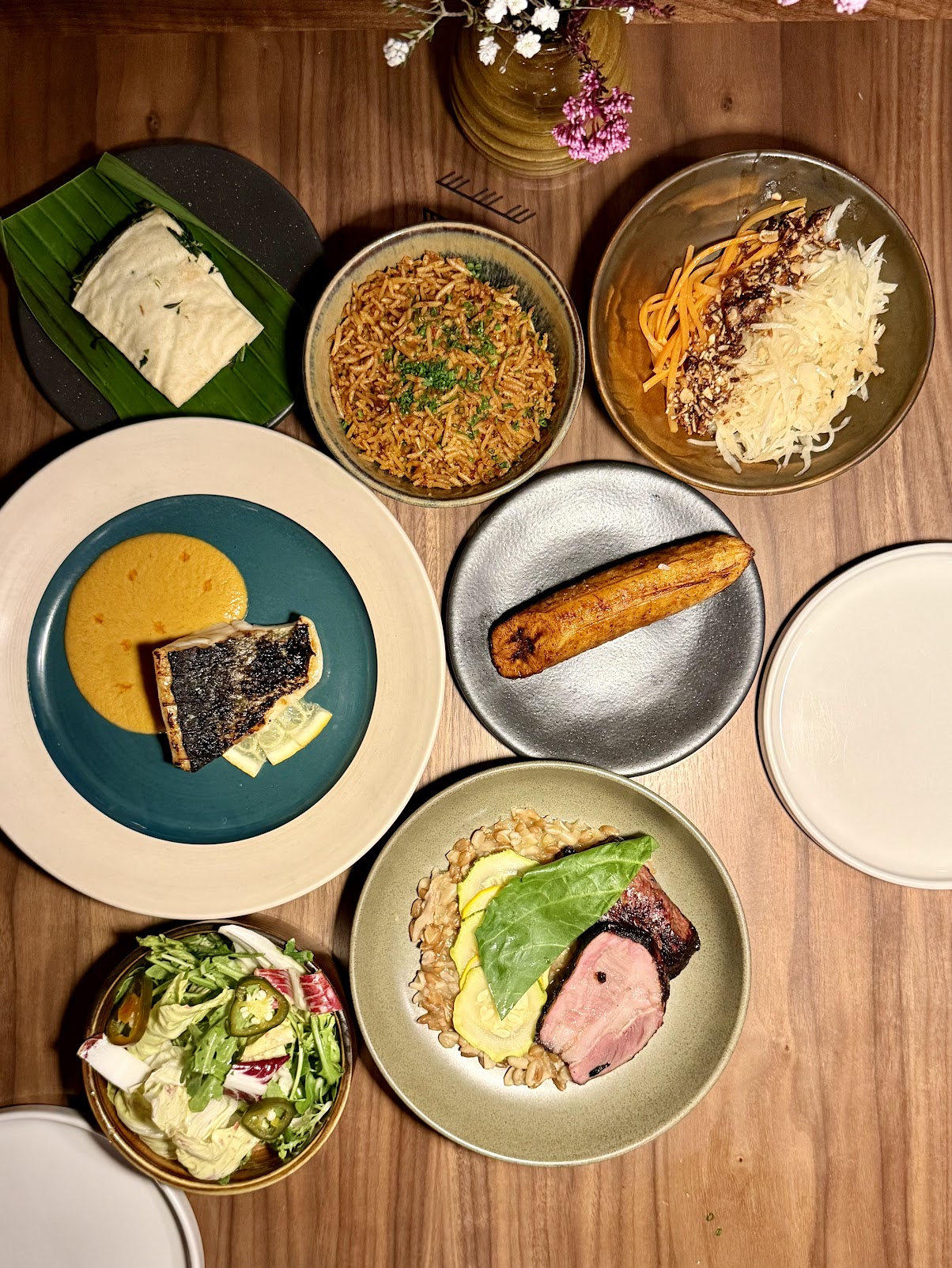
For the mains, we did what my wife and I almost always do with a menu like this: order two different things rather than the same thing twice, and split them down the middle. It’s a habit built for exactly this kind of meal, and it turned out to be the right call here, because Ukwa and Èbìrìpo aren’t really comparable dishes so much as two different arguments for the same cuisine. Ukwa — barbecued pork neck with breadfruit seeds, courgette marinated in blood orange vinegar, over a base of farro — is the more elemental of the two: real char on the pork, a good chew to the grain underneath, the blood orange vinegar cutting through the fat of the neck exactly where you’d want a break.

Èbìrìpo went a different direction entirely: sea bass fillet, skin rendered dark and crackling, set against steamed celeriac and brassicas, an egúsí sauce, and Moroccan citrus. Egúsí — ground melon seed, a staple across West African cooking — gave the sauce a nutty, almost velvety body that the citrus then lifted, and the sea bass itself was cooked with real restraint: skin doing all the textural work, flesh left alone to just be sea bass. It’s a plate that trusts the fish, which is rarer than it should be.

We rounded the table out with the Side Set — party jollof rice, plantain wrapped in banana leaf, and a dressed cabbage-and-carrot slaw — because a meal built this far into West African tradition doesn’t feel complete without the jollof making an appearance, and this one earned the reputation the dish carries into every room it enters: properly smoky, the rice cooked through without turning mushy, confident with its spice rather than shy about it. The plantain did the quiet, essential work of scooping up whatever sauce was left on the plate — the kind of unglamorous component a meal like this doesn’t actually work without — and the slaw reset the palate against the richer courses around it.
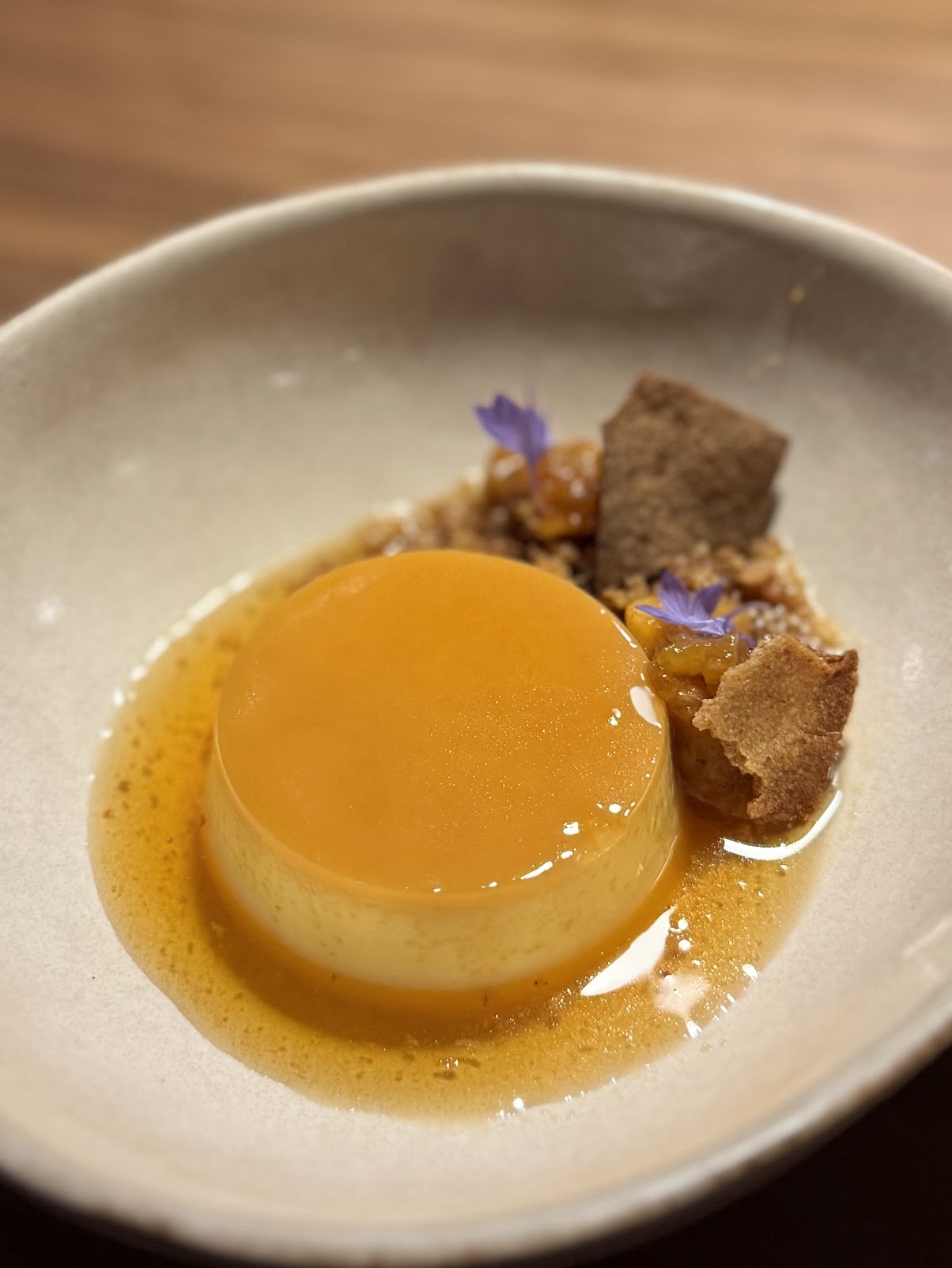
Dessert was the Aridan crème caramel, with a plantain crumb and plantain chips — a familiar form built from unfamiliar parts, which by that point in the meal felt like the whole point of the place stated plainly. The caramel sat dark and slightly bitter over a custard that held its wobble properly; the plantain crumb underneath added a texture crème caramel almost never gets, sandy and faintly sweet in a way that played well against the set custard rather than fighting it.
The surprise worked, in the end, for both of us. I keep coming back to the same thought with restaurants like Chishuru, the same one I’ve had standing in front of a wall of regional Chinese dishes: the specific version of a cuisine is almost always more interesting — and more respectful — than the flattened, generic one most menus default to. West African food covers an enormous amount of ground, region to region, and Bakare isn’t interested in compressing it into a single “African” tasting menu shorthand. Every dish on the table told you where it came from and made you want to know more, and neither of us walked in with a frame of reference from South Africa or Morocco that could have prepared us for it — which is exactly the kind of homework a good surprise is supposed to leave you with.
Order this: the Ablo if it’s on the menu when you go — that tamarind sauce is worth the visit on its own — and don’t skip the jollof, even as a side. If quail is offered as a supplement, take it.



The Newsletter
New pieces, plus what’s on my table next. Every few weeks.

An error has occurred somewhere and it is not possible to submit the form. Please try again later or contact us.


