


The Chinese Restaurant Awards, Vancouver: A View from Behind the Scenes

Jacob Ung
September 23, 2026

8 min read
An afternoon at the 17th Chinese Restaurant Awards, from the reception to the podium, and why it was my last as a Taste Advisor.
Disclosure: I’m the COO of the Chinese Restaurant Awards, and for the 2025 and 2026 awards I was also one of its Taste Advisors. This is my own view from behind the scenes.
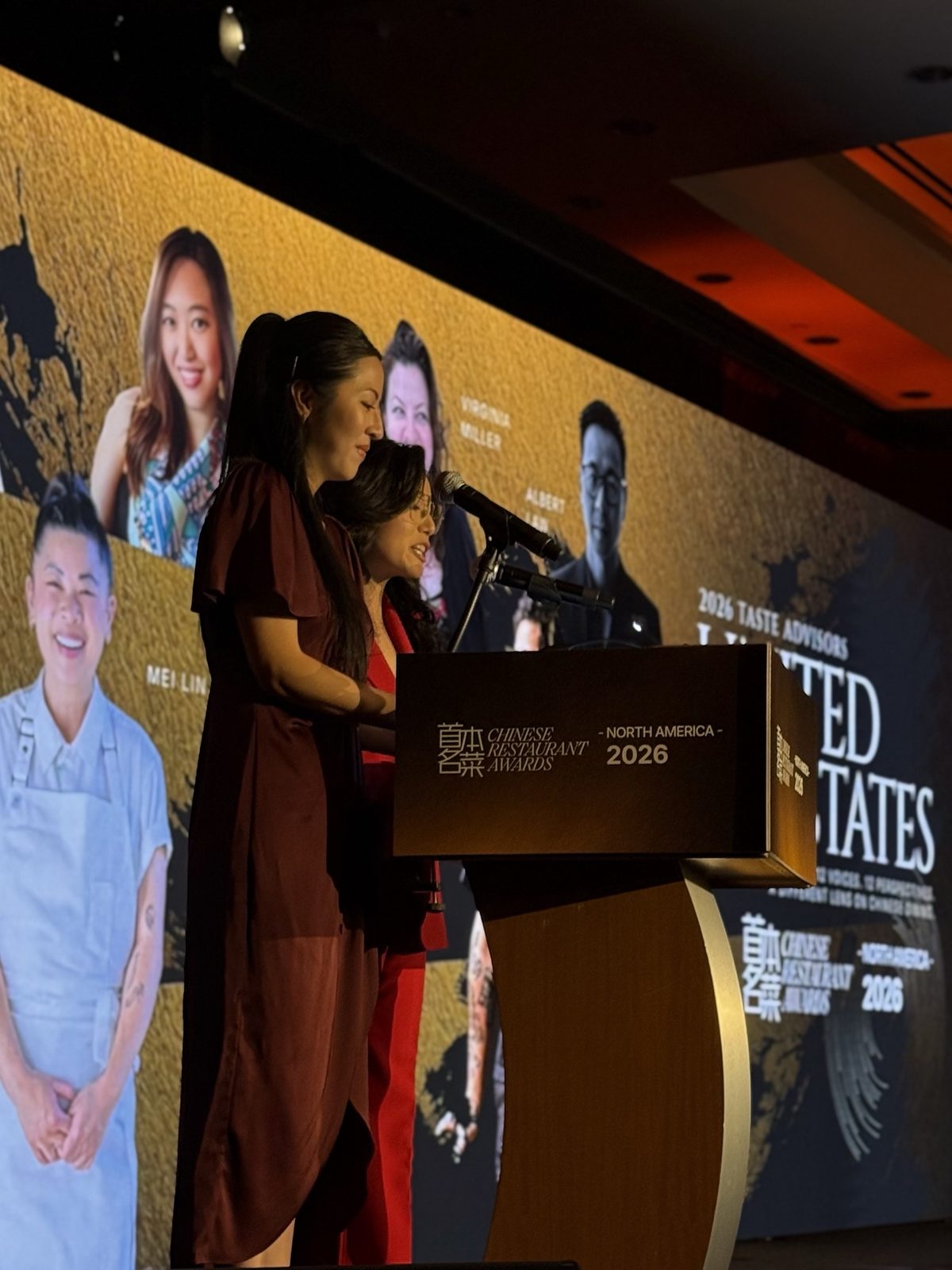
There’s a word that comes easily from a podium and hardly ever at a dinner table, and the word is “our.” On Wednesday afternoon I stood at the front of the Star Sapphire ballroom at the Fairmont Pacific Rim, talking about the Awards’ Taste Advisors: who they are, how they eat, why they don’t always agree. I said “our Taste Advisors” more times than I’d like to count. It’s the right phrase from a stage. A little later the screen behind the podium ran the Canadian advisors’ portraits, mine among them, and it was the last time I’d be up there.
For two terms I was one of them, mostly here in Vancouver, with trips to other parts of Canada, the U.S., and Asia. The easy version of the job would be to read everyone else’s lists and agree with them. The actual work was finding places that weren’t on those lists yet, and then finding the dish. From the stage I put it as three questions: “Before reputation, size or hype — does the food taste good? Is there craftsmanship behind it? And is this somewhere we genuinely believe people should discover?” That’s why the Awards’ Signature Dishes mean so much to the people who choose them. They’re also harder to find than you’d think. Most menus don’t mark them, and often the chefs don’t call anything a signature at all. So I would ask the server, or whoever was behind the counter, what I should order. If they didn’t have a signature dish, I’d ask what the most popular one was: the plate the place is known for. It’s the same question I end most of my own pieces here with, because “one dish can introduce you to a restaurant, a chef, a regional tradition — or something you have never tasted before.”
One of the things I liked most about being a Taste Advisor is that you eat, deliberate, and then find out who won in the room with everyone else. That kept it clean. As the newly appointed COO, sooner or later I’ll know things before the room does, and a seat at the advisors’ table wouldn’t be fair to anyone at it.
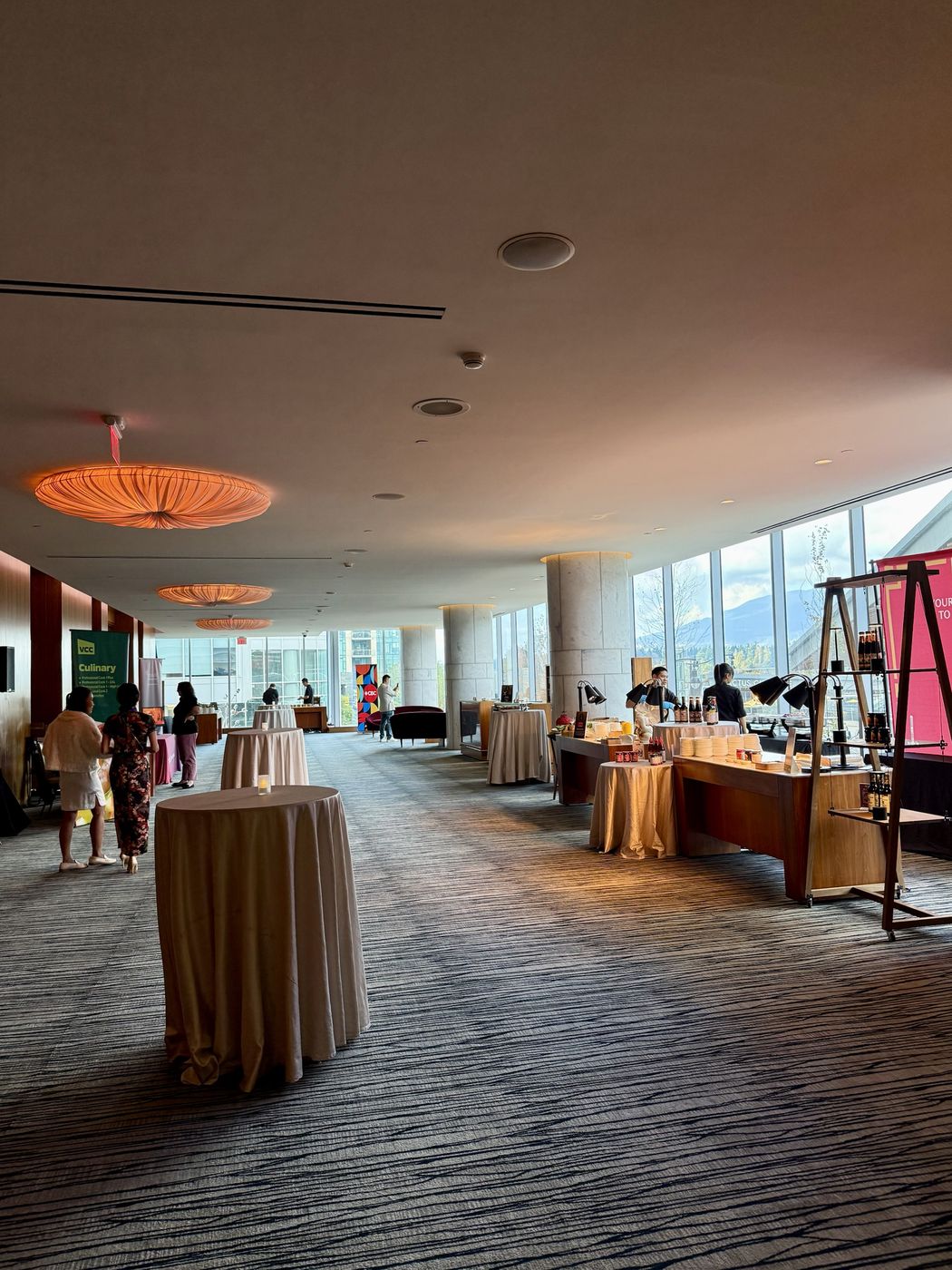
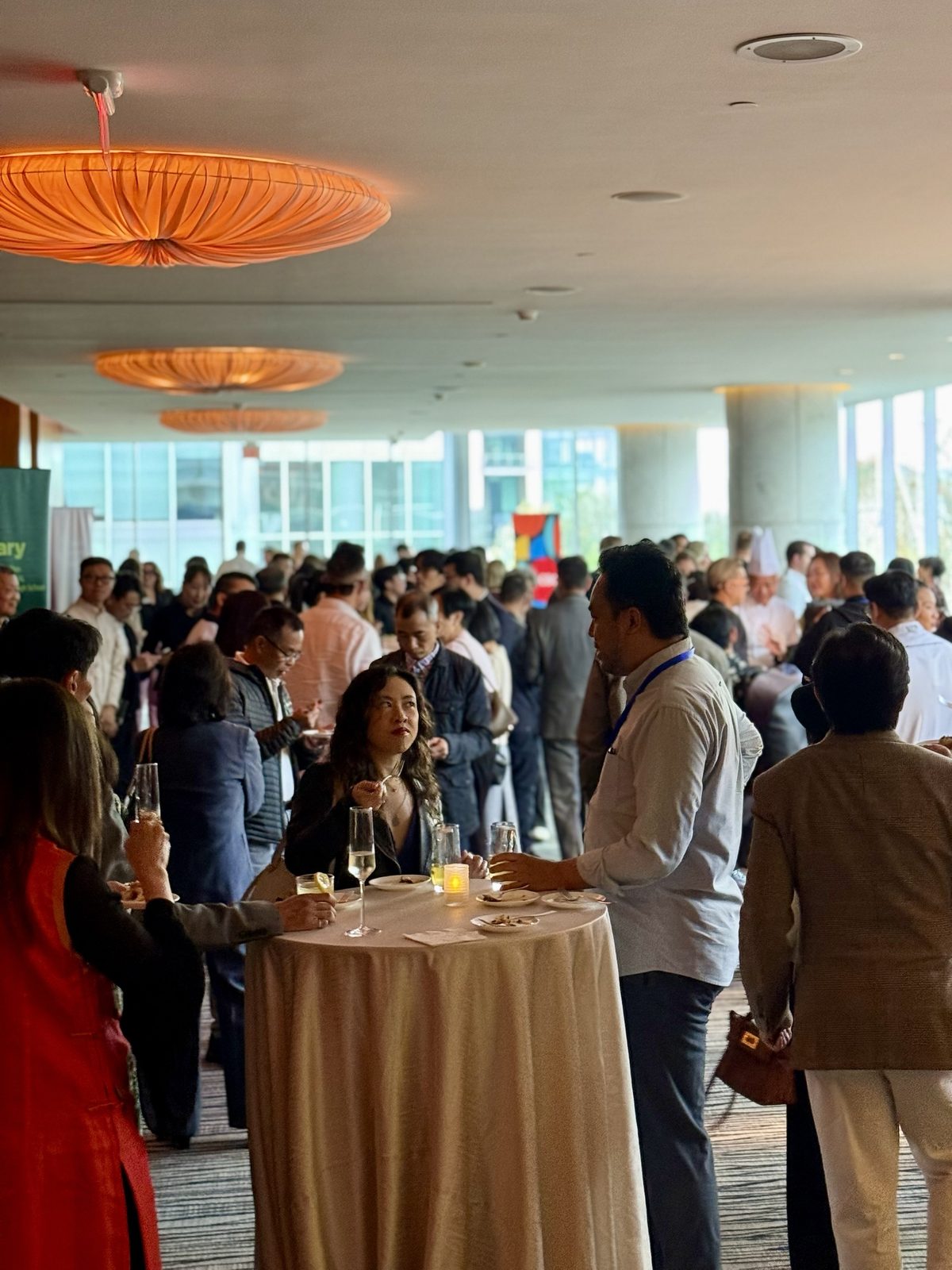
Before the ceremony, there was an hour to gather over good food and drink, and to catch up with the people who make this industry what it is. It ran from around two o’clock in the reception area of the Fairmont Pacific Rim’s Star Sapphire ballroom, across several stations, some with food and a couple with drinks. Just before two it was nearly empty, the high-tops standing in their long cream cloths and everyone getting the last-minute details in place for service. Then the guests arrived, most of them early or right on time, which I think says something about what they expected to experience and who they expected to see. They stood at bar-tops with a small plate in one hand and a glass in the other, and the earliest had quickly taken the couches along the windows. The windows run floor to ceiling, past the convention centre’s green roof to the North Shore mountains, and big orange pendant lamps of pleated fabric hung over the crowd like paper lanterns someone had flattened. Rae Kung, our CEO, wanted us out front with our guests, the media and our partners. That’s where Amy Venhuizen and I spent most of the reception.
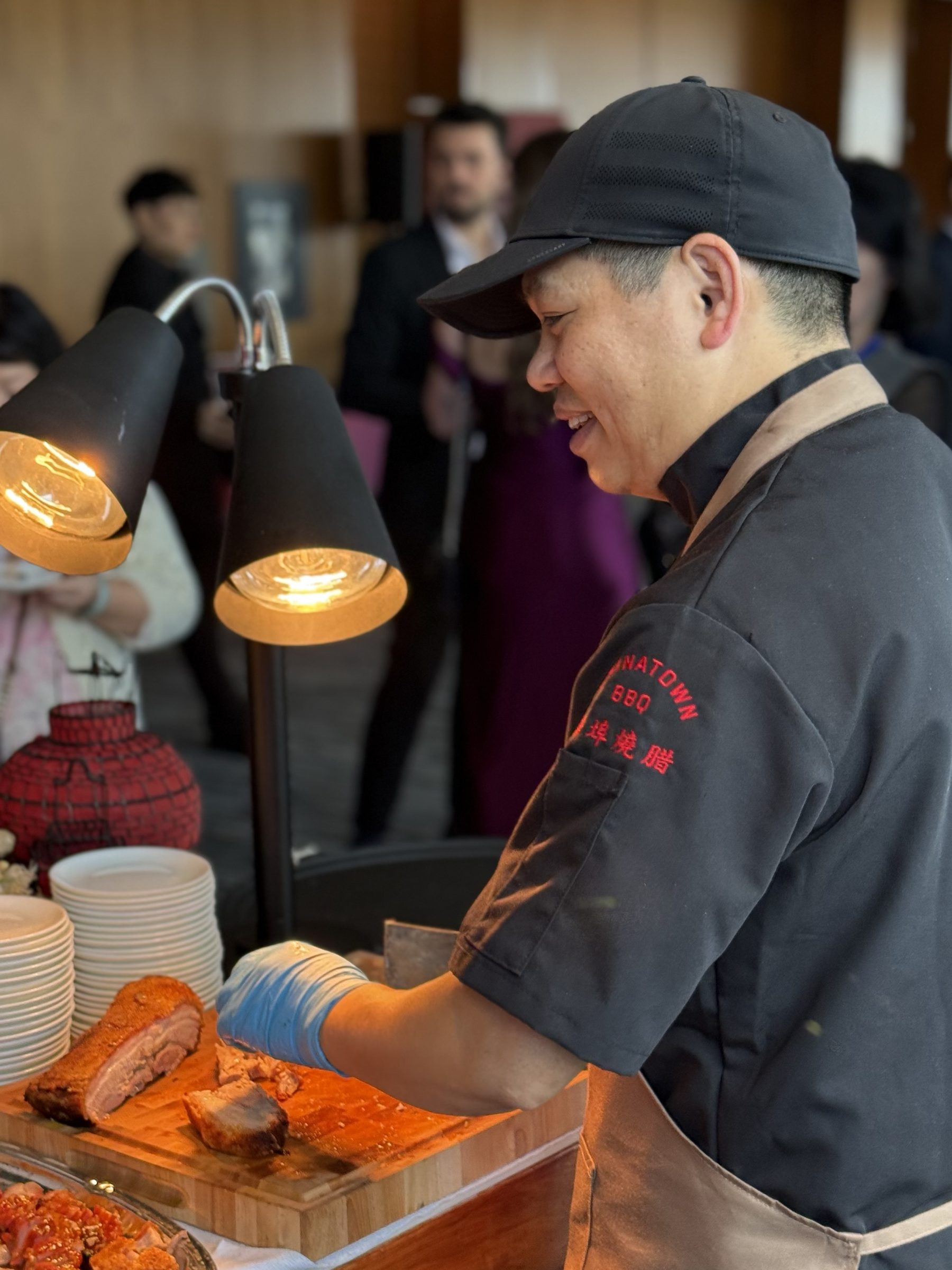
At the Chinatown BBQ station, a chef in a black cap was working a slab of Siu Yuk on a wooden block under a pair of heat lamps, and the steady knock of his cleaver ran underneath the conversation throughout. Beside him, Kaniia Sam, a private chef plating for the shop, was building the plates in stacks: a cube of Siu Yuk, a slice of Char Siu, a dot of sauce. Jason Ye, the general manager, was out front hosting, making sure that everyone was looked after. That cleaver is an everyday sound in Chinatown, where Carol Lee opened the shop to keep its barbecue tradition going. Just outside a Fairmont ballroom, it sounded like a little part of the neighbourhood had come downtown for the afternoon.

At the next station, Chef Toby Chen spotted me and waved from behind a row of chefs in VCC whites. He was serving BC Dungeness Crab Lo Bak Go with Lee Kum Kee: a bar of radish cake fried golden, with crab piled on top, thin pale slices and a few purple microgreens. Toby and I spent a while on the crab itself: its texture, that sweetness with the umami underneath, and how it’s one of the easier crabs to get the meat out of. We agreed it’s one of the best crabs in the world. Toby has cooked at these events since 2016, and he came up through Vancouver Community College’s Asian Culinary Arts program, which the college describes as the only one of its kind in North America. The afternoon also supported St. Paul’s Foundation, which had a booth in the room, and VCC’s program is one the Awards keep coming back to. A graduate of it was feeding the room, which is exactly how Rae orchestrated it.


Chang’An brought Chef Leo Wang’s Imperial Sea Cucumber, served from a row of cut bamboo cups, each planted with a leafy sprig of bamboo that doubled as the skewer, so the table looked like a small grove against the window. Chef Wang was born in Sichuan and spent more than a decade cooking in Xi’an, and his food leans north in a city that mostly eats south. The chef serving it and I got about as far as my Mandarin and his English would carry us, which was a smile, a plate and a round of thank-yous.

Executive Chef Damon Campbell and the Fairmont’s own team sent out Slow Cooked Spiced Duck with black pepper jam, crispy garlic and ginger on toasted brioche. The black pepper, garlic and ginger did the talking, and it held its own beside everything else in the room.
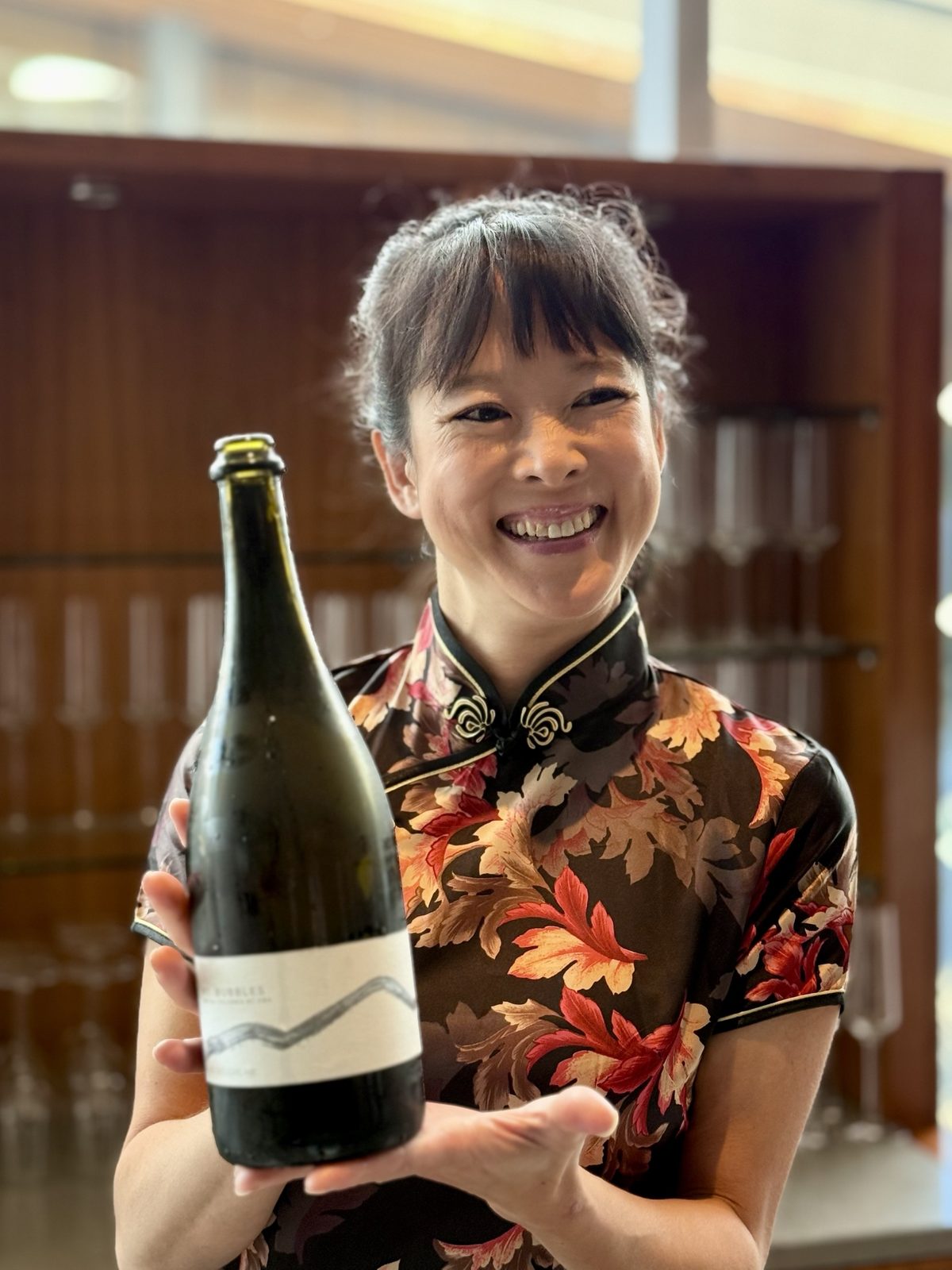
My friend Van Doren Chan was pouring Mt. Bubbles from Mount Boucherie, a dry BC sparkling wine. Van Doren is a private chef as well as a sommelier, and she knew what she was standing next to: bubbles and acid are what you want beside roast pork, because they cut through the fat and send you back for another piece. On an afternoon like this one, bubbles are also simply what you pour to celebrate.
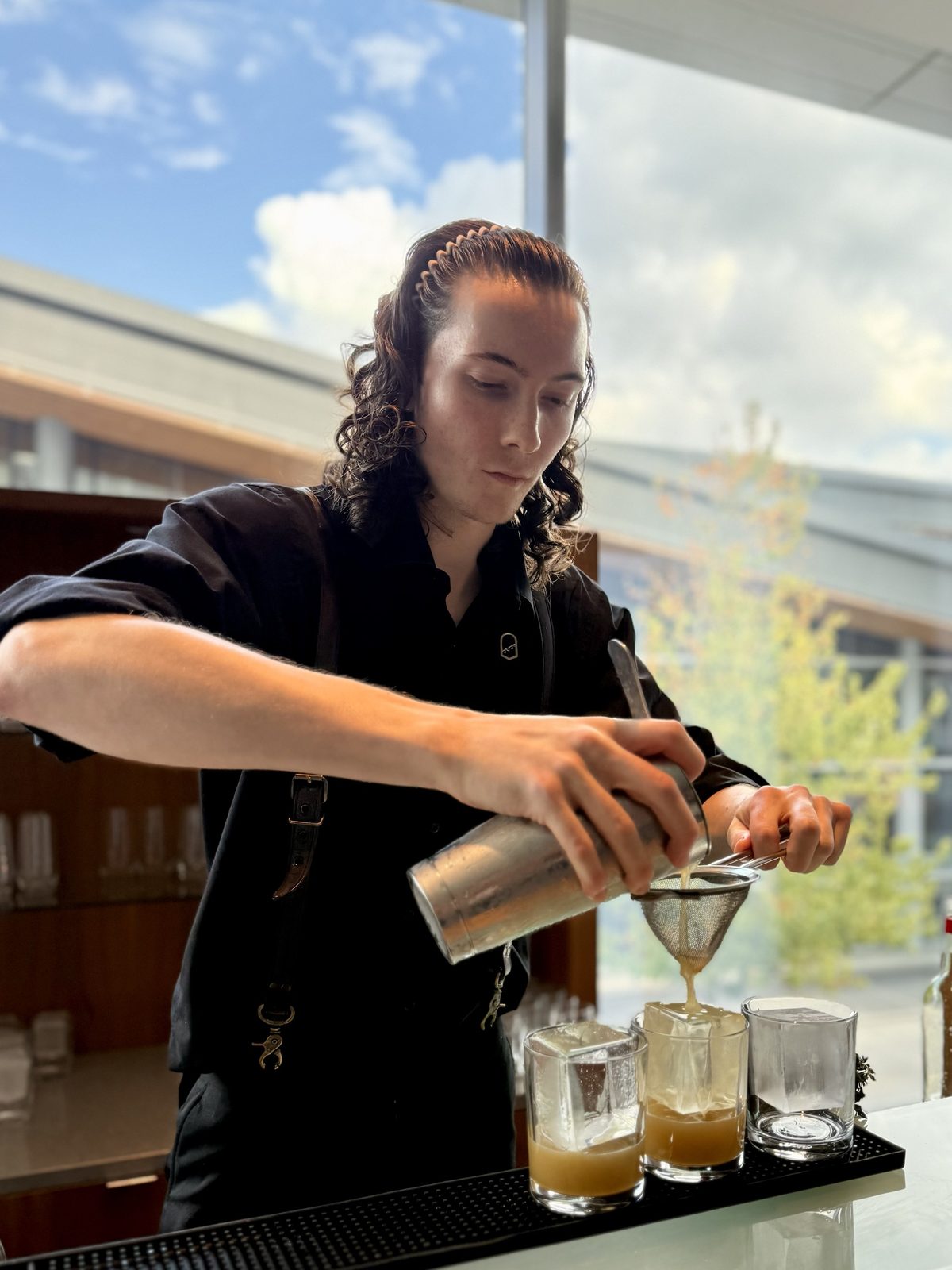
At the other drinks station, Andre from Botanist, the bar one floor down, was building two cocktails with The Dalmore, shaking each one hard. I chose the Golden Veil, made with The Dalmore 12 and double-strained over a single clear cube. Andre described it as built much like a whisky sour, and that’s how it drank. I kept it to one, since I still had a speech to deliver.
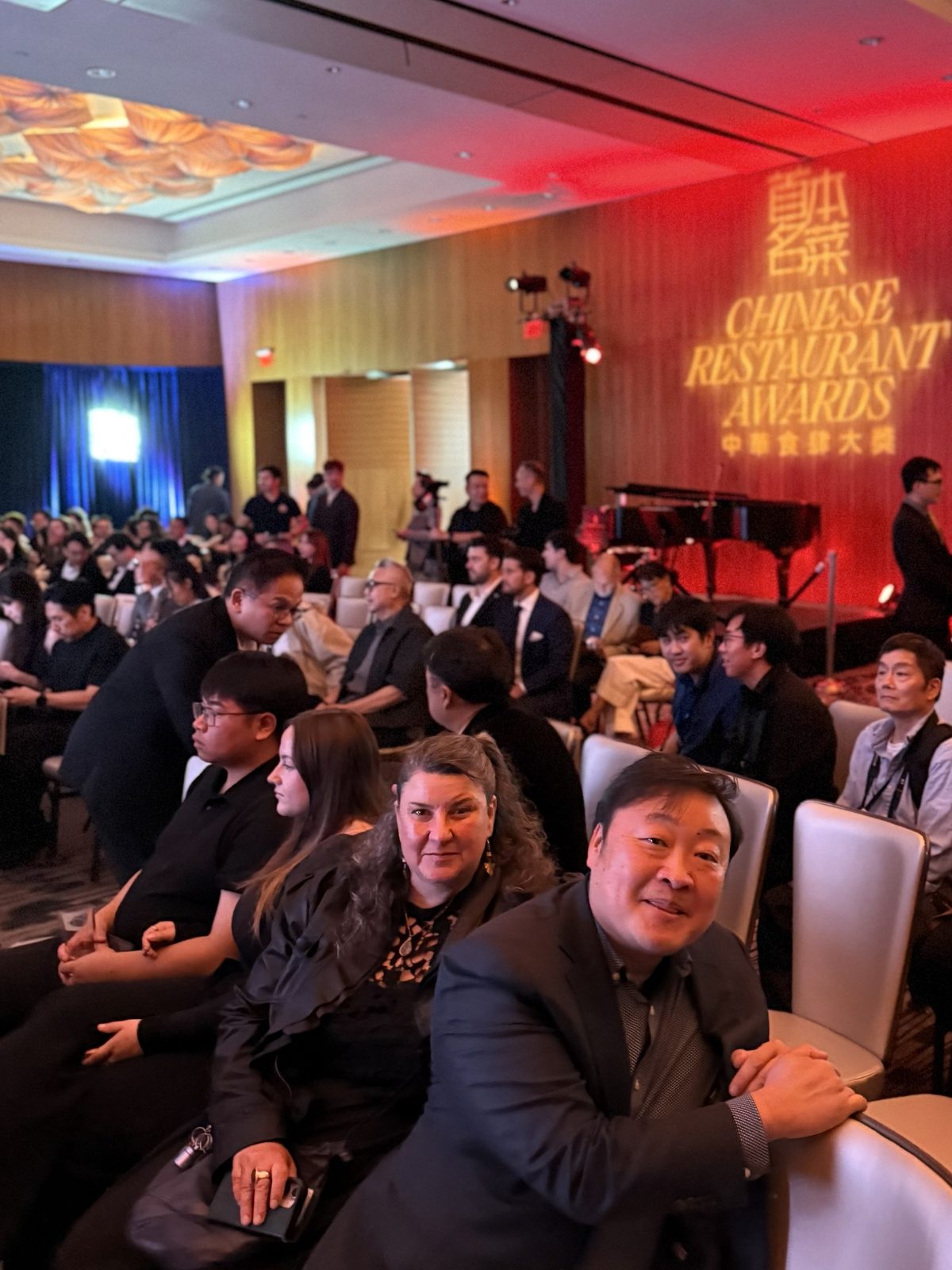
Just before three, we went through the doors into the ballroom itself, and the afternoon changed. The room was set up as a grand auditorium: rows of pale chairs facing a stage; the Awards’ name thrown in gold light across the wood panelling; a grand piano off to one side, waiting for the evening’s gala; our emcees, Lien Yeung of CBC and Manica Ng of Fairchild Media, at the podium; and a screen the width of the stage. As I said in my opening, “What began here has gradually taken us much further — across Canada, across Asia, and this year, for the first time, into the United States.” The winners are the Awards’ to announce, and the full list of this year’s honours is on the Chinese Restaurant Awards site.
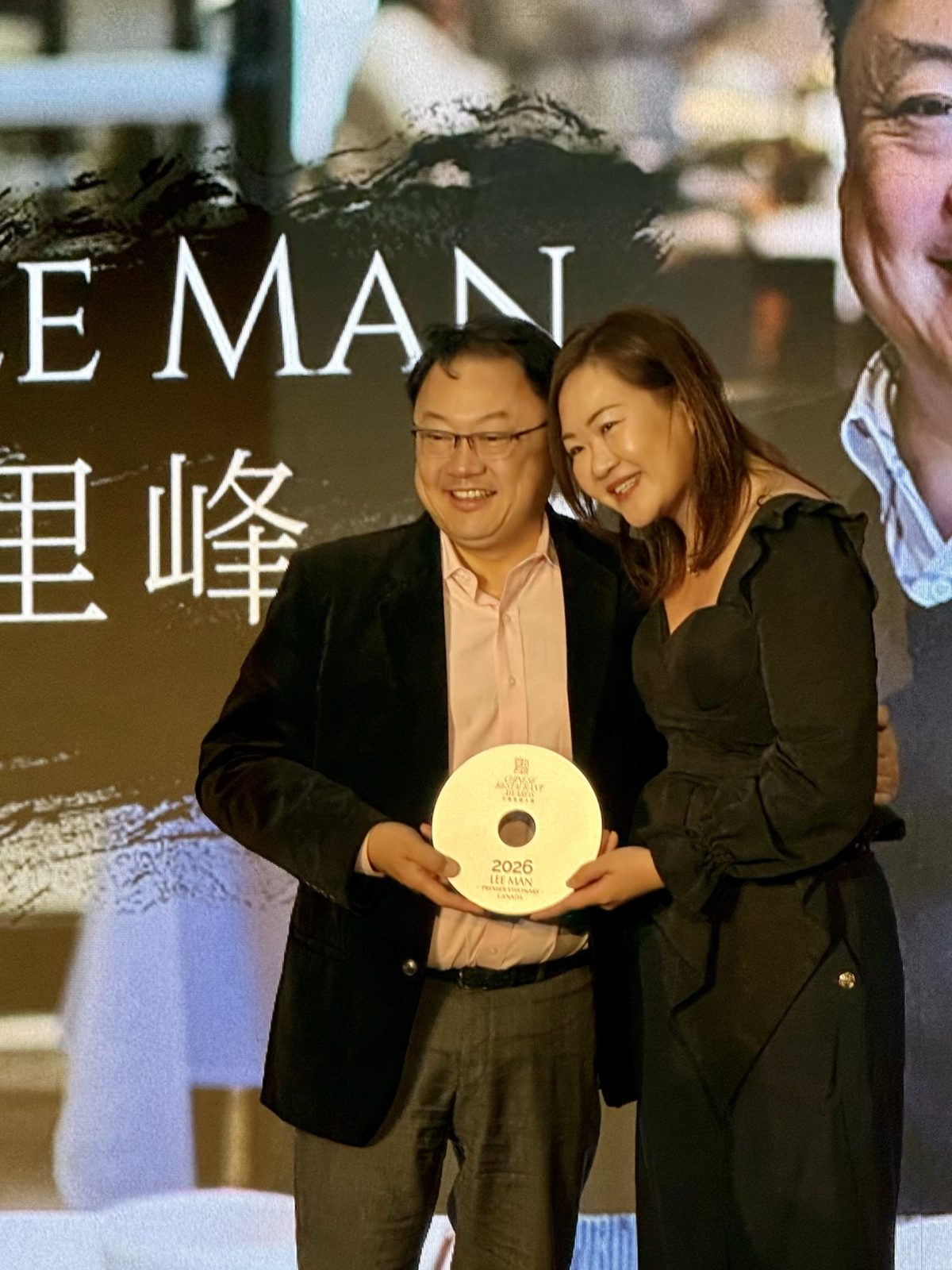
One honour I’ll mention, because it speaks to the advisors’ side of the Awards: the Premier Visionary Award went to Lee Man, the food critic who chairs our judging panel and has been a judge since the Awards began in 2008. In the Awards’ own words, he “has spent nearly two decades seeking out the dishes, restaurants and chefs that deserve to be known.” Keeping an award secret from the man who chairs the judging took some doing, and he was probably getting suspicious once he noticed how many of his family and friends had turned up for the ceremony. Most of our awards are presented by distinguished guests and sponsors, but this one meant something to all of us, and especially to Rae, who presented it herself. Once she had handed him the award, they all joined him on stage to congratulate him and celebrate the moment.
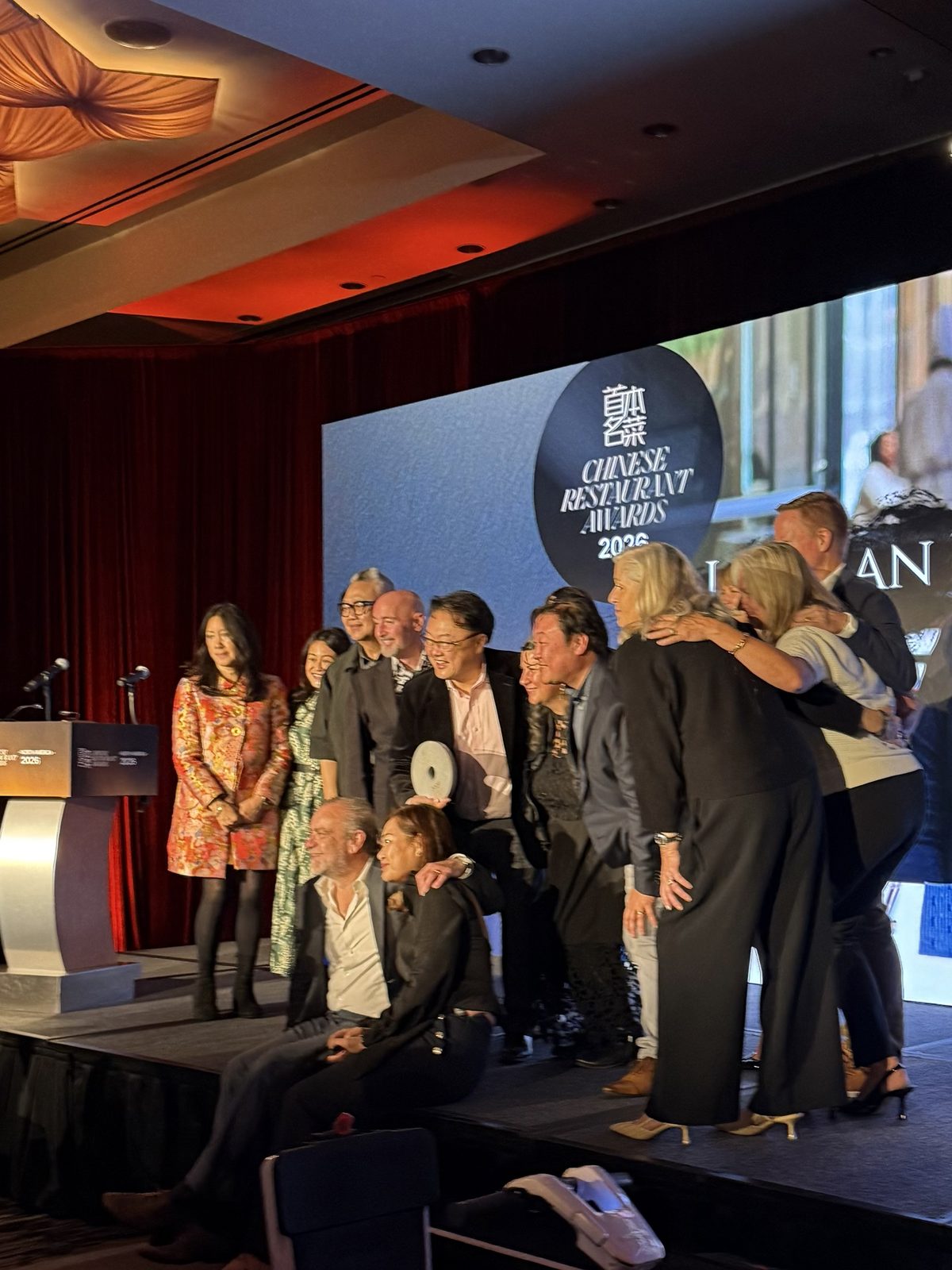
Near the end of my speech, I spoke directly to the chefs, the restaurateurs and the teams behind them: “You are the people doing the work. Our job is to help more people see it.”
If I had to stand behind one line in my own voice, it would be this: “Our role isn’t to define what Chinese food should be.” The reception had already made that case before I got to the microphone. Cantonese barbecue chefs from Chinatown, a Sichuan-born chef cooking northern food, a hotel chef putting duck on brioche, and a young chef from a college program shared one room, and nobody in it thought any of them was less Chinese than the others.
By five it was over, and it had to be. The Dim Sum Gala was coming next, and the room had been turning over the whole time we were inside. While the awards were still being handed out, the reception area was already being reset for gala guests arriving around six. Once the ceremony ended, the auditorium itself became a dining room, and by seven the doors were open again for dinner. Few people pay much attention to the desk on the far side of the room: laptops, a switcher, cables, and a crew in earpieces calling cues while the emcees waited their turn. It was a team effort, but the vision behind it, and the overall execution, were Rae’s and Rae’s alone. She has been putting on events for a long time. We first met over a decade ago, working together on Luxury Supercar Weekend, which used to be an annual three-day event. She doesn’t stop at the vision, meaning how a room should look, how it should feel, and what a guest should experience walking into it. She works it through in enough detail that an afternoon and an evening can share one ballroom without either one noticing.
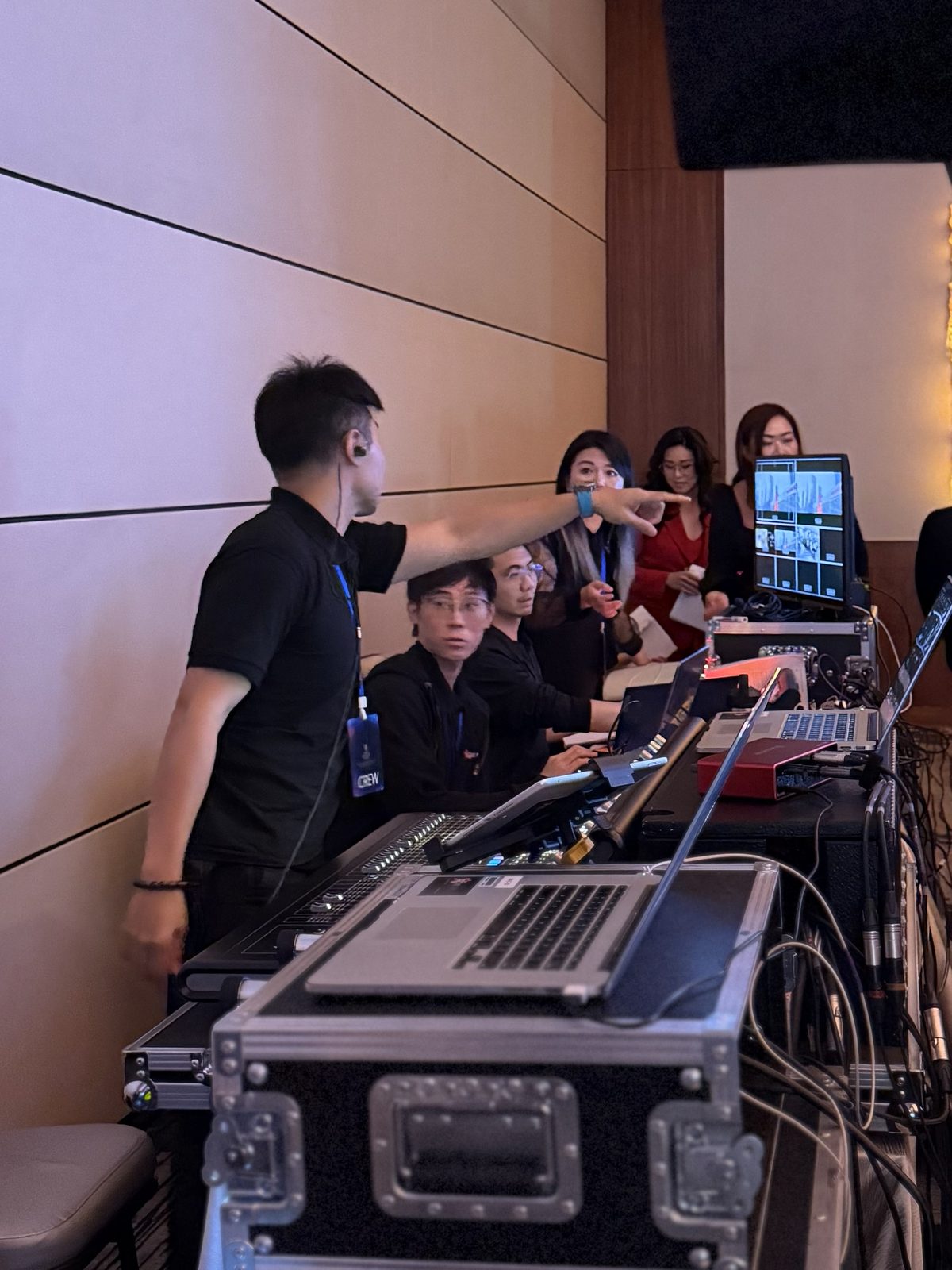
I first joined the Awards for the same reason I write today: to point people toward places and dishes worth going out for, and to tell them what to order when they get there. The Awards cover the Chinese corner of that, which also makes them a way to share my own culture. Rae is a large part of why I got involved. She is an amazing woman, and I’m glad to have the opportunity to work with her.



The Newsletter
New pieces, plus what’s on my table next. Every few weeks.

An error has occurred somewhere and it is not possible to submit the form. Please try again later or contact us.


